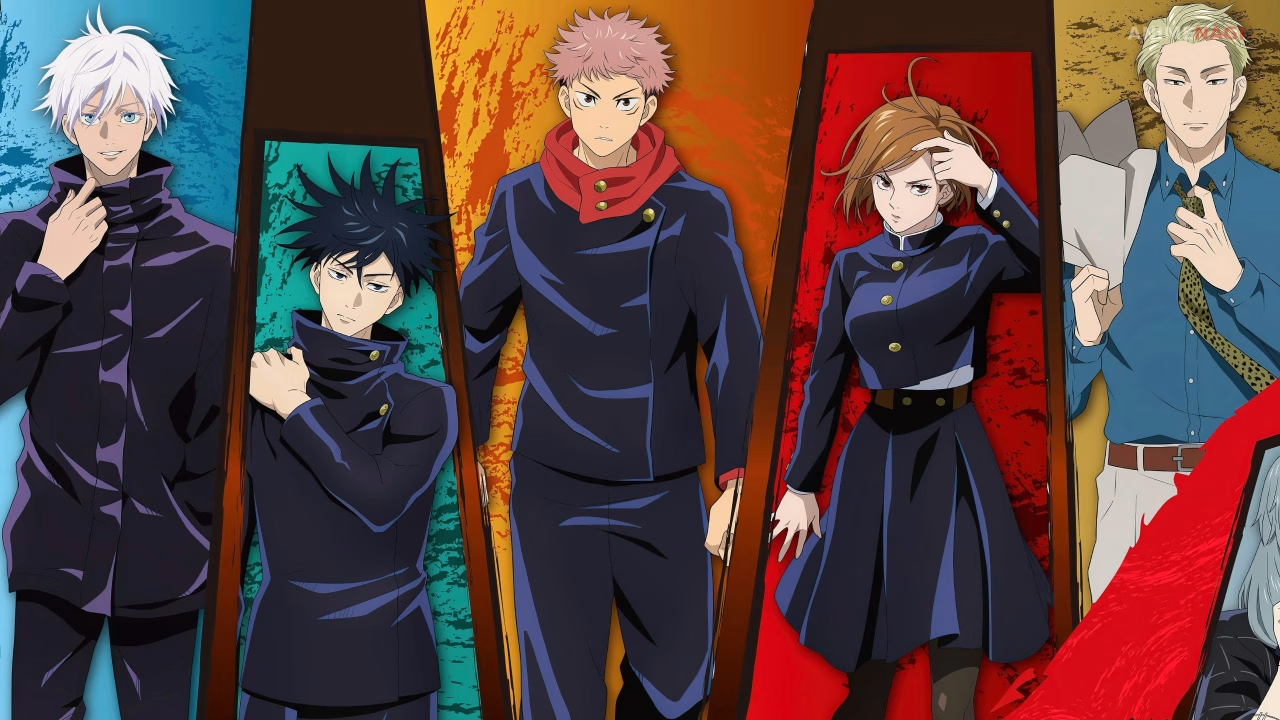
Jujutsu Kaisen became one of modern anime’s biggest global hits because it combined fast-paced action with a complex supernatural power system and emotionally intense storytelling. Created by Gege Akutami, the manga debuted in Weekly Shonen Jump in 2018 before receiving an anime adaptation by MAPPA in 2020. The story follows Yuji Itadori, a teenager who becomes connected to the ancient curse Ryomen Sukuna after swallowing one of Sukuna’s cursed fingers. That decision pulls Yuji into the dangerous world of jujutsu sorcerers, cursed spirits, and secret supernatural conflicts.
What makes Jujutsu Kaisen stand out is how layered its world-building becomes over time. The series introduces concepts like cursed energy, innate techniques, Domain Expansion, and binding vows while also exploring themes of death, morality, trauma, and sacrifice. Characters evolve through devastating battles and ideological conflicts rather than simple power progression. Understanding the series can feel overwhelming because of how quickly the story expands, especially during arcs like the Shibuya Incident and the Culling Game. This guide breaks down the core characters, power system, and major story arcs that define Jujutsu Kaisen.
What Is Jujutsu Kaisen About?
At its core, Jujutsu Kaisen is about humans fighting curses born from negative emotions such as fear, hatred, grief, and regret. In the series’ world, almost every human produces cursed energy unconsciously. When this energy accumulates, it creates cursed spirits that threaten society. Jujutsu sorcerers are individuals trained to control cursed energy and exorcise these monsters.
The story begins when Yuji Itadori encounters Megumi Fushiguro, a student from Tokyo Jujutsu High searching for one of Sukuna’s fingers. To save his friends, Yuji swallows the cursed object and becomes Sukuna’s vessel. Instead of immediately executing Yuji, the powerful sorcerer Gojo Satoru convinces the jujutsu authorities to delay his death sentence until all twenty fingers are collected.
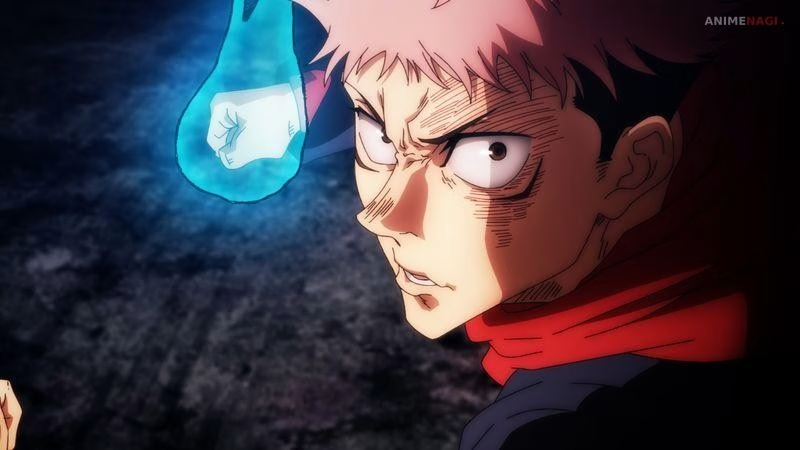
This setup creates the central conflict of the series. Yuji must live knowing he is eventually meant to die once Sukuna is fully destroyed. At the same time, he trains alongside other sorcerers while uncovering larger conspiracies involving curses and the corrupt jujutsu society.
The Main Jujutsu Kaisen Characters Explained
Yuji Itadori
Yuji Itadori is the protagonist and Sukuna’s vessel. Unlike many shonen protagonists, Yuji’s main struggle is psychological rather than ambition-driven. He constantly questions what it means to save people and whether a “good death” truly exists.
Yuji’s natural physical strength already exceeds normal human limits before entering the jujutsu world. After becoming Sukuna’s host, he learns cursed energy manipulation and techniques like Black Flash, which amplifies cursed energy impact during combat.
Throughout the series, Yuji experiences repeated emotional trauma. Characters close to him die violently, forcing him to confront guilt and helplessness. These experiences shape him into one of the series’ most emotionally grounded characters.
Gojo Satoru
Gojo Satoru is widely considered the strongest jujutsu sorcerer in the modern era. His inherited Limitless technique and Six Eyes ability make him nearly untouchable in combat. Gojo can manipulate space itself, slowing attacks before they reach him.
His most famous technique is Domain Expansion: Infinite Void, which traps enemies in an overwhelming flood of information. Gojo also uses powerful attacks like Blue, Red, and Hollow Purple.
Despite his confidence and humor, Gojo plays a major ideological role in the story. He believes the jujutsu world is corrupted by conservative leadership and wants to reform it through a new generation of sorcerers.
Megumi Fushiguro
Megumi Fushiguro uses the Ten Shadows Technique, a hereditary Zen’in clan ability that summons shikigami creatures for combat. Unlike Yuji, Megumi is calm and strategic, often relying on tactical thinking rather than raw power.
Sukuna becomes particularly interested in Megumi because of the hidden potential of the Ten Shadows Technique. This eventually becomes one of the story’s most important plot points.
Megumi also represents the morally gray nature of Jujutsu Kaisen. While he helps others, he openly admits he chooses who deserves saving based on personal judgment rather than heroic ideals.
Nobara Kugisaki
Nobara Kugisaki quickly became a fan-favorite because of her aggressive personality and confidence. Her Straw Doll Technique allows her to damage enemies using nails, cursed energy, and linked objects.
Unlike many female shonen characters, Nobara is written with strong individuality rather than existing solely for support. Her fights emphasize creativity and brutality, especially during battles involving Mahito and the Death Paintings.
Her relationship with Yuji and Megumi also gives the series emotional warmth during its darker moments.
Ryomen Sukuna
Sukuna is the series’ main supernatural threat. Known as the King of Curses, he existed over a thousand years before the story began. Even after death, his fingers remained powerful cursed objects.
Unlike many inner-demon anime tropes, Sukuna is not secretly sympathetic. He is cruel, manipulative, and fascinated by destruction. His presence creates constant tension because Yuji can lose control at critical moments.
Sukuna’s Domain Expansion, Malevolent Shrine, is especially terrifying because it manifests without creating a closed barrier, allowing widespread destruction.
How Cursed Energy and Techniques Work
The power system in Jujutsu Kaisen revolves around cursed energy. Negative emotions naturally generate this energy, and sorcerers learn to control it instead of leaking it unconsciously.
Most sorcerers possess Innate Techniques, unique abilities engraved into their bodies from birth. These techniques vary widely and often reflect personality, family lineage, or emotional experiences.
Some important concepts include:
Domain Expansion
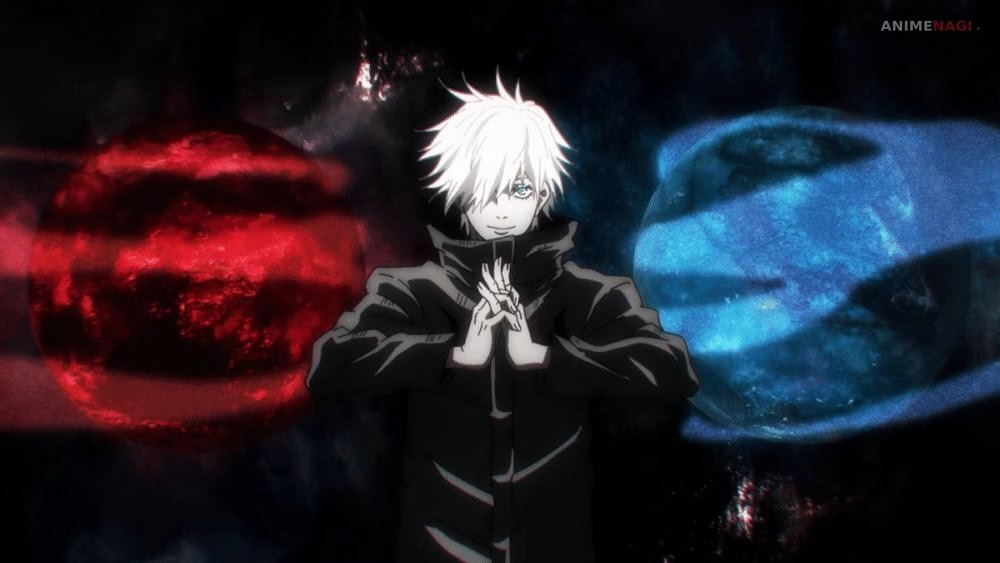
Domain Expansion is considered the peak of jujutsu combat. It creates a separate space where the user’s cursed technique becomes overwhelmingly powerful and almost impossible to avoid.
Examples include Gojo’s Infinite Void and Sukuna’s Malevolent Shrine. Domains often determine the outcome of high-level battles because of their guaranteed-hit properties.
Black Flash
Black Flash occurs when cursed energy impacts within an incredibly precise time frame after a physical hit. This dramatically increases attack power and improves the sorcerer’s understanding of cursed energy.
Yuji becomes especially proficient at Black Flash during the series.
Reverse Cursed Technique
Reverse Cursed Technique converts negative energy into positive energy for healing. Very few characters can use it effectively. Gojo and Shoko Ieiri are among the strongest practitioners.
Binding Vows
Binding Vows are self-imposed conditions that increase power in exchange for restrictions or risks. These vows add strategic complexity to battles because characters constantly manipulate conditions to gain advantages.
The Major Story Arcs Explained
Fearsome Womb Arc
The opening arc introduces Yuji, Sukuna, Megumi, and the basic rules of the jujutsu world. It establishes the series’ darker tone immediately through death and moral ambiguity.
Vs. Mahito Arc
This arc introduces Mahito, one of the series’ most disturbing villains. Mahito manipulates souls directly, making him obsessed with human suffering and identity. His conflict with Yuji becomes deeply personal after Junpei’s death.
The arc also emphasizes one of the series’ main ideas: human emotions create both strength and horror.
Kyoto Goodwill Event Arc
Initially presented like a tournament arc, this storyline quickly shifts into chaos after cursed spirits attack the event. It introduces characters like Aoi Todo, Maki Zen’in, and Panda while expanding the political tension within jujutsu society.
Todo’s friendship with Yuji became one of the franchise’s most popular dynamics.
Hidden Inventory / Premature Death Arc
This flashback arc explores Gojo and Suguru Geto during their student years. It reveals how Geto transformed from Gojo’s closest friend into an extremist curse user.
The arc also introduces Toji Fushiguro, Megumi’s father, whose physical abilities rival sorcerers despite lacking cursed energy.
Many fans consider this arc one of the series’ strongest because of its emotional depth and tragic character writing.
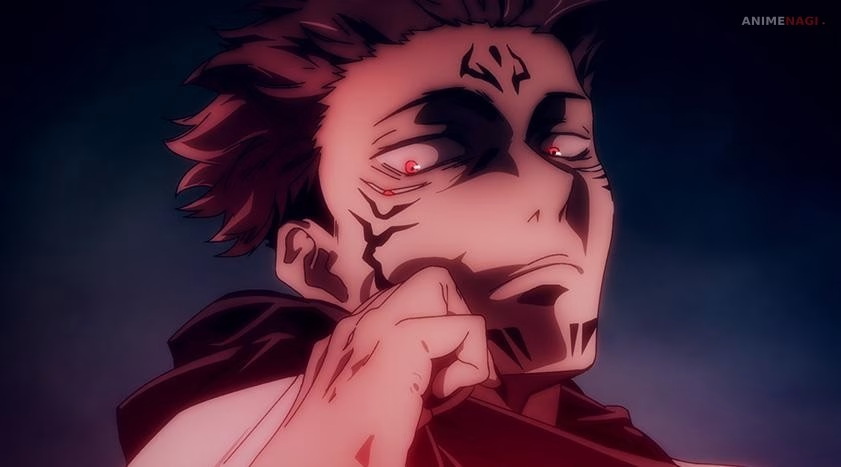
Shibuya Incident Arc
The Shibuya Incident is widely viewed as the defining arc of Jujutsu Kaisen. The villains launch a coordinated attack in Shibuya to seal Gojo and destabilize the jujutsu world.
This arc dramatically raises the stakes. Major characters die, entire city sections are destroyed, and Yuji experiences severe psychological collapse after Sukuna massacres civilians.
The Shibuya Incident permanently changes the tone of the series from supernatural action adventure into full-scale tragedy.
Culling Game Arc
After Shibuya, Kenjaku launches the Culling Game, a deadly battle royale designed to evolve humanity through cursed energy. Sorcerers and reincarnated fighters battle across Japan under strict supernatural rules.
This arc introduces complex new abilities, moral dilemmas, and large-scale battles. It also pushes Yuji, Megumi, and Yuta into increasingly desperate situations.
Kenjaku’s long-term manipulation of events becomes clearer during this storyline, revealing how deeply the series connects curses with humanity itself.
Why Jujutsu Kaisen Became So Popular
Jujutsu Kaisen succeeded because it modernized classic shonen ideas while embracing darker emotional storytelling. The series combines horror aesthetics, philosophical themes, and high-quality action choreography without losing emotional sincerity.
Gege Akutami’s writing also avoids simple morality. Even heroes make questionable decisions, while villains often represent distorted responses to human suffering. Critics and fans frequently praise the series for balancing intense spectacle with psychological depth.
MAPPA’s anime adaptation further elevated the franchise through cinematic animation, especially during fights involving Gojo, Sukuna, Toji, and Mahito.
Ultimately, Jujutsu Kaisen stands out because its battles are not only about power. They are about ideology, trauma, fear, and the meaning of life in a world constantly shaped by death.
Another key reason Jujutsu Kaisen resonates so strongly with audiences is how it refuses to offer easy resolutions. Even after major victories, the emotional consequences of each battle linger, shaping character decisions in future arcs. Yuji’s evolving mindset, especially after the Shibuya Incident, reflects a deeper shift from idealism to painful realism.
This layered storytelling ensures that every fight carries narrative weight beyond spectacle. As the series progresses, the line between hero and villain continues to blur, reinforcing its core theme that human emotions, both positive and negative, are inseparable from the power that drives the world of jujutsu.