The anime adaptation of Kill Blue premiered on April 11, 2026, bringing renewed attention to one of Shonen Jump’s more underrated manga series. Blending action and comedy, the story follows Juzo Ogami, a seasoned assassin who is suddenly transformed into his 13-year-old self after being stung by a genetically engineered wasp. Forced to enroll in middle school while hiding his true identity, Juzo navigates a double life that mixes deadly missions with adolescent challenges. While this premise feels fresh, it draws heavily from a well-established anime trope: age regression.
The roots of this trope can be traced back to Detective Conan, also known as Case Closed, which first aired in 1996. Its protagonist, Conan Edogawa, is a teenage detective transformed into a child after being poisoned. Retaining his intellect, Conan solves complex mysteries while concealing his identity from a dangerous organization. The appeal of this concept lies in its “fish out of water” dynamic, where a highly capable mind is underestimated due to a childlike appearance. This creates both comedic situations and narrative tension, as the character must overcome physical limitations while pursuing serious goals.
Detective Conan’s Lasting Influence Shapes Modern Anime Tropes and Storytelling Approaches
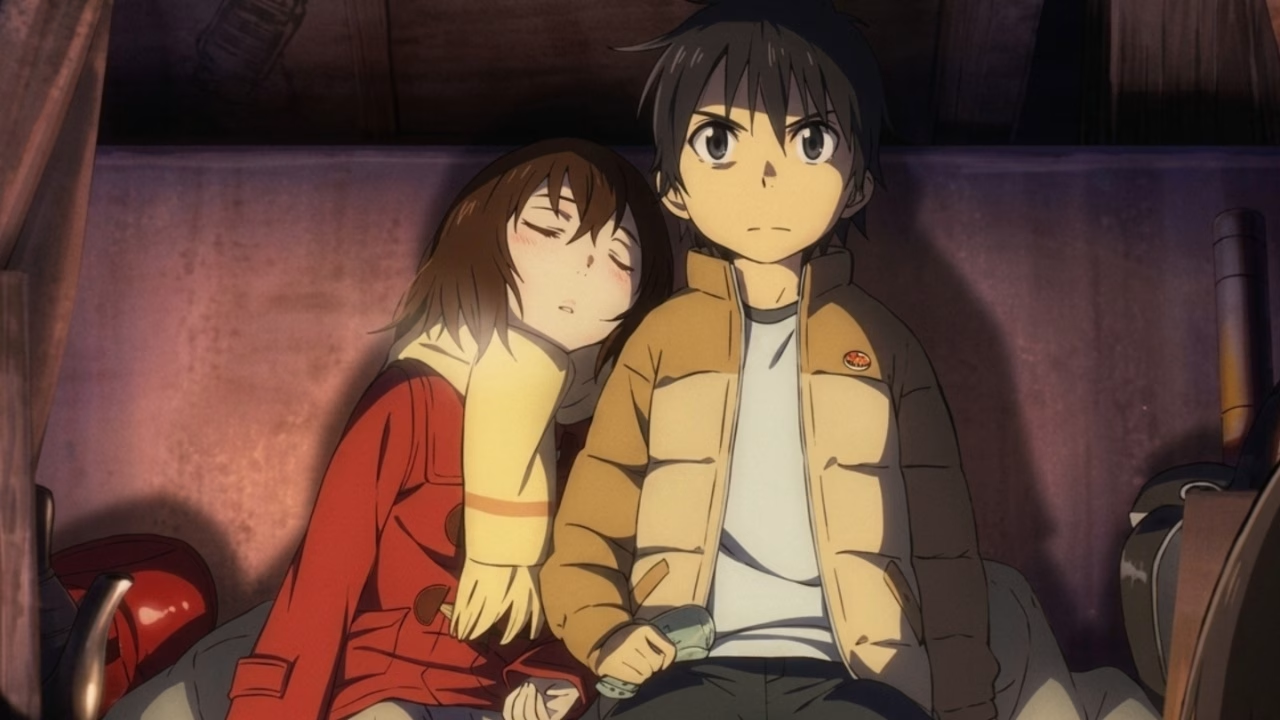
The influence of Detective Conan on later anime is profound. It helped popularize the de-aging trope as both a storytelling device and a source of humor. Over time, this concept expanded beyond mystery series and became a staple in other genres, particularly in fantasy and isekai. Shows like Mushoku Tensei: Jobless Reincarnation, Oshi no Ko, and Erased all explore variations of characters being reborn or sent back to childhood while retaining their memories. In these stories, the trope often serves as a second-chance narrative, allowing characters to correct past mistakes or reshape their futures.
Kill Blue openly acknowledges its inspiration from Detective Conan. Fans have frequently described it as “Detective Conan, but with an assassin,” and the series leans into this comparison with a direct reference. In one scene, Juzo uses a voice modulator and jokes that at least it is not a bow tie, a clear nod to Conan’s iconic gadget. This self-awareness demonstrates how modern anime increasingly embraces intertextuality, referencing older works as a form of homage and fan service. Similar trends can be seen in series like Gintama, which is famous for parodying other anime, and crossover moments in manga like Chainsaw Man.
Despite its popularity, the age regression trope has faced criticism over the years. One major concern is the imbalance created when an adult mind exists in a child’s body, particularly in social or romantic contexts. These dynamics can become uncomfortable if not handled carefully, as they blur boundaries between maturity and physical age. Some anime have struggled with this issue, leading to mixed reception among audiences.
Kill Blue Modernizes Age Regression Trope Through Balanced Storytelling and Character Dynamics
Kill Blue attempts to address these concerns by modernizing the trope. Juzo’s relationship with Noren Mitsuoka, a middle school girl he is assigned to protect, is handled with caution. Initially wary of him, Noren gradually builds trust as their connection develops into a mentor-protégé relationship rather than a romantic one. This approach avoids the problematic implications that have affected similar stories, while still allowing for meaningful character development.
Another way Kill Blue updates the trope is by balancing realism with humor. While the series embraces comedic elements, it remains grounded in Juzo’s responsibilities and the consequences of his double life. His struggle to adapt to school life while maintaining his skills as an assassin adds depth to the narrative. This blend of action, comedy, and character-driven storytelling helps distinguish it from earlier examples.
The anime also reflects broader trends in the industry. With the increasing number of seasonal releases, familiar tropes can sometimes feel repetitive. By acknowledging its influences and refining them, Kill Blue demonstrates how established ideas can still feel fresh when approached creatively. Its mix of homage, self-awareness, and thoughtful execution makes it stand out in a crowded field.
Kill Blue represents a modern evolution of the age regression trope that was popularized by Detective Conan. By combining classic elements with updated storytelling sensibilities, it manages to honor its predecessor while addressing longstanding criticisms. The result is a series that feels both nostalgic and contemporary, offering audiences a compelling mix of humor, action, and character growth.