Dragon Ball has long been structured around a clear and compelling principle: power is something that must be earned. From its earliest arcs to its modern expansions, the series built its identity on disciplined growth, extreme training, and the idea that surpassing one’s limits requires both effort and sacrifice.
That internal logic gave weight to every transformation and ensured that each leap in strength felt justified within the narrative. In recent developments, however, that framework has begun to erode. As more characters rapidly ascend to god-tier levels through inconsistent methods, the power hierarchy that once anchored the series is becoming increasingly unstable.
The original appeal of Dragon Ball’s progression system lay in its clarity. Characters trained, struggled, and gradually evolved. Transformations such as Super Saiyan were not arbitrary upgrades; they were narrative milestones tied to emotional intensity, physical endurance, and situational stakes. This consistency allowed audiences to track growth logically.
By the time Dragon Ball Super expanded the universe, the series introduced the concept of divine power through God Ki. This was a significant shift. Rather than simply increasing raw strength, the narrative began to explore different philosophies of combat. Goku’s Ultra Instinct emphasized calmness, precision, and autonomous reaction, while Vegeta’s Ultra Ego focused on embracing damage and channeling destructive energy.
These forms were positioned as the pinnacle of combat evolution, not simply because of their strength, but because of the discipline required to achieve and maintain them. They were tied to higher cosmic entities, namely Angels and Gods of Destruction, reinforcing their rarity and significance.
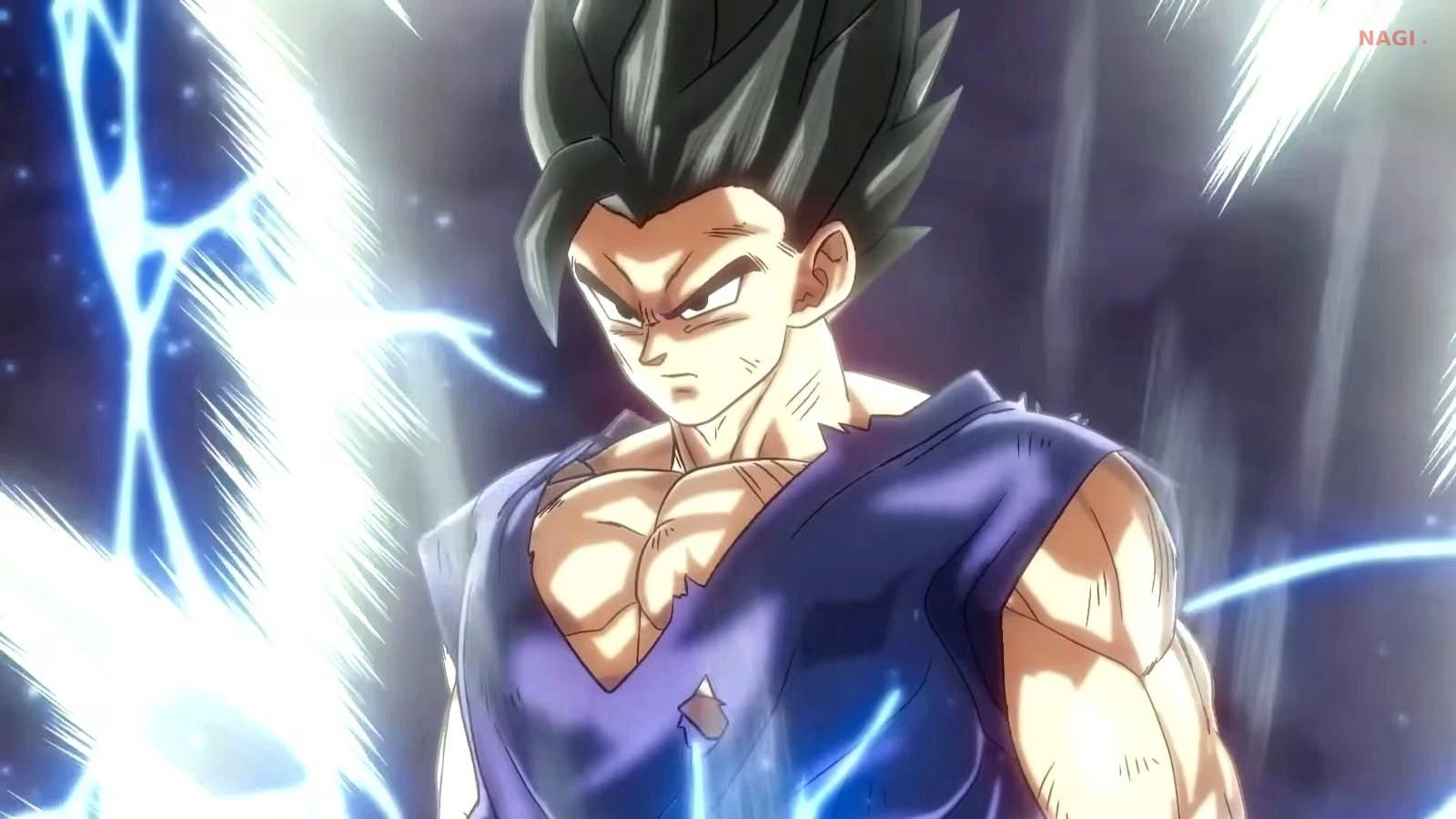
Despite this structured foundation, recent arcs have introduced a pattern of accelerated power growth that conflicts with the established system. The most prominent example is Gohan. Historically, Gohan’s potential has been a central narrative element. His hybrid Saiyan-human physiology allowed him to surpass expectations, particularly during key moments in earlier arcs.
That trajectory was consistent when applied within the Super Saiyan hierarchy. However, the introduction of his Beast transformation represents a significant deviation. Gohan’s ability to rival Ultra Instinct despite limited training undermines the effort-based progression that defines the series. Unlike Goku and Vegeta, who underwent prolonged and intensive training to access divine techniques, Gohan’s transformation is primarily triggered by emotional escalation.
This creates a disparity between effort and outcome. If god-tier power can be achieved through sudden emotional spikes, the importance of sustained training diminishes. The system begins to favor narrative convenience over internal logic.
Emotional Power Versus Earned Strength
Dragon Ball has always incorporated emotional triggers as catalysts for transformation. The original Super Saiyan awakening is a prime example. However, those moments were supported by extensive buildup. Goku’s transformation on Namek was not just the result of anger; it was the culmination of relentless training, repeated near-death experiences, and escalating stakes.
In contrast, newer transformations often lack that same depth of preparation. Gohan’s Beast form, while visually and conceptually striking, appears abruptly within the narrative. This shift alters the role of emotion from a catalyst into a shortcut.
The distinction is critical. When emotion amplifies an already established foundation, it enhances the narrative. When it replaces that foundation, it weakens it.
This trend is not isolated to Gohan. Dragon Ball Super: Broly serves as another example of accelerated scaling. During his first major battle, Broly surpasses Super Saiyan Blue-level fighters through explosive growth driven largely by instinct and rage.
While his unique biology and backstory provide some justification, the speed and magnitude of his progression still contribute to the broader issue. The pattern becomes clear: characters are increasingly able to reach elite tiers without following the established progression model.
This does not inherently invalidate their strength, but it compresses the power hierarchy. When multiple characters can rapidly approach or exceed the same level, distinctions between tiers become less meaningful.
The Role of Antagonists and Narrative Shortcuts
The issue extends further when examining antagonists. In the Granolah arc, both Granolah and Gas achieve top-tier strength through wishes made to the Dragon Balls. This mechanism bypasses traditional progression entirely, reducing power acquisition to a transactional process.
Such shortcuts undermine the series’ core philosophy. If strength can be granted rather than earned, the narrative stakes associated with training and growth are significantly reduced.
By contrast, Frieza’s Black Frieza transformation provides a more consistent example of power escalation. His new form is explicitly tied to an extended period of intense training, aligning with the established logic of the series. This reinforces the idea that effort remains a valid and necessary pathway to power.
One of the most significant consequences of inconsistent scaling is the weakening of the divine hierarchy. Ultra Instinct and Ultra Ego were introduced as specialized techniques representing the highest levels of combat philosophy. They are not merely stronger forms; they are fundamentally different approaches to fighting.
Ultra Instinct prioritizes efficiency, allowing the body to react independently of conscious thought. Ultra Ego, on the other hand, thrives on destruction, growing stronger as the user embraces damage and battle intensity. These are conceptual systems tied to the identities of Angels and Gods of Destruction.
When other characters match or surpass these states without equivalent development, the distinction between mortal and divine techniques becomes blurred. This diminishes the narrative significance of God Ki and reduces what should be rare, specialized abilities into interchangeable power levels.
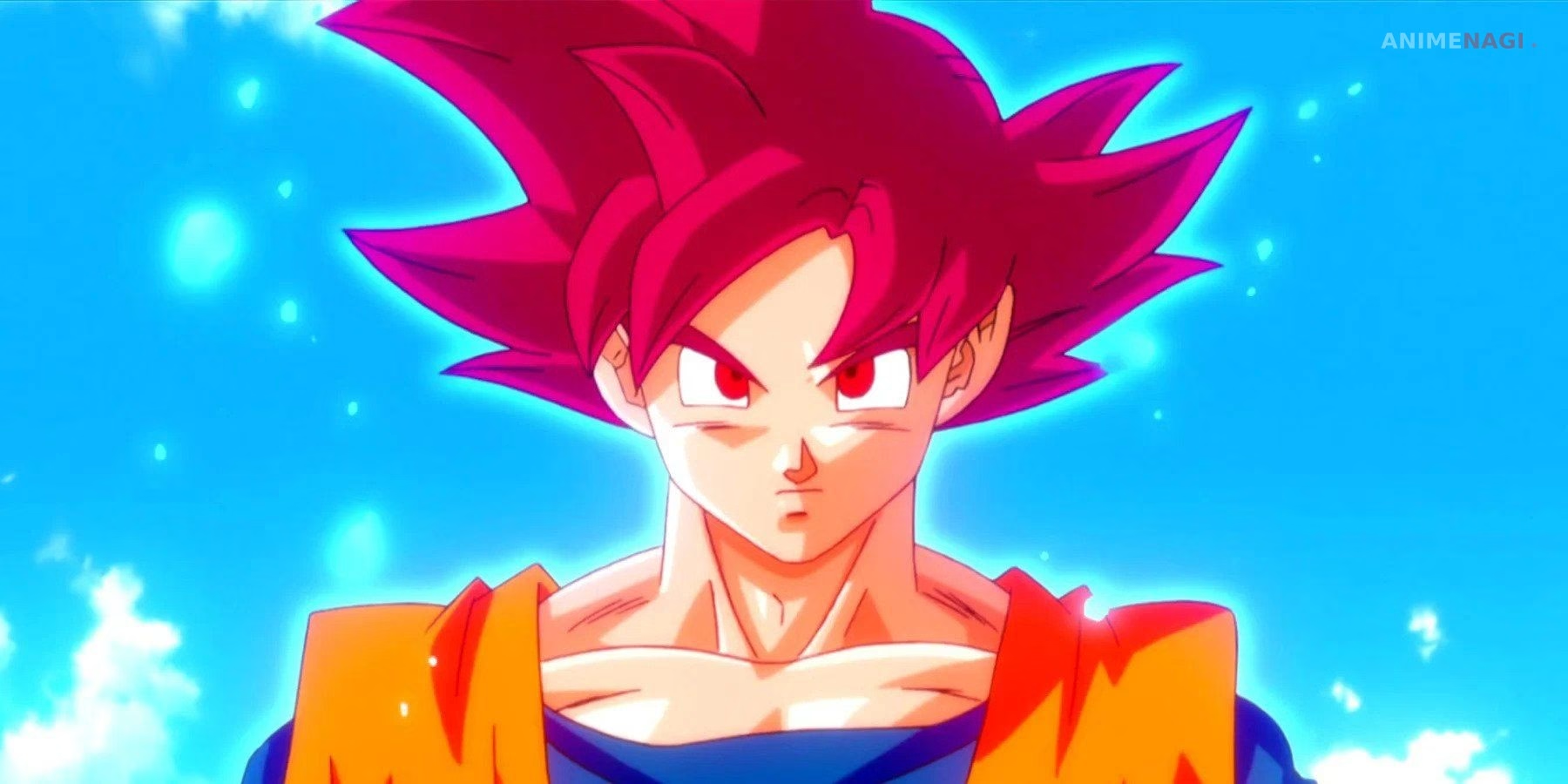
As the power ceiling becomes increasingly crowded, the series risks losing its sense of progression. Earlier arcs maintained a clear hierarchy, allowing audiences to understand where each character stood. This clarity contributed to tension, as each new transformation represented a meaningful shift in the balance of power.
In the current framework, that clarity is less defined. Multiple characters occupy similar tiers without consistent justification, making it more difficult to establish stakes. If everyone can reach comparable levels through different, often inconsistent methods, the hierarchy loses its function as a narrative tool.
This also impacts character identity. Transformations were once closely tied to individual philosophies and journeys. As scaling becomes more homogenized, those distinctions begin to fade.
Reestablishing Consistency in Future Arcs
Addressing these issues does not require limiting character growth. Instead, it requires reinforcing the principles that originally defined the series. Power should correlate with effort, time investment, and clearly established mechanics.
One approach is to introduce explicit limitations on newer transformations. Forms such as Beast Gohan or Broly’s controlled state could be associated with instability, high energy consumption, or strict conditions for activation. This would differentiate them from Ultra Instinct and Ultra Ego, which, while difficult to achieve, offer greater refinement and sustainability once mastered.
Another solution is to restore tier separation. Non-divine transformations can remain powerful, but they should not immediately equal divine techniques without additional progression. This preserves the significance of God Ki as a distinct threshold rather than allowing it to become redundant.
Narrative pacing is also critical. Transformations should be built over time, with clear foreshadowing and gradual development. This ensures that each new form feels earned rather than abrupt.
Dragon Ball’s enduring appeal lies in its ability to balance spectacle with structure. While high-intensity battles and dramatic transformations are central to the series, they are most effective when grounded in a coherent system of progression.
The recent trend toward rapid, convenience-based scaling risks undermining that balance. By reestablishing the link between effort and power, the series can maintain its internal logic while continuing to evolve.
Ultimately, the goal is not to restrict characters from becoming stronger, but to ensure that their growth aligns with the principles that define the narrative. When power is earned, it carries weight. When it is given too easily, it loses significance. Reaffirming that distinction is essential for the long-term integrity of Dragon Ball’s power system.