The global expansion of anime has transformed it into a widely consumed cultural product, bringing increased scrutiny to how characters are designed and represented. As international audiences engage more deeply with the medium, debates around aesthetics, cultural interpretation, and representation have intensified. These discussions are often shaped by differences in cultural expectations, particularly between Japanese creators and global viewers, leading to contrasting interpretations of the same visual language.
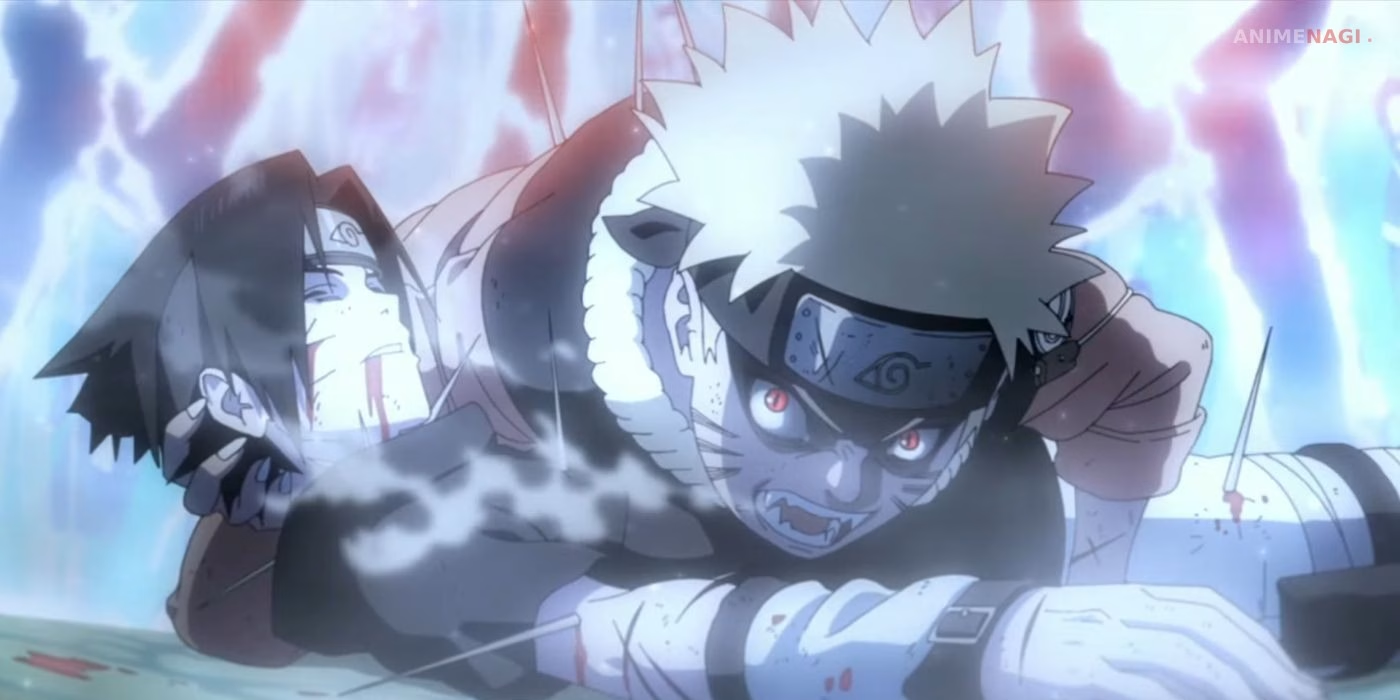
At the center of these debates is anime’s distinctive approach to character design. Unlike many Western animation styles that prioritize anatomical consistency, anime embraces exaggeration and stylization as core expressive tools. This is evident in Naruto, where characters like Naruto Uzumaki and Sasuke Uchiha feature simplified facial structures and sharply stylized hair. These elements are not intended to reflect realism but to enhance emotional clarity and visual identity, particularly during fast-paced action sequences.
This design philosophy becomes even more pronounced in series such as One Piece. Characters like Monkey D. Luffy are deliberately constructed with exaggerated proportions and elastic expressions, emphasizing individuality and thematic tone over realism. In this context, stylization functions as a narrative tool, allowing creators to convey personality and mood with immediacy.
Despite this, international audiences sometimes interpret anime character designs through their own cultural frameworks. A recurring claim is that anime characters resemble Western features, particularly due to large eyes or lighter hair colors. However, this interpretation overlooks the historical development of anime aesthetics.
For example, Sailor Moon features Usagi Tsukino with large, expressive eyes, a stylistic choice rooted in shōjo manga traditions rather than an attempt to replicate Western appearance. Similarly, characters like Goku from Dragon Ball are highly abstract, lacking detailed ethnic markers altogether.
In response to such critiques, Japanese creators often emphasize creative autonomy. Anime is generally treated within the industry as an artistic medium governed by internal conventions rather than as a direct reflection of real-world demographics.
This is evident in works like JoJo’s Bizarre Adventure, where characters such as Jotaro Kujo undergo dramatic stylistic shifts across different story arcs. These changes are driven by artistic direction rather than any attempt to align with realism or external expectations.
At the same time, the anime industry operates within a globalized media economy, where international audiences contribute significantly to its success. Streaming platforms and global distribution networks have expanded anime’s reach, influencing how some productions approach character design.
A clear example is Cyberpunk: Edgerunners, which blends traditional anime stylization with design sensibilities that appeal to a global audience. This reflects a broader trend of selective adaptation, where studios make calculated adjustments without abandoning core artistic principles.
Cultural context remains a critical factor in these discussions. Many criticisms arise from applying external standards to a medium that developed within a specific cultural framework. Anime frequently employs symbolic and exaggerated elements that carry meaning within Japanese storytelling traditions. Films like Spirited Away, featuring Chihiro Ogino, demonstrate how character design and world-building are deeply tied to cultural symbolism that may not be immediately accessible to international viewers.
The conversation around character design also intersects with broader issues of representation. Certain portrayals have sparked ongoing debate, particularly regarding gender and race. For instance, Fire Force includes Tamaki Kotatsu, whose portrayal has been widely discussed in conversations about fanservice and sexualization. Similarly, older characters like Mr. Popo from Dragon Ball have been reexamined in discussions about racial representation.
However, change within the industry has been gradual and influenced by multiple factors. Domestic discourse in Japan, evolving audience expectations, and broader cultural shifts all play a role alongside international criticism. Contemporary series such as My Hero Academia reflect a mix of traditional stylization and more varied character archetypes, indicating an ongoing evolution rather than a complete transformation.
It is also important to recognize that the anime industry is not a unified entity. Different studios adopt different approaches to character design and respond to criticism in distinct ways. Studio Ghibli, for example, is known for relatively grounded and naturalistic character designs, while Trigger embraces extreme stylization in works like Kill la Kill. This diversity highlights the range of artistic philosophies within the industry.
The rise of digital platforms has further intensified these dynamics. Online discourse allows criticism to spread rapidly, amplifying specific controversies around character design. At the same time, it enables direct interaction between creators and audiences, creating a feedback loop that can influence production decisions. However, this environment is often polarized, making it difficult to separate constructive critique from cultural misunderstanding.
Japan’s response to international criticism of anime character design is best understood as a selective adaptation. The industry continues to prioritize its established artistic conventions while making strategic adjustments in response to global market conditions. Anime’s global appeal lies in its distinctiveness, and while criticism can encourage reflection, it does not dictate creative direction. Instead, the medium continues to evolve through an ongoing balance between cultural identity, artistic expression, and global consumption.
The influence of digital platforms has further intensified these dynamics. Online discourse allows criticism to spread rapidly and gain visibility, often amplifying specific controversies. It enables direct interaction between creators and audiences, creating a feedback loop that can influence production decisions. However, this environment is often polarized, making it difficult to distinguish between constructive critique and cultural misunderstanding.
Ultimately, Japan’s response to international criticism of anime character design is characterized by selective adaptation. The industry continues to uphold its established artistic conventions while making calculated adjustments in response to global market conditions. This approach reflects a broader tension between maintaining cultural identity and engaging with an increasingly interconnected audience.
Anime’s global success suggests that its appeal lies in its distinctiveness rather than its conformity. While criticism can encourage reflection and incremental change, it does not dictate creative direction. Instead, anime continues to evolve through an ongoing negotiation between artistic expression, cultural context, and global consumption.