The upcoming anime adaptation of Witch and Mercenary, based on the novels by Kaeru Chohokiteki, has been officially announced for a 2027 release, marking another calculated move in the anime industry’s ongoing reliance on established light novel properties.
With production already in motion, the project reflects a broader trend where studios prioritize material with demonstrated audience traction over riskier original concepts.
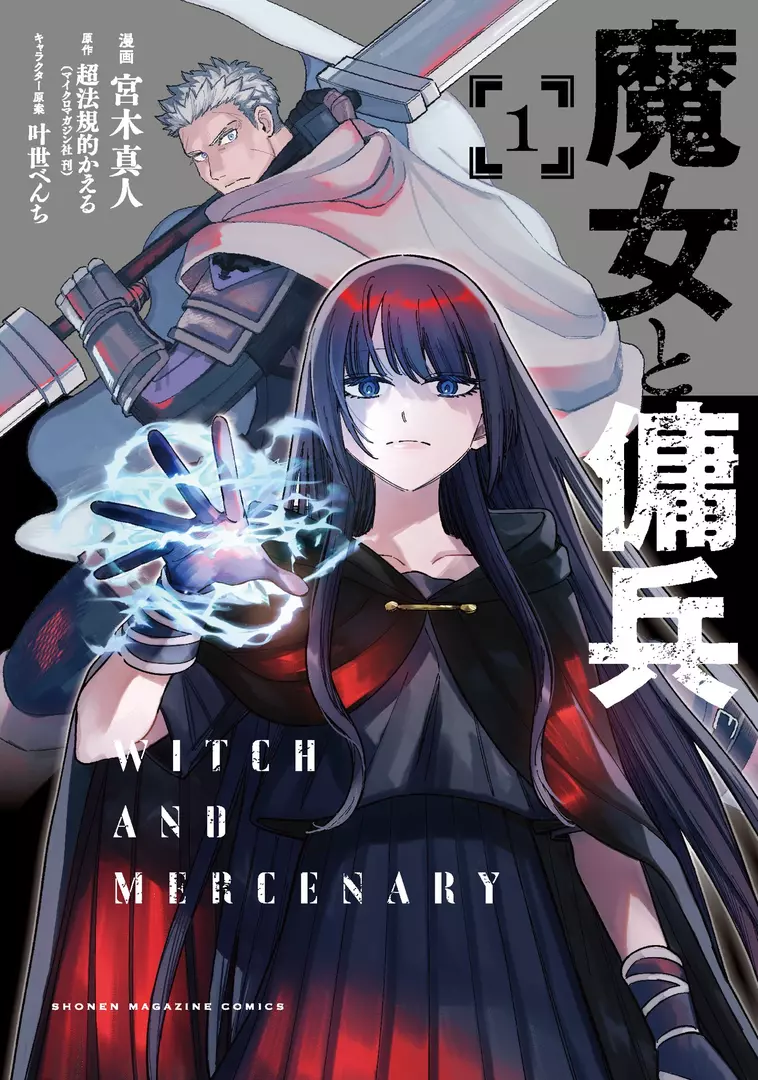
The series itself fits squarely within the dark fantasy space but carries enough narrative contrast to stand out on paper. It follows a witch, a figure typically feared and hunted, and a mercenary shaped by violence and survival.
Both characters exist on the fringes of society, creating a dynamic rooted in shared isolation rather than traditional heroism. This dual-protagonist structure provides a foundation for both action-driven storytelling and more introspective character development, an approach that has proven effective in recent adaptations.
Animation production is being handled by Eight Bit, a studio known for delivering consistent adaptations of serialized works. Direction is led by Shinpei Ezaki, with series composition by Taishirou Tanimura and music by Rei Ishizuka. This is a team structured for reliability rather than experimentation, signaling that the production aims to meet audience expectations rather than redefine genre boundaries.
From a strategic standpoint, the timing of the announcement is notable. A 2027 release window indicates long-term planning, a necessity in an industry increasingly constrained by production bottlenecks and scheduling complexities.
The decision to adapt Witch and Mercenary also reflects the continued influence of digital-first publishing platforms. Like many modern light novels, the series built its audience before securing an anime adaptation, reducing financial uncertainty for stakeholders.
By the time such projects reach production, they often carry an existing fanbase, established world-building, and a proven narrative structure, all of which contribute to a more predictable return on investment.
However, this approach raises an ongoing concern about market saturation. The steady influx of light novel adaptations has created a dense content environment where new series must compete for attention within familiar genre frameworks. In this context, success is less dependent on originality and more on execution. Elements such as pacing, visual direction, and character chemistry become critical differentiators.
For Witch and Mercenary, the premise offers enough thematic weight to resonate if handled correctly. The relationship between its two leads, shaped by distrust, survival, and gradual alignment, could provide the emotional depth needed to stand out.
Ultimately, this announcement reinforces a clear industry pattern. Anime production is increasingly driven by properties that have already proven their value across multiple formats.
Witch and Mercenary is not positioned as a disruptive entry, but rather as a refined iteration within an established system. Whether it distinguishes itself will depend on how effectively it translates its source material into a cohesive and engaging on-screen experience when it arrives in 2027.