86 Eighty-Six stood out because it refused to treat war as spectacle alone. Instead, it explored systemic discrimination, the emotional cost of survival, and the psychological toll carried by soldiers forced into dehumanizing conflicts. Characters like Shin and Lena grounded the story in empathy, creating a rare blend of mecha action and deeply personal storytelling. That balance is what made the anime resonate far beyond typical sci-fi or military series.
Finding anime that replicate that exact combination is difficult because 86 blends genres so seamlessly. It is part dystopian political drama, part war tragedy, and part character-driven emotional narrative. However, several anime capture different aspects of what made it impactful, whether through morally gray conflicts, tragic character arcs, or grounded depictions of war.
The following five anime stand out as the closest matches to 86 EIGHTY-SIX, not because they copy its formula, but because they evoke the same emotional intensity, thematic depth, and lasting impact.
1. Attack on Titan
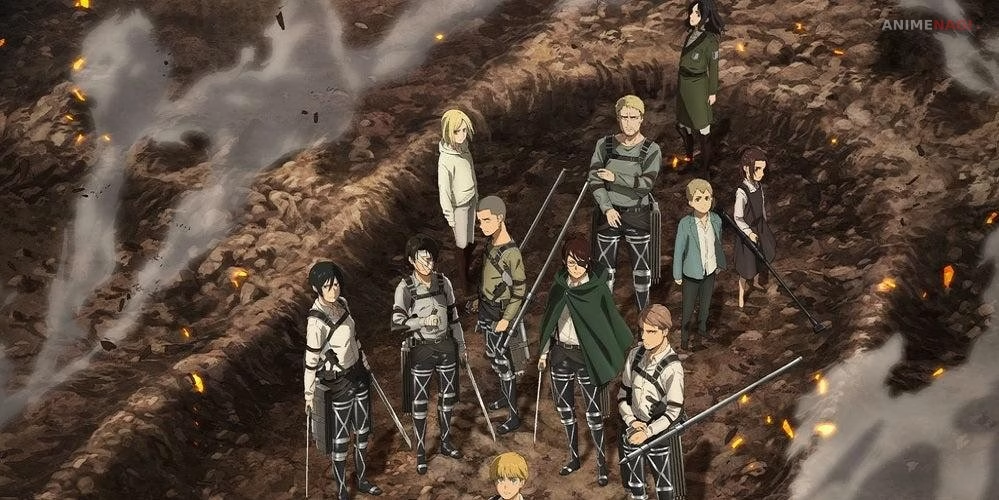
Attack on Titan is often the first recommendation for fans of 86 because both series explore the brutality of war through a deeply personal lens. While it begins as a survival story against Titans, the narrative quickly evolves into a layered political conflict involving oppression, propaganda, and generational hatred. Much like 86, the series forces viewers to confront uncomfortable truths about society rather than offering simple hero-versus-villain storytelling.
One of the strongest similarities lies in how both anime handle discrimination and systemic injustice. In 86, the Eighty-Six are treated as expendable tools, stripped of identity and humanity. Attack on Titan mirrors this through the treatment of Eldians, who are marginalized, feared, and manipulated by political powers. This parallel creates a shared thematic foundation centered on dehumanization and survival within oppressive systems.
The emotional weight of Attack on Titan also closely aligns with 86. Characters constantly face loss, betrayal, and moral dilemmas that have no clean resolution. Eren Yeager’s transformation from an idealistic protagonist into a morally complex figure reflects the same kind of character evolution seen in Shin. Both series show how war reshapes individuals in irreversible ways.
From an action perspective, the series maintains a grounded intensity despite its fantastical elements. Battles are chaotic, desperate, and often tragic rather than triumphant. The constant threat of death creates tension similar to 86’s battlefield scenes, where survival is never guaranteed.
Ultimately, Attack on Titan works as a follow-up because it expands on the same core ideas of war, identity, and consequence, delivering one of the most emotionally exhausting yet rewarding experiences in anime.
2. Mobile Suit Gundam: Iron-Blooded Orphans
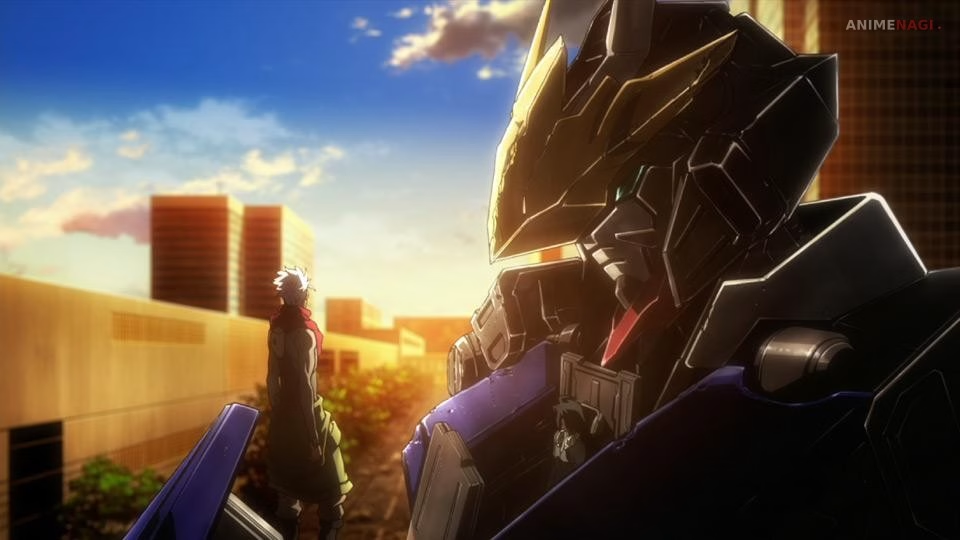
Among all mecha anime, Iron-Blooded Orphans is arguably the closest match to 86 in tone and themes. Both series focus on marginalized child soldiers forced into war by systems that view them as disposable. This shared premise creates an immediate emotional connection for viewers who appreciated 86’s portrayal of exploitation and survival.
The story follows Tekkadan, a group of young mercenaries fighting for independence in a corrupt interplanetary society. Much like the Spearhead Squadron, these characters develop deep bonds because they rely on each other to survive. Their relationships are not just emotional support systems but essential for staying alive in a world that constantly tries to break them.
What sets Iron-Blooded Orphans apart is its commitment to realism within a sci-fi setting. The mechs feel heavy, mechanical, and dangerous rather than flashy or exaggerated. Combat is brutal and often unforgiving, reinforcing the idea that every victory comes at a cost. This grounded approach mirrors the tone of 86, where battles emphasize tension and consequence over spectacle.
The emotional storytelling is equally powerful. Characters dream of freedom, dignity, and a better future, but the reality of their situation makes those dreams difficult to achieve. The series explores themes of loyalty, sacrifice, and the price of ambition, often leading to devastating outcomes.
For fans who connected with the emotional core of 86’s squad dynamics and its portrayal of systemic oppression, Iron-Blooded Orphans offers one of the most similar and impactful experiences available.
3. Code Geass
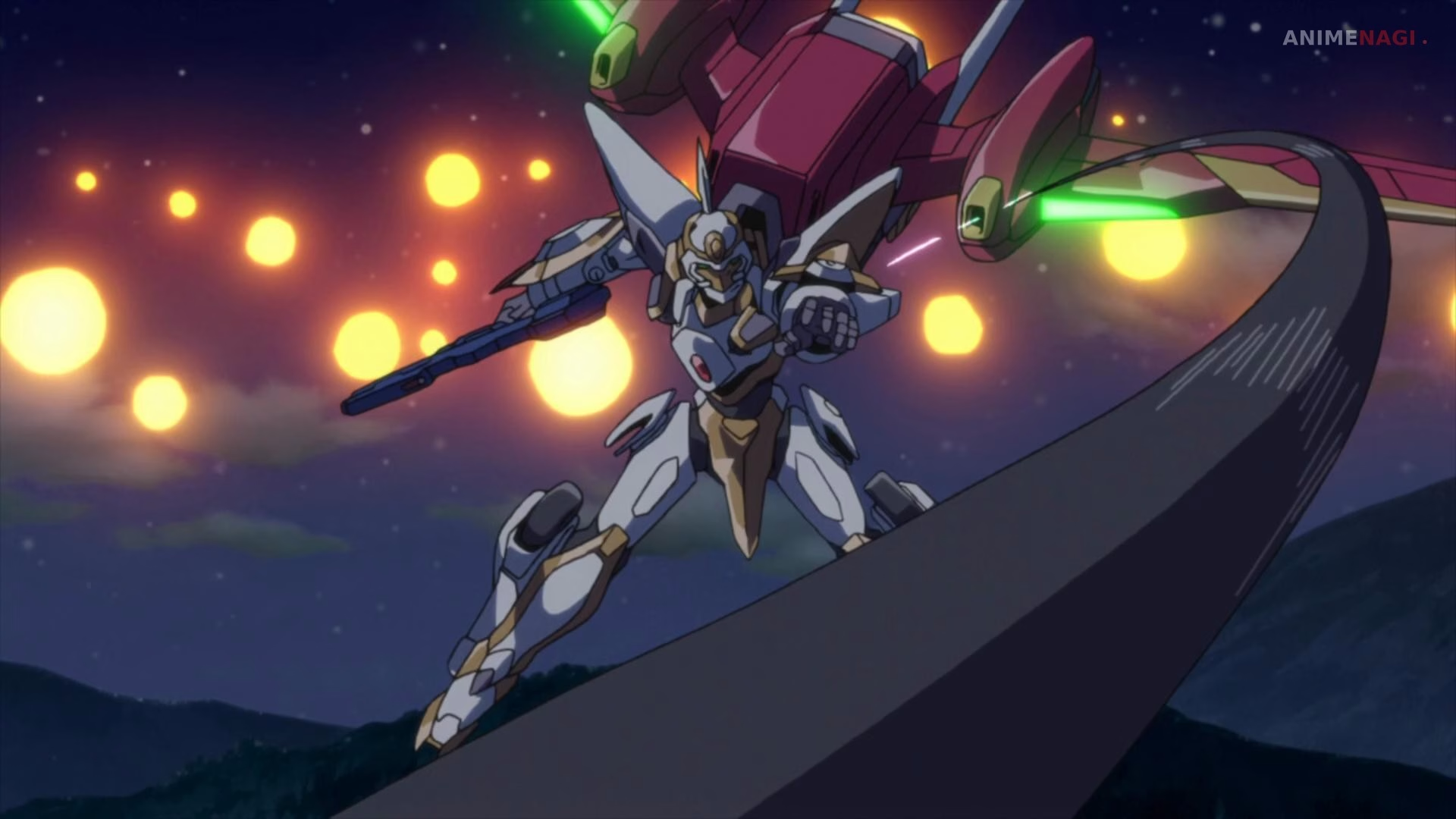
Code Geass approaches war from a more strategic and political perspective, but its thematic overlap with 86 is undeniable. Both series center on oppressed populations fighting against powerful regimes while questioning the morality of their actions. The conflict is not just physical but ideological, forcing characters to confront the consequences of their choices.
The story follows Lelouch vi Britannia, a strategist who leads a rebellion using both intellect and supernatural power. Like Lena in 86, Lelouch operates from a position of command, directing battles while grappling with the human cost of his decisions. This perspective highlights the disconnect between leadership and frontline suffering, a theme central to both series.
One of Code Geass’s greatest strengths is its morally complex narrative. Characters are constantly forced into situations where every option carries consequences. Victories often come with unintended damage, and even well-intentioned actions can lead to tragedy. This mirrors 86’s portrayal of war as a series of impossible choices rather than heroic triumphs.
The mecha battles in Code Geass are more tactical than purely action-driven. Strategy, deception, and psychological warfare play a major role in determining outcomes. This adds a layer of intellectual engagement that complements the emotional storytelling.
For viewers who appreciated the political intrigue and ethical dilemmas in 86, Code Geass delivers a compelling and thought-provoking experience that goes beyond traditional war narratives.
4. Vivy: Fluorite Eye’s Song
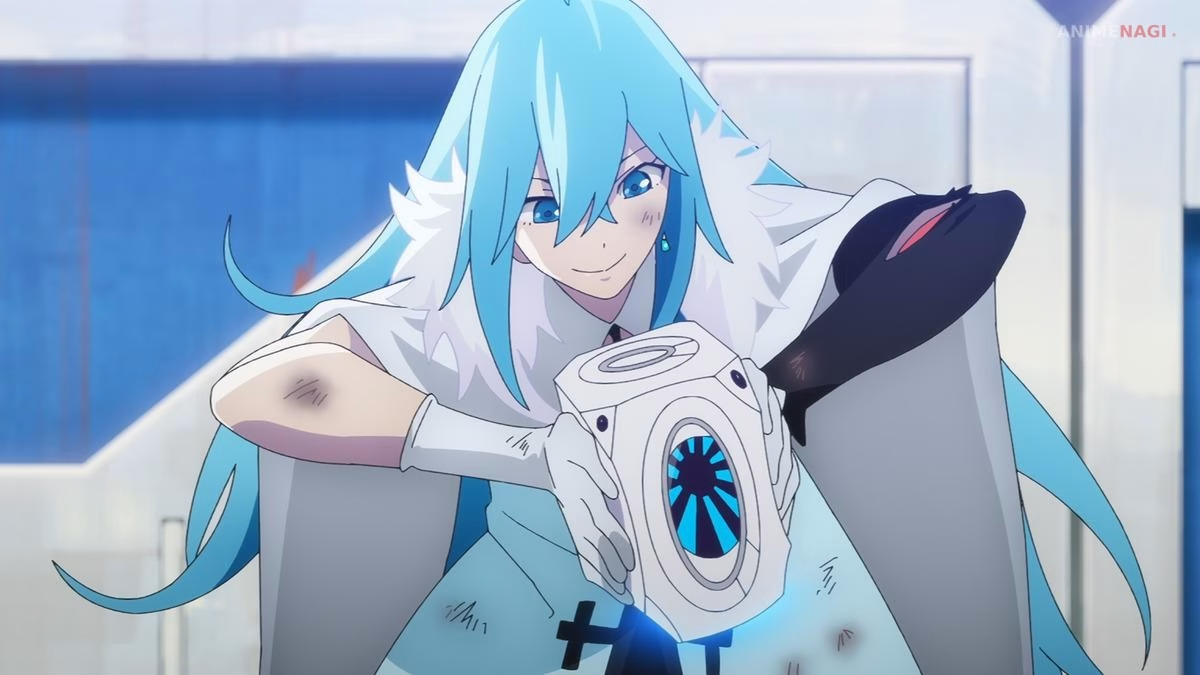
Vivy: Fluorite Eye’s Song may not be a traditional war anime, but it captures the emotional depth and existential themes that made 86 so impactful. The series explores identity, purpose, and the consequences of conflict through a time-spanning narrative involving artificial intelligence and humanity’s future.
The story follows Vivy, an AI tasked with preventing a catastrophic war between humans and machines. Like 86, the series examines what it means to exist in a world defined by conflict. Characters are repeatedly forced to make sacrifices, often questioning whether their actions truly lead to a better future.
What makes Vivy particularly compelling for 86 fans is its emotional storytelling. Each arc focuses on personal loss, memory, and the burden of responsibility. The series does not shy away from tragedy, using it to drive character growth and narrative progression. This creates a similar emotional resonance to 86’s most powerful moments.
Visually, Vivy stands out for its cinematic presentation and high-quality animation. Action scenes are intense and fluid, but they are always tied to emotional stakes rather than existing purely for spectacle. The music and atmosphere further enhance the melancholic tone, making each moment feel impactful.
For those who connected more with the emotional and philosophical aspects of 86, Vivy offers a deeply moving experience that explores similar themes through a different lens.
5. Darling in the Franxx
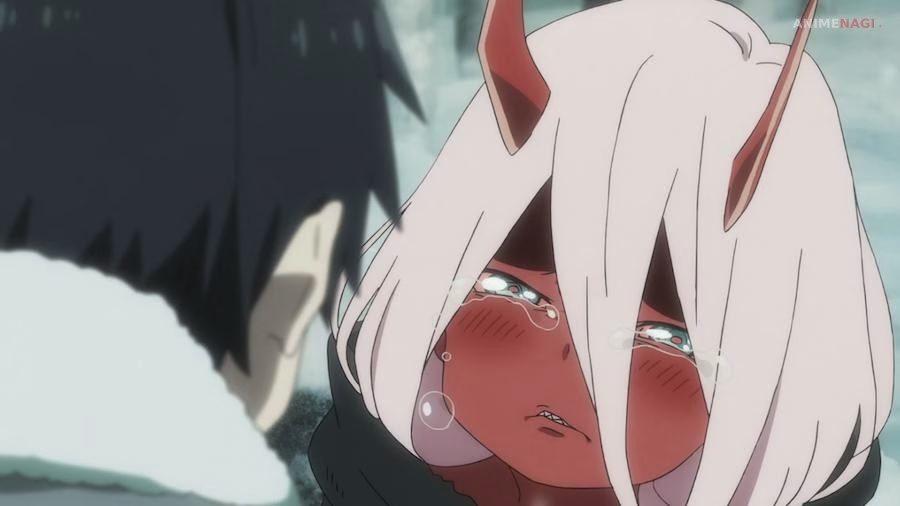
Darling in the Franxx shares several thematic similarities with 86, particularly in its portrayal of young soldiers living in a controlled, dystopian society. Both series depict characters who are isolated from the rest of humanity and forced into combat roles that define their existence. This setup creates a strong emotional foundation centered on identity and freedom.
The story follows a group of teenage pilots who operate mechs to defend humanity from mysterious enemies. Like the Eighty-Six, these characters are treated as tools rather than individuals. Their lives are tightly controlled by authority figures, and their value is determined solely by their ability to fight.
What sets Darling in the Franxx apart is its focus on interpersonal relationships and emotional vulnerability. The series places significant emphasis on connection, intimacy, and the search for meaning in a restrictive world. This aligns closely with 86’s exploration of human bonds formed under extreme circumstances.
The anime also explores themes of rebellion and self-discovery. Characters gradually question the systems controlling their lives, leading to conflicts that extend beyond physical battles. This narrative progression mirrors 86’s deeper commentary on societal structures and individual agency.
While the tone can be more symbolic and romantic compared to 86’s grounded realism, the emotional core remains similar. For viewers who enjoyed the character-driven aspects of 86 alongside its dystopian setting, Darling in the Franxx provides a compelling alternative.
Why These Anime Capture the Essence of 86 EIGHTY-SIX
What makes 86 EIGHTY-SIX so impactful is not just its setting but its approach to storytelling. It treats war as a human experience filled with pain, loss, and moral ambiguity. The anime listed above succeed because they share that same commitment to emotional realism and thematic depth.
Each series explores different aspects of what made 86 memorable. Attack on Titan emphasizes large-scale political conflict, Iron-Blooded Orphans focuses on marginalized soldiers, Code Geass highlights strategic warfare, Vivy explores emotional and philosophical questions, and Darling in the Franxx examines identity and relationships.
Together, they form a collection of anime that reflect the many layers of 86’s storytelling. While none of them replicate the experience exactly, each captures a piece of what made the series special.
Which Anime Should You Watch First?
Choosing where to start depends on what you valued most in 86 EIGHTY-SIX. If you were drawn to the war drama and political themes, Attack on Titan is the strongest choice. If the emotional bonds between soldiers resonated most, Iron-Blooded Orphans offers the closest match.
For viewers interested in strategy and moral dilemmas, Code Geass provides a compelling narrative. Those who prefer emotional storytelling over action should consider Vivy, while Darling in the Franxx works best for fans of character relationships within a dystopian setting.
No anime can fully replicate 86 because of how uniquely it blends genres and themes. However, these five series come closest to delivering the same emotional impact, making them essential recommendations for anyone looking to continue that experience.