One of the most unforgettable moments in Overlord came during the devastating clash between Ainz Ooal Gown and Gazef Stronoff in Season 3. While the series had already established Ainz as overwhelmingly powerful, his duel with Gazef completely changed how viewers understood the gap between Nazarick and the rest of the New World. The battle was not long, flashy, or evenly matched. In fact, it ended almost instantly. Yet that was precisely the point.
The fight happened immediately after the horrifying Massacre of Katze Plains, where Ainz wiped out tens of thousands of soldiers with a single spell. Even after witnessing that impossible level of destruction, Gazef still chose to challenge him directly. That decision transformed the duel from a simple battle into one of Overlord’s most emotionally powerful scenes.
The encounter revealed several important truths about both characters. It showed the terrifying scale of Ainz’s abilities, but it also highlighted Gazef’s honor, loyalty, and willingness to sacrifice himself for his kingdom. More importantly, the duel symbolized the moment humanity fully realized it could not compete with the Sorcerer King through normal means.
Let’s break down why Gazef challenged Ainz, how the duel unfolded, and why this scene remains one of Overlord’s defining moments.
Why Gazef Challenged Ainz Despite Knowing He Would Lose
By the time the duel happened, Gazef already understood that defeating Ainz was impossible. He had witnessed the Massacre of Katze Plains firsthand, including Ainz’s super-tier spell that annihilated around 70,000 soldiers and summoned monstrous Dark Young creatures onto the battlefield. According to the Overlord Wiki’s breakdown of the battle, even Gazef’s instincts told him survival was impossible. However, Gazef’s decision was never truly about victory.
Gazef Stronoff was the Warrior Captain of the Re-Estize Kingdom and one of the few genuinely honorable figures in the nation’s corrupt political system. Throughout the series, he consistently prioritized protecting civilians and defending the kingdom despite knowing its nobles were incompetent and divided. Reddit discussions analyzing the duel often point out that Gazef understood he was sacrificing himself from the beginning.
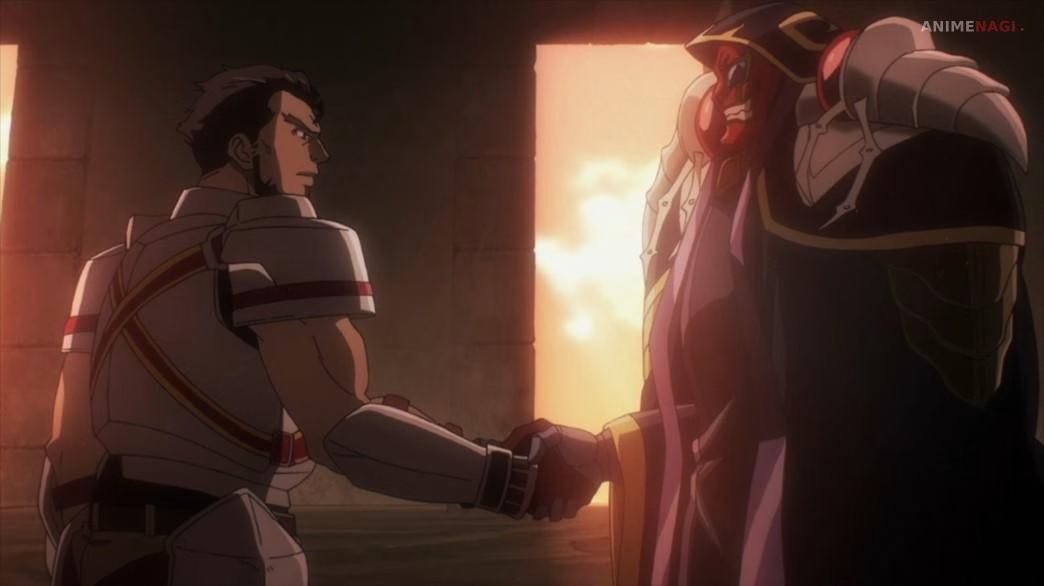
After the massacre, Ainz actually offered Gazef a chance to survive by joining Nazarick. For a brief moment, the scene almost looked like a possible turning point. Ainz respected Gazef more than most humans in the New World and recognized him as a rare warrior with genuine integrity. According to the character summary archived on the Overlord Wiki, Ainz even wanted to preserve Gazef’s body properly for resurrection magic after the duel.
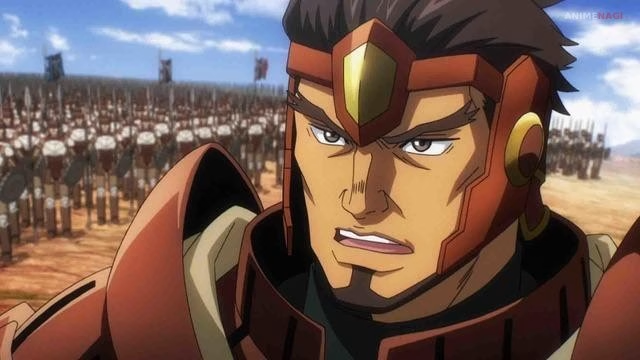
Gazef refused because accepting Nazarick’s offer would have meant betraying his kingdom. Even though he knew the kingdom was politically broken, his loyalty to King Ramposa and the people remained absolute. His final challenge was essentially an act of defiance against hopelessness itself.
The duel also reflected Gazef’s personal warrior code. He wanted to face Ainz directly rather than live with surrender or compromise. Brain Unglaus even begged to fight alongside him, but Gazef rejected the idea because he believed the battle had to remain honorable.
That choice is what made the scene tragic. Gazef was not ignorant of Ainz’s power. He fully understood the outcome and still stepped forward anyway.
The Massacre of Katze Plains Changed Overlord Forever
To understand why the duel mattered so much, it is important to understand the context surrounding it. Before facing Gazef, Ainz had already demonstrated power far beyond anything the New World had ever seen.
The Massacre of Katze Plains was the moment Overlord fully transitioned from political fantasy into overwhelming domination. According to official summaries from the Overlord Wiki, Ainz cast a super-tier spell that instantly killed tens of thousands of soldiers before summoning the terrifying Dark Young creatures.
The scale of destruction fundamentally altered the balance of power in the world. Until that moment, many kingdoms still believed Nazarick could potentially be challenged through alliances, armies, or strategy. The massacre destroyed that illusion instantly.
Gazef represented humanity’s strongest conventional warrior, and even he could barely comprehend what he witnessed. The battlefield became less about war and more about demonstrating absolute superiority. Ainz was not fighting a difficult battle. He was making a statement.
This is one reason the later duel feels so emotionally heavy. The audience already knows Gazef has no realistic chance. The tension comes entirely from watching how he responds to impossible circumstances.
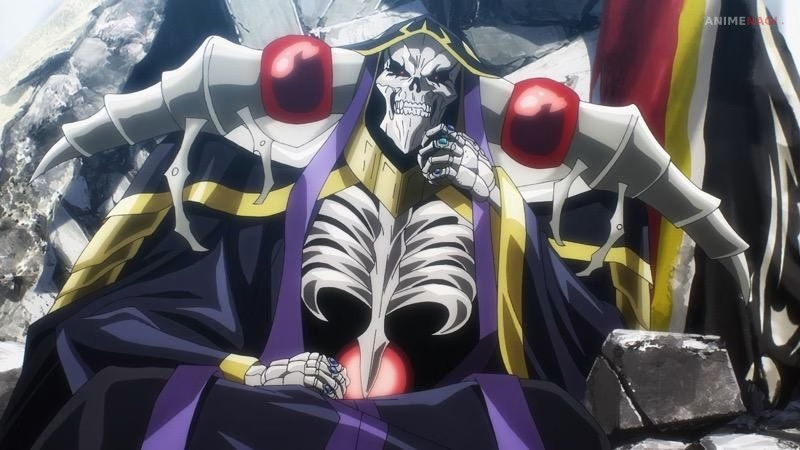
The massacre also revealed a darker side of Ainz’s evolution as a character. Earlier seasons occasionally portrayed him as uncertain or awkward in leadership situations. By Season 3, he had fully embraced the role of the Sorcerer King. His actions at Katze Plains showed how detached he had become from ordinary human morality.
At the same time, the series still allows glimpses of his former humanity through moments of respect toward warriors like Gazef. That contradiction makes Ainz far more interesting than a simple villain.
How Ainz Defeated Gazef Instantly
The duel itself is one of the shortest major fights in Overlord, but it remains one of the most memorable because of how brutally efficient it is.
Before the battle began, Ainz inspected Gazef’s sword, Razor Edge. According to the anime episode summary and multiple lore discussions, Ainz revealed that Razor Edge was one of the few weapons in the New World capable of bypassing his defensive immunities.
This moment was important because it briefly suggested Gazef might at least be able to injure Ainz under the right circumstances. However, the duel immediately shattered that possibility.
As soon as the fight started, Ainz cast a time-stop spell. Everything froze except him. Gazef never even realized what happened. During stopped time, Ainz calmly activated the high-tier instant death spell “True Death” before time resumed normally.
From Brain and Climb’s perspective, Gazef simply collapsed.
The scene perfectly illustrated the difference between New World warriors and YGGDRASIL players like Ainz. Gazef was operating within the limits of human combat skill, while Ainz possessed abilities built for high-level MMORPG warfare. Time manipulation, instant death magic, and resurrection negation were concepts completely outside normal human understanding.
What makes the scene especially chilling is Ainz’s composure. He does not mock Gazef or celebrate his victory. Instead, he treats the duel with respect and solemnity. According to the episode summary on the Overlord Wiki, Ainz honored Gazef’s request not to be resurrected and acknowledged that he died as a true warrior.
That respect actually makes the scene more unsettling. Ainz kills Gazef effortlessly, but he still views him as worthy of dignity. The combination of absolute power and detached courtesy defines much of Ainz’s personality throughout Overlord.
Why the Duel Was So Important for Brain and Climb
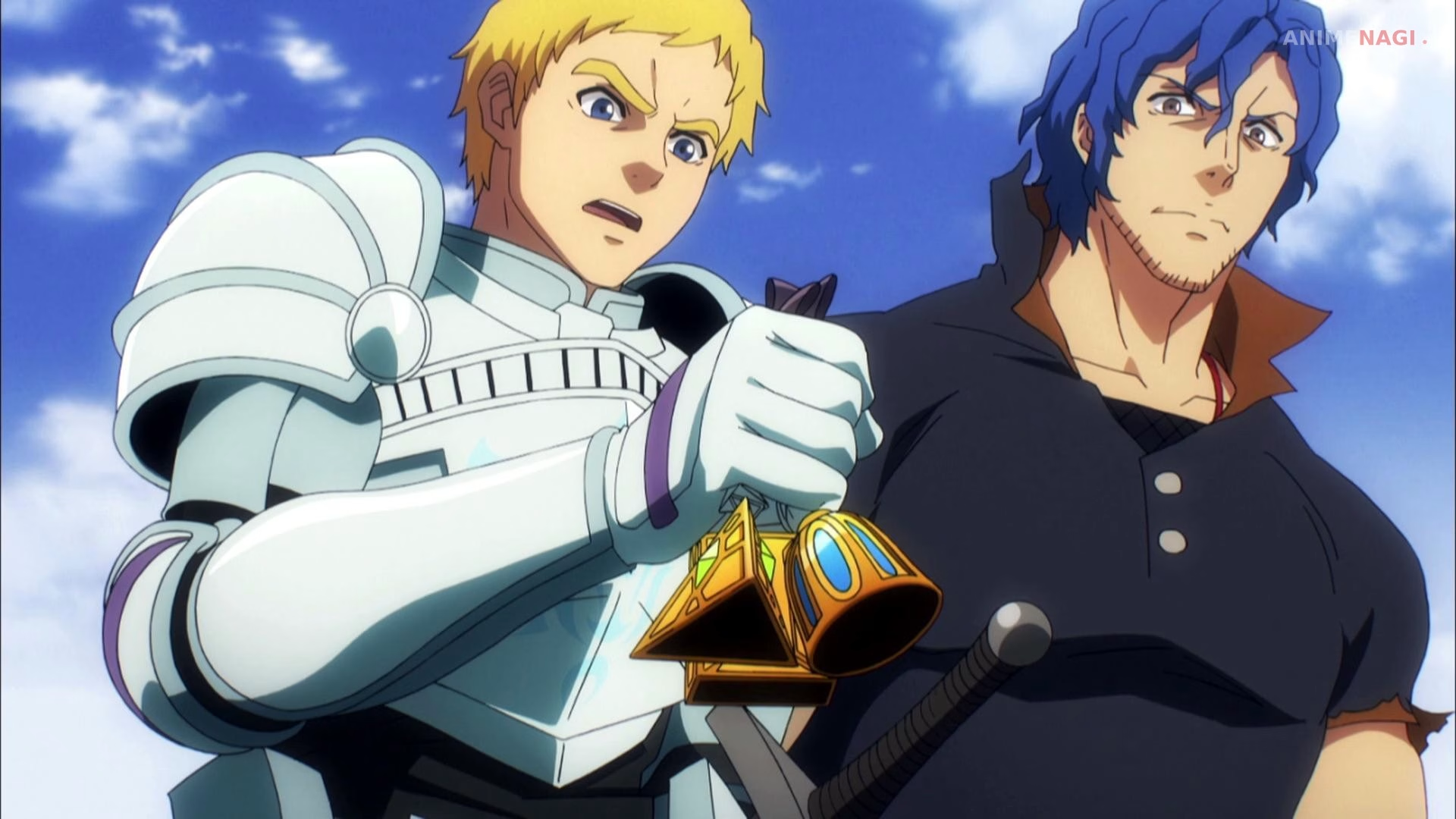
The duel also had major consequences for supporting characters like Brain Unglaus and Climb. For Brain, Gazef represented the ideal warrior he could never surpass. Earlier in the series, Brain was consumed by pride and obsession with strength, especially after his traumatic encounter with Shalltear. Watching Gazef willingly face certain death fundamentally changed Brain’s understanding of courage.
The scene becomes a turning point for Brian’s character arc because he finally recognizes that true strength is not only about power. It is also about conviction and sacrifice.
Climb experiences something similar. Throughout the series, Climb constantly struggles with feelings of inadequacy compared to elite warriors like Gazef. Witnessing Gazef’s final stand reinforces his determination to protect Princess Renner regardless of his limitations.
The duel, therefore, works on multiple narrative levels simultaneously. It demonstrates Ainz’s overwhelming superiority while also inspiring growth in the remaining human characters.
What Ainz vs Gazef Revealed About Overlord’s Themes
Ainz vs Gazef was not designed as a traditional anime showdown where the underdog somehow pushes the stronger opponent to their limit. Instead, the duel reinforced Overlord’s core themes about power imbalance, morality, and inevitability.
Gazef represented the peak of humanity within the New World. He was brave, loyal, disciplined, and honorable. Yet none of those qualities mattered against Nazarick’s overwhelming power. That contrast is central to Overlord’s darker fantasy storytelling.
The duel also showed how far Ainz had evolved from his original identity as Momonga. Although traces of empathy still remain, he increasingly views the world through the logic of Nazarick rather than ordinary humanity. His respectful treatment of Gazef does not change the fact that he killed him effortlessly as part of a larger conquest.
More importantly, the battle revealed that Overlord is not truly a story about defeating evil through friendship or determination. It is a story about what happens when an unstoppable force enters a world completely unprepared for it.
Gazef’s final stand remains memorable precisely because it was hopeless. He challenged Ainz not because he believed he could win, but because his principles would not allow him to do anything else. That unwavering resolve gave emotional weight to a battle decided before it even began.
Another layer that makes the Ainz vs Gazef duel so impactful is how it redefines tension in Overlord. Instead of relying on uncertainty about who will win, the series builds tension through inevitability. Viewers know Gazef cannot defeat Ainz, yet the emotional weight comes from watching how he chooses to face that reality.
This approach separates Overlord from typical battle anime, where outcomes are often unpredictable. Here, the focus shifts to character decisions rather than combat mechanics. Gazef’s final stand becomes less about fighting and more about identity, legacy, and honor, making the scene resonate long after the battle itself ends.