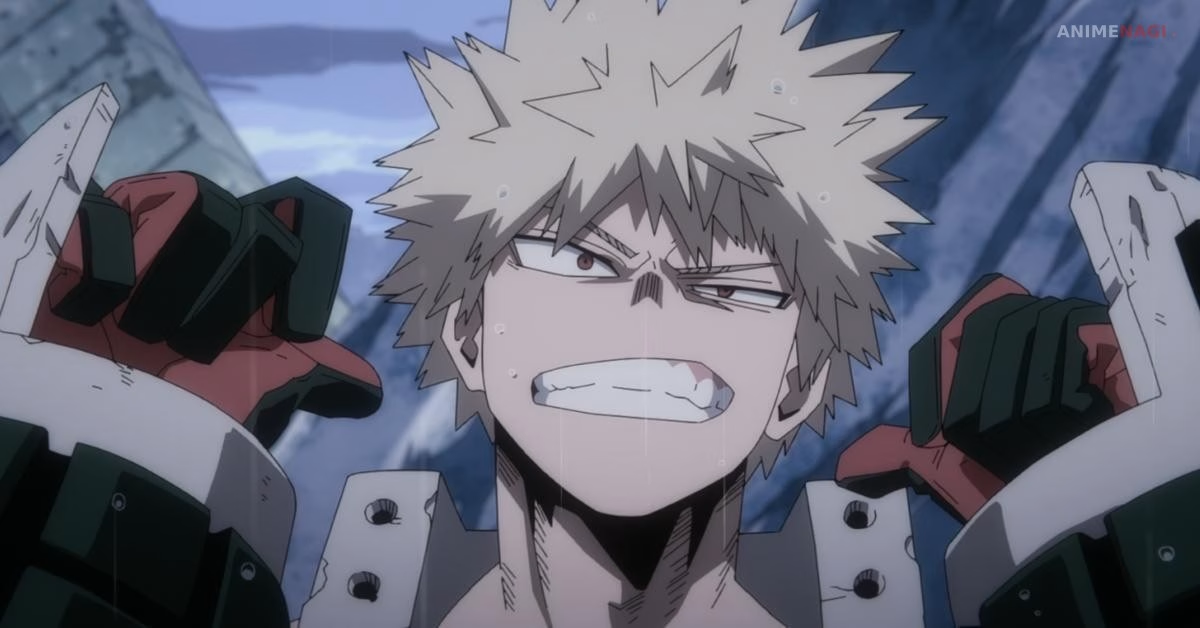
Katsuki Bakugo’s “perfect victory” during the Joint Training Arc became one of the most important moments in My Hero Academia because it completely changed how both characters and viewers saw him as a future hero. Before this battle, Bakugo was already recognized as one of Class 1-A’s strongest fighters, but he still carried a reputation for arrogance, aggression, and poor teamwork. Many students believed his explosive personality would eventually become a weakness in professional hero work.
However, Match 4 of the Joint Training exercise proved the opposite. Bakugo not only defeated Class 1-B decisively, but he also achieved exactly what he promised before the fight: a flawless 4-0 victory without losing a single teammate. According to the Joint Training Battle summaries, Bakugo specifically declared that a true victory meant winning without casualties or unnecessary damage.
What made the match especially impressive was how efficiently Bakugo combined overwhelming offense with tactical teamwork. Instead of charging recklessly into battle like he might have earlier in the series, he coordinated constantly with his teammates while protecting them throughout the fight. This battle ultimately became one of the clearest signs that Bakugo was evolving into a complete hero rather than simply a powerful fighter.
Let’s break down how Bakugo achieved his perfect victory, why Class 1-B could not stop his strategy, and what this battle revealed about his character growth.
Who Was on Bakugo’s Team and Why It Worked So Well
Bakugo’s team during Match 4 consisted of Katsuki Bakugo, Kyoka Jiro, Hanta Sero, and Rikido Sato. On paper, many viewers initially assumed Bakugo would dominate the match individually while the others simply supported him. Instead, the battle quickly revealed that the team’s coordination was the real reason for their success.
Each member filled a specific tactical role. Jiro handled reconnaissance using her Earphone Jack Quirk to track enemy movements and identify hidden opponents. Sero provided mobility and restraint support with his tape abilities, while Sato functioned as the team’s close-range power backup whenever direct combat became necessary.
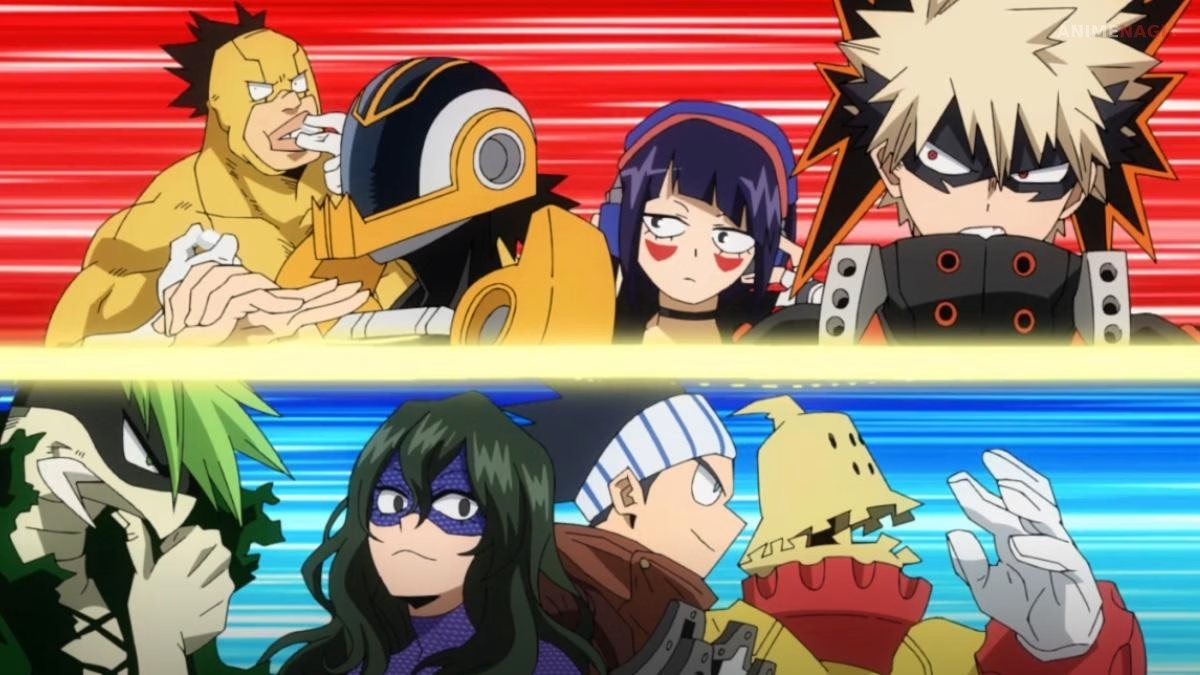
Bakugo tied the entire strategy together through rapid decision-making and battlefield awareness. Rather than ignoring his teammates, he constantly communicated with them while reacting instantly whenever they faced danger. This created a highly efficient combat flow where every member contributed meaningfully.
The teamwork surprised both Class 1-B and the teachers watching the exercise. Even All Might struggled to believe how smoothly Bakugo operated within the group.
Why Bakugo’s “Perfect Victory” Was Different From His Old Fighting Style
Earlier in My Hero Academia, Bakugo often fought with an extremely aggressive and individualistic mindset. While he respected strength and skill, he frequently viewed teamwork as something secondary to personal dominance. This attitude caused problems during previous exercises and contributed to his rivalry with Izuku Midoriya.
The Joint Training Arc shows how much Bakugo changed after experiences like the Kamino incident and his second fight with Deku.
Before Match 4 begins, Bakugo explicitly states that he wants total victory without sacrifices. He refuses to accept a win where teammates are injured or captured because, in his view, the strongest hero should protect everyone while still defeating the enemy completely. This philosophy marks a huge shift in his mindset.
Instead of focusing purely on proving his superiority, Bakugo now prioritizes efficiency, teamwork, and responsibility. He still retains his aggressive personality, but his actions during the battle show far greater maturity than before. He trusts his teammates completely and expects them to trust him equally. That balance between confidence and teamwork becomes the foundation of his perfect victory.
How Class 1-B Planned to Defeat Bakugo
Class 1-B entered the match with a strong strategy specifically designed to counter Bakugo’s aggressive fighting style. Their team consisted of Setsuna Tokage, Yosetsu Awase, Togaru Kamakiri, and Manga Fukidashi.
Setsuna, one of U.A.’s recommended students, planned to divide Bakugo’s team and exploit his supposed inability to cooperate. Her Lizard Tail Splitter Quirk allowed her body parts to separate independently, giving her excellent scouting and harassment capabilities. Meanwhile, Awase attempted to trap opponents using his Weld Quirk while Kamakiri pressured enemies with aggressive close-range attacks. The strategy itself was intelligent.
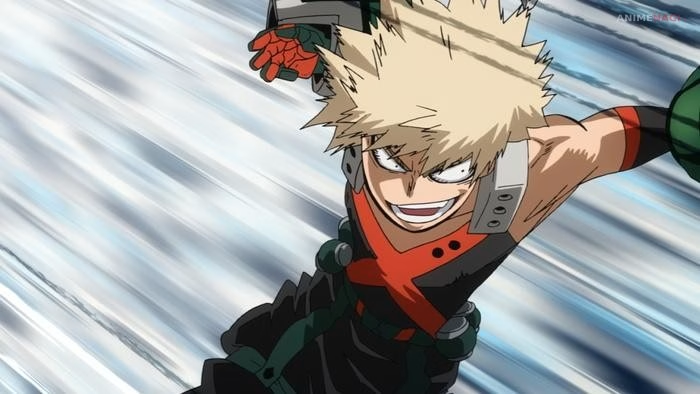
Class 1-B assumed Bakugo would eventually rush ahead recklessly, creating openings they could exploit by isolating his teammates. According to post-battle analysis from the Joint Training Arc, Setsuna specifically expected Bakugo’s arrogance to become his downfall. However, Bakugo completely disrupted these expectations by refusing to abandon his teammates at any point during the match.
How Bakugo Protected His Team Throughout the Match
One of the most important reasons Bakugo achieved a flawless victory was that he constantly prioritized teammate safety alongside offense. Whenever Class 1-B attempted ambushes or surprise attacks, Bakugo responded immediately instead of focusing solely on chasing opponents.
A major example occurs when Jiro faces danger during the battle. Instead of continuing his own attack, Bakugo instantly changes direction and rescues her without hesitation. This moment shocks both his enemies and his classmates because earlier versions of Bakugo might have ignored support responsibilities entirely. Bakugo also trusts his teammates more than ever before.
Rather than micromanaging every movement, he allows Jiro, Sero, and Sato to operate independently while coordinating naturally with them. This trust creates much smoother teamwork and prevents Class 1-B from isolating anyone successfully.
The battle demonstrates that Bakugo finally understands a core aspect of heroism. Winning alone is not enough. A true hero must protect allies while securing victory simultaneously.
Why Bakugo’s Speed and Decision-Making Overwhelmed Class 1-B
Bakugo’s combat speed became one of Class 1-B’s biggest problems during the match. His Explosion Quirk allows him to maneuver through the battlefield at extremely high speeds while attacking from multiple angles. Earlier arcs already established Bakugo as one of the fastest students in close combat, but Match 4 reveals how much more refined his movements have become.
More importantly, Bakugo combines this speed with exceptional tactical awareness. Whenever Class 1-B attempts regrouping or surprise attacks, Bakugo reacts almost instantly and shifts strategy accordingly. He does not waste movement or attacks unnecessarily. Every action contributes toward either protecting teammates or capturing opponents. This efficiency overwhelms Class 1-B’s planning.
Even though Setsuna’s team prepared carefully for the match, Bakugo’s improved teamwork and rapid decision-making prevent them from controlling the pace of the battle. Instead of reacting emotionally, Bakugo remains focused entirely on achieving his promised flawless victory. That composure becomes just as important as his firepower.
The battle ends with Class 1-A achieving a complete 4-0 victory without losing any teammates. According to the Joint Training Battle recap, the match becomes the fastest and most decisive win of the entire exercise. Bakugo successfully fulfills every condition he established before the fight.
Not only does his team capture every opponent, but they also avoid serious injuries or tactical mistakes throughout the match. This level of efficiency impresses even teachers like Aizawa and All Might, who both recognize how dramatically Bakugo has matured.
Class 1-B is especially amazed because their strategy depended entirely on Bakugo behaving selfishly. Once he demonstrates genuine teamwork, their assumptions collapse completely. The flawless victory, therefore, becomes more than just a combat achievement. It symbolizes Bakugo overcoming one of his greatest personal weaknesses.