Japan’s manga industry is one of the most competitive entertainment markets in the world. Every year, thousands of manga series compete for reader attention across magazines, digital platforms, bookstores, and anime adaptations. Yet only a small number manage to become true best-selling phenomena capable of selling millions of copies and shaping pop culture nationwide. Series like Kaguya-sama: Love Is War stand out because they succeeded in ways that went beyond simple popularity.
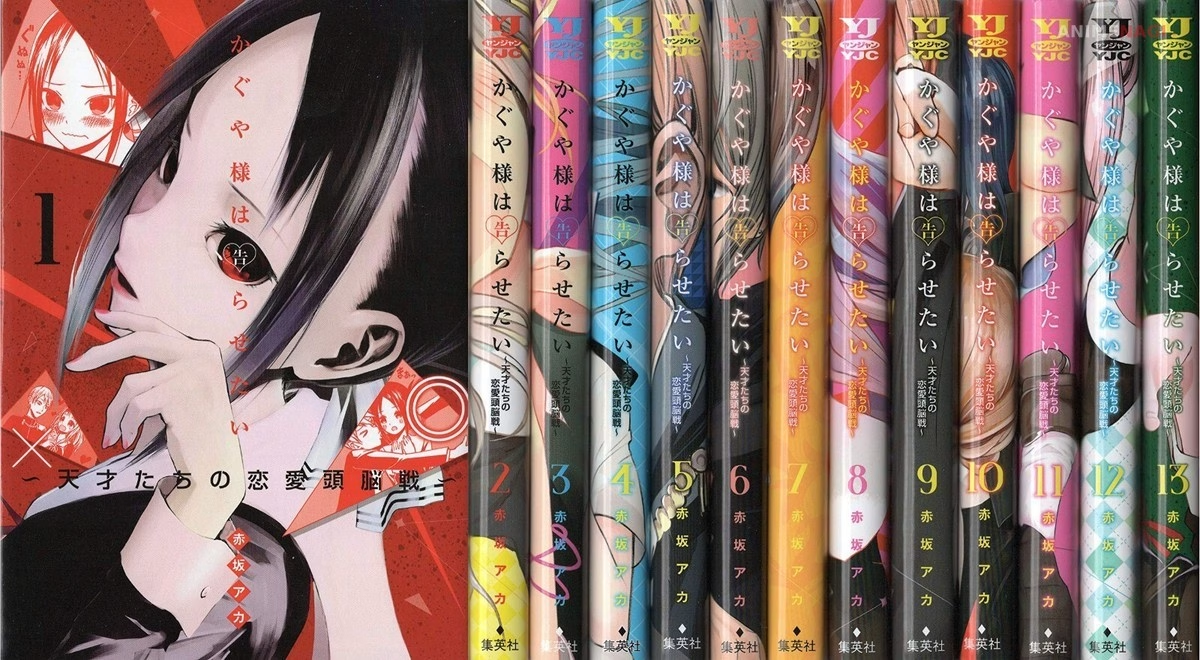
While action-heavy franchises like One Piece and Jujutsu Kaisen dominate headlines with massive sales numbers, romance-comedy manga like Kaguya-sama proved that strong character writing and emotional storytelling can compete at the highest level as well. According to sales data and circulation reports, Kaguya-sama surpassed 22 million copies in circulation worldwide by the end of 2022, making it one of the most successful romantic comedy manga of its era.
The success of these manga is not random. Their rise usually comes from a combination of storytelling quality, anime adaptation timing, market trends, fan engagement, and emotional connection with readers. Understanding why these series become massive hits reveals a lot about how modern manga success works in Japan.
Why Manga Sales Matter So Much in Japan
Manga sales are treated very seriously in Japan because they directly reflect long-term audience engagement. Unlike streaming popularity or short-term social media trends, manga sales show whether readers are consistently investing money and time into a series over multiple years. High sales often lead to anime adaptations, merchandise, movies, collaborations, and broader media expansion.
Publications like Oricon track manga sales closely, and rankings are widely discussed among fans and publishers. A successful manga can dramatically increase the reputation of both its creator and its publishing magazine. This is especially important in highly competitive magazines like Weekly Shonen Jump and Weekly Young Jump, where serialization survival often depends on popularity.
The best-selling manga in Japan also tends to influence broader entertainment trends. Successful series shape anime production decisions, merchandising strategies, and even storytelling trends across the industry. That influence is why manga sales numbers are often viewed as a measure of cultural impact rather than just commercial success.
Because of this environment, becoming a best-selling manga in Japan requires more than simply having a good premise. A series must maintain reader interest consistently while adapting to changing audience expectations over time.
Why Kaguya-sama Became Such a Massive Hit
Kaguya-sama: Love Is War succeeded because it combined romantic comedy with surprisingly strong psychological and emotional storytelling. At first glance, the series appears to follow a simple premise where two elite students try to force each other into confessing love first. However, creator Aka Akasaka turned that concept into a layered character-driven story filled with comedy, emotional vulnerability, and sharp dialogue.
One of the biggest reasons the series connected with readers was its character writing. Characters like Kaguya Shinomiya and Miyuki Shirogane evolved naturally over time instead of remaining locked in repetitive romantic comedy tropes. Supporting characters such as Chika Fujiwara, Yu Ishigami, and Miko Iino also became extremely popular because of their distinct personalities and emotional depth.
The anime adaptation played a huge role in boosting sales as well. Produced by A-1 Pictures, the anime amplified the manga’s humor through fast-paced editing, strong voice acting, and memorable narration. Following the anime’s success, manga circulation numbers rose rapidly, eventually surpassing 22 million copies worldwide.
What made Kaguya-sama especially impressive was that it achieved this success in the romantic comedy genre, which traditionally sells less aggressively than battle-focused shonen manga.
Anime Adaptations Often Transform Manga Sales

One of the clearest patterns in the manga industry is the “anime boost” effect. When a manga receives a successful anime adaptation, sales often increase dramatically because the anime introduces the story to a much larger audience. This trend has become even more powerful in the streaming era, where global platforms expose anime to international viewers instantly.
Kaguya-sama benefited heavily from this effect, but it is far from the only example. Series like Oshi no Ko experienced massive sales jumps after their anime adaptations became popular online. According to manga sales reports discussed by industry coverage, Oshi no Ko gained millions of additional sales after its anime release in 2023.
The reason anime boosts work so effectively is because they create emotional attachment quickly. Viewers who become invested in characters often turn to the manga to continue the story ahead of the anime adaptation. This creates a cycle where anime popularity drives manga sales, which then increases franchise visibility further.
However, anime alone is not enough to sustain long-term success. Many manga receive temporary boosts but fail to maintain momentum afterward. The biggest hits usually combine strong anime adaptations with storytelling capable of keeping readers invested long after the anime season ends.
Character-Driven Stories Often Build Stronger Fanbases
One major reason series like Kaguya-sama become massive hits is because they focus heavily on character attachment rather than just plot twists. Readers are more likely to buy volumes consistently when they feel emotionally invested in the cast. This is especially important for long-running manga where maintaining reader loyalty over several years becomes difficult.
Kaguya-sama excelled in this area because it balanced comedy with emotional progression. The relationships evolved naturally, and characters matured over time instead of remaining static for the sake of endless serialization. This emotional growth encouraged fans to stay invested throughout the manga’s entire run.
Many other best-selling manga follow a similar pattern. Slam Dunk became legendary not just because of basketball matches, but because readers connected deeply with characters like Hanamichi Sakuragi and Kaede Rukawa. Gintama similarly built a loyal fanbase through emotional storytelling hidden beneath comedy.

Strong character writing also helps manga generate active fan communities online. Discussions, memes, fan art, and social media engagement all contribute to maintaining visibility between volume releases.
Why Genre Diversity Matters in Modern Manga Success
Another important trend in Japan’s manga market is the increasing success of diverse genres. While battle shonen manga still dominate sales, audiences are supporting a wider variety of stories than before. Romantic comedies, sports manga, psychological thrillers, and slice-of-life series are all capable of becoming major commercial hits.
Kaguya-sama’s success demonstrated that romance-comedy manga could compete alongside larger action franchises. Fans on online forums often praised the series for elevating the rom-com genre through strong character development and emotionally satisfying storytelling.
This genre diversity reflects changing audience habits. Modern manga readers are consuming stories across multiple demographics and genres rather than limiting themselves strictly to traditional categories like shonen or shojo. Streaming services and digital manga platforms have also made niche genres more accessible globally.
As a result, modern best-selling manga often succeed by standing out emotionally or stylistically rather than simply copying existing trends.