Black Clover has built a reputation as one of the most debated modern shonen anime, often criticized early on but steadily winning over audiences with its consistency and payoff. Adapted from the manga by Yuki Tabata, the series follows Asta, a magicless boy in a world where magic defines status, as he aims to become the Wizard King.
At first glance, Black Clover feels familiar, drawing inspiration from genre staples like Naruto and Bleach. However, what sets it apart is its execution. The show embraces classic tropes but accelerates them with relentless pacing, constant battles, and rapid character progression.
While it struggles with early presentation issues, particularly its loud protagonist and uneven animation, Black Clover evolves into a highly engaging experience. Let’s break down why this anime has become a fan favorite and whether it truly deserves its growing reputation.
A Classic Underdog Story With Relentless Energy
At its core, Black Clover is a story about perseverance. Asta, born without magic in the Clover Kingdom, refuses to accept his limitations. Instead of relying on innate talent, he builds his strength through physical training and sheer determination.
This underdog narrative is not new, but Black Clover distinguishes itself through pacing. Unlike many long-running shonen, it wastes little time on prolonged setup. Major arcs begin quickly, conflicts escalate fast, and resolutions come with immediate consequences.
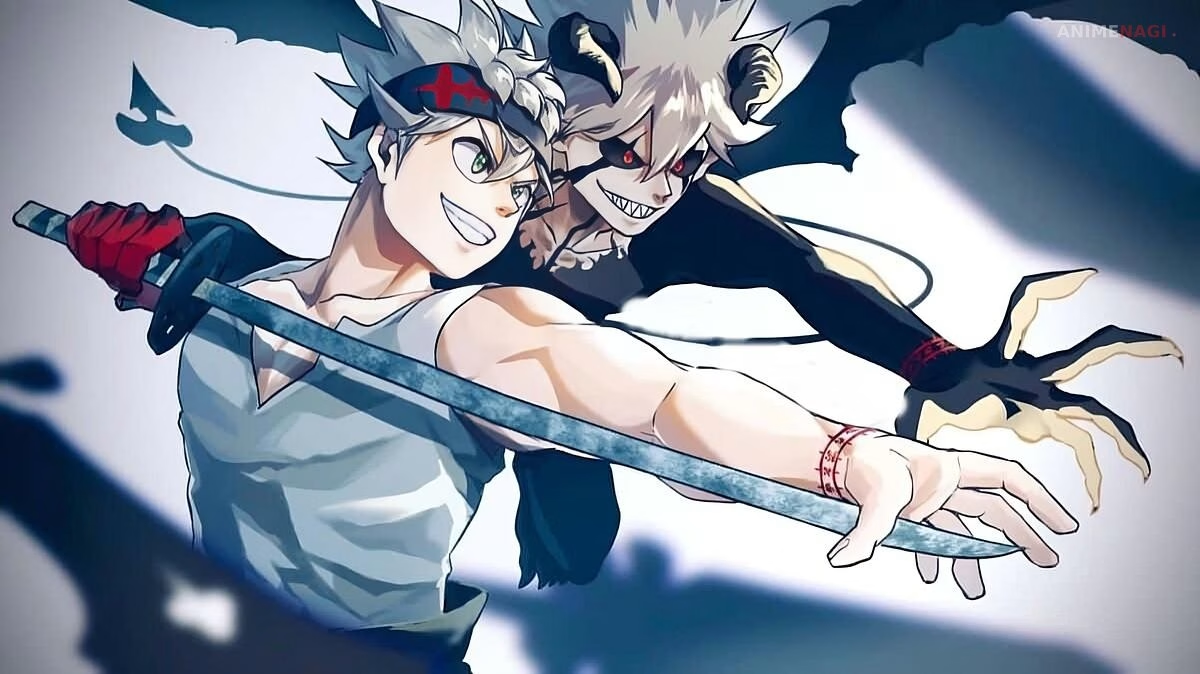
Asta’s rivalry with Yuno adds emotional depth to the story. While Yuno is naturally gifted and calm, Asta is loud and relentless. Their dynamic avoids typical rivalry toxicity, instead focusing on mutual respect and motivation.
This constant forward momentum keeps the series engaging. Even when arcs follow familiar structures, the speed and intensity make them feel fresh. The show rarely lingers, ensuring that there is always something at stake.
Asta’s Character Growth and Emotional Core
Asta is one of the most polarizing protagonists in anime. Early in the series, his loud personality can be overwhelming, often turning new viewers away. However, those who stick with the show are rewarded with significant character growth.
Asta’s journey is defined by effort rather than talent. His anti-magic abilities, granted through a mysterious grimoire, level the playing field but never make things easy. Every victory feels earned, reinforcing the theme of hard work over natural ability.
As the series progresses, Asta becomes more composed without losing his core optimism. His relationships with teammates, especially within the Black Bulls, add emotional weight to his character. He is not just fighting for himself but for those who believe in him.
This emotional grounding is what ultimately elevates Asta beyond typical shonen protagonists. He represents resilience in its purest form, making his victories deeply satisfying.
The Black Bulls and a Strong Supporting Cast
One of Black Clover’s biggest strengths lies in its ensemble cast. The Black Bulls squad, led by Yami Sukehiro, is filled with misfits who gradually reveal their strengths and backstories.
Characters like Noelle Silva undergo meaningful development. Initially struggling with her magic control, Noelle grows into one of the most powerful and emotionally complex characters in the series. Her arc balances personal insecurity with royal expectations, creating a compelling narrative.
Other members, such as Luck, Magna, and Vanessa, each receive moments to shine. The series takes time to explore their pasts, turning what could have been one-note characters into fully realized individuals.

This focus on teamwork sets Black Clover apart from many shonen series that prioritize the main character above all else. Battles often rely on coordination and strategy, emphasizing the importance of unity.
Magic System and High-Intensity Battles
The magic system in Black Clover is both accessible and versatile. Each character’s abilities are tied to their grimoire, allowing for a wide range of spells and combat styles. This creates visually diverse battles that keep the action fresh.
What makes the fights stand out is their choreography and scale. Battles are fast-paced, often combining multiple characters’ abilities to overcome stronger opponents. The emphasis on teamwork enhances the excitement, as victories rarely come from a single overpowering move.
Key moments, such as Noelle’s Valkyrie Armor transformation and Yami’s Dimension Slash, highlight the series’ ability to deliver memorable action sequences. These scenes are not just visually impressive but also emotionally charged, reflecting character growth.
However, the animation quality can be inconsistent. While major fights are handled with care, some episodes feature noticeable drops in detail. Despite this, the overall impact of the battles remains strong due to their creativity and intensity.
Story Arcs and Pacing Strengths
Black Clover thrives on its arc-based storytelling. From the Dungeon Exploration arc to the Elf Reincarnation arc and beyond, each storyline builds upon the previous one, gradually expanding the world.
The Elf Reincarnation arc, in particular, stands out as a turning point. It combines large-scale conflict with emotional storytelling, revealing deeper layers of the series’ lore. This arc showcases the anime’s ability to balance action with narrative depth.
The pacing remains one of the show’s biggest advantages. Unlike many long-running anime that rely on filler, Black Clover maintains a steady progression. Even slower moments contribute to character development or future plot points.
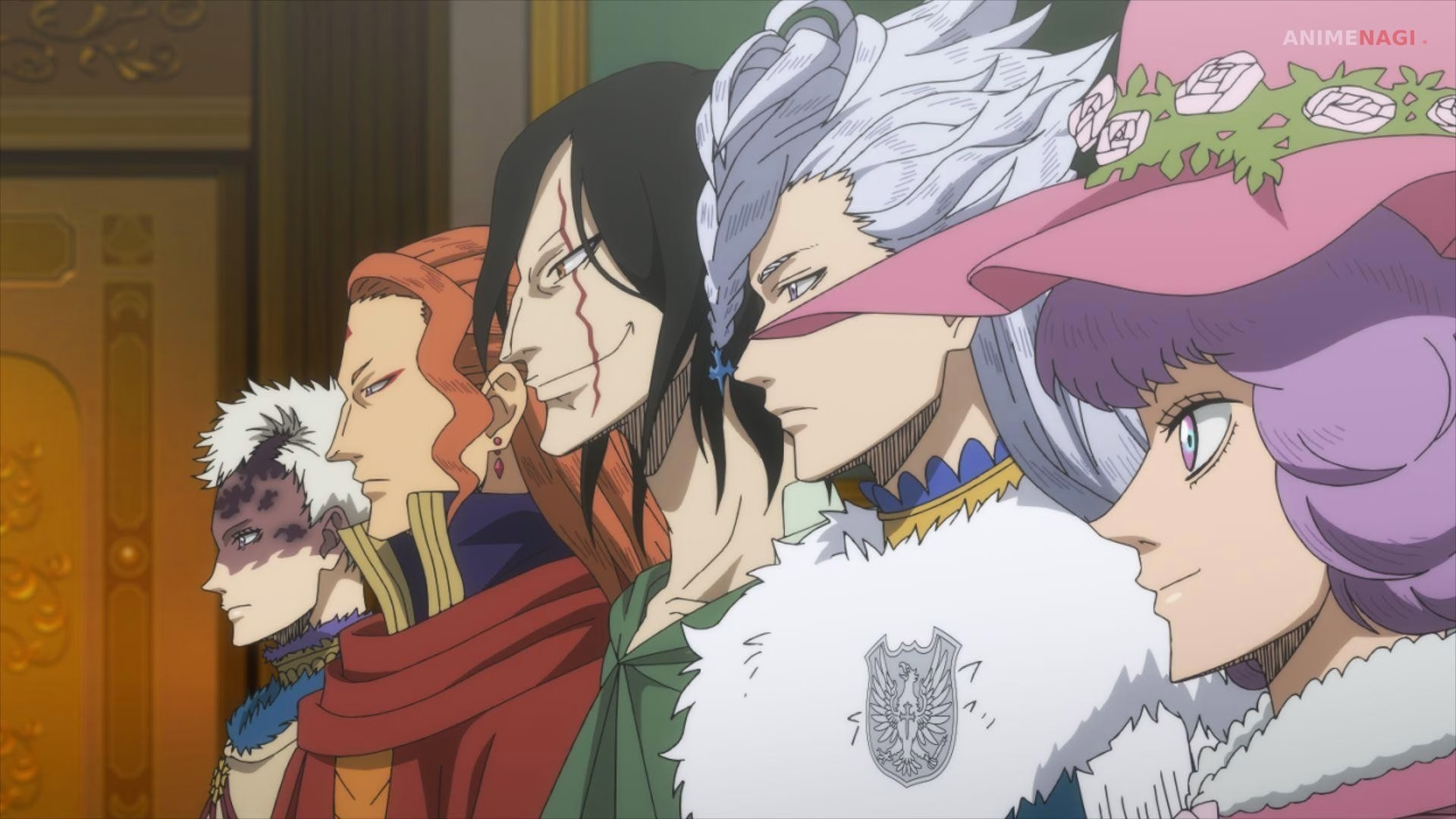
This efficiency makes it easier for viewers to stay invested. The story consistently moves forward, ensuring that there is always a sense of progression.
Animation, Sound, and Production Quality
Produced by Studio Pierrot, Black Clover delivers a mixed visual experience. Early episodes suffer from limited animation and repetitive sequences, which can be off-putting.
However, the quality improves significantly during major arcs. Key battles receive higher production value, with fluid animation and dynamic camera work. This inconsistency is noticeable but does not overshadow the overall experience.
The soundtrack and openings are consistently strong. Many of the series’ openings have become fan favorites, adding energy and emotional resonance to the story. The music plays a crucial role in elevating both action scenes and dramatic moments.
Voice acting is another highlight, particularly in the Japanese version. Asta’s voice, while divisive at first, becomes more controlled over time, enhancing the character’s development.
Should you watch it?
Black Clover is a testament to the power of persistence, both in its narrative and its execution. It starts off rough, with issues in presentation and character reception, but gradually transforms into a highly engaging and rewarding anime.
Its strengths lie in its fast-paced storytelling, strong character development, and creative battles. The series embraces shonen tropes while refining them, delivering a familiar yet compelling experience.
While it is not without flaws, particularly in animation consistency, the overall package is more than satisfying. For viewers willing to push past the initial hurdles, Black Clover offers a journey filled with growth, intensity, and emotional payoff.
Black Clover may not reinvent the shonen genre, but it perfects many of its core elements. It is an anime that proves consistency and character growth can turn a simple story into something truly memorable.