The return of Classroom of the Elite with Season 2 was one of the most anticipated anime comebacks in recent years. After a long hiatus following Season 1, fans were eager to see how the story of Kiyotaka Ayanokoji and the cutthroat Advanced Nurturing High School would evolve. Season 2 wastes no time looking deeper into psychological warfare, social manipulation, and the hidden motives of its characters.
Unlike its relatively grounded first season, this installment leans heavily into high-stakes mind games and moral ambiguity. It expands the scope of conflicts between classes while also sharpening its focus on individual rivalries. At the same time, the season sparked mixed reactions due to pacing issues and adaptation choices. Let’s break down whether Classroom of the Elite Season 2 lives up to expectations or falls short of its potential.
A More Intense and Strategic Narrative
Season 2 picks up with a stronger emphasis on strategy, pushing students into increasingly complex challenges where intellect matters more than brute force. The anime adapts the Cruise Ship Test and Paper Shuffle arcs, both of which rely heavily on deception, alliances, and psychological pressure.
The Cruise Ship Test, in particular, sets the tone for the season by showcasing how easily trust can be manipulated. Students are forced into groups with hidden roles, creating a tension-filled environment where every interaction carries weight. This arc highlights the brilliance of Ayanokoji’s analytical mind while also exposing cracks in other characters’ strategies.

The Paper Shuffle arc further escalates the stakes by shifting focus to academic warfare. Here, the tension comes from preparation, betrayal, and anticipation rather than direct confrontation. It shows how intelligence in this world is not just about solving problems but about predicting others’ moves before they even act.
This layered storytelling is one of Season 2’s biggest strengths. It trusts the audience to follow intricate plans without over-explaining them, making the payoff feel more satisfying when everything clicks into place.
Ayanokoji’s Evolution as a Protagonist
At the center of the narrative is Kiyotaka Ayanokoji, whose character undergoes subtle yet significant development. While he remains outwardly calm and detached, Season 2 peels back layers to reveal a more calculated and, at times, ruthless side.
Unlike typical protagonists, Ayanokoji is not driven by friendship or justice. His motivations are rooted in control and survival, making him unpredictable and compelling. The season gradually reveals glimpses of his past, hinting at the “White Room” and the intense training that shaped his personality.
The rooftop confrontation with Kakeru Ryuen stands out as one of the most defining moments of the season. It is here that Ayanokoji fully embraces his darker nature, delivering a chilling display of dominance. This scene redefines him not just as a strategist but as someone capable of crossing moral boundaries without hesitation.
This evolution adds depth to the story, but it also creates a sense of emotional distance. Viewers looking for a more relatable protagonist may find Ayanokoji difficult to connect with, even as they admire his brilliance.
Expanding the Cast and Rivalries
Season 2 significantly expands the roles of supporting characters, giving more screen time to figures like Suzune Horikita and Kei Karuizawa. Each character is pushed into situations that test their limits, revealing new sides of their personalities.
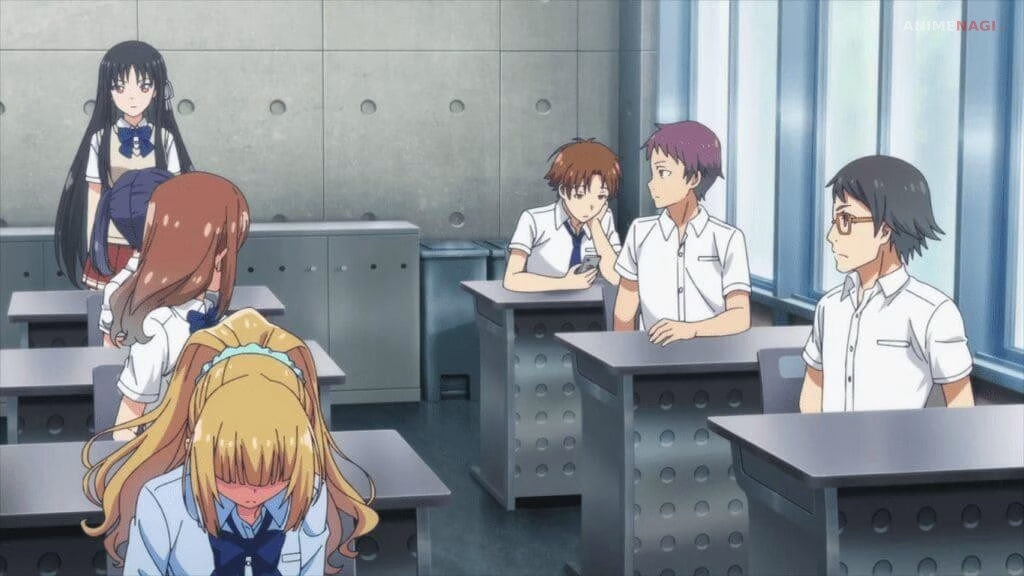
Horikita’s development continues as she struggles to balance leadership with personal growth. While she remains intelligent and determined, the season shows that she still has much to learn about trust and teamwork. Her journey feels more grounded compared to Ayanokoji’s almost superhuman capabilities.
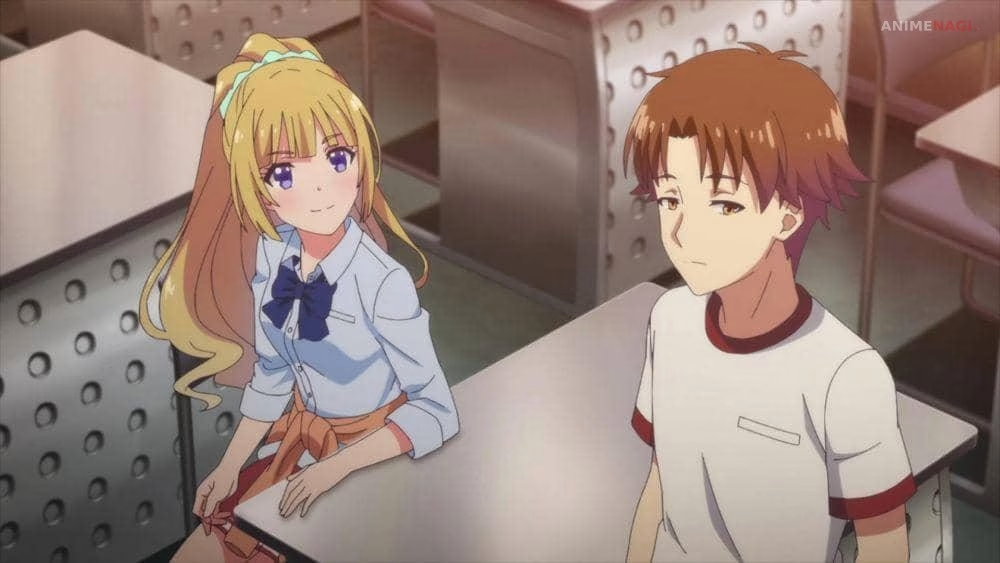
Karuizawa, on the other hand, emerges as one of the most intriguing characters. Her vulnerability and hidden strength make her arc emotionally impactful. The dynamic between her and Ayanokoji adds a new layer to the story, blending manipulation with a hint of genuine connection.
Meanwhile, Ryuen serves as a formidable antagonist whose aggressive tactics contrast sharply with Ayanokoji’s calculated approach. Their rivalry drives much of the season’s tension, culminating in a showdown that feels both inevitable and satisfying.
Animation Quality and Production Concerns
Despite its strong narrative, Season 2 faced criticism for inconsistent animation quality. Produced by Lerche, the series delivers solid visuals during key moments but struggles with consistency in less critical scenes.
Some episodes feature noticeable drops in detail, with simplified character designs and limited movement. This can be distracting, especially during dialogue-heavy sequences where visual engagement is crucial. However, the animation significantly improves during high-stakes moments like the rooftop confrontation, where lighting, framing, and motion come together effectively.
The direction also deserves credit for maintaining tension even when animation falls short. Strategic use of close-ups and shadowy visuals helps emphasize the psychological aspect of the story, compensating for technical limitations.
While the animation may not meet the expectations set by modern high-budget anime, it does enough to support the narrative. Still, it remains one of the season’s weakest aspects.
Faithfulness to the Light Novel and Pacing Issues
One of the most debated aspects of Season 2 is its adaptation of the original light novel series by Shogo Kinugasa. Fans of the source material have pointed out that the anime condenses several volumes into a relatively short runtime, leading to rushed pacing and omitted details.
Important character moments and internal monologues are either shortened or removed entirely. This affects the depth of certain arcs, making them feel less impactful compared to their light novel counterparts. For new viewers, the story still works, but for longtime fans, these omissions can be frustrating.
The fast pacing also means that some plot points lack proper buildup. While the major twists are still effective, they do not always hit as hard as they could with more development. This creates a disconnect between the complexity of the narrative and the time given to explore it.
That said, the adaptation does succeed in preserving the core themes of the series. It captures the essence of competition, manipulation, and survival that defines Classroom of the Elite, even if it sacrifices some nuance along the way.
Should you watch it?
Classroom of the Elite Season 2 is a compelling continuation that doubles down on what makes the series unique. Its focus on psychological warfare, strategic battles, and morally ambiguous characters sets it apart from typical school anime.
The season shines brightest in its character dynamics and high-stakes confrontations, particularly the clash between Ayanokoji and Ryuen. It also successfully expands the narrative, introducing new challenges and deepening existing relationships.
However, it is not without flaws. Inconsistent animation and rushed pacing hold it back from reaching its full potential. These issues prevent certain moments from having the impact they deserve, especially for fans familiar with the source material.
Season 2 delivers a gripping experience that rewards attentive viewers. It may not be perfect, but it is undeniably engaging and sets the stage for even bigger developments in future seasons.
If you appreciated the mind games and character intrigue of Season 1, this sequel is definitely worth watching. It raises the stakes in meaningful ways, even if it occasionally stumbles in execution.