Dragon Ball Super dramatically expanded the franchise’s mythology by introducing gods, multiversal rulers, and Angels who exist far above traditional fighters like Goku and Vegeta. Among these divine beings, the Angels quickly became some of the most mysterious characters in the series. Calm, overwhelmingly powerful, and seemingly neutral, figures like Whis and the Grand Priest operate according to rules that remain only partially explained.
However, the Tournament of Power arc also sparked one of the franchise’s biggest fan theories: the “Evil Angels” theory. Some fans began speculating that the Angels were secretly manipulating events behind the scenes or even planning a future rebellion against the multiverse itself. Suspicious smiles, emotional detachment, and the terrifying power gap between Angels and mortals only intensified those discussions online.
Let’s break down where the Evil Angels theory comes from, why so many Dragon Ball fans believed it, and whether the theory actually makes sense within established canon.
Who Are the Angels in Dragon Ball Super?
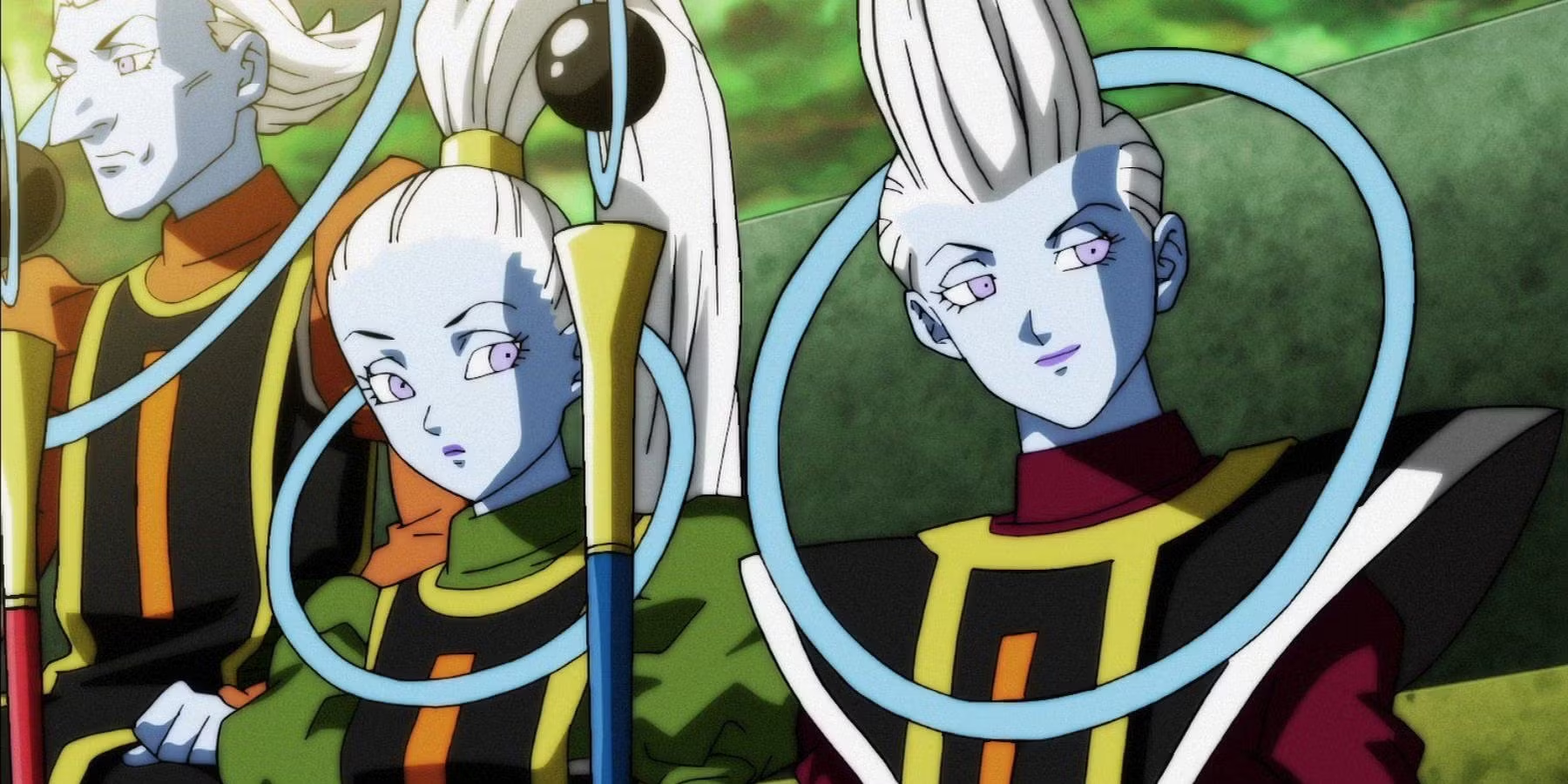
The Angels are divine attendants assigned to the Gods of Destruction across the multiverse. Each universe has its own Angel, whose role is to guide and assist the God of Destruction while maintaining neutrality in universal affairs. Despite serving the destroyers, the Angels are vastly stronger than them.
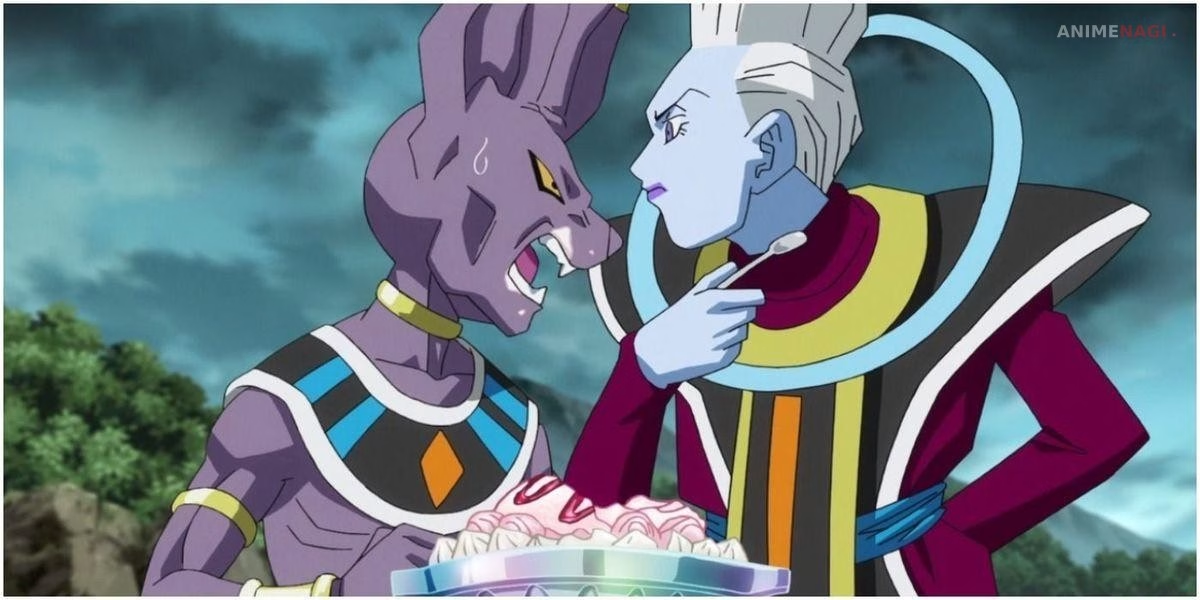
Whis repeatedly demonstrates this difference throughout Dragon Ball Super. He casually defeats Beerus during training sessions, effortlessly dodges attacks, and trains Goku and Vegeta in techniques tied to Ultra Instinct. His calm personality and immense strength make him one of the series’ most mysterious characters.
Above all the Grand Priest stands, father of the Angels and one of the highest-ranking beings in existence. Even Whis admits he cannot compare to the Grand Priest’s power. This enormous hierarchy immediately made fans curious about the true role of the Angels within the multiverse.
Another important detail is Angel neutrality. Angels are forbidden from directly interfering in mortal conflicts unless acting under specific rules. If they violate those laws, they can be erased, as seen with Merus during the Moro arc. This restriction suggests the Angels operate under an extremely rigid divine system.
What Is the “Evil Angels” Theory?
The Evil Angels theory suggests that the Angels are secretly manipulating the multiverse or hiding darker intentions behind their calm personalities.
Some versions of the theory claim the Angels are waiting for the right moment to overthrow the current cosmic order. Others suggest the Grand Priest himself may secretly be the true mastermind controlling Zeno and the multiverse from behind the scenes. A more extreme version proposes that the Angels could eventually become the final antagonists of Dragon Ball Super.
The theory gained massive popularity during the Tournament of Power. Several fans noticed that some Angels appeared strangely calm or even amused while universes were being erased. One Angel in particular, Mojito from Universe 9, smiled after his universe was destroyed, which immediately triggered online speculation.
Fans also pointed out how detached many Angels seemed compared to the Gods of Destruction and mortals around them. Since Angels survive even when their universes are erased, some viewers believed they viewed mortal life as insignificant or disposable.
The Grand Priest’s behavior also fueled suspicion. His calm demeanor, immense authority, and mysterious relationship with Zeno led many fans to theorize that he might secretly control the Omni King behind the scenes.
Why the Theory Became So Popular
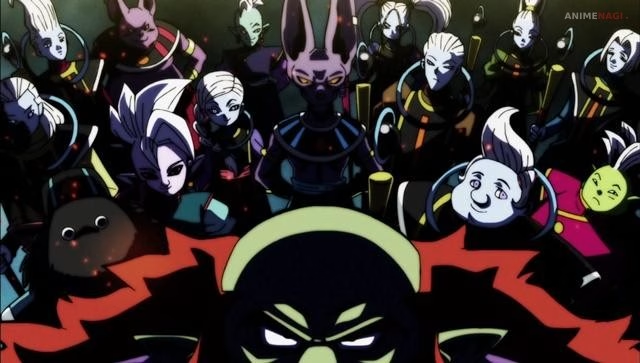
One major reason the theory exploded online is that Dragon Ball Super intentionally presents the Angels as emotionally unreadable. Unlike characters such as Goku or Vegeta, the Angels rarely display strong emotional reactions. Their calmness during catastrophic events naturally made them seem suspicious to many viewers.
The Tournament of Power especially amplified this perception. Entire universes were erased in front of everyone, yet several Angels appeared composed rather than devastated. Fans interpreted this emotional distance as evidence that the Angels either knew something hidden or simply did not care about mortal existence.
The enormous power gap between Angels and everyone else also contributed heavily to the theory. Even Beerus, one of the strongest Gods of Destruction, is casually outclassed by Whis. This made fans wonder why beings so powerful would willingly remain subordinate to the current system unless they had a larger hidden agenda.
Online discussions also compared the Angels to biblical or mythological depictions of fallen angels. Some fans even theorized that the Grand Priest could become Dragon Ball’s equivalent of Lucifer, especially because of his position directly beneath Zeno.
At the same time, the anime itself occasionally framed the Angels with ominous expressions and dramatic camera shots. These visual choices encouraged speculation even if no direct evidence existed.
The Grand Priest’s Role in the Theory
The Grand Priest became the center of most Evil Angels theories because of his immense authority and mysterious personality.
As the father of all Angels and direct attendant to Zeno, the Grand Priest occupies one of the highest positions in existence. He organizes the Tournament of Power, controls major divine events, and appears perfectly calm even when universes are destroyed. This composure made many fans suspicious about his true intentions.
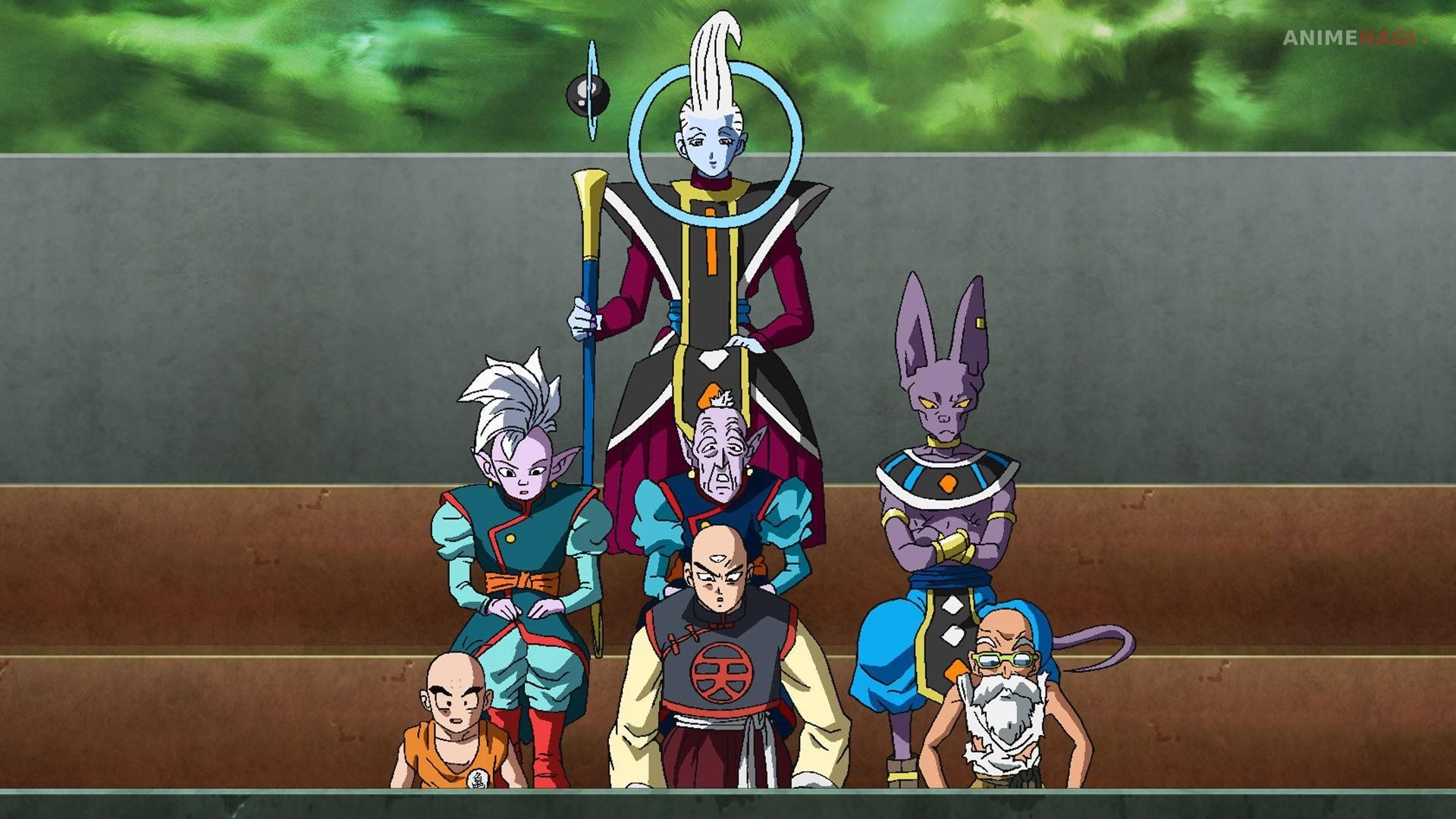
Some theories suggest the Grand Priest secretly manipulates Zeno because Zeno behaves childishly despite possessing ultimate power. Fans speculated that the Grand Priest could be using the Omni King as a figurehead while controlling the multiverse indirectly.
Another popular theory proposed that the Angels were testing mortals through the Tournament of Power. According to this idea, the competition was designed not just to evaluate universes, but to determine whether mortals deserved to continue existing at all.
YouTube theory videos heavily expanded these ideas during Dragon Ball Super’s original run. Entire fan theories imagined future arcs where rogue Angels rebel against Zeno or reveal hidden motivations after years of pretending neutrality.
These discussions became so widespread that the “evil Grand Priest” theory turned into one of the defining fan debates of the Dragon Ball Super era.
Does the Theory Actually Hold Up?
From a canon perspective, the Evil Angels theory currently lacks strong evidence.
The biggest issue is that Dragon Ball Super repeatedly portrays the Angels as bound by strict neutrality rules rather than secret malice. Angels rarely interfere directly because divine law forbids them from taking sides in mortal conflicts. Merus’s erasure during the Moro arc reinforces that these rules are taken seriously.
Additionally, several Angels display genuine emotional reactions throughout the series. Some appear saddened when universes are erased during the Tournament of Power, which contradicts the idea that all Angels secretly hate mortals. Fans online have also pointed out that many suspicious scenes were likely exaggerated by viewers searching for hidden meaning.
Whis himself consistently helps Goku and Vegeta despite technically remaining neutral. While he often acts mysteriously, his actions rarely suggest outright villainy. In fact, he repeatedly protects Earth and assists Universe 7 when possible within the rules.
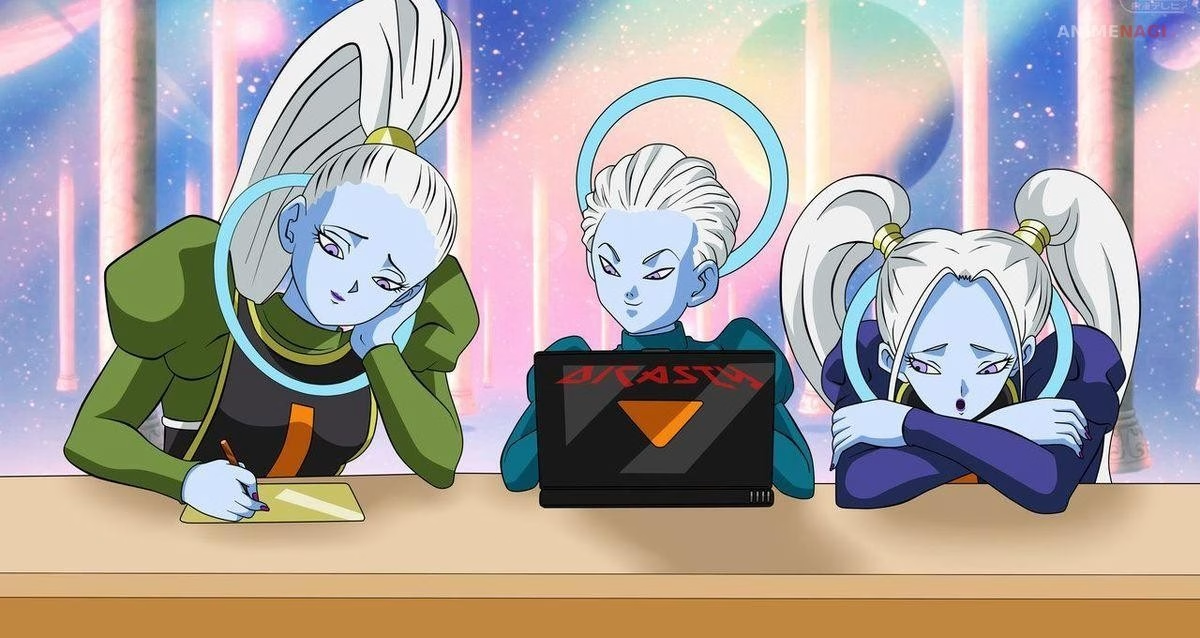
The Grand Priest also never directly behaves maliciously. Although his calm demeanor can feel unsettling, Dragon Ball Super presents him more as a cosmic administrator than a hidden antagonist.
Most importantly, the theory relies heavily on interpretation rather than direct narrative setup. Suspicious expressions and emotional detachment alone are not enough to confirm an Angel conspiracy.
Why the Angels Feel Morally Ambiguous
Even if the Angels are not secretly evil, Dragon Ball Super intentionally portrays them as morally distant from mortals.
Unlike Goku or the Z Fighters, the Angels operate on a cosmic scale where individual lives and universes may seem temporary. Their neutrality prevents them from becoming emotionally invested in mortal conflicts, which naturally creates an unsettling atmosphere around them.
This emotional distance is especially visible during the Tournament of Power. While mortals panic over universal erasure, the Angels mostly observe events calmly because their role is to maintain cosmic balance rather than interfere emotionally.
The series also emphasizes that the divine hierarchy itself is morally complicated. Zeno casually erases universes, Gods of Destruction oversee destruction as part of cosmic balance, and Angels serve these systems without openly questioning them. That ambiguity makes fans wonder whether the divine order is truly “good” in the traditional sense.
In many ways, the Evil Angels theory became popular because the series deliberately blurred the line between neutrality and indifference.
The “Fallen Angel” and Rogue Angel Variations
Some modern Dragon Ball fan theories have expanded beyond the original Evil Angels concept. Newer versions imagine rogue Angels who were sealed away or exiled for breaking divine laws. These ideas often describe hidden dimensions containing fallen Angels seeking revenge against the multiverse.
These theories gained traction because Dragon Ball Super established that Angels can indeed violate divine law and face punishment. Merus’s temporary erasure proved that Angel rules are strict and enforceable. Fans naturally began wondering whether other Angels in the past may have rebelled completely.
The concept also appeals to fans because it would finally create antagonists powerful enough to challenge the current divine hierarchy. Since Goku and Vegeta continue approaching god-level power, many viewers believe future arcs will eventually need enemies tied directly to the Angels themselves.
However, it is important to note that these ideas remain purely speculative. Dragon Ball Super has never officially confirmed the existence of rogue Angel factions or hidden Angel realms.