For decades, Dragon Ball and One Piece have stood at the center of the anime industry. Both series transformed manga and anime into global entertainment giants while influencing generations of creators and fans. However, one debate continues resurfacing among anime audiences: which franchise actually earns more money?
The answer is more complicated than many fans expect because both franchises dominate different areas of the entertainment industry. Dragon Ball historically generates enormous revenue through merchandise, games, and global licensing, while One Piece dominates manga sales and continues benefiting from its active weekly anime and manga presence. Depending on the category being measured, either franchise can temporarily take the lead.
Recent financial reports from Toei Animation and Bandai Namco have reignited the discussion after One Piece surpassed Dragon Ball in certain annual revenue categories for the first time in years. At the same time, long-term franchise valuation data still places Dragon Ball among the highest-grossing anime media franchises ever created. Understanding why requires looking at how both franchises actually make money.
Dragon Ball’s Financial Legacy Is Built on Merchandise and Global Branding
Dragon Ball’s greatest financial strength has always been merchandise and brand longevity. While the manga ended decades ago, the franchise continued expanding through anime sequels, films, games, toys, apparel, and licensing partnerships across multiple generations. This long-term commercial stability is a major reason Dragon Ball consistently ranks among the highest-grossing media franchises in history.
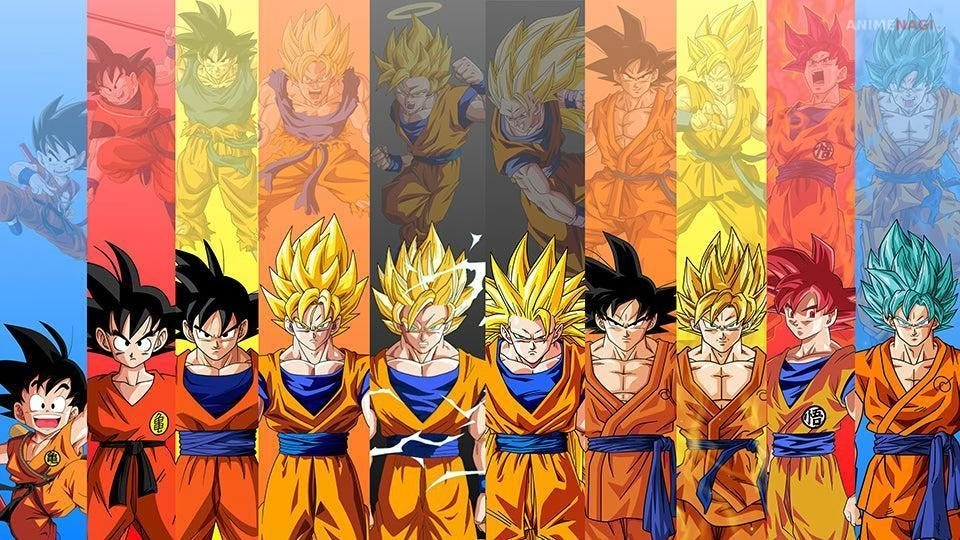
One of Dragon Ball’s biggest advantages is global recognition. Characters like Goku, Vegeta, and Frieza became internationally recognizable far earlier than most anime characters. During the late 1990s and early 2000s, Dragon Ball Z helped popularize anime worldwide, especially in North America, Latin America, and Europe. That international reach allowed the franchise to develop massive merchandise ecosystems long before anime streaming became mainstream.
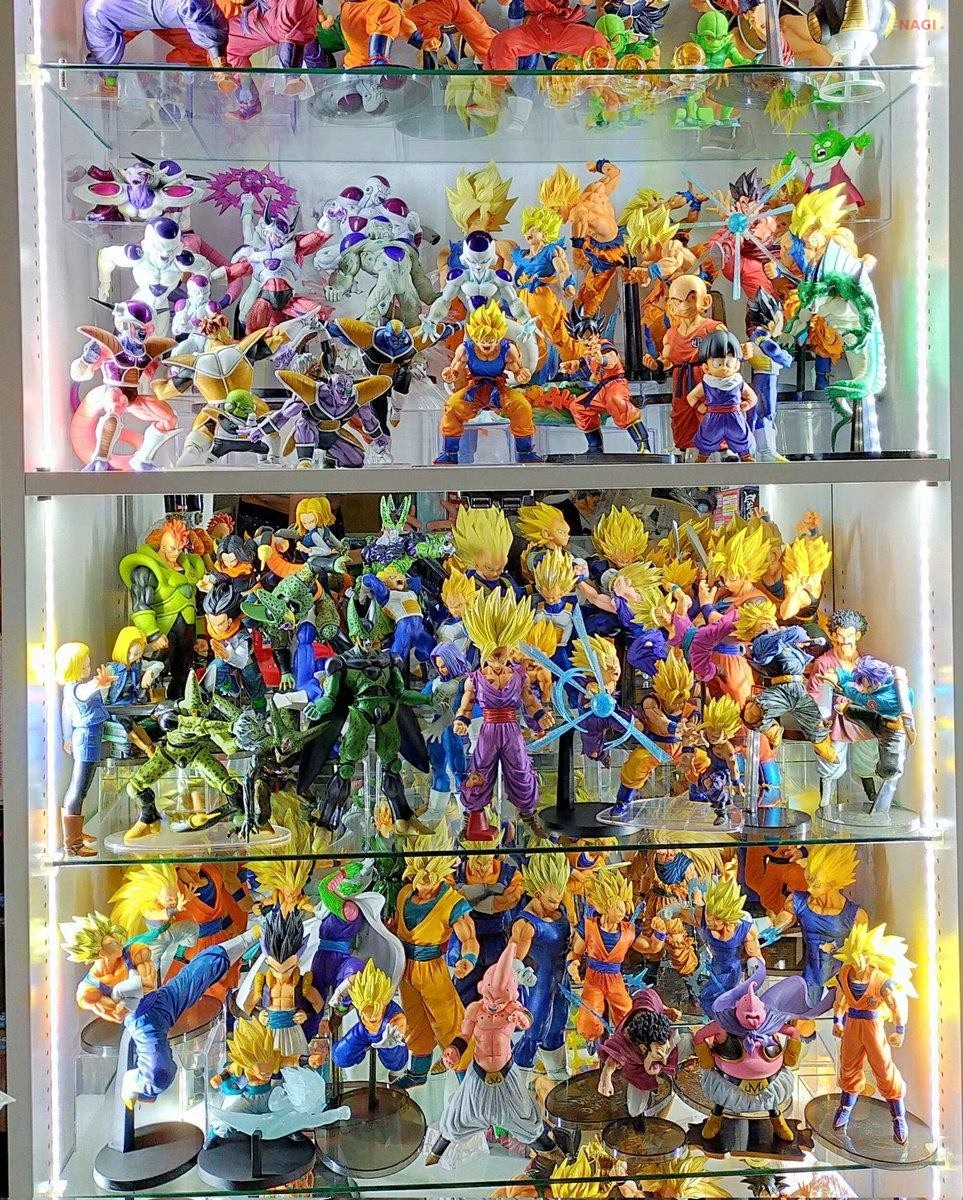
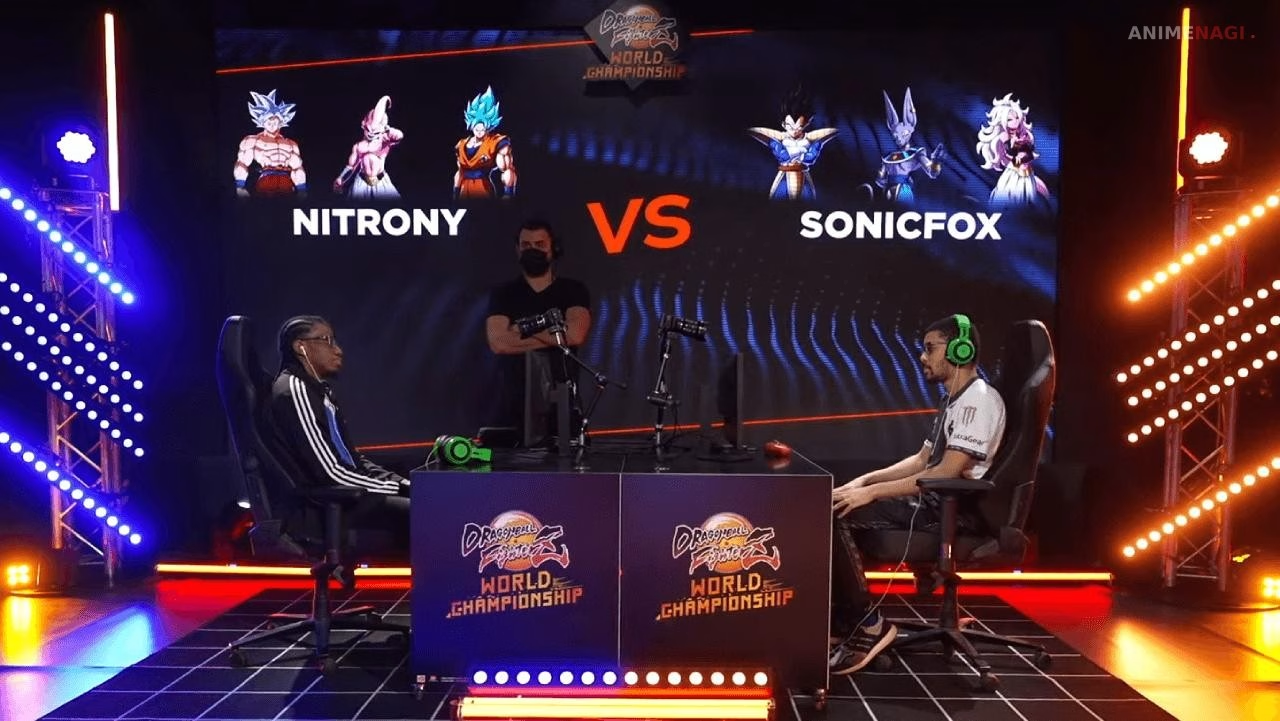
Bandai Namco plays a huge role in Dragon Ball’s earnings power. Games like Dragon Ball Z: Dokkan Battle, Dragon Ball Legends, and Dragon Ball FighterZ generated enormous revenue through mobile gaming and competitive esports popularity. According to franchise revenue breakdowns and Bandai Namco financial reports, Dragon Ball regularly earns billions of yen annually through games and merchandise alone.
The franchise also benefits from theatrical success. Films like Dragon Ball Super: Broly became major international hits, helping modernize the brand for newer audiences while generating strong box office revenue worldwide.
Even without a continuously airing weekly anime for years, Dragon Ball remained commercially dominant because its characters and branding became permanently embedded within global pop culture.
One Piece Dominates Manga Sales More Than Any Other Anime Franchise
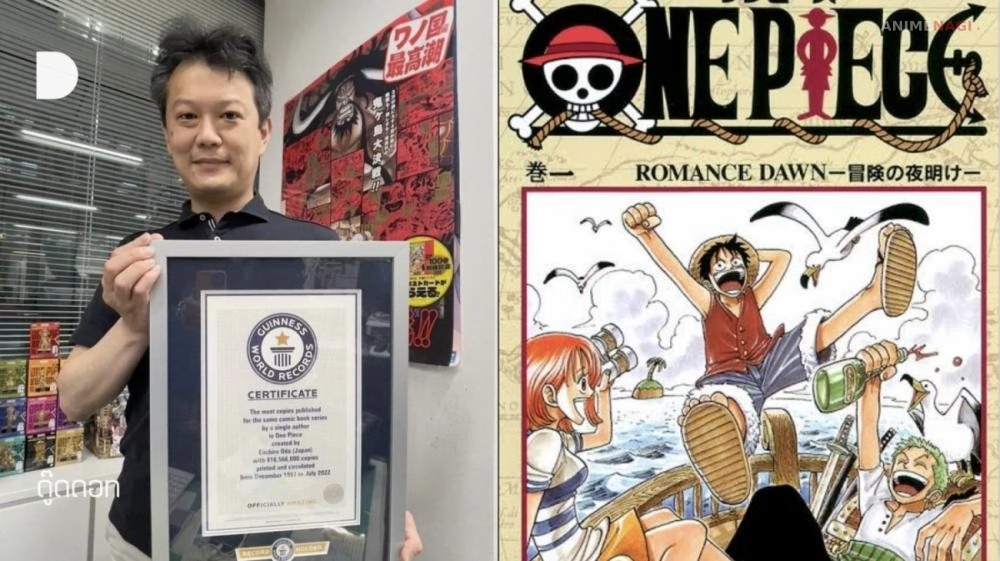
While Dragon Ball dominates merchandise historically, One Piece’s greatest strength is its unmatched manga success. Created by Eiichiro Oda, One Piece became the best-selling manga series in history by an enormous margin. The series surpassed 600 million copies in circulation worldwide, making it one of the highest-selling comic properties ever created.
This manga dominance directly impacts the franchise financially. Unlike Dragon Ball, whose manga concluded in the 1990s, One Piece still releases new chapters weekly. That ongoing serialization continuously drives physical sales, digital engagement, marketing campaigns, and merchandise demand.
Another key difference is audience momentum. One Piece remains in its “final saga,” meaning fan interest is currently reaching some of the highest levels in franchise history. Every major reveal, new transformation, or storyline development creates massive online discussion and media coverage. This constant visibility strengthens streaming performance, merchandise sales, and international licensing opportunities.
Toei Animation financial reports recently reflected this momentum clearly. In the 2023-2024 fiscal period, One Piece reportedly generated over 22 billion yen for Toei, surpassing Dragon Ball’s approximately 19 billion yen and ending Dragon Ball’s long-running dominance within the company’s yearly franchise earnings.
The franchise also received additional global momentum from the success of Netflix’s live-action One Piece adaptation. That project introduced entirely new audiences to the franchise while boosting manga and anime engagement simultaneously.
As a result, One Piece currently benefits from both historical popularity and active cultural momentum at the same time.
Why Dragon Ball Still Wins in Long-Term Franchise Revenue
Despite One Piece’s recent annual gains, Dragon Ball still leads in historical franchise revenue according to multiple media franchise estimates. Reports compiling merchandise, games, home entertainment, licensing, and box office revenue consistently place Dragon Ball above One Piece in lifetime franchise earnings. The reason largely comes down to merchandising scale and gaming dominance.
Dragon Ball built a global toy and gaming empire over the decades. Action figures, trading cards, statues, clothing, console games, arcade machines, and mobile games generated massive long-term profits. Even during periods without active anime content, Dragon Ball products continued selling worldwide because the franchise became evergreen.
One Piece, meanwhile, remained more dependent on manga and anime engagement for much of its history. Although One Piece merchandise sales have grown dramatically in recent years, Dragon Ball’s global licensing infrastructure matured much earlier.
There is also a generational factor involved. Dragon Ball influenced multiple waves of anime fandom internationally. Older anime audiences who grew up during the Toonami era often remain financially attached to the franchise through collectibles, premium statues, games, and nostalgic merchandise purchases.
This is why Dragon Ball can still outperform newer anime franchises commercially even during quieter production periods.
The Anime Release Strategy Creates a Huge Difference
One Piece and Dragon Ball also operate using very different release strategies, which directly affects yearly earnings patterns.
One Piece functions as an ongoing weekly franchise. The anime continues airing regularly while the manga constantly pushes the story forward. This creates stable and continuous audience engagement across streaming, manga sales, social media, and merchandise.
Dragon Ball, by contrast, often operates through event-style releases. Instead of weekly anime consistency, the franchise relies more heavily on theatrical films, major game launches, and special anime projects like Dragon Ball Daima. This creates stronger spikes in revenue during major launches but less consistent yearly momentum.
That difference explains why One Piece recently overtook Dragon Ball in some yearly Toei Animation earnings reports. One Piece currently benefits from constant weekly engagement while Dragon Ball remains between major long-form anime releases.
However, Dragon Ball’s strategy also has advantages. Large event releases often generate enormous international attention very quickly. Films like Dragon Ball Super: Broly and Dragon Ball Super: Super Hero performed extremely well globally despite the absence of a weekly anime series. In other words, One Piece excels through consistency, while Dragon Ball often relies on explosive peak popularity.
Which Franchise Is Bigger Internationally?
This question depends heavily on region and generation. Dragon Ball historically dominated international anime expansion, especially in Latin America, Europe, and North America. In many countries, Dragon Ball became synonymous with anime itself during the late 1990s and early 2000s. Goku remains one of the most globally recognized anime characters ever created.
One Piece initially struggled internationally compared to its Japanese dominance. Early localization issues and inconsistent Western broadcasting limited its global expansion for years. However, streaming platforms dramatically changed that situation. Modern audiences now consume One Piece far more easily, allowing the franchise’s international popularity to grow rapidly.
Recent Toei licensing reports suggest One Piece’s international business is growing at an exceptional pace and, in some areas, beginning to rival Dragon Ball’s dominance. Still, Dragon Ball’s global recognition remains extraordinarily difficult to surpass because of its cultural influence across multiple decades.
Why One Piece Is Catching Up Financially
One Piece’s recent financial growth is happening for several reasons simultaneously. First, the franchise is entering its endgame narrative phase. Fans know the story is approaching its eventual conclusion, which naturally increases engagement and merchandise demand. Major reveals surrounding the Void Century, Joy Boy, and the One Piece treasure itself continue generating enormous online discussion.
Second, modern streaming helped One Piece become far more internationally accessible than it was during earlier decades. Platforms like Netflix and Crunchyroll introduced millions of new viewers to the anime worldwide.
Third, the live-action adaptation significantly expanded the franchise beyond traditional anime audiences. Unlike many anime adaptations, Netflix’s One Piece series received unusually strong mainstream reception, increasing interest in both the anime and manga globally.
Finally, One Piece benefits from constant weekly visibility. Unlike franchises that disappear between seasons, One Piece continuously remains part of anime conversation culture. These combined factors explain why One Piece has started challenging Dragon Ball financially in ways that seemed impossible years ago.
So Which Franchise Actually Earns More?
The most accurate answer is that Dragon Ball still leads historically, while One Piece currently leads in several modern annual categories.
Dragon Ball remains one of the highest-grossing anime media franchises ever created due to decades of merchandise dominance, gaming revenue, and international licensing. Lifetime franchise estimates still place it ahead of One Piece.
However, One Piece currently generates stronger momentum in active yearly revenue categories tied to anime broadcasting, manga sales, and Toei Animation licensing. The franchise is experiencing a major global growth phase while Dragon Ball remains in a quieter transitional period following Akira Toriyama’s passing and the hiatus of Dragon Ball Super.
Ultimately, both franchises succeed for different reasons. Dragon Ball built one of anime’s strongest long-term commercial empires through merchandising and worldwide brand recognition. One Piece built extraordinary momentum through ongoing storytelling, manga dominance, and consistent audience engagement.
Rather than replacing each other, the two franchises represent different models of anime success. Dragon Ball became the blueprint that helped globalize anime culture, while One Piece evolved into one of the most successful ongoing storytelling franchises in entertainment history.