For years, Dragon Ball Super has been the centerpiece of the Dragon Ball franchise. The series expanded the universe with Gods of Destruction, alternate universes, Ultra Instinct, and some of the franchise’s biggest modern transformations. However, the future of Dragon Ball became uncertain following the passing of Akira Toriyama in March 2024. Since then, fans have questioned whether Dragon Ball Super will continue, whether the anime will finally return, and what direction the franchise could take next.
Those questions became even more important after the manga entered hiatus following Chapter 103. While Dragon Ball remains one of the biggest anime properties in the world, the franchise is now entering a completely new era. Recent projects like Dragon Ball Daima and statements surrounding Toyotarou’s future role suggest that Dragon Ball is evolving rather than ending. The series may look different moving forward, but there are still multiple paths for the franchise to continue expanding.
The future of Dragon Ball now depends on how Toei Animation, Shueisha, and Toriyama’s longtime collaborators choose to preserve and build upon his legacy.
Why Dragon Ball Super Is at a Turning Point
The biggest factor shaping Dragon Ball’s future is the current status of the Dragon Ball Super manga. After Toriyama’s passing, the manga went on indefinite hiatus following the completion of the “Super Hero” arc. A special one-shot chapter connected to Toriyama’s work was later released, but the long-term direction of the series remains unclear.
This uncertainty has created a rare situation for the franchise. Normally, Dragon Ball operates with clear momentum through ongoing anime series, movies, or manga arcs. Right now, however, the franchise feels transitional. That does not mean Dragon Ball is ending, but it does mean the series is entering a rebuilding phase.
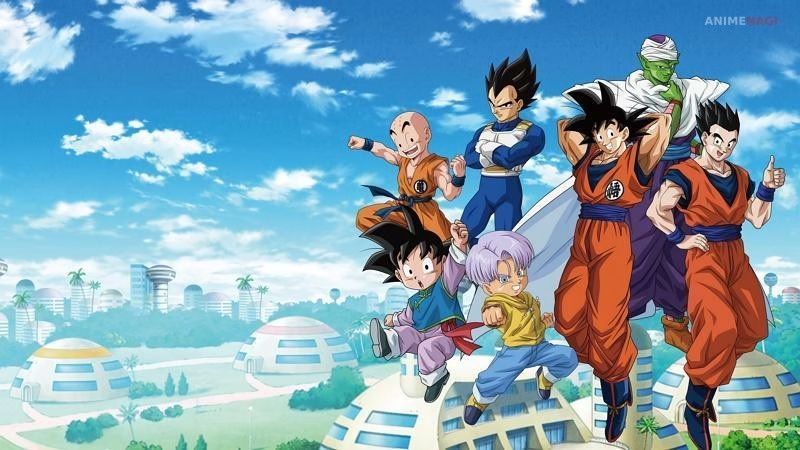
At the same time, there is still a large amount of unreleased Dragon Ball Super material that has never been animated. The Moro arc and Granolah arc remain exclusive to the manga despite being some of the franchise’s biggest modern storylines. Fans continue discussing these arcs heavily online because many believe they are inevitable anime adaptations.
That backlog alone gives Dragon Ball enough material to continue for years if Toei decides to revive the anime.
Toyotarou’s Growing Importance After Akira Toriyama
Toyotarou has become one of the most important figures in Dragon Ball’s future. Over the years, he worked directly alongside Toriyama on Dragon Ball Super, illustrating the manga while receiving story drafts, corrections, and feedback from the creator himself. Their collaboration became increasingly close during the Moro, Granolah, and Super Hero arcs.
Toriyama reportedly remained heavily involved in shaping major story beats, while Toyotarou expanded those ideas visually and structurally. This creative partnership allowed Dragon Ball Super to maintain continuity with Toriyama’s style while still introducing new concepts. As a result, Toyotarou is widely viewed as the franchise’s most natural creative successor.
However, continuing Dragon Ball without Toriyama presents major challenges. Dragon Ball has always carried Toriyama’s humor, pacing, and storytelling instincts even during collaborative projects. Toyotarou may continue the manga, but fans will inevitably compare future arcs to Toriyama’s direct involvement.
That pressure could also influence the franchise creatively. Future Dragon Ball stories may avoid radically changing the formula and instead focus on preserving the spirit of Toriyama’s work. This would explain why recent projects have leaned more heavily into adventure, nostalgia, and character-focused storytelling.
Why Dragon Ball Daima May Reveal the Franchise’s Direction
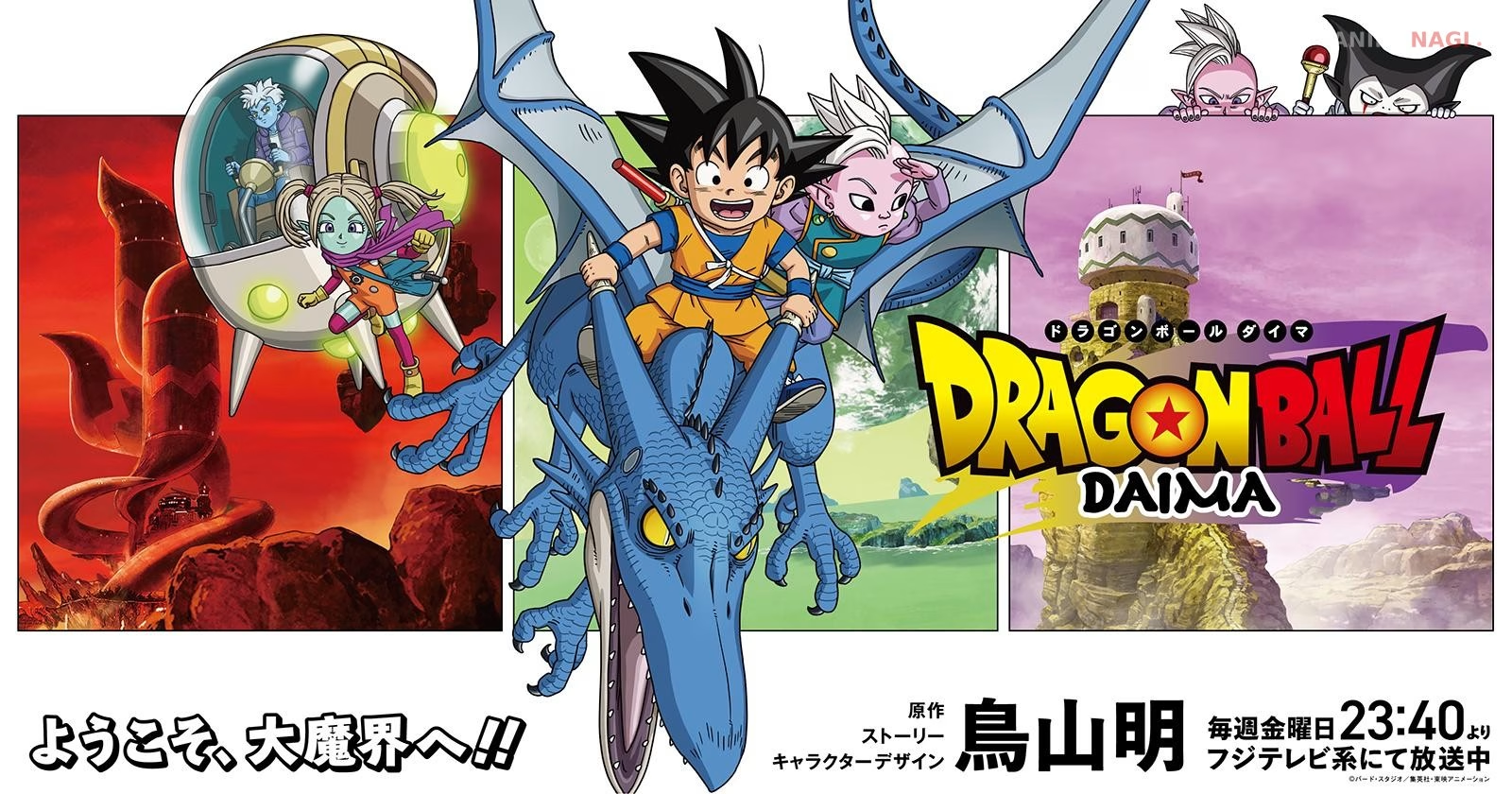
One of the clearest signs of Dragon Ball’s future direction is Dragon Ball Daima. Unlike some later Dragon Ball projects where Toriyama mainly contributed outlines or character concepts, producers confirmed that he became deeply involved in Daima’s development. He reportedly helped craft much of the story, worldbuilding, and character design himself.
That creative involvement matters because Daima feels very different from Dragon Ball Super. Instead of focusing entirely on larger transformations and universal-scale battles, the series emphasizes adventure, fantasy worlds, humor, and exploration. These are elements that defined the original Dragon Ball era before the franchise became heavily battle-focused.
This tonal shift may not be temporary. Dragon Ball Daima suggests the franchise could move toward a more balanced storytelling style moving forward. Action will obviously remain important, but future projects may prioritize character interactions and worldbuilding more heavily than constant power escalation.
The success of this approach could shape the next phase of Dragon Ball. If audiences respond positively, future anime projects may continue blending classic adventure elements with modern Dragon Ball action.
Will the Dragon Ball Super Anime Return?
The question fans ask most often is whether the Dragon Ball Super anime will eventually come back. Officially, there has still been no confirmed full anime continuation since the series ended in 2018. However, the amount of unadapted material makes a return extremely likely at some point.
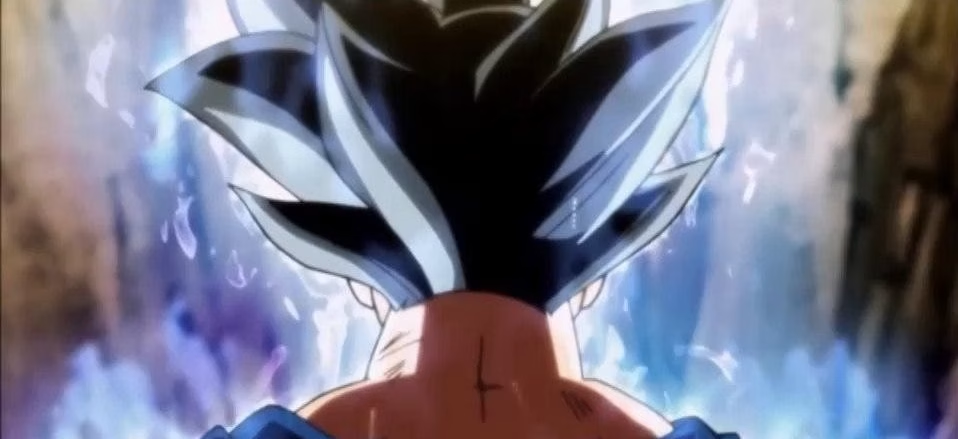
The Moro arc alone contains enough content for a major anime season. It introduces one of Dragon Ball’s most dangerous villains while exploring Galactic Patrol lore and expanding Ultra Instinct further. The Granolah arc also pushes Goku and Vegeta into new territory through Ultra Ego, Cerealian history, and Black Frieza’s arrival.
These arcs are particularly important because they already exist in manga form. Toei Animation would not need to create entirely original material from scratch. The structure is already available, which reduces creative risk compared to launching an entirely new storyline immediately after Toriyama’s passing.
There is also strong fan demand for these stories to be animated. Community discussions consistently mention Moro and Granolah as the arcs audiences most want to see adapted. Even so, Toei may proceed carefully. Dragon Ball is now carrying the responsibility of protecting Toriyama’s legacy while continuing a globally successful franchise.
Movies Could Become Dragon Ball’s Main Focus
Another possible future for Dragon Ball involves prioritizing theatrical films over long-running weekly anime. Recent Dragon Ball movies have performed extremely well commercially. Dragon Ball Super: Broly and Dragon Ball Super: Super Hero both attracted strong international audiences and generated significant revenue.
Movies also offer several advantages creatively. They allow higher production quality, tighter storytelling, and less pressure compared to weekly television schedules. This format could become increasingly attractive as the franchise transitions into the post-Toriyama era.
A film-focused approach would also let Dragon Ball experiment more with character-focused stories. Super Hero already proved that audiences would support a movie centered on Gohan and Piccolo instead of Goku and Vegeta. Future films could continue exploring side characters, alternate timelines, or entirely new adventures.
This strategy would mirror how other major anime franchises now operate. Instead of relying solely on weekly episodes, studios increasingly use major films to maintain excitement and generate global event-level attention.
The Biggest Challenge Facing Dragon Ball
The greatest challenge facing Dragon Ball is balancing continuation with preservation. Fans want new stories, transformations, and arcs, but they also recognize that Toriyama’s creative voice cannot truly be replaced. Every future Dragon Ball project will exist under that reality.
At the same time, Dragon Ball has always evolved across generations. The franchise survived transitions from the original Dragon Ball to Dragon Ball Z, from manga to movies, and from GT to Super. Reinvention has always been part of its history.
That adaptability is likely why Dragon Ball will continue long into the future. The franchise remains commercially massive, globally recognizable, and culturally influential. Games, films, manga, merchandise, and streaming success ensure that Dragon Ball still holds enormous value worldwide.
The real question is not whether Dragon Ball will continue. It is what kind of Dragon Ball fans will see next.
Dragon Ball’s Future Will Likely Blend Nostalgia With New Ideas
Dragon Ball’s next era will probably combine familiar elements with gradual experimentation. Characters like Goku, Vegeta, Gohan, and Piccolo will remain central because they define the franchise’s identity. However, newer storytelling approaches may slowly reshape how Dragon Ball feels structurally.
Projects like Dragon Ball Daima already show signs of this transition. The franchise appears more interested in rediscovering adventure, comedy, and emotional storytelling instead of endlessly chasing larger power levels. That shift may ultimately help Dragon Ball stay fresh in the long term.
Toyotarou’s involvement will also play a massive role moving forward. Whether through manga continuation, story supervision, or collaborative projects, he represents the strongest link between Dragon Ball’s future and Toriyama’s creative legacy. Fans may never fully agree on how Dragon Ball should evolve, but Toyotarou remains one of the few creators directly shaped by years of working alongside Toriyama himself.
For now, Dragon Ball stands in an unusual but fascinating position. The franchise has reached the end of one era while quietly preparing for another. Whatever comes next, Dragon Ball’s influence on anime and pop culture is far from over.
Another factor shaping Dragon Ball’s future is the growing influence of global audiences and streaming platforms. Over the past decade, the franchise has expanded far beyond its original Japanese fanbase, becoming a dominant force in international anime markets. This shift could influence how future projects are developed, with more emphasis on worldwide releases, multilingual accessibility, and cinematic storytelling formats.
As a result, Dragon Ball may continue evolving not just creatively, but also strategically, ensuring that it remains relevant across different regions, platforms, and generations of viewers in an increasingly competitive anime terrain.