Jujutsu Kaisen is filled with morally complex characters, but few are as layered and thought-provoking as Suguru Geto. Introduced as a major antagonist, Geto initially appears to be a cold and calculated villain driven by a hatred for humanity. However, as the story unfolds, it becomes clear that his journey is far more tragic and ideologically driven than it first seems.
Geto was once a dedicated jujutsu sorcerer and one of the brightest students at Jujutsu High, standing alongside Satoru Gojo as an elite protector of humanity. His eventual fall from grace is not sudden but the result of accumulated trauma, disillusionment, and philosophical conflict. This transformation makes him one of the most compelling figures in the series.
Let’s break down Geto Suguru’s ideology, what caused his downfall, and how his character continues to shape the narrative of Jujutsu Kaisen long after his apparent end.
Who Is Suguru Geto?
Suguru Geto was originally a special grade jujutsu sorcerer and one of the most talented individuals in his generation. During his time at Jujutsu High, he was known for his calm demeanor, intelligence, and strong sense of duty. Alongside Gojo, he formed an almost unbeatable duo, often handling high-risk missions that other sorcerers could not manage.
Geto’s cursed technique, Cursed Spirit Manipulation, allows him to absorb and control cursed spirits after exorcising them. This ability not only makes him incredibly powerful but also places him in constant contact with the very creatures born from human negativity. Over time, this exposure begins to shape his perspective on humanity itself.
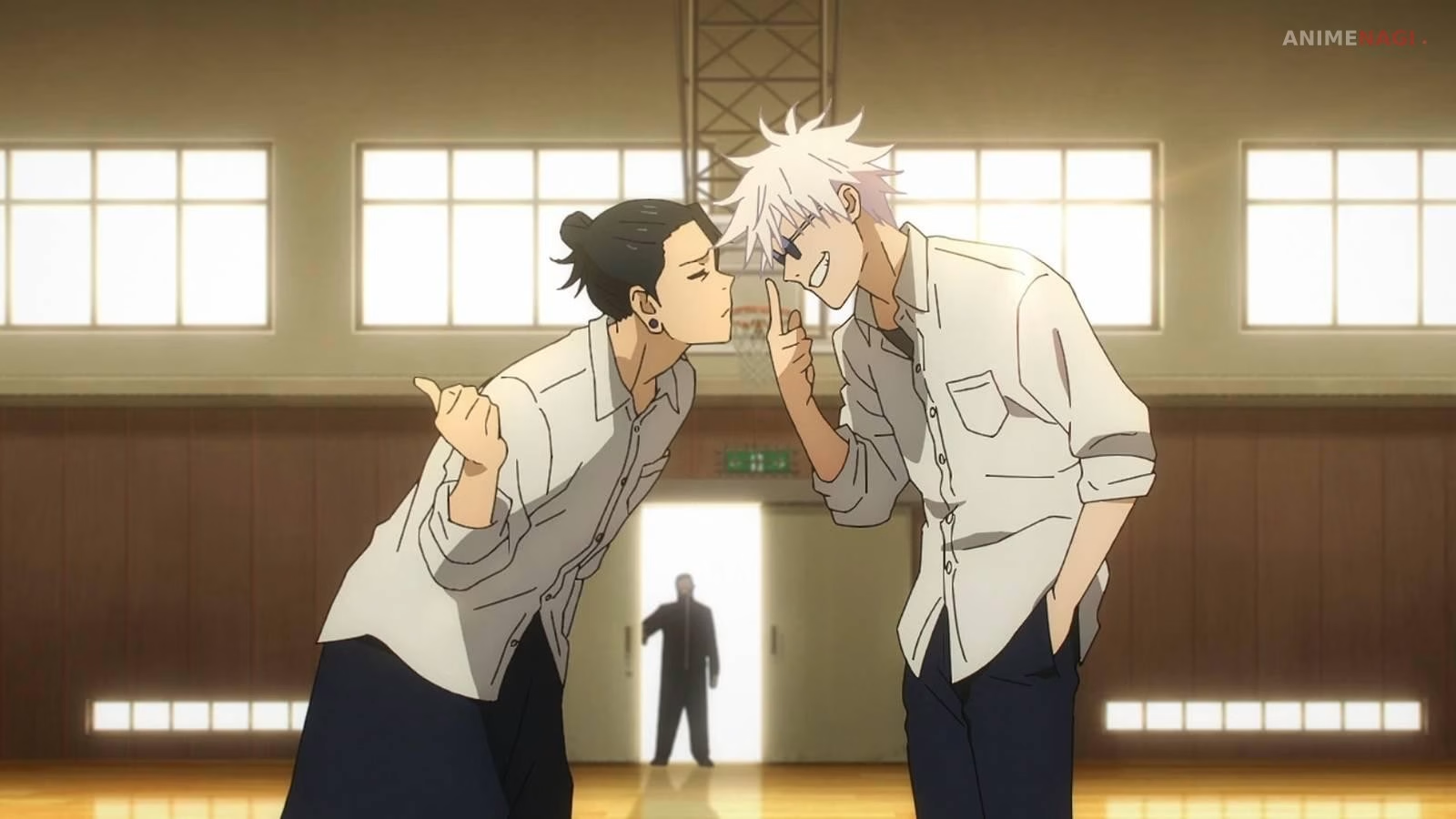
Initially, Geto believed strongly in protecting non-sorcerers. He saw it as the responsibility of jujutsu sorcerers to defend ordinary people from curses. However, even in his early days, there are hints of internal conflict. He begins questioning why sorcerers must risk their lives for individuals who unknowingly create the very curses that threaten them. This philosophical tension becomes the foundation of his eventual transformation.
Geto’s Ideology Explained: Sorcerers vs Non-Sorcerers
Geto’s ideology is one of the most controversial aspects of his character. At its core, he believes that the root of all curses lies in non-sorcerers, whose negative emotions give birth to these dangerous entities. From his perspective, sorcerers are forced into a never-ending cycle of cleaning up problems created by others.
This belief leads him to a radical conclusion. Instead of endlessly fighting curses, he begins to see the elimination of non-sorcerers as a way to eradicate curses entirely. In his ideal world, only jujutsu sorcerers would exist, creating a society free from cursed spirits.
What makes this ideology compelling is that it is not entirely irrational within the context of the series. Curses are indeed born from human negativity, and sorcerers do suffer immensely while protecting those who remain unaware of their sacrifices. Geto’s logic follows a dark but structured path.
However, the flaw in his thinking lies in its dehumanization. By reducing non-sorcerers to the source of all problems, he strips them of individuality and moral value. This shift marks the point where his ideology crosses from critical thinking into extremism.
His beliefs also put him in direct opposition to Gojo, who, despite recognizing the flaws in the system, chooses to reform it rather than destroy it.
The Breaking Point: What Caused Geto’s Fall?
Geto’s fall is not the result of a single event but a gradual accumulation of trauma and disillusionment. One of the most significant turning points occurs during the mission involving Riko Amanai, the Star Plasma Vessel. The failure of this mission and the death of Riko deeply impact Geto, shaking his belief in the system he serves.

At the same time, he witnesses the toll that being a sorcerer takes on individuals around him. The constant exposure to curses, the danger of missions, and the lack of recognition from society begin to erode his idealism. He starts to see the role of sorcerers as thankless and exploitative.
The final breaking point comes when Geto encounters a village that has been abusing two young sorcerer girls out of fear and ignorance. Seeing innocent children treated as monsters by non-sorcerers pushes him over the edge. In response, Geto massacres the entire village.
This moment marks his complete transformation. It is no longer about questioning the system. He fully embraces his ideology and declares war on non-sorcerers. From this point onward, Geto abandons his former life and begins building a following that shares or supports his vision.
Geto vs Gojo: The Ideological Conflict
The relationship between Suguru Geto and Satoru Gojo is central to understanding the series’ deeper themes. They start as close friends who share similar experiences and responsibilities, yet they ultimately take completely different paths.
Gojo chooses to stay within the system, believing that change can be achieved through reform and education. He focuses on nurturing the next generation of sorcerers, hoping to create a better future without resorting to extreme measures.
Geto, on the other hand, loses faith in gradual change. He sees the system as fundamentally broken and believes that only radical action can solve the problem. This ideological divide transforms their friendship into one of the most emotionally charged rivalries in the series.
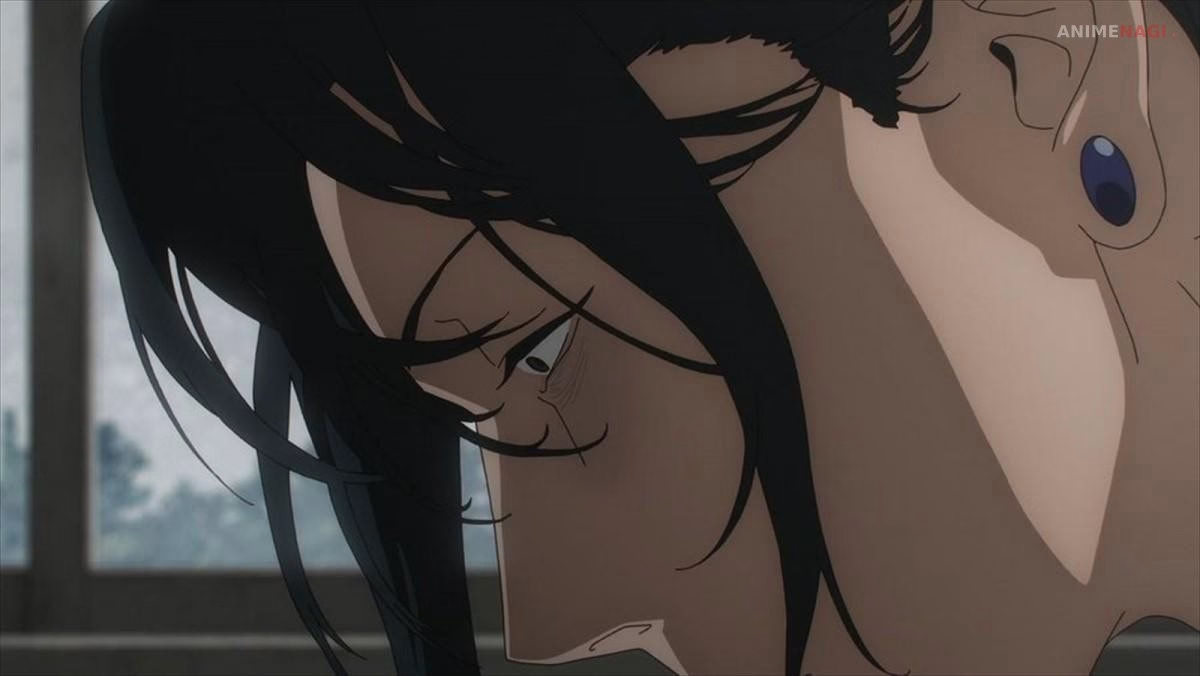
What makes their conflict so powerful is that both perspectives have merit. The series does not present a simple right or wrong answer. Instead, it explores the consequences of each approach. Their eventual confrontation in Jujutsu Kaisen 0 carries significant emotional weight because it represents the culmination of years of shared history and diverging beliefs.
Geto’s Role as a Villain in Jujutsu Kaisen 0
In Jujutsu Kaisen 0, Geto emerges as the primary antagonist, executing a large-scale plan to eliminate non-sorcerers and reshape the world according to his ideology. His actions escalate from targeted violence to full-scale conflict, showcasing how far he has moved from his original self.
Geto’s plan involves unleashing a massive number of curses in a coordinated attack, forcing jujutsu sorcerers into a battle that he believes will determine the future of humanity. His confidence in his ideology drives him to take extreme risks, including confronting powerful opponents directly.
Despite his ruthless actions, Geto retains a sense of charisma and conviction that makes him a compelling antagonist. He genuinely believes in his cause, and this sincerity adds depth to his character.
His final confrontation with Yuta Okkotsu highlights the contrast between his ideology and the values of the next generation. Yuta’s empathy and belief in connection stand in direct opposition to Geto’s exclusionary worldview.
The Truth About Ghetto After His Death
One of the most surprising twists in Jujutsu Kaisen is the revelation that the Geto seen in the main timeline is not actually himself. After his death, his body is taken over by Kenjaku, an ancient sorcerer who uses a body-hopping technique to manipulate events across generations. This twist recontextualizes many of Geto’s actions in the present timeline.
While Kenjaku uses Geto’s body and identity, the original Geto’s ideology and legacy continue to influence the story. His beliefs about sorcerers and non-sorcerers echo throughout the series, shaping conflicts and character motivations.
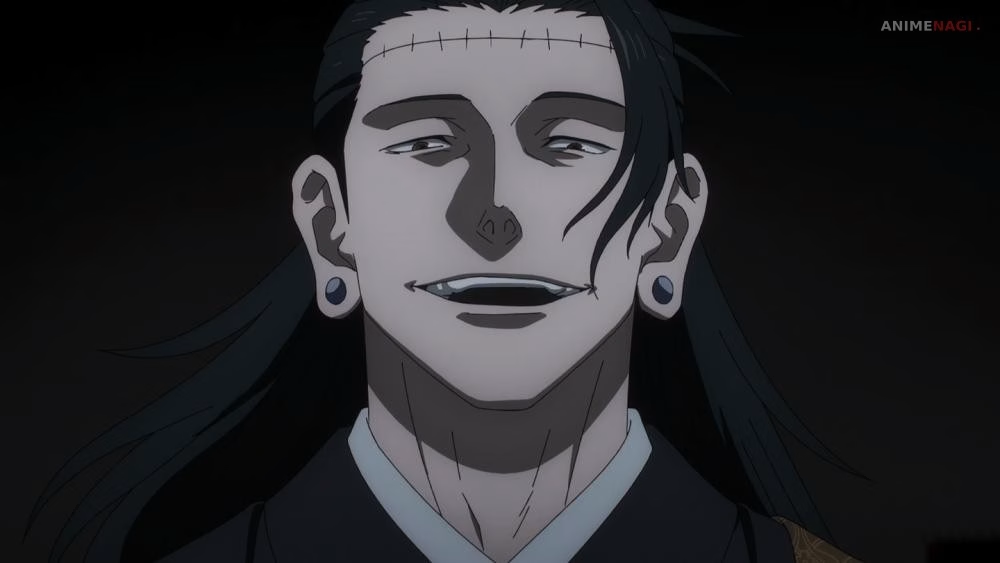
This development also adds a tragic dimension to Geto’s character. Even in death, his body is used as a tool for someone else’s plans, stripping him of agency and further emphasizing the harsh realities of the Jujutsu world.
Why Geto Remains One of Jujutsu Kaisen’s Most Important Characters
Suguru Geto stands out because he represents the moral gray area at the heart of Jujutsu Kaisen. He is neither a purely evil villain nor a misunderstood hero. Instead, he is a character shaped by his environment, experiences, and beliefs. His story explores themes of responsibility, disillusionment, and the cost of power. Through Geto, the series examines what happens when someone loses faith in the system they once believed in.
Even after his fall, Geto’s influence continues to shape the narrative. His ideology challenges other characters to confront their own beliefs and question the structure of the Jujutsu world.
Ultimately, Geto’s journey is a tragic one. He begins as someone who wants to protect others and ends as someone willing to destroy them for what he believes is a greater good. That transformation is what makes him one of the most compelling and unforgettable characters in modern anime.
Another important aspect of Suguru Geto’s character is how his ideology continues to influence other characters even after his fall. His belief that the jujutsu system is fundamentally broken forces characters like Satoru Gojo and Yuta Okkotsu to confront difficult questions about their own roles as sorcerers. While they reject his extreme methods, they cannot fully dismiss the issues he raised, which keeps his presence alive in the narrative long after his death.
At the same time, Geto’s story reinforces one of Jujutsu Kaisen’s core themes: that power without emotional balance can lead to destruction. His descent is not caused by weakness but by an inability to reconcile his ideals with reality. This makes his arc deeply human despite the supernatural setting. In many ways, Geto serves as a warning of what even the most talented and well-intentioned sorcerers can become when they lose their sense of purpose.