Goblin Slayer, few characters are as emotionally scarred or psychologically driven as the series’ main protagonist. While many fantasy anime heroes seek glory, adventure, or destiny, Goblin Slayer is motivated by something far darker. His entire life was shaped by a traumatic goblin attack that destroyed his childhood and turned him into a man obsessed with exterminating goblins at any cost.
The series slowly reveals pieces of Goblin Slayer’s past through flashbacks, conversations, and the prequel story Goblin Slayer Side Story: Year One. These moments explain why he behaves differently from most adventurers and why he approaches every mission with extreme caution. His hatred of goblins is not based on pride or heroism. It comes from fear, grief, and survivor’s guilt that never truly disappeared.
Understanding Goblin Slayer’s backstory is essential to understanding the series itself. His trauma influences the tone of the story, the tactical combat style, and even the relationships he builds with his companions. Let’s break down the tragic life that transformed him into Goblin Slayer.
The Goblin Attack That Destroyed His Childhood
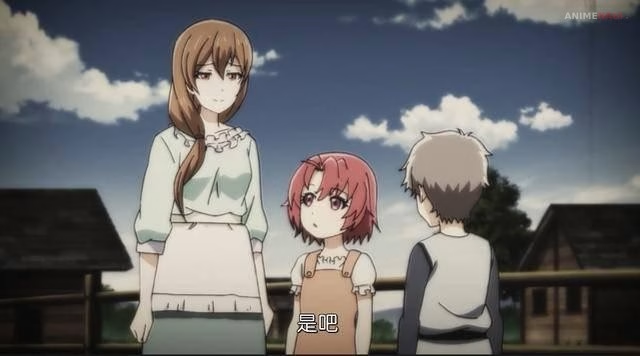
Goblin Slayer’s life changed forever when goblins attacked his village during his childhood. According to the series lore and character summaries, he was forced to hide beneath the floorboards of his home while witnessing goblins murder and assault the people around him, including his older sister.
This moment became the foundation of his entire identity. Unlike traditional fantasy protagonists who lose loved ones in battle against powerful demons or world-ending villains, Goblin Slayer’s trauma comes from creatures most adventurers consider weak and insignificant. That contrast is one of the main themes of the series. Goblins are often underestimated, but Goblin Slayer knows firsthand how horrifying they truly are.
The trauma also explains why he constantly prepares for the worst-case scenario. In several conversations throughout the anime and light novels, Goblin Slayer admits that he lives with constant fear. A Medium analysis discussing the series highlighted one of his most revealing quotes, where he explains that even walking once terrified him after the attack because he believed disaster could happen at any moment.
Instead of processing his grief emotionally, he buried himself in purpose. Killing goblins became both revenge and survival. By focusing entirely on extermination missions, he avoided confronting the deeper emotional damage caused by his childhood experience.
The attack also shaped his worldview. Goblin Slayer does not believe in romanticized adventure stories because he saw the brutal reality of violence at a young age. This is why he often clashes with more optimistic adventurers early in the series. To him, survival matters more than heroics.
The Mentor Who Trained Goblin Slayer
After losing his village, Goblin Slayer was eventually taken in and trained by an old Rhea adventurer. While the anime only briefly references this mentor, supplementary material and side stories reveal that the training was extremely harsh and survival-focused.
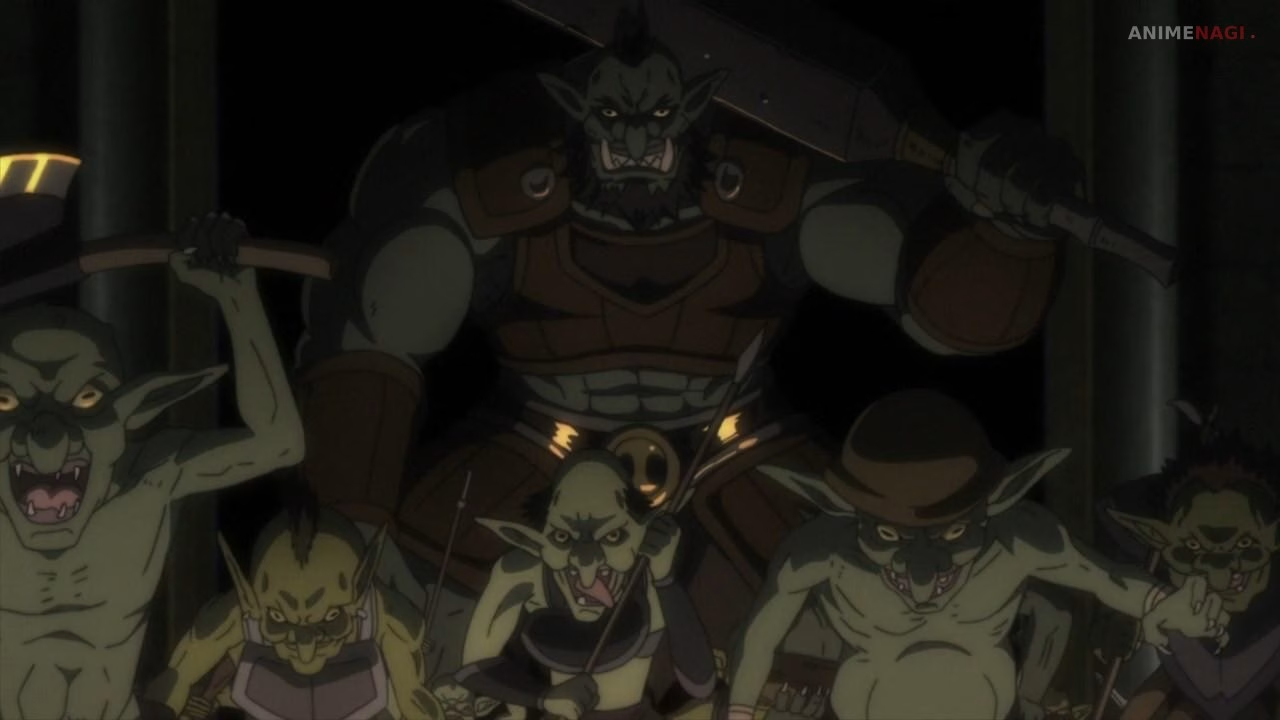
The mentor did not teach him to become a heroic knight or legendary warrior. Instead, he trained him specifically to survive against goblins. Goblin Slayer learned how goblins think, how they hunt, how they set traps, and how they exploit human weaknesses. This education became the reason he later surpassed stronger adventurers in goblin extermination missions.
One of the most important lessons he learned was that goblins should never be underestimated. Many adventurers in the series die because they assume goblins are weak monsters suitable for beginners. Goblin Slayer understands that goblins become deadly when ignored, especially in groups.
His mentor also taught him unconventional combat methods. Rather than relying on flashy swordsmanship, Goblin Slayer uses traps, poison, fire, tunnels, water, and environmental manipulation. This practical fighting style separates him from traditional fantasy protagonists and reinforces the grounded realism of the series.
The harsh training additionally shaped his personality. Goblin Slayer became emotionally reserved, disciplined, and highly methodical. He rarely speaks more than necessary because he was conditioned to focus entirely on survival and efficiency. Even his iconic armor exists mainly for practicality rather than appearance.
The prequel series Goblin Slayer Side Story: Year One expands on this phase of his life by showing how he slowly became known within the Adventurer’s Guild. According to official series information, the prequel specifically explores the events that turned him into an adventurer obsessed with goblin extermination.
Why Goblin Slayer Only Hunts Goblins
One of the biggest questions in the series is why Goblin Slayer refuses to pursue fame, wealth, or higher-level monsters. Even after proving his abilities repeatedly, he continues accepting low-paying goblin quests that most adventurers avoid.
The answer is deeply connected to his trauma. Goblin Slayer believes that nobody else takes goblins seriously enough. Since stronger adventurers chase dragons, demons, and glory, villages are often left defenseless against goblin attacks. He sees himself as the only person willing to consistently protect ordinary people from those threats.
This mindset is reinforced during his interactions with survivors of goblin attacks. Characters like Sword Maiden understand the lasting psychological damage caused by goblins, which creates an important connection between them. According to discussions surrounding the series, Goblin Slayer recognizes that survivors carry trauma long after the physical wounds heal.
Survivor’s guilt also fuels his obsession. Goblin Slayer believes he survived while others died because he hid instead of fighting back. Even as an adult, he struggles with the idea that he could have done more to save his sister and village. Hunting goblins becomes his way of preventing similar tragedies from happening to others.
This motivation makes him very different from revenge-driven anime characters who eventually move on from their trauma. Goblin Slayer never fully heals. Instead, the story focuses on how he gradually learns to live alongside his pain through companionship and purpose.
How Trauma Defines Goblin Slayer’s Personality
Goblin Slayer’s personality is heavily shaped by psychological trauma. He avoids unnecessary emotional attachment, struggles with normal conversation, and often appears detached from social situations. At first glance, he seems almost emotionless, but the story gradually reveals that this behavior is a coping mechanism.
The helmet he constantly wears symbolizes that emotional barrier. He rarely removes it around others because Goblin Slayer does not fully see himself as a normal person anymore. His identity has become inseparable from his mission to kill goblins.
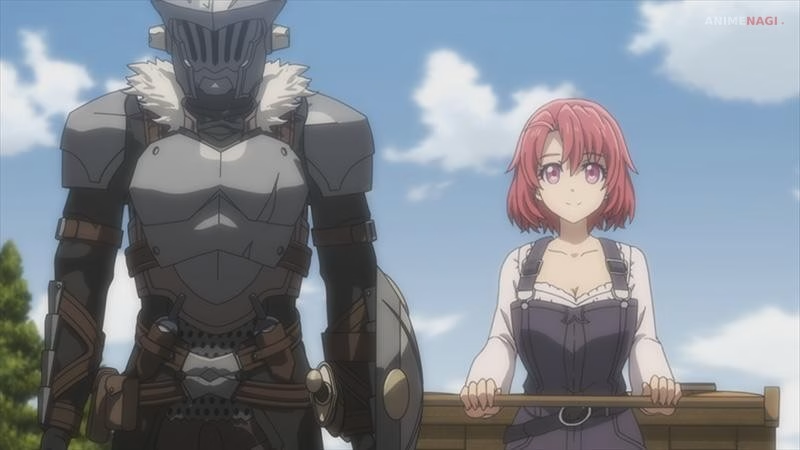
However, the series also shows that traces of his old self still exist. Characters like Priestess, Cow Girl, and Guild Girl slowly reconnect him with ordinary human experiences. Simple moments involving meals, festivals, or conversations become important because they remind him that life exists beyond endless violence.
His party members also challenge his isolation. High Elf Archer, Dwarf Shaman, and Lizard Priest force him into teamwork and friendship, even when he initially resists it. Over time, Goblin Slayer becomes slightly more expressive and socially aware, though he never completely abandons his guarded personality.
The story carefully avoids portraying trauma as something easily “fixed.” Instead, Goblin Slayer learns how to function despite his fears. This grounded approach is one reason the character resonates strongly with fans of darker fantasy storytelling.