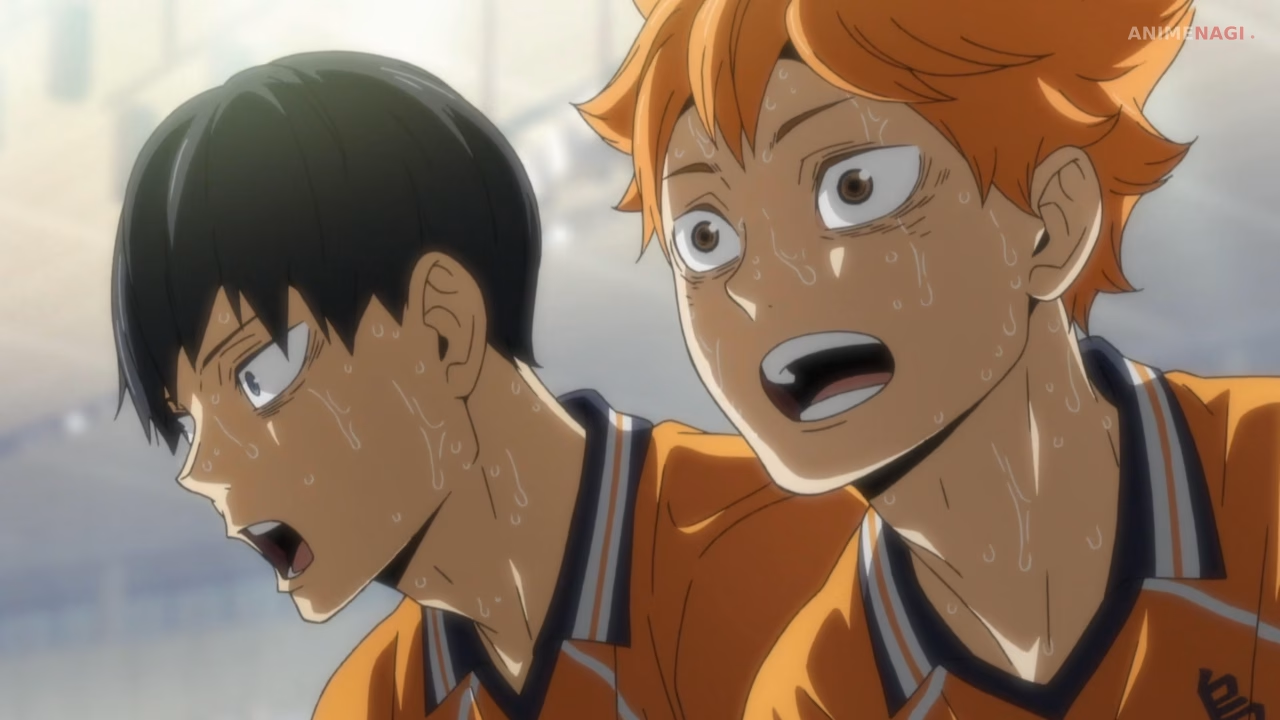
When Haikyu!! returned with its fourth season, titled Haikyu!! To The Top, expectations were extremely high. The previous seasons had already established the anime as one of the greatest sports series of its generation thanks to its emotional storytelling, realistic volleyball action, and consistently strong animation. Season 4 arrived after a long gap, but it also brought major changes that immediately divided fans.
Unlike the earlier seasons, Haikyuu Season 4 focused heavily on preparation, character growth, and the beginning of the Nationals tournament arc. The story pushed Karasuno into a much larger competitive environment while giving important development to players like Hinata and Kageyama. At the same time, viewers quickly noticed significant changes in the anime’s art style, animation approach, pacing, and production structure.
Despite the debates surrounding its visuals, Season 4 still delivered some of the most important moments in the entire series. From Hinata’s training camp journey to the intense Karasuno vs Inarizaki match, the season expanded the scale of Haikyuu while setting up the story’s endgame.
Let’s break down the story arcs, major matches, character development, and production changes that defined Haikyuu Season 4.
What Story Arc Does Haikyuu Season 4 Cover?
According to official series information, Haikyuu Season 4 adapts the first half of the “Tokyo Nationals” storyline from Haruichi Furudate’s manga, primarily covering chapters 207 to 292.
The season begins with two parallel training arcs. Kageyama is invited to the All-Japan Youth Training Camp due to his elite talent as a setter, while Tsukishima attends the Miyagi Prefecture rookie camp. Hinata, feeling left behind, sneaks into the rookie camp despite not being invited. Instead of participating as a player, he becomes a ball boy.
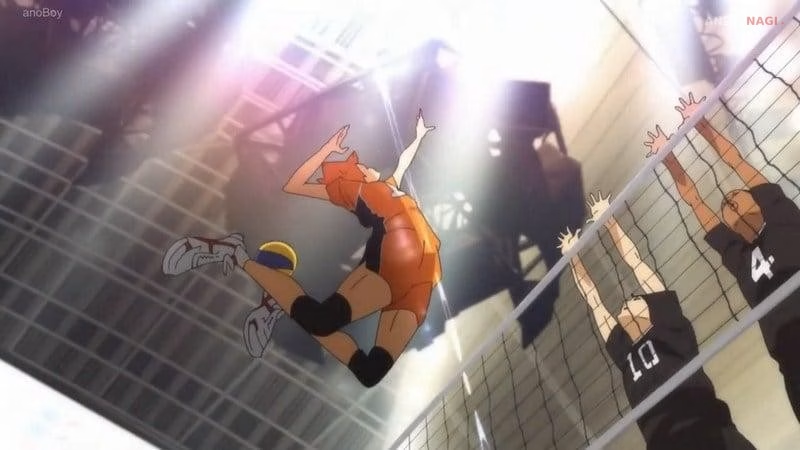
At first, this storyline surprised many fans because it moved away from traditional match-focused pacing. However, the arc became one of the most important parts of Hinata’s development. By observing top-level players and learning positioning, awareness, and defensive reading, Hinata starts improving beyond pure athletic instinct.
The training camp arc also introduces several future rivals who become crucial during Nationals. Players like Korai Hoshiumi and Kiyoomi Sakusa immediately stand out as elite athletes capable of challenging Karasuno. These introductions expand the world of Haikyuu far beyond Miyagi Prefecture and make Nationals feel genuinely intimidating.
Season 4 then transitions into the Nationals tournament itself. Karasuno travels to Tokyo and faces stronger opponents than ever before. The anime spends significant time emphasizing the pressure and excitement surrounding Nationals because it represents the culmination of everything Karasuno fought for across the earlier seasons.
This shift in scale is one of the biggest reasons Haikyuu Season 4 feels different from previous entries. Earlier seasons focused on regional rivalries and local tournaments. Season 4 finally places Karasuno on the national stage.
Hinata’s Growth Became the Core of Season 4
One of the biggest themes in Haikyuu Season 4 is personal growth, especially for Shoyo Hinata. Earlier seasons established him as an explosive athlete with incredible reflexes and jumping ability, but Season 4 forces him to confront his weaknesses directly.
The ball boy arc becomes essential because Hinata finally realizes he cannot rely solely on Kageyama’s perfect sets forever. Watching top-tier players teaches him how to read the court, predict movements, and contribute defensively. These lessons eventually transform him into a more complete volleyball player.
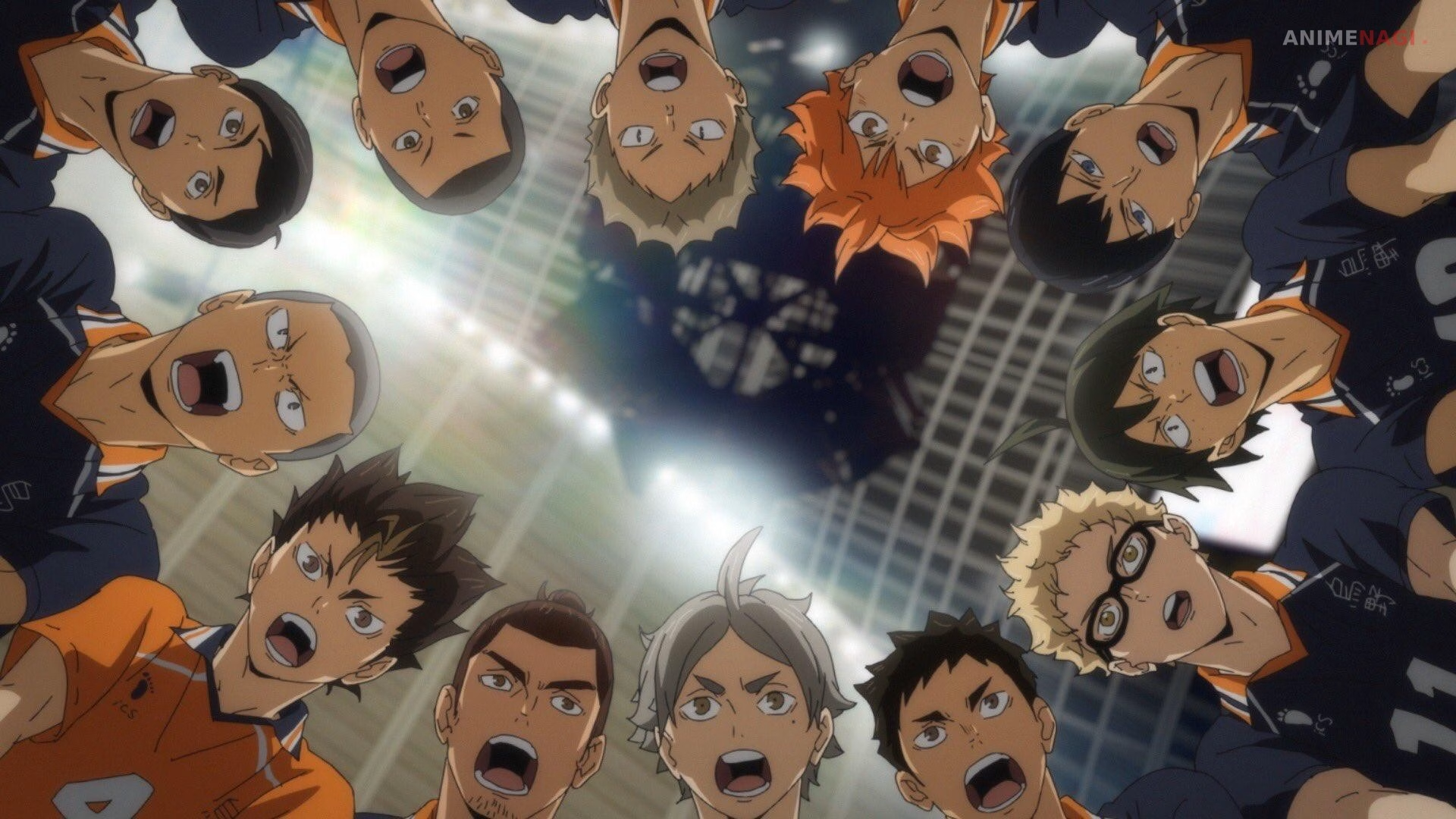
One of the season’s most celebrated moments is Hinata’s successful receive during the Inarizaki match. The scene works so well because it represents the payoff of everything he learned while observing games from the sidelines. Rather than scoring with flashy attacks, Hinata earns respect through awareness and discipline.
The season also matures Hinata emotionally. He becomes more patient, more observant, and more focused on long-term improvement. This growth helps prepare him for the increasingly difficult competition at Nationals.
Kageyama undergoes development as well. His time at the All-Japan camp pushes him to rethink how he communicates with teammates. Earlier seasons portrayed him as a controlling perfectionist, but Season 4 gradually shows him becoming more adaptable as a setter.
Together, Hinata and Kageyama’s parallel growth reinforces one of Haikyuu’s central themes: talent alone is never enough. Continuous learning and adaptability matter just as much as natural ability.
Karasuno vs Inarizaki Was the Highlight of Haikyuu Season 4
The biggest match in Haikyuu Season 4 is unquestionably Karasuno vs Inarizaki. For many fans, this became one of the best matches in the entire anime despite the debates surrounding animation quality.
Inarizaki High is introduced as one of the strongest teams in Japan, led by the dangerous Miya twins, Atsumu and Osamu. Atsumu especially stands out as one of the series’ best setters due to his aggressive mentality and technical skill. The match immediately feels different from Karasuno’s earlier games because Inarizaki constantly pressures them psychologically.
The atmosphere of the game is another major factor. Inarizaki’s cheering squad creates an intense environment that makes Karasuno feel overwhelmed at times. The anime uses crowd noise, music, and pacing effectively to emphasize how stressful Nationals can be.
Several characters receive standout moments during the match. Tanaka’s line shot becomes one of the emotional highlights of the season because it represents his determination to overcome self-doubt. Nishinoya also struggles against Atsumu’s serves, showing that even Karasuno’s most reliable players can crack under pressure.
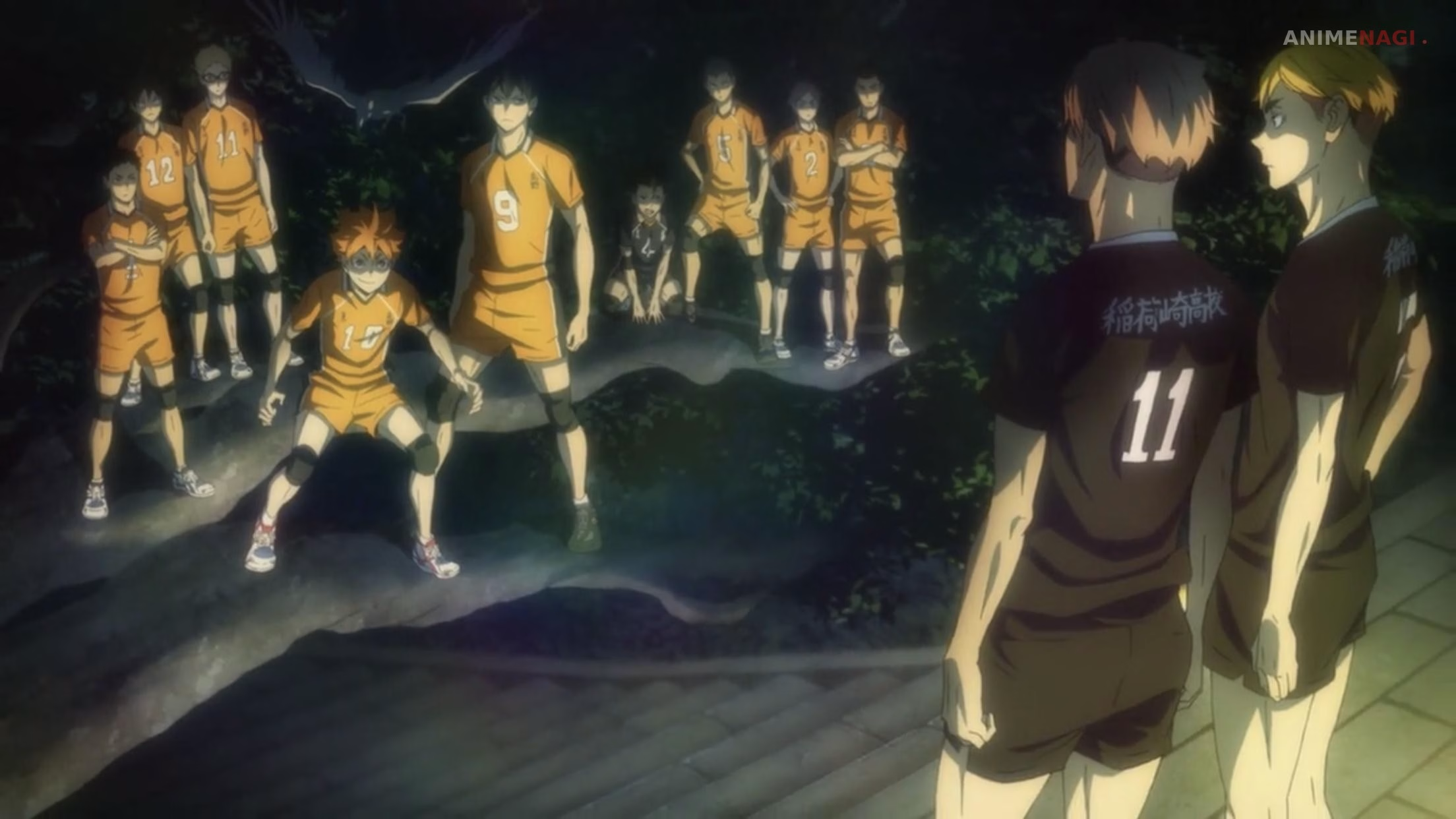
The match additionally reinforces how far Karasuno has come as a team. Earlier seasons often relied heavily on Hinata and Kageyama’s freak quick attack, but the Inarizaki game shows every player contributing strategically.
Many fans consider the match one of Haikyuu’s best examples of balancing realism with dramatic storytelling. The game feels exhausting, chaotic, and emotionally intense without becoming unrealistic.
Why Haikyuu Season 4 Looked Different
The biggest controversy surrounding Haikyuu Season 4 involved its visual presentation. Many viewers immediately noticed changes in character designs, animation fluidity, and overall art direction compared to Seasons 1 through 3.
Official production information confirms that Masako Satō replaced Susumu Mitsunaka as director for Season 4, though Production I.G remained the animation studio.
The character designs were altered to more closely resemble Haruichi Furudate’s later manga art style. According to fan discussions, the new designs were also considered easier to animate for production purposes.
Compared to earlier seasons, Season 4 used thinner facial structures, sharper expressions, and more simplified movement designs. Some fans appreciated the manga accuracy, while others preferred the smoother and more polished visuals of earlier seasons.
The animation itself also became a major topic of discussion online. Reddit discussions from longtime viewers criticized certain episodes for feeling less fluid and cinematic than previous seasons.
However, the production changes were not entirely negative. Some action scenes still received excellent animation treatment, especially important moments like Hinata’s receiving and Tanaka’s line shot. Several viewers also praised the season for capturing Furudate’s sharper and more energetic manga expressions more accurately.
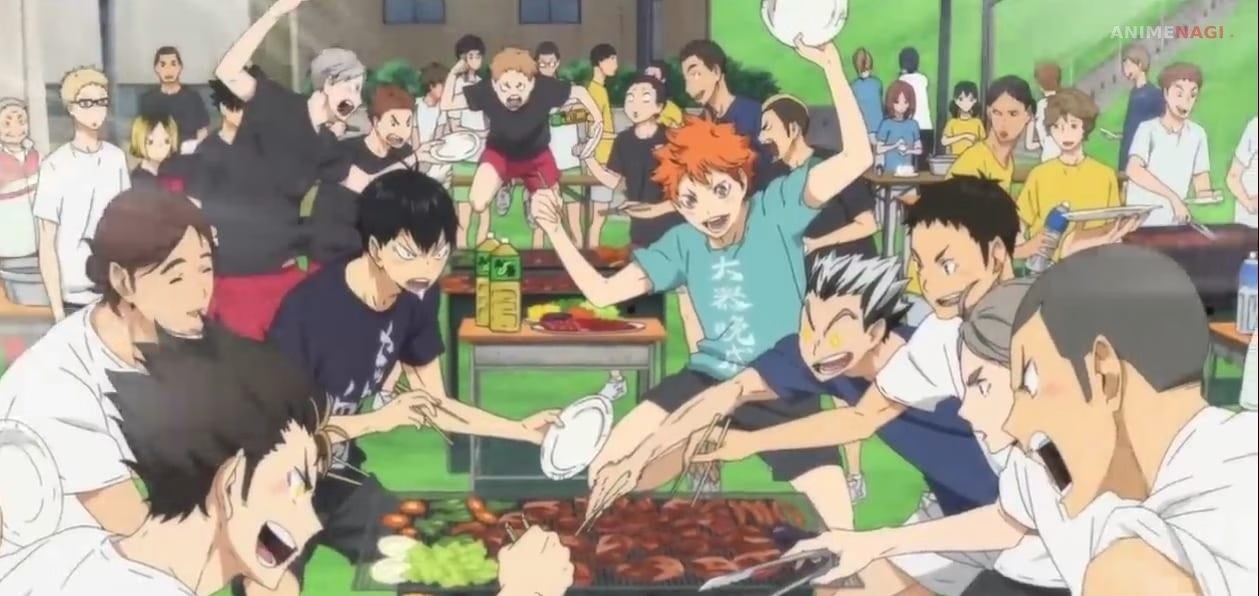
COVID-19 additionally impacted production during the second half of the season. Official reports confirm that the second cour was delayed because of the pandemic before eventually airing later in 2020.
Because of these production issues, Season 4 occasionally felt inconsistent visually. Some episodes looked outstanding, while others appeared rougher than fans expected from Haikyuu’s normally elite animation standards.
The Season Expanded Haikyuu’s World Beyond Karasuno
Another major strength of Haikyuu Season 4 is how it expands the competitive world of the series. Earlier seasons focused mainly on local rivals like Aoba Johsai and Shiratorizawa. Nationals introduces a much wider pool of elite players and teams.
Characters like Korai Hoshiumi immediately stand out because they reflect alternate versions of Hinata’s potential. Hoshiumi is short like Hinata but already possesses world-class fundamentals, making him both inspiring and intimidating.
Kiyoomi Sakusa also becomes one of the most anticipated players despite limited screen time. His calm personality and reputation as one of Japan’s top aces create excitement for future matches.
The Nationals setting also changes the atmosphere of the series. Karasuno is no longer the underdog nobody recognizes. At Nationals, every team has elite athletes, unique strategies, and dangerous momentum swings. This creates a stronger sense of unpredictability than earlier arcs.
Season 4 also gives more attention to side teams and secondary characters. The anime spends time showing how other schools prepare mentally and emotionally for Nationals, reinforcing the idea that every team carries its own story.
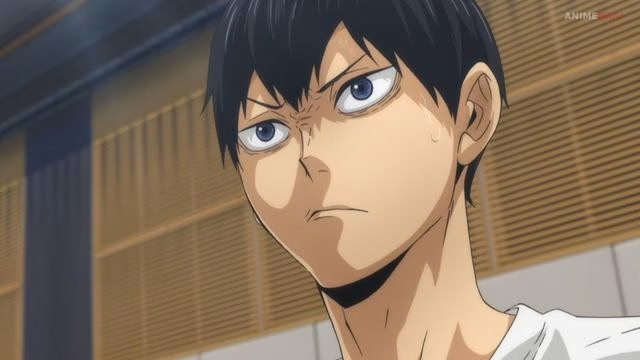
That broader focus helps Haikyuu feel less like a simple school sports anime and more like a full competitive sports world.
Was Haikyuu Season 4 Good Despite the Changes?
Haikyuu Season 4 remains one of the anime’s most debated installments, but it still succeeds in several major ways. The season delivers critical character development, introduces some of the series’s best rivals, and adapts one of the manga’s strongest matches.
The visual changes understandably divided fans because earlier seasons established an extremely high standard for animation and direction. However, Season 4 still preserved the emotional core that made Haikyuu so popular in the first place.
More importantly, the season prepared the story for its final phase. Hinata’s evolution, Karasuno’s Nationals experience, and the introduction of stronger competitors all push the anime into a much larger stage than before.
Even with production inconsistencies, Haikyuu Season 4 proved why the franchise remained one of the defining sports anime of its era. It was not simply about volleyball matches anymore. It became a story about growth, adaptation, pressure, and learning how to compete at the highest possible level.