Dragon Ball Super begins in a surprisingly calm and grounded way compared to the high-stakes endings of Dragon Ball Z. After defeating Majin Buu, the world finally enters a long period of peace, allowing characters like Goku, Vegeta, and the rest of the Z Fighters to live normal lives again. Episode 1 does not immediately introduce a major villain or universe-threatening conflict. Instead, it focuses on re-establishing the characters, their relationships, and the new status quo after years of constant battles.
This slower opening is intentional because it contrasts heavily with what is coming next. While the episode shows a peaceful Earth, it also hints at future disruptions, especially through subtle foreshadowing of Beerus, the God of Destruction. At the same time, the episode reinforces Goku’s personality, showing that even in times of peace, he remains focused on training and improving himself.
Understanding how Dragon Ball Super begins is important because Episode 1 lays the foundation for everything that follows. It bridges the gap between the Majin Buu saga and the god-focused storyline that defines the series moving forward.
The timeline picks up after the defeat of Majin Buu
Episode 1 of Dragon Ball Super takes place after the defeat of Majin Buu, during a period where Earth is finally at peace. This timeline placement is important because it shows what happens after one of the most destructive threats in Dragon Ball history has been eliminated. The world is no longer in danger, and life begins returning to normal for both civilians and the Z Fighters.
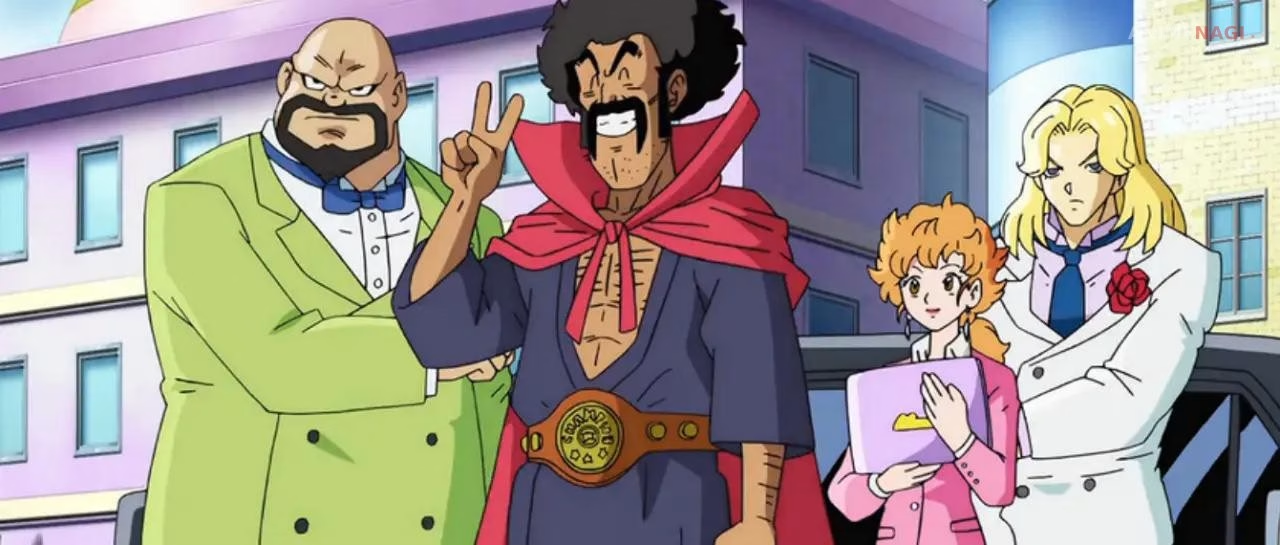
Mr. Satan receives global recognition as the hero who defeated Majin Buu, which becomes a running gag and narrative detail throughout the episode. The public remains unaware of Goku and the others’ involvement, reinforcing the idea that the Z Fighters continue to operate behind the scenes.
This peaceful setting allows the episode to slow down and focus on character moments rather than immediate action. It gives viewers a chance to reconnect with the cast after the intense events of Dragon Ball Z. At the same time, it creates a calm atmosphere that will soon be disrupted by the arrival of new threats.
The timeline placement also helps connect Dragon Ball Super directly to the end of Z while still leaving room for expansion.
Goku struggles with normal life and returns to training
One of the most important aspects of Episode 1 is how it portrays Goku’s inability to adapt to a peaceful life. While the world celebrates the end of major conflicts, Goku quickly becomes restless. Instead of enjoying relaxation, he immediately looks for opportunities to train and grow stronger.
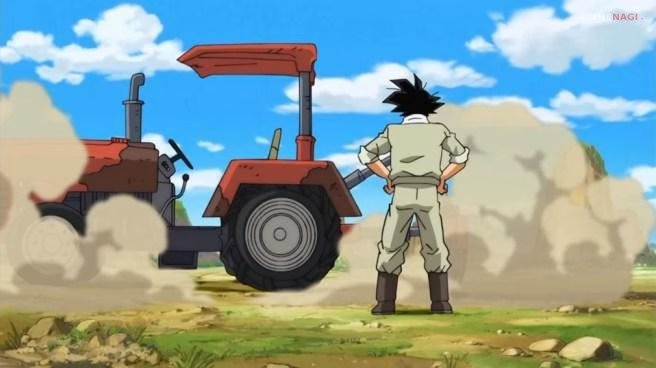
In the episode, Goku is shown working as a farmer, something he clearly finds unfulfilling compared to fighting and training. This moment adds humor but also highlights his core personality. Goku is not driven by responsibility or status alone. His primary motivation has always been self-improvement through combat.
Despite Chi-Chi’s insistence that he focus on earning money and supporting the family, Goku secretly continues training whenever possible. This reflects a consistent character trait carried over from earlier series. Even in peace, Goku is preparing for the next challenge.
This detail becomes important later because it explains why Goku is able to adapt quickly when new threats appear. While others relax, he continues pushing himself forward.
Goten and Trunks represent the next generation
Episode 1 also highlights the younger generation, particularly Goten and Trunks, who are now living in a world without constant danger. Unlike their parents, they have not experienced prolonged war or destruction firsthand. This allows them to behave more like normal children.
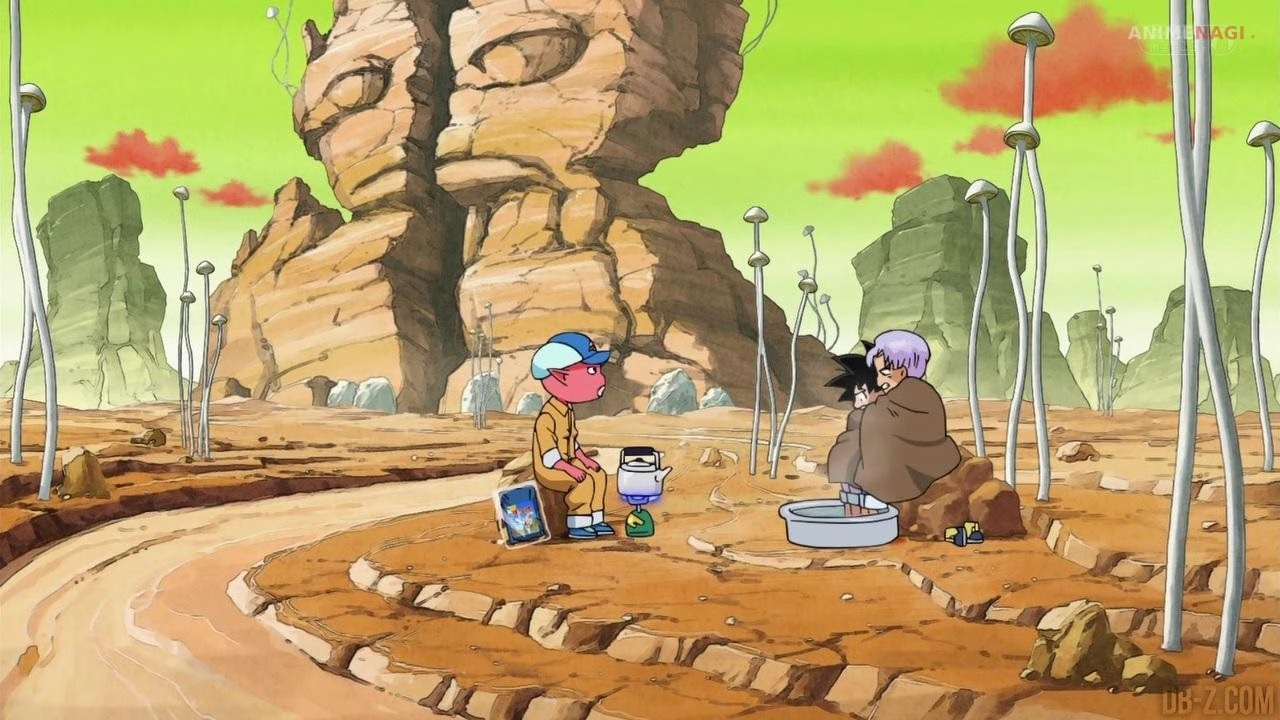
The episode shows Goten and Trunks playing together and interacting in a much lighter tone compared to earlier arcs. Their presence reinforces the idea that Earth is currently safe and stable. However, it also subtly sets up their importance in future storylines.
The contrast between generations becomes clear here. While Goku and Vegeta remain focused on training and strength, Goten and Trunks enjoy the peace that was hard-earned by their parents. This creates a sense of continuity within the Dragon Ball universe.
Their inclusion also helps balance the tone of the episode. Instead of being entirely serious, Episode 1 mixes humor, family moments, and lighthearted interactions effectively.
This approach makes the beginning of Dragon Ball Super feel more grounded before the introduction of larger conflicts.
Vegeta’s character shows subtle growth
While Goku continues focusing on training, Vegeta’s role in Episode 1 highlights a different type of character development. Unlike earlier arcs where Vegeta was obsessed with surpassing Goku, he is shown taking on more domestic responsibilities, particularly with his family.
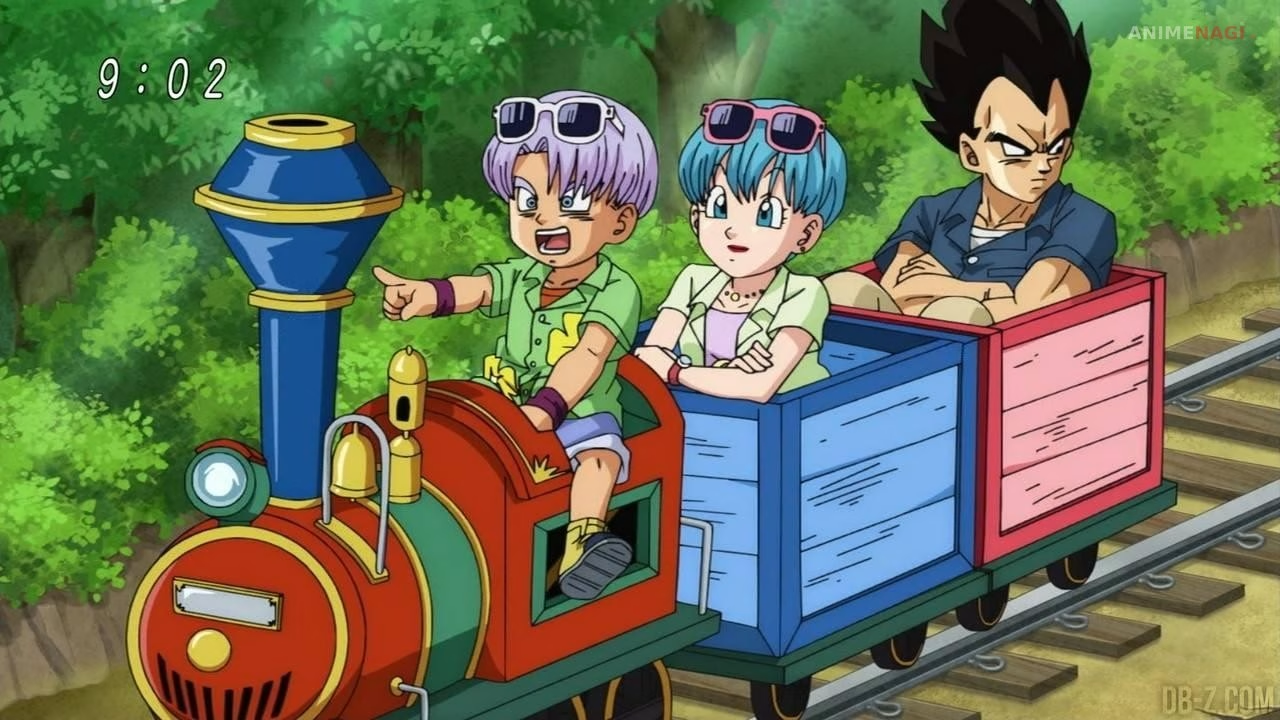
One notable moment involves Vegeta participating in a family outing for Bulma and Trunks. Although he remains serious and somewhat reluctant, this behavior shows clear growth compared to his earlier self. Vegeta is no longer defined solely by pride and rivalry.
However, his competitive nature has not disappeared entirely. He still trains regularly and remains determined to grow stronger. The difference is that his motivations have become more balanced, combining personal ambition with family responsibilities.
This development is important because it sets up Vegeta’s role throughout Dragon Ball Super. He evolves from a purely rival-focused character into someone who values both strength and relationships.
Episode 1 quietly establishes this change without making it overly dramatic.
Mr. Satan’s role reinforces the peaceful setting
Mr. Satan plays a key role in Episode 1 by reinforcing the idea that the world believes the Majin Buu crisis was resolved by a normal human hero. His public image as Earth’s savior continues, and he enjoys widespread fame and admiration.
This narrative detail adds humor but also highlights the secrecy surrounding the Z Fighters. Despite saving the world multiple times, Goku and the others remain largely unknown to the general public. This creates a unique dynamic where the true heroes operate behind the scenes.
Mr. Satan’s interactions also provide comedic relief throughout the episode. His exaggerated personality contrasts with the more serious tones of previous arcs, helping establish the lighter atmosphere at the beginning of the series.
At the same time, his role becomes important later when he continues influencing events indirectly. Even though he lacks real fighting ability compared to the Z Fighters, his presence still affects how the world perceives major events.
Episode 1 uses his character effectively to ground the story in everyday life.
Beerus is introduced through subtle foreshadowing
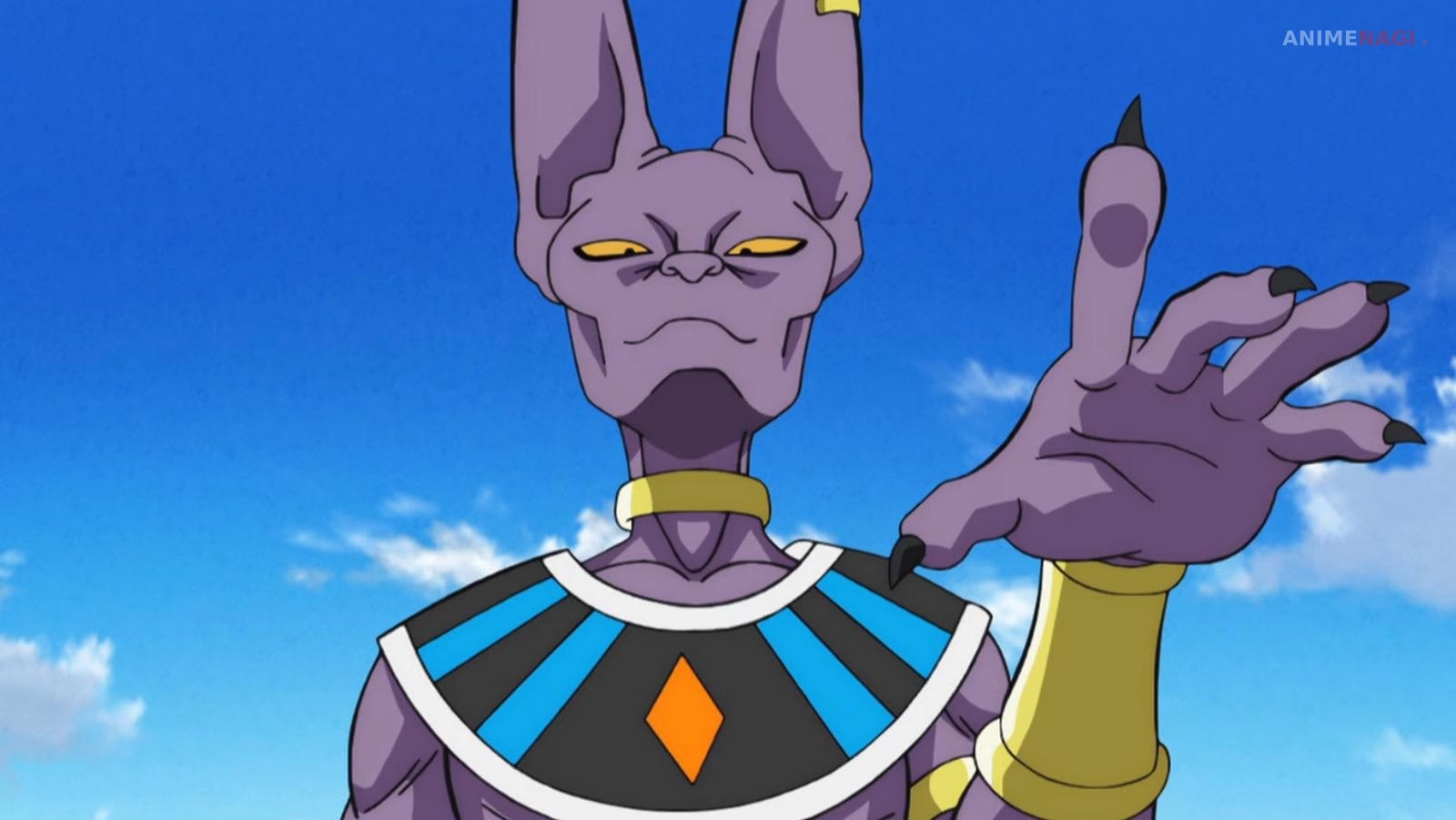
While most of Episode 1 focuses on peaceful life, it also introduces the first hints of a much larger threat. Beerus, the God of Destruction, is not immediately involved in Earth’s events, but his presence is established early.
The episode shows Beerus waking up from a long sleep and beginning to search for a warrior known as the Super Saiyan God. This moment is brief but extremely important because it sets up the central conflict of the upcoming arc.
Beerus’ introduction changes the scale of the story immediately. Unlike previous villains, he is not simply another powerful enemy. He represents a completely different level of existence tied to divine hierarchy.
This foreshadowing creates tension beneath the otherwise peaceful tone of Episode 1. While Earth remains calm, viewers are aware that something far more dangerous is approaching.
The contrast between peace and impending danger becomes a defining element of the opening arc.
Episode 1 balances slice-of-life and future setup
One of the strengths of Episode 1 is how it balances everyday life with a long-term storytelling setup. Instead of rushing into action, the episode takes time to show how characters are living after the events of Dragon Ball Z.
This slice-of-life approach helps reintroduce the world in a relaxed way. Viewers see Goku farming, Vegeta spending time with his family, and Goten and Trunks enjoying childhood. These moments make the characters feel more human and relatable.
At the same time, the episode carefully introduces key elements that will drive future arcs. Beerus’ search for the Super Saiyan God, Goku’s constant desire to grow stronger, and the evolving relationships between characters all play important roles later.
This balance ensures that the story feels cohesive rather than abrupt. The transition from peace to conflict happens naturally rather than suddenly.
Episode 1 effectively sets expectations for both character-driven moments and large-scale battles moving forward.
How Episode 1 connects to Battle of Gods
Episode 1 of Dragon Ball Super directly connects to the events of Battle of Gods, which is adapted as the first major arc of the series. The peaceful setting and Beerus’ introduction lead directly into the conflict seen in that story.
The episode essentially acts as a prologue to the Beerus arc. It shows the world before divine intervention changes everything again. Once Beerus arrives on Earth, the tone shifts from calm to high-stakes almost immediately.
This connection is important because it shows how Dragon Ball Super builds on previous material rather than restarting the story completely. The transition from Dragon Ball Z to Battle of Gods and then into the Super anime feels continuous.
Goku’s behavior in Episode 1 also ties into this connection. His desire to train and improve prepares him for the challenge Beerus will bring. Without that mindset, the transition into the next arc would feel less natural.
Episode 1, therefore, acts as a bridge between the end of Z and the beginning of the god-focused storyline.
Why the slow start is important for Dragon Ball Super
The slower pace of Episode 1 is essential for setting up the long-term direction of Dragon Ball Super. Instead of immediately escalating stakes, the series takes time to establish a new baseline for characters and the world.
This approach makes the introduction of Beerus and later threats feel more impactful. The contrast between peace and destruction becomes stronger because viewers have seen what normal life looks like first.
It also allows for deeper character exploration. Goku’s restlessness, Vegeta’s growth, and the next generation’s innocence all become more meaningful when shown in a calm environment.
The episode also reinforces one of Dragon Ball’s core themes: growth never stops. Even in times of peace, characters continue evolving, preparing for challenges they do not yet fully understand.
By the time the action begins, the audience is fully reconnected with the characters and invested in their journey.