When Boruto: Naruto Next Generations introduced Baryon Mode, it instantly became one of the most surprising and emotional power-ups in the entire Naruto franchise. For years, Naruto Uzumaki had already been considered one of the strongest shinobi in history due to his Six Paths powers, Sage Mode, and partnership with Kurama. However, even all of those abilities combined were not enough to defeat Isshiki Ōtsutsuki, one of the most powerful enemies the series had ever introduced.
Faced with complete defeat, Kurama reveals a hidden transformation called Baryon Mode. Unlike Naruto’s previous forms, this power does not simply increase chakra output or enhance physical abilities normally. Instead, Baryon Mode works through an energy fusion process similar to nuclear fusion, consuming Naruto and Kurama’s chakra as raw material to generate entirely new energy. The result is overwhelming power capable of surpassing Isshiki temporarily, but the cost is catastrophic.
The transformation completely changes the direction of the story. Not only does Naruto gain enough strength to challenge Isshiki directly, but the battle also leads to Kurama’s death, permanently altering Naruto’s abilities afterward. Baryon Mode, therefore, becomes much more than a simple transformation. It represents sacrifice, desperation, and the emotional culmination of Naruto and Kurama’s partnership after decades of shared history.
Naruto activates Baryon Mode during the fight against Isshiki Ōtsutsuki
Baryon Mode first appears during Naruto’s battle against Isshiki Ōtsutsuki in the Kara arc of Boruto: Naruto Next Generations. At this stage of the story, Naruto and Sasuke are completely overwhelmed by Isshiki’s abilities. Even with their strongest techniques, they struggle to damage him meaningfully. Isshiki’s speed, strength, shrinking abilities, and overwhelming combat skill place him on an entirely different level from previous enemies.
After suffering repeated defeats, Naruto realizes conventional methods will not work. Kurama then privately speaks to Naruto and reveals he possesses one final transformation capable of changing the battle. However, Kurama warns that this power comes with an extreme price and should only be used as a last resort. Naruto, already prepared to sacrifice himself to protect the village and his family, agrees immediately without hesitation.
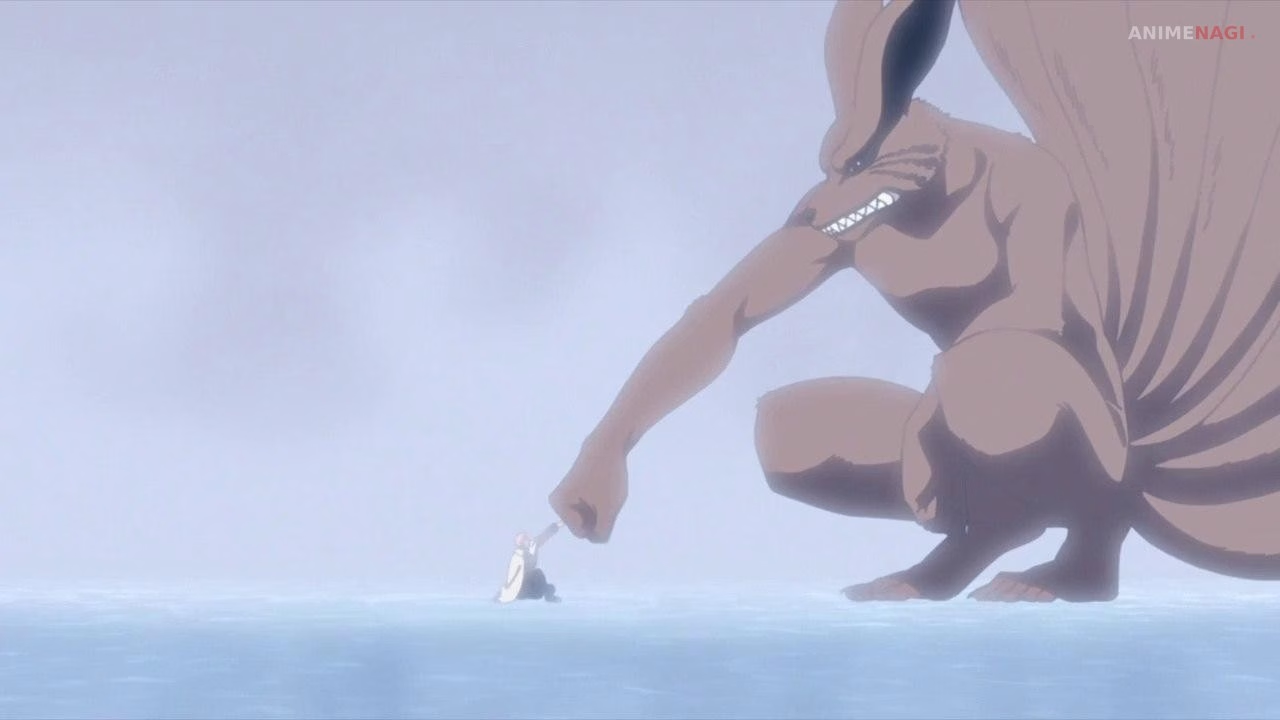
The scene becomes emotionally powerful because Naruto understands the transformation may kill him. Throughout the franchise, Naruto repeatedly risked his life for others, but Baryon Mode feels different because of its finality. Even Kurama treats the situation seriously, emphasizing that there is no room for mistakes once the mode activates.
When Naruto finally transforms, both Isshiki and Sasuke are surprised by the sudden explosion of chakra and energy surrounding him. The transformation immediately feels far more dangerous than any previous Naruto form.
Baryon Mode works differently from Naruto’s older transformations
One of the most important aspects of Baryon Mode is how fundamentally different it is from Naruto’s previous forms. Earlier transformations like Nine-Tails Chakra Mode or Six Paths Sage Mode relied on combining or amplifying existing chakra reserves. Baryon Mode, however, creates an entirely new type of energy through chakra fusion.
Kurama compares the process directly to nuclear fusion. In real-world physics, nuclear fusion combines particles together to create massive energy while consuming raw material in the process. Baryon Mode functions similarly. Naruto and Kurama fuse their chakra together at an entirely different level, generating extraordinary power but rapidly consuming the life force fueling the transformation.
This difference is critical because Baryon Mode is not sustainable. Unlike earlier Naruto forms that could be maintained for extended battles, Baryon Mode acts more like a countdown toward death. Every movement, attack, and even unnecessary thought accelerates the consumption of chakra and life energy.
Kurama specifically warns Naruto to avoid wasting motion during the fight. This creates a much more strategic and intense battle style compared to Naruto’s normally explosive combat approach. Every second matters while Baryon Mode remains active.
That limitation makes the transformation feel more dangerous and emotionally tense than a typical anime power-up.
Naruto’s appearance changes dramatically in Baryon Mode
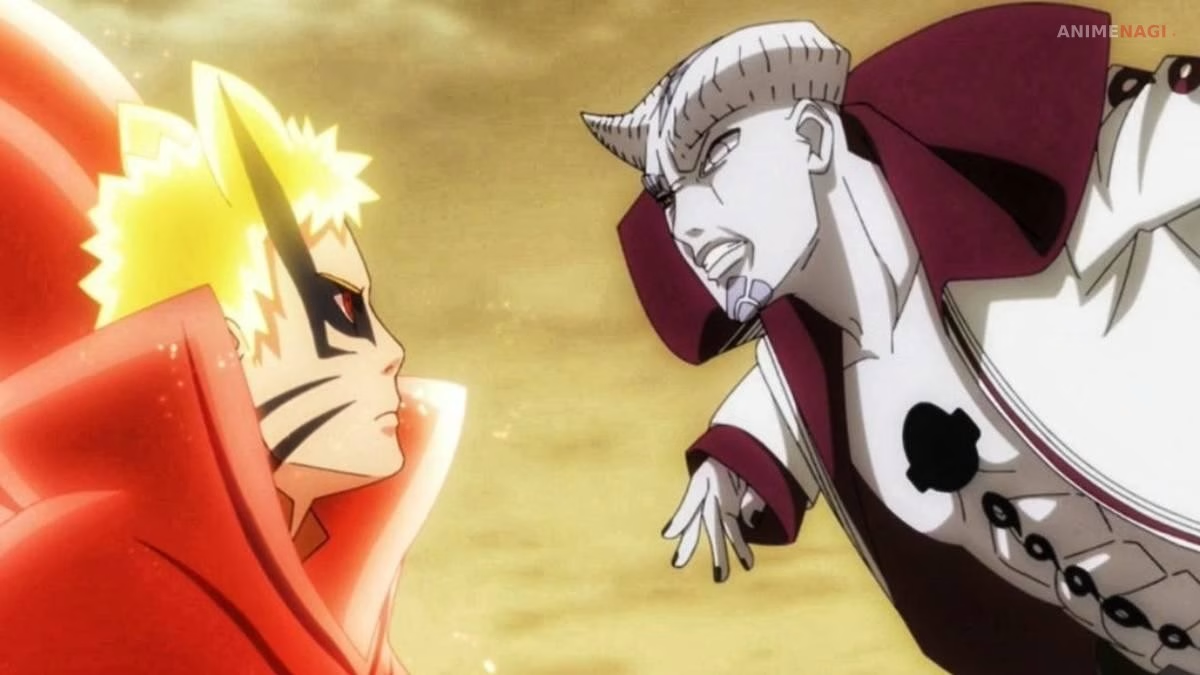
Baryon Mode gives Naruto one of his most visually distinct forms in the franchise. His chakra cloak becomes darker and more refined compared to earlier Nine-Tails transformations. The energy around him appears sharper and more concentrated rather than wildly overflowing outward.
Naruto’s hair spikes upward more aggressively, creating fox-like silhouettes resembling Kurama’s ears. His whisker markings become thicker and more defined, while black patterns extend around his eyes. His pupils also shift into a more feral appearance connected directly to Kurama’s influence.
The chakra tails behind him look more controlled and condensed compared to earlier transformations. Instead of gigantic chakra constructs and oversized explosions, Baryon Mode focuses on compressed, highly lethal energy. This visual design reflects the transformation’s nature perfectly because the mode prioritizes efficiency and overwhelming combat speed over flashy destruction.
The anime adaptation enhanced this appearance further through glowing red chakra effects and fluid animation during Naruto’s movements. Every attack in Baryon Mode feels heavier and faster than before, emphasizing that Naruto has surpassed his normal physical limits completely.
The transformation’s design also symbolizes Naruto and Kurama finally acting as one unified entity rather than separate sources of power.
Baryon Mode makes Naruto stronger than Isshiki temporarily
Once Naruto enters Baryon Mode, the battle changes immediately. Earlier in the fight, Isshiki dominated Naruto and Sasuke almost effortlessly. However, Baryon Mode suddenly allows Naruto to overpower Isshiki physically in direct combat.
Naruto’s reflexes and speed increase to extraordinary levels. He begins dodging attacks that previously seemed impossible to react to, including Isshiki’s chakra rods and close-range strikes. Sasuke even comments that Naruto’s movements have surpassed Isshiki’s speed during the battle.
The transformation also massively enhances Naruto’s striking power. His punches and kicks begin sending Isshiki flying repeatedly despite the Ōtsutsuki’s overwhelming durability. For the first time in the fight, Isshiki appears genuinely pressured and uncertain.
What makes this especially impressive is that Naruto accomplishes this without relying heavily on giant Rasengans or large-scale ninjutsu. Instead, Baryon Mode turns Naruto himself into the weapon. His close-combat attacks become devastating because the mode focuses on concentrated physical dominance rather than flashy chakra techniques.
This creates one of Naruto’s most brutal and aggressive fighting styles in the franchise.
Baryon Mode drains Isshiki’s lifespan with every hit
Baryon Mode’s most dangerous ability is not simply increased strength. The transformation also drains the lifespan of anyone Naruto touches physically during combat.
Kurama explains that because all chakras are connected, Baryon Mode’s fusion process affects opponents as well through direct contact. Every successful hit Naruto lands shortens Isshiki’s remaining lifespan dramatically. This ability becomes critical because Isshiki already has limited time left due to problems with his imperfect vessel.
At the start of the battle, Isshiki still possesses over twenty hours of life. However, Naruto’s repeated attacks reduce that time rapidly. Eventually, Isshiki realizes he only has minutes remaining because of Baryon Mode’s effects.
This completely changes the battle’s strategy. Naruto does not necessarily need to kill Isshiki directly through raw force anymore. Instead, he simply needs to continue landing attacks long enough for Isshiki’s lifespan to expire naturally.
The ability also reinforces Baryon Mode’s nuclear fusion metaphor. The transformation behaves almost like unstable radiation, consuming life energy through contact while burning itself out simultaneously.
That dangerous balance makes the fight feel incredibly tense throughout its duration.
Kurama secretly lies to Naruto about the true cost
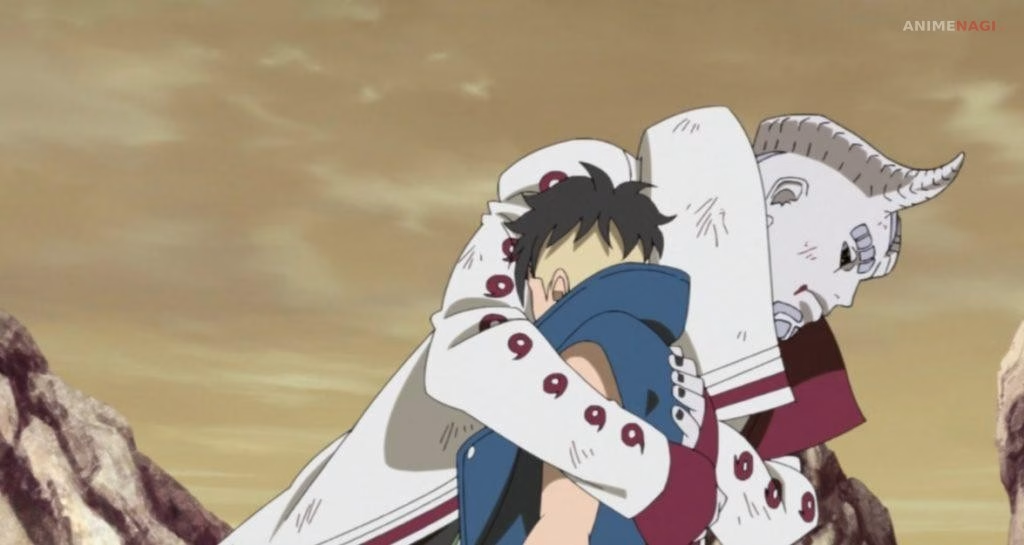
One of the biggest emotional twists surrounding Baryon Mode comes after the battle ends. Initially, Kurama tells Naruto that using the transformation could kill both of them because their chakra and life force are being consumed together. Naruto accepts this possibility immediately and activates the form anyway.
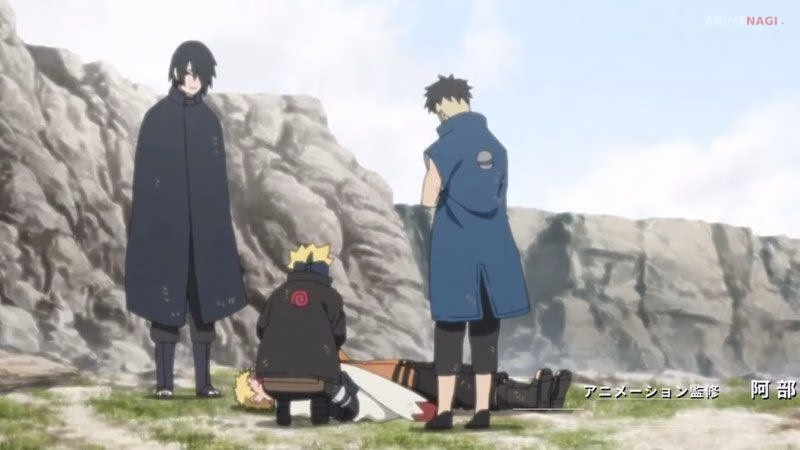
However, after Isshiki’s defeat, Naruto collapses and awakens in a spiritual space beside Kurama. It is here that Kurama finally reveals the truth: only Kurama was actually destined to die from using Baryon Mode. Naruto himself was never truly in danger of death from the transformation.
Kurama intentionally deceived Naruto because he knew Naruto would hesitate if he understood the real sacrifice involved. Since Baryon Mode consumes the tailed beast’s chakra completely, Kurama’s existence is erased permanently during the process.
This revelation transforms the emotional meaning of the fight entirely. What initially seemed like a mutual sacrifice becomes Kurama’s final act of protection for Naruto. After decades of conflict, hatred, friendship, and partnership, Kurama willingly gives his life to save Naruto and the Hidden Leaf Village.
The moment becomes one of the most emotional scenes in the franchise because it completes Kurama’s character arc perfectly.
Kurama’s death permanently changes Naruto
Kurama’s death after Baryon Mode fundamentally changes Naruto as a character moving forward. Since childhood, Naruto relied on Kurama’s chakra for strength, survival, and emotional support. Over time, their relationship evolved from hatred into genuine friendship and partnership.
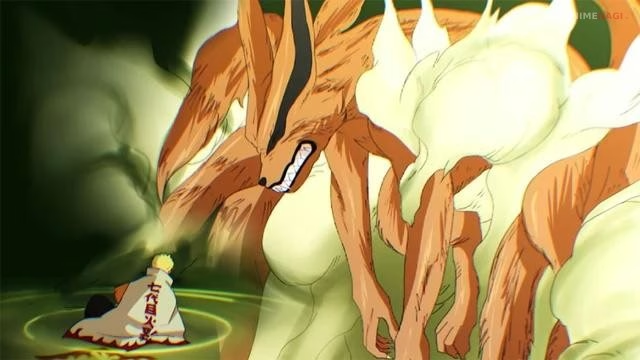
Without Kurama, Naruto loses access to many of his strongest abilities. He can no longer use Nine-Tails Chakra Mode, massive chakra reserves connected to Kurama, or transformations tied directly to the tailed beast.
This dramatically lowers Naruto’s power level compared to his peak during the Fourth Great Ninja War. The change also symbolizes the series’s shifting focus toward the next generation rather than keeping Naruto as the ultimate solution to every conflict.
Emotionally, Kurama’s death leaves Naruto deeply affected. The tailed beast had been part of Naruto’s life since birth, meaning losing Kurama feels closer to losing family than losing a weapon or source of power.
The sacrifice also completes Kurama’s redemption arc. Originally introduced as a destructive force responsible for immense tragedy, Kurama ultimately dies protecting Naruto and the shinobi world willingly.
That emotional evolution gives Baryon Mode far more narrative weight than a normal transformation.
Why is Baryon Mode Naruto’s strongest form
Even though Baryon Mode exists only briefly, it is widely considered Naruto’s strongest transformation ever. No previous form allowed him to overpower an enemy on Isshiki Ōtsutsuki’s level physically and strategically at the same time.
The transformation combines extraordinary speed, strength, reflexes, and lifespan-draining abilities into one concentrated combat state. Unlike earlier forms that emphasized large-scale ninjutsu or overwhelming chakra reserves, Baryon Mode focuses on direct efficiency and lethal close-range combat.
Its temporary nature also makes it feel more impactful. Because the form cannot be sustained safely, every second Naruto spends using it feels meaningful and dangerous. This creates much higher emotional stakes than transformations with no serious drawbacks.
The mode also represents the peak of Naruto and Kurama’s bond. Instead of simply sharing chakra, they literally fuse their energy together completely. Symbolically, Baryon Mode becomes the ultimate expression of trust and partnership between them.
That emotional context is part of why the transformation resonated so strongly with fans despite its short appearance.