When Jigen first appeared in Boruto: Naruto Next Generations, many fans immediately sensed that he was different from previous Naruto villains. Calm, mysterious, and overwhelmingly powerful, Jigen quickly established himself as one of the deadliest threats the shinobi world had ever faced. As the leader of Kara, he was not simply another rogue ninja seeking destruction. He represented a completely new level of power tied directly to the Ōtsutsuki Clan and the terrifying mystery of Karma.
What made Jigen especially dangerous was the way his abilities constantly overwhelmed even legendary characters like Naruto Uzumaki and Sasuke Uchiha. His powers seemed almost impossible to counter at first, creating one of the most one-sided battles in the franchise’s history. However, beneath Jigen’s strength lies a deeper truth that completely changes how fans understand his character and role in the story.
Let’s break down Jigen’s powers, how his abilities work, why he was so difficult to defeat, and how he shaped the direction of Boruto’s story. Information in this article is based on the Boruto manga, official Naruto franchise material, and character information from official databases and fan analysis sources.
Who Is Jigen in Boruto?
Jigen is introduced as the leader of Kara, the secretive organization operating behind many of the major conflicts in Boruto. Initially, he appears to be a powerful human enhanced through scientific ninja technology and Karma abilities. However, the story later reveals that Jigen is actually the vessel of Isshiki Ōtsutsuki, one of the strongest members of the Ōtsutsuki Clan.
Long before the events of Naruto, Isshiki arrived on Earth alongside Kaguya Ōtsutsuki. However, Kaguya betrayed him and left him near death. To survive, Isshiki parasitically took over the body of a monk named Jigen. Because Jigen’s body was never meant to fully contain Isshiki’s immense power, it functioned as an imperfect vessel for centuries.
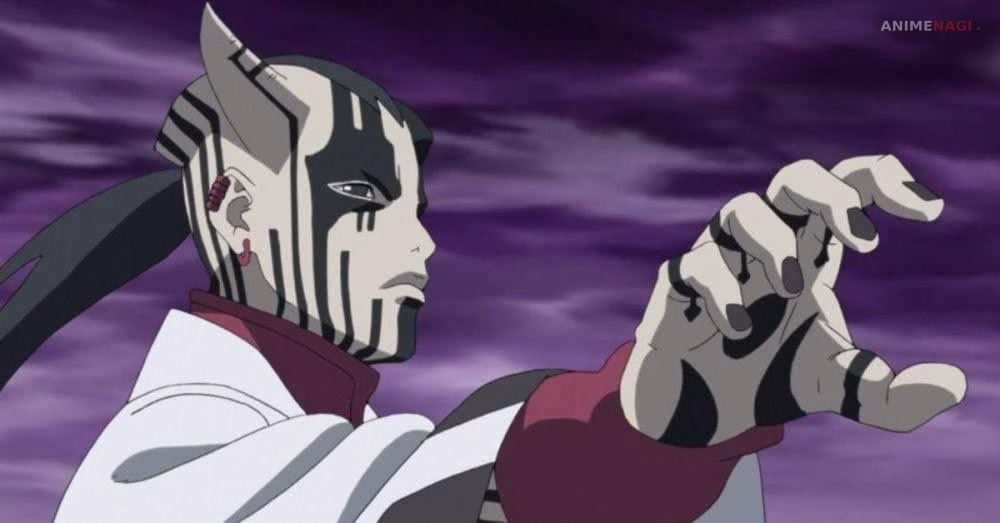
This revelation completely changes the meaning behind Jigen’s abilities. Most of his overwhelming powers are actually Isshiki’s abilities being channeled through an unstable host body. Even then, Jigen remained powerful enough to dominate Naruto and Sasuke simultaneously.
Jigen’s role in the story also expands the franchise’s mythology. Before Boruto, the Ōtsutsuki Clan already represented god-like beings connected to chakra itself. Jigen raised the threat level even further by introducing abilities that bypassed many traditional ninja combat systems.
Jigen’s Karma Powers Explained
One of Jigen’s most important abilities is Karma, the mysterious seal connected to the Ōtsutsuki Clan. Karma acts as both a weapon and a resurrection mechanism. Through Karma, an Ōtsutsuki can gradually overwrite a vessel’s body and eventually reincarnate through them. Jigen carries Isshiki’s Karma, which grants him access to immense chakra amplification and advanced abilities beyond ordinary ninjutsu.
The Karma seal dramatically boosts Jigen’s physical abilities, speed, durability, and combat efficiency. It also allows him to absorb chakra-based attacks, making many ninjutsu techniques nearly useless against him. This ability becomes a major reason Naruto and Sasuke struggle against him despite their experience.
Unlike earlier Naruto villains who relied heavily on flashy elemental attacks, Jigen fights with brutal efficiency. He neutralizes enemy techniques almost instantly and forces opponents into close-range combat where his superior speed and strength dominate.
Karma also plays a huge role in Boruto’s larger narrative. Through Jigen, the series introduces the terrifying idea that Boruto and Kawaki could eventually lose themselves entirely to Momoshiki and Isshiki. This transforms Karma from a simple power-up into one of the story’s central existential threats.
Sukunahikona: Jigen’s Most Broken Ability
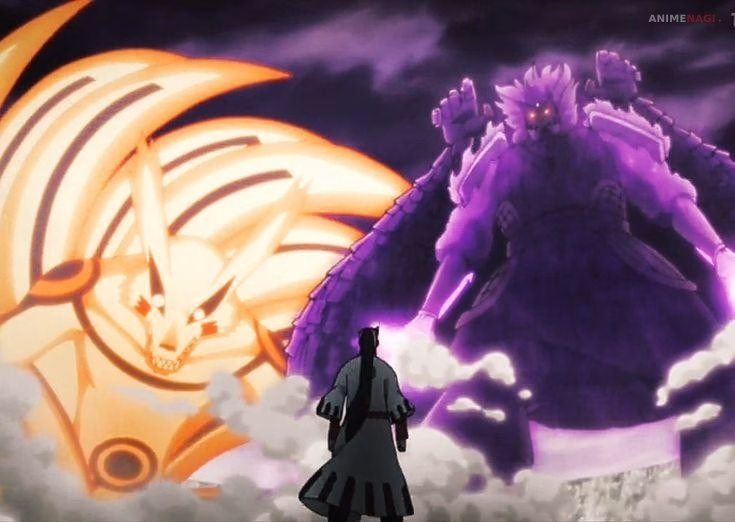
Jigen’s signature ability is Sukunahikona, a dōjutsu power inherited from Isshiki Ōtsutsuki. This technique allows him to instantly shrink himself or non-living objects to microscopic sizes and then restore them to normal instantly.
At first, Naruto and Sasuke struggle to understand what is happening during battle. Weapons appear and disappear instantly, attacks seem impossible to track, and Jigen constantly evades damage in ways that make no sense visually. Sasuke eventually deduces that Jigen is shrinking objects rather than teleporting them.
This ability is devastating because it bypasses normal combat expectations. Jigen can shrink deadly black rods to microscopic size, launch them invisibly, and expand them inside or near opponents before they can react. Even elite shinobi struggle to track these attacks.
Sukunahikona also allows Jigen to shrink himself instantly, making direct attacks incredibly difficult to land. Combined with his speed and taijutsu, this creates a nearly unbeatable fighting style focused on unpredictability and precision.
Many fans consider Sukunahikona one of the most overpowered abilities in the Naruto franchise because of how effectively it counters traditional ninja techniques.
Daikokuten and Dimensional Storage
Another terrifying power connected to Jigen is Daikokuten. This ability allows Isshiki to store shrunken objects inside a timeless dimension and summon them instantly whenever needed. Rather than carrying physical weapons, Jigen effectively has access to a hidden arsenal that can appear without warning during combat.
The black cubes and giant rods frequently seen during his battles are part of this ability. Because time does not flow inside the storage dimension, objects remain perfectly preserved until summoned.
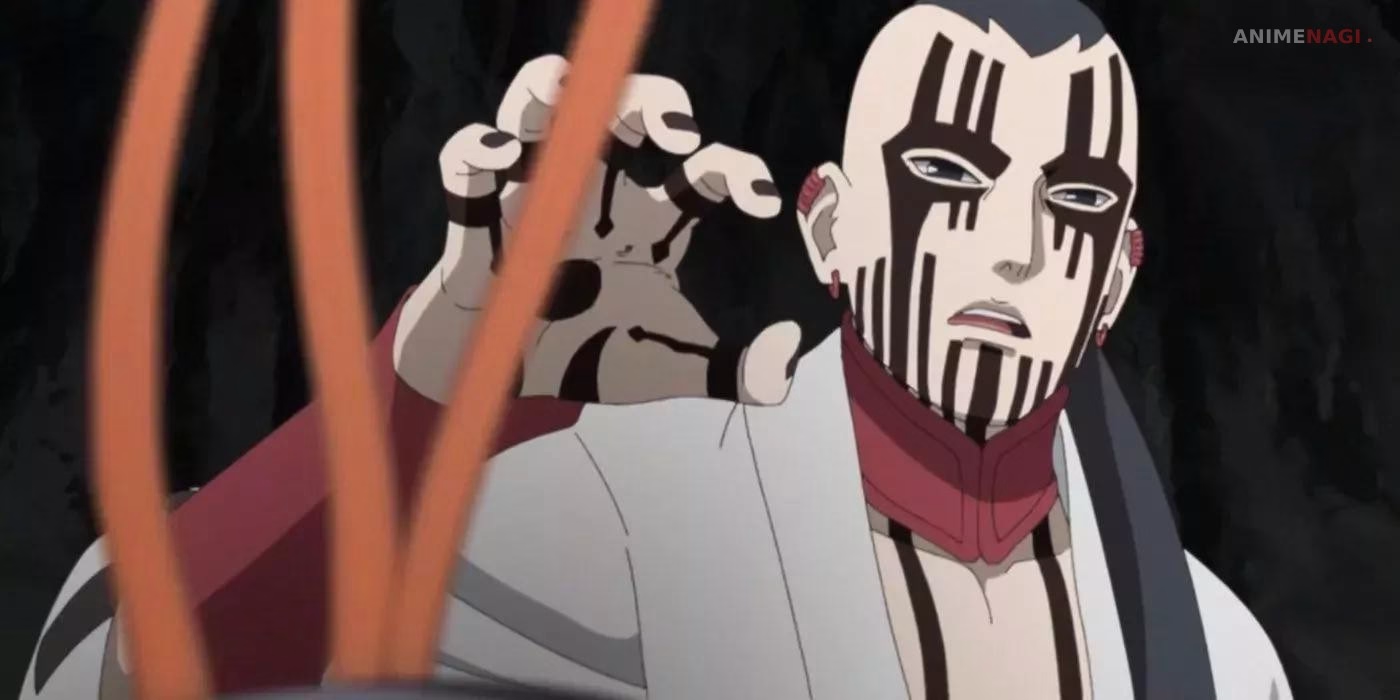
Daikokuten synergizes perfectly with Sukunahikona. Jigen can shrink objects, store them instantly, and release them at lethal speeds during combat. This combination creates an attack pattern that overwhelms even highly experienced fighters.
The psychological effect of these powers is also important. Opponents constantly feel pressured because attacks can emerge from nowhere at any moment. Jigen essentially controls the battlefield itself through spatial manipulation and dimensional storage.
These abilities helped shift Boruto battles toward more abstract, high-concept combat compared to the elemental warfare that dominated earlier Naruto arcs.
Jigen’s Physical Strength and Taijutsu
Even without his dōjutsu abilities, Jigen’s physical combat skills are absurdly powerful. One of the most stunning moments in Boruto occurs when Jigen fights Naruto and Sasuke simultaneously and dominates them almost effortlessly. He overpowers Naruto in close combat, breaks through Sasuke’s defenses, and constantly pressures both fighters with superior speed and reaction time.
Unlike villains who rely mostly on raw destructive power, Jigen fights with precision and efficiency. His movements are economical, controlled, and extremely aggressive. Every strike feels calculated to overwhelm opponents quickly.
His black chakra rods also play a major role in combat. These rods drain chakra and restrict movement when embedded into targets. Jigen uses them strategically to weaken enemies and control the flow of battle.
Another key detail is that Jigen was still limited by his vessel’s weakness. Isshiki’s full power could not be sustained properly inside Jigen’s body, meaning the character fans saw was technically an incomplete version of Isshiki. That revelation made Jigen even scarier because it implied the true Isshiki was potentially far stronger than the version already defeating Naruto and Sasuke together.
How Jigen Changed the Power Scale in Boruto
Jigen fundamentally changed the Naruto franchise’s power scale. For years, Naruto and Sasuke represented the absolute peak of shinobi strength. After defeating Kaguya and Madara, many fans believed there were few believable threats left capable of challenging them directly. Jigen shattered that assumption completely.
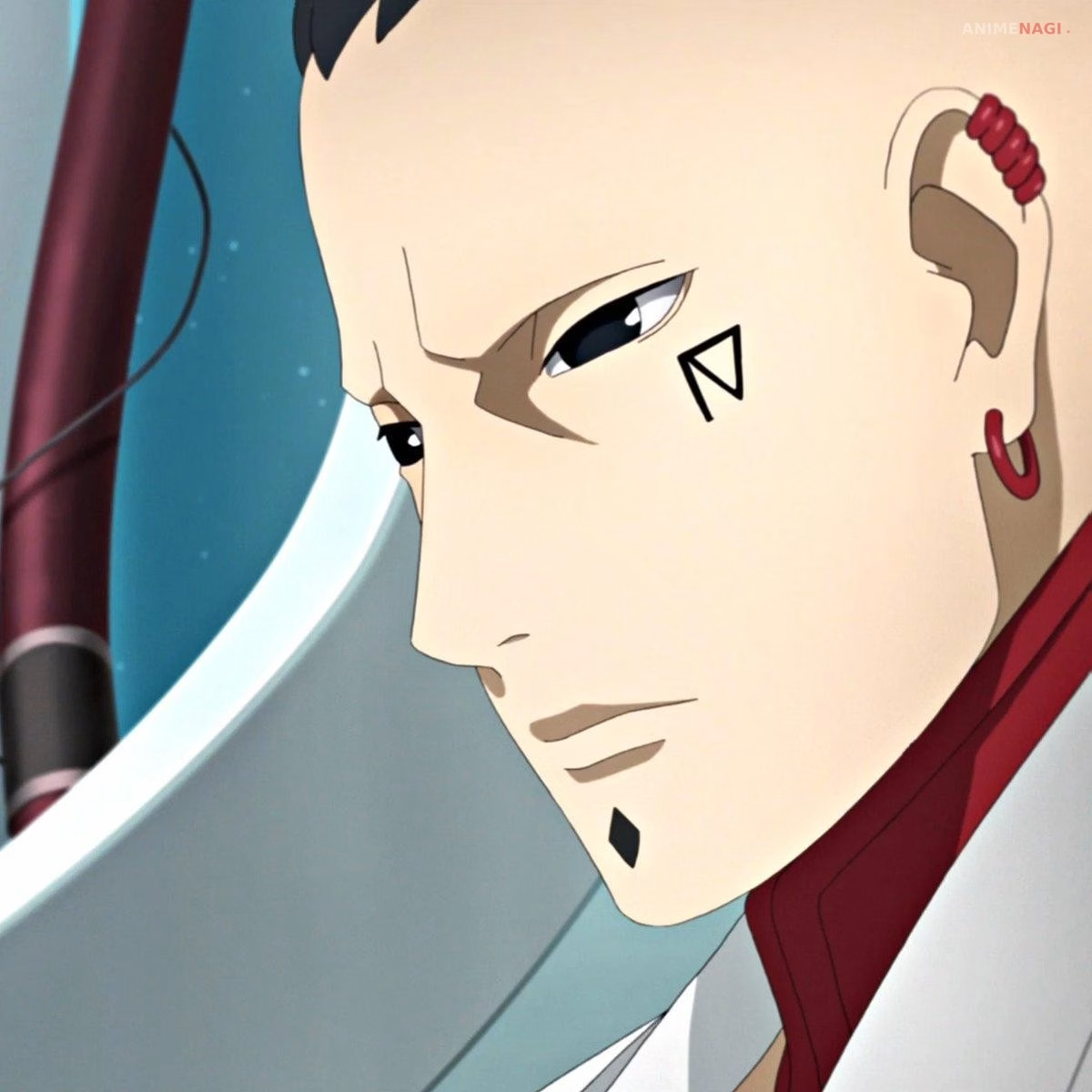
His victory against Naruto and Sasuke established Kara and the Ōtsutsuki as threats beyond traditional ninja warfare. Instead of relying on giant armies or political conflict, Boruto shifted toward god-like enemies with reality-altering powers.
This change was controversial among fans. Some enjoyed the higher stakes and science-fiction elements, while others felt the series moved too far away from the grounded ninja themes of early Naruto. Regardless of opinion, Jigen undeniably reshaped the franchise’s direction.
His existence also forced Boruto and Kawaki into central narrative roles. Since Karma became the key to fighting Ōtsutsuki threats, the younger generation suddenly carried responsibilities even Naruto and Sasuke could not fully handle.
In many ways, Jigen represents the transition point where Boruto stops being a sequel focused mainly on legacy characters and becomes its own story about the next generation facing entirely new dangers.
Jigen’s Relationship With Kawaki
Jigen’s connection to Kawaki is one of the darkest aspects of Boruto’s story. Because Jigen’s body could not permanently sustain Isshiki, he searched for a more suitable vessel. Kawaki became that target after surviving brutal Karma implantation experiments that killed many other children.
Jigen treated Kawaki less like a child and more like property meant for future possession. This abusive relationship deeply traumatized Kawaki and shaped many of his later decisions.
The emotional weight of this storyline is important because it humanizes the larger conflict. Jigen is not simply trying to conquer the world. He is destroying lives to ensure his own survival and resurrection.
Kawaki’s fear of Jigen also creates some of Boruto’s strongest emotional scenes. Even after escaping Kara, Kawaki remains psychologically scarred by years of abuse and manipulation.
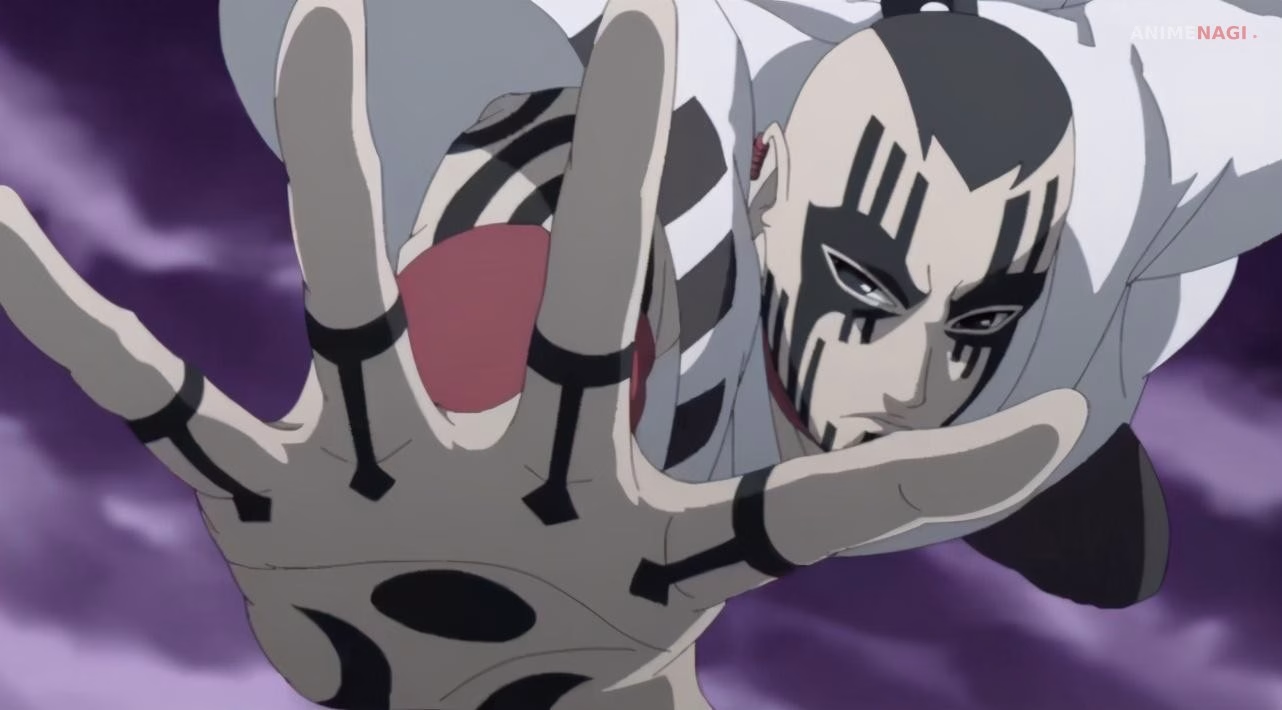
This relationship adds another layer to Jigen’s character. While his powers make him physically terrifying, his treatment of Kawaki demonstrates the emotional and psychological damage caused by the Ōtsutsuki’s obsession with vessels and reincarnation.
Why Jigen Became One of Boruto’s Best Villains
Jigen stands out because he combines mystery, overwhelming power, and psychological intimidation extremely effectively. His calm personality makes him more unsettling than loud or chaotic villains. He rarely wastes movement or emotion during battle, which reinforces the sense that he operates on an entirely different level from ordinary shinobi.
The gradual reveal that Jigen is merely Isshiki’s vessel also adds complexity to his role. He is simultaneously a villain, a victim, and a tool being consumed by another entity. That layered identity makes him more interesting than a straightforward conqueror.
Jigen’s fights are also some of the most visually memorable battles in Boruto. His shrinking abilities, dimensional powers, and brutal taijutsu created combat sequences unlike anything previously seen in Naruto.
Most importantly, Jigen forced the franchise’s heroes into genuine desperation. For the first time in years, Naruto and Sasuke encountered an opponent they simply could not overpower through experience or teamwork alone.
That sense of hopelessness made Jigen one of the most impactful antagonists in Boruto: Naruto Next Generations. Even after his defeat, the consequences of his actions continue shaping the series through Kawaki, Karma, and the lingering threat of the Ōtsutsuki Clan.