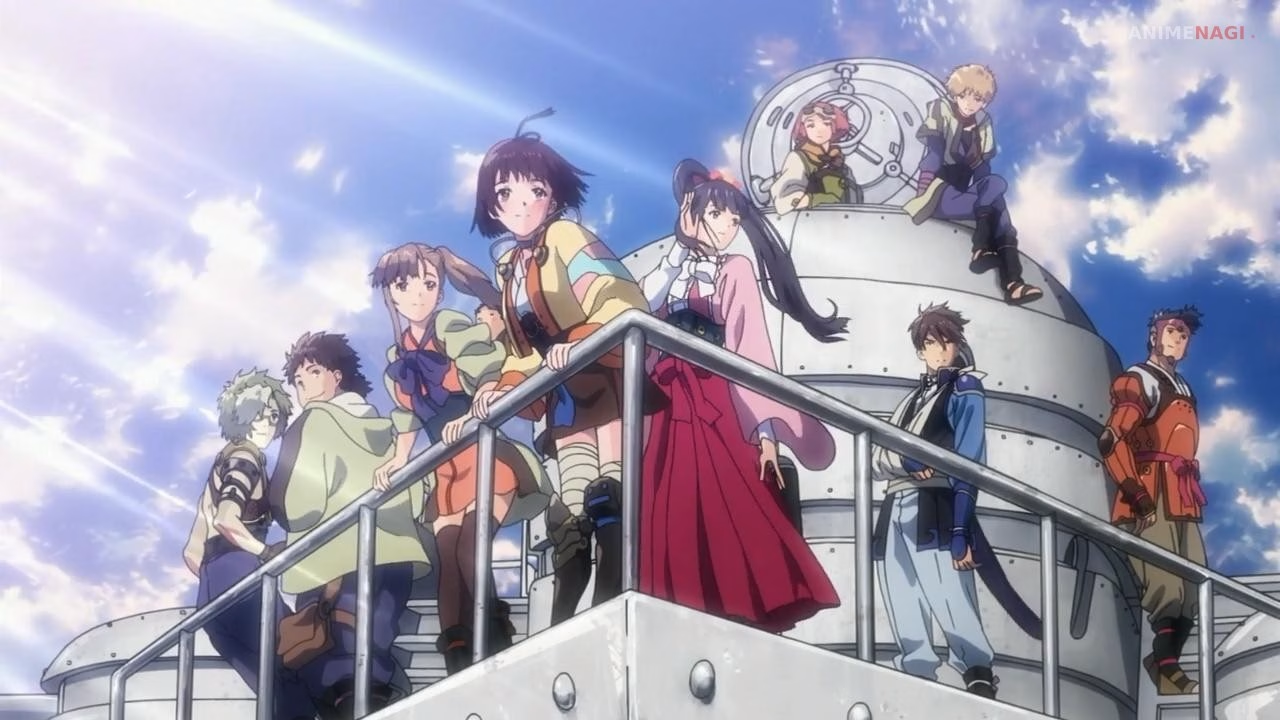
When Kabaneri of the Iron Fortress first aired in 2016, the anime quickly gained attention for its striking steampunk world, intense action scenes, and obvious similarities to Attack on Titan. Produced by Wit Studio and directed by Tetsurō Araki, the series blended zombie horror, industrial-era aesthetics, and fast-paced combat into one of the most visually memorable anime of its season.
However, the original anime ended with several unresolved character arcs and lingering questions about the future of Ikoma, Mumei, and the surviving crew aboard the Kotetsujo. That continuation eventually arrived in 2019 through the sequel movie Kabaneri of the Iron Fortress: The Battle of Unato. Rather than rebooting the story or retelling the anime, the film directly continues the events of the TV series and serves as the franchise’s true conclusion.
The movie expands the world of Kabaneri beyond survival horror by focusing more heavily on emotional character growth, political conflict, and the lingering consequences of the Kabane outbreak. At the same time, it preserves the intense train battles, steampunk action, and emotional bond between Ikoma and Mumei that made the original series popular.
Let’s break down the story, characters, themes, and exactly where The Battle of Unato fits within the Kabaneri timeline.
What Is Kabaneri of the Iron Fortress: The Battle of Unato About?
According to official summaries and streaming descriptions, The Battle of Unato takes place roughly six months after the events of the original anime series. The story follows Ikoma and the crew of the Kotetsujo as they join a military alliance attempting to reclaim the region of Unato from the Kabane horde.
Unlike the TV anime, which constantly moved from one station to another, the movie focuses almost entirely on a single conflict surrounding Unato Castle. This tighter structure gives the film a more focused narrative and allows the emotional storylines to breathe more naturally. Critics and fan reviews frequently noted that the movie benefited from centering itself around one major battle rather than rapidly escalating plot twists.
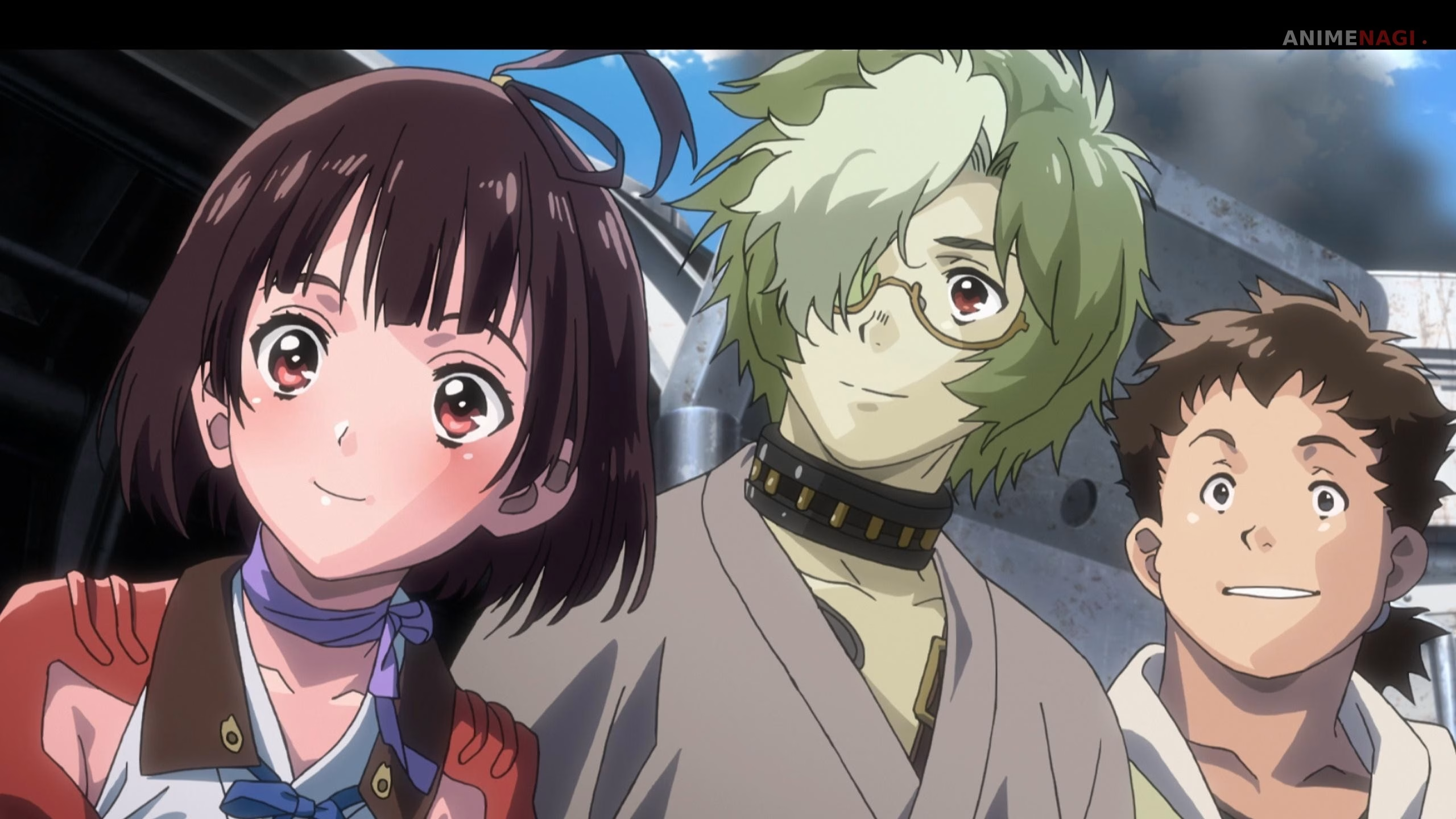
The central mystery of the movie involves unusual Kabane behavior. Ikoma notices that the Kabane in Unato are acting in coordinated patterns instead of moving randomly like mindless monsters. This eventually leads to the discovery that a powerful force within Unato Castle is influencing the Kabane swarm.
The conflict becomes deeply personal once the heroes uncover the tragic truth behind the castle’s fall. The movie reveals that the former lord of Unato transformed his own daughter into a Kabane after failing to save her life. That emotional tragedy becomes the core of the film’s climax and reinforces one of Kabaneri’s recurring themes: humanity often creates even greater horrors while trying to survive.
The movie also expands the scale of the franchise’s action. Massive train assaults, underground tunnel battles, and the appearance of the terrifying Black Fog create some of the largest combat sequences in the entire series. At the same time, the story remains emotionally grounded through the relationship between Ikoma and Mumei.
Ikoma’s Role in the Movie Explained
Ikoma remains the emotional center of The Battle of Unato. Throughout the original anime, he struggled with balancing his humanity against the monstrous instincts created by becoming a Kabaneri, a hybrid between human and Kabane. The movie continues exploring that internal conflict.
At the beginning of the film, Ikoma is already more experienced and emotionally stable compared to his earlier self. However, the Unato mission forces him to confront how dangerous his Kabane instincts still are. During one sequence, he temporarily loses control and attacks Mumei, leading to his imprisonment by the group.
This moment is important because it shows that Ikoma’s transformation is still psychologically affecting him. Unlike many action anime protagonists who simply “master” their powers, Ikoma continues struggling with the fear of losing himself completely.
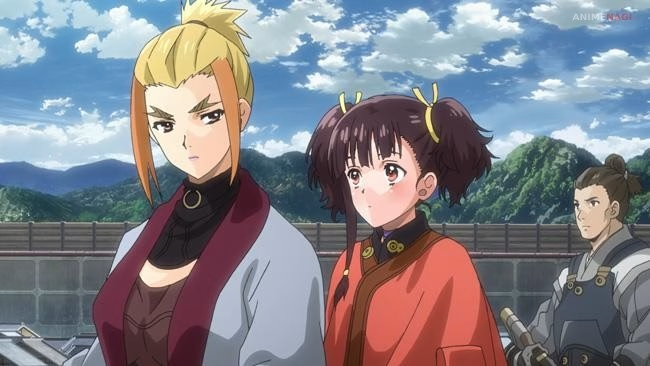
The movie also reinforces his role as both engineer and fighter. Rather than relying only on brute force, Ikoma constantly analyzes enemy behavior and searches for strategic solutions. His intelligence remains one of the defining traits that separates him from more traditional action heroes.
Most importantly, the film deepens his connection with Mumei. Earlier episodes hinted at emotional attachment between them, but The Battle of Unato develops their relationship far more directly. Several scenes focus on trust, emotional support, and their shared understanding as Kabaneri living between humanity and monstrosity.
By the movie’s conclusion, Ikoma evolves beyond simply surviving. He becomes someone actively fighting to preserve hope for the future, which marks significant growth compared to the traumatized engineer introduced at the beginning of the anime.
Mumei’s Character Development in The Battle of Unato
Mumei arguably receives the strongest emotional development in The Battle of Unato. In the original anime, she was introduced as an incredibly powerful fighter shaped by manipulation and emotional trauma. Although she gradually opened up to the Kotetsujo crew, much of her personality remained emotionally guarded.
The movie shows a noticeably more mature version of Mumei. She is calmer, more compassionate, and more connected to the people around her. However, she still struggles with the psychological scars left by Biba Amatori and the violent ideology forced upon her during childhood.
One of the film’s biggest strengths is how it explores Mumei’s vulnerability. Despite her combat ability, several moments reveal how emotionally dependent she has become on the relationships she formed aboard the Kotetsujo. Her bond with Ikoma especially becomes central to the story.
The movie also gives Mumei some of the franchise’s best action sequences. Her fights inside the tunnels beneath Unato Castle showcase the speed and brutality that originally made her one of the anime’s standout characters. At the same time, those scenes now carry more emotional weight because viewers understand how much she fears losing the people around her.
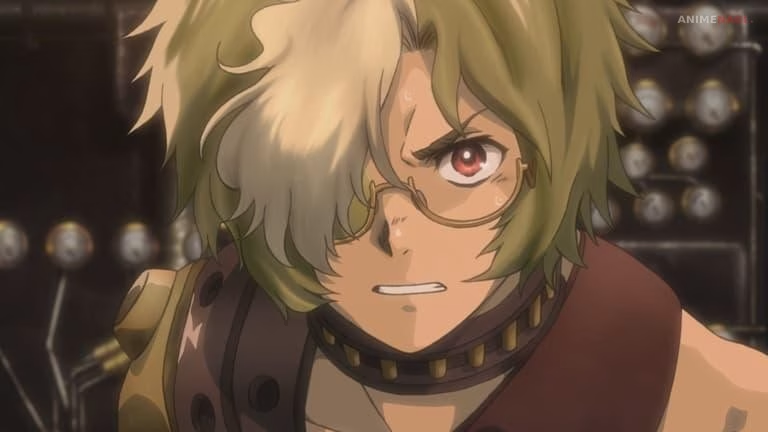
During the climax, Mumei becomes emotionally invested in stopping the tragedy surrounding Unato because she recognizes similarities between herself and the victims trapped by the Kabane infection. That empathy marks a major contrast from the emotionally detached fighter seen early in the TV anime.
The Battle of Unato ultimately positions Mumei as more than just a powerful warrior. She becomes one of the emotional pillars holding the surviving group together.
How the Movie Fits Into the Kabaneri Timeline
One of the most common questions surrounding The Battle of Unato is whether it is a sequel, recap, or alternate story. The answer is straightforward: the movie is a direct sequel to the original anime series.
The confusion exists partly because the franchise also released compilation movies before The Battle of Unato. Those earlier films simply summarized the TV anime’s events, while The Battle of Unato continues the narrative with entirely new material.
Chronologically, the movie takes place half a year after the fall of Kongokaku and the defeat of Biba Amatori. By this point, the Kotetsujo crew has become more organized and experienced, though the Kabane threat still dominates the world of Hinomoto.
Importantly, the movie functions as a narrative conclusion for the anime. While the ending leaves room for future stories, it resolves many of the franchise’s major emotional arcs, especially regarding Ikoma and Mumei.
The film also shifts the tone slightly compared to the original series. While the TV anime emphasized nonstop survival horror and political betrayal, The Battle of Unato focuses more on emotional healing, sacrifice, and rebuilding after tragedy.
That tonal shift helps the movie feel less like a simple continuation and more like the final chapter of the characters’ journey.
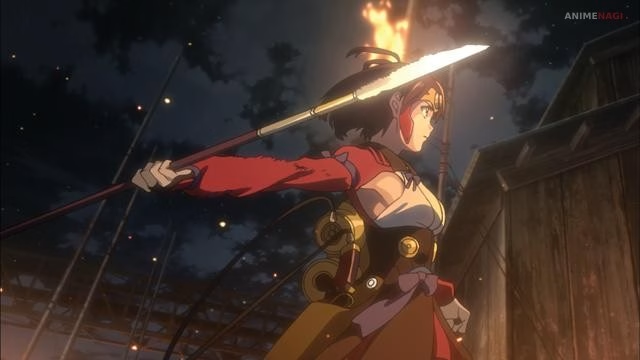
Why Kabaneri of the Iron Fortress Still Stands Out
Even years after its release, Kabaneri of the Iron Fortress remains visually distinctive within the anime industry. Many viewers initially compared it heavily to Attack on Titan because of its action style, zombie-like enemies, and Wit Studio involvement. Reddit discussions and anime forums still frequently debate those similarities.
However, Kabaneri developed its own identity through its industrial-revolution setting, armored trains, and steampunk-inspired worldbuilding. Reviews from anime critics consistently praised the franchise’s art direction, animation quality, and action choreography.
The Battle of Unato especially benefits from the franchise’s cinematic strengths. The movie format allows the animation team to deliver larger-scale action scenes while maintaining the detailed visual style that defined the original anime.
Composer Hiroyuki Sawano also remains a major reason the franchise stands out. His soundtrack gives the movie a grand, emotional atmosphere that amplifies both the action and quieter character moments.
More importantly, the movie succeeds because it focuses on its characters instead of trying to endlessly escalate the apocalypse. Beneath the monster fights and explosive battles, The Battle of Unato is ultimately a story about people searching for humanity in a collapsing world. That emotional focus is why the movie still resonates with fans of dark fantasy anime today.
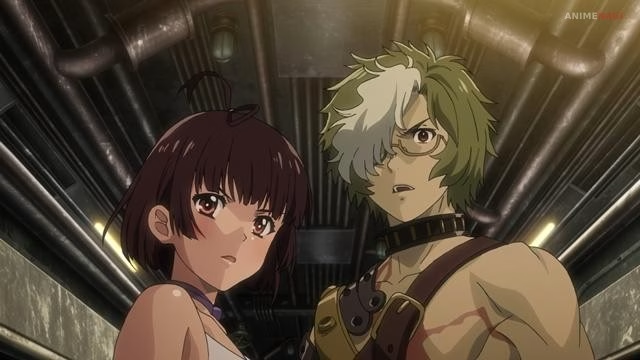
Another reason Kabaneri of the Iron Fortress: The Battle of Unato continues to stand out is how it refines the balance between spectacle and storytelling. While the original series sometimes prioritized style over narrative depth, the movie feels more controlled and intentional in its pacing. The stakes are clearer, the emotional arcs are more focused, and the central conflict carries stronger thematic weight.
This tighter narrative structure allows viewers to connect more deeply with Ikoma and Mumei’s journey without being overwhelmed by constant chaos. It also highlights how the franchise evolved beyond its early comparisons and embraced its own identity. In many ways, the movie proves that Kabaneri works best when it slows down just enough to let its characters breathe.