With its Summer 2026 debut approaching, Kaiju Girl Caramelise has released a new trailer and key visual that offer a clearer look at what makes this anime stand out. Alongside the footage, official details about the opening and ending theme songs have also been confirmed, giving fans a better sense of the tone the series is aiming for.
Adapted from Spica Aoki’s manga, the story has quietly built a strong following since its serialization began in 2018. Its central hook remains unusual even by anime standards. It follows a shy high school girl whose emotions don’t just stay internal but instead manifest in the form of a destructive kaiju.
Trailer Focuses on Romance Turning Into Chaos
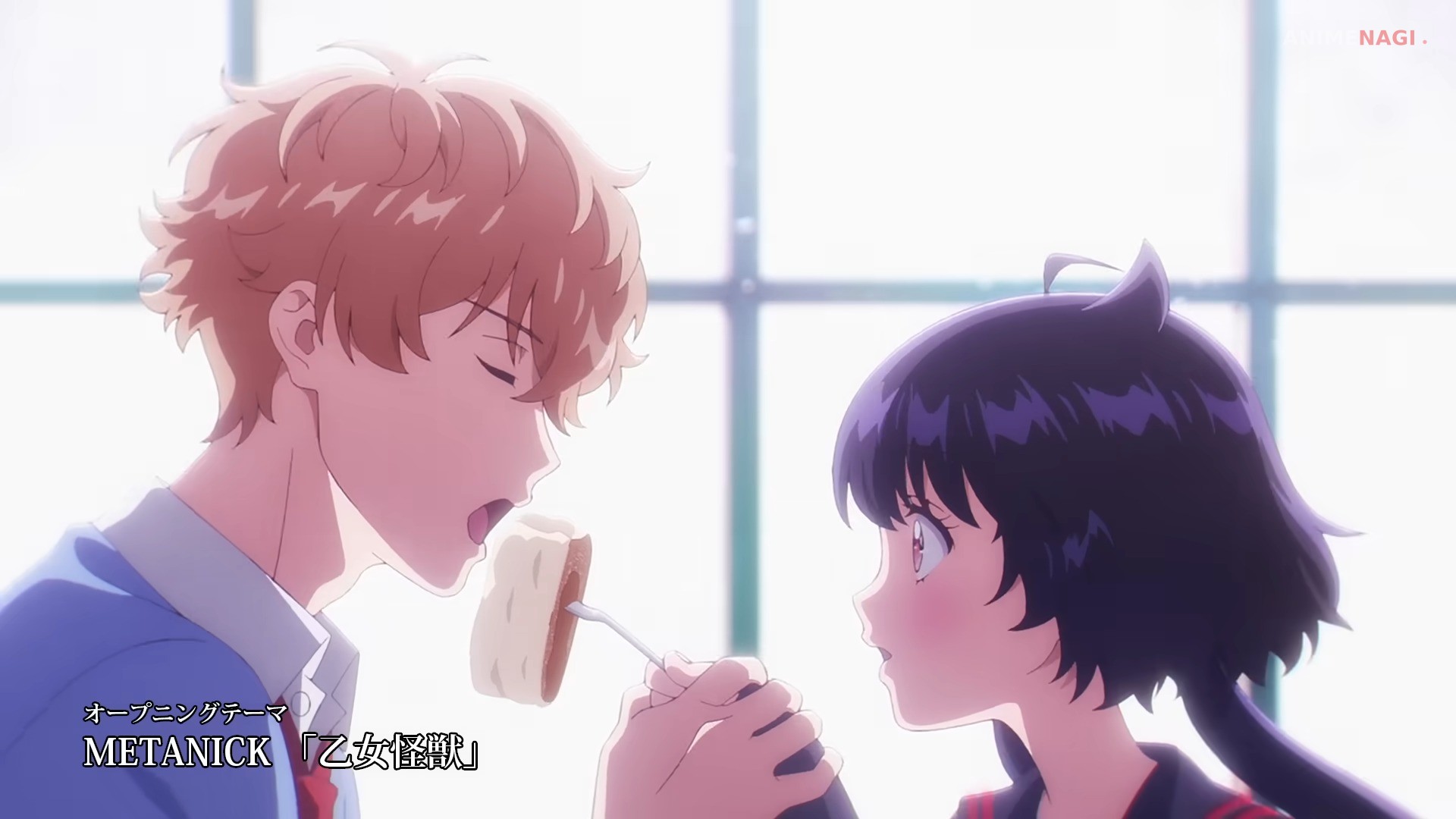
The newly released trailer leans heavily into the contrast at the heart of the series. On one side, it presents a familiar high school romance between Kuroe Akaishi and Arata Minami. On the other, it quickly shifts into something far less ordinary as Kuroe’s feelings begin to spiral out of control.
Every emotional turning point in her life carries visible consequences, making even simple moments feel unpredictable. The trailer hints that the relationship between Kuroe and Arata will not follow a straightforward path, as her condition continues to complicate every step forward. Instead of resolving tension, her growing feelings seem to amplify the stakes.
The second key visual supports this tone by placing Kuroe in a more reflective and uneasy state. Rather than focusing on spectacle, it highlights her vulnerability, reinforcing the idea that the story is driven as much by internal struggle as external chaos.
Theme Songs Reflect Two Sides of the Story
The music lineup for the anime adds another layer to its identity, with two very different approaches shaping the opening and ending themes. The opening track, “KAIJU GIRL” by METANICK, embraces a heavier and more energetic sound. According to vocalist AKARI, the performance was built around expressing Kuroe’s insecurities and emotional intensity, capturing the conflict she feels as her emotions grow stronger.
In contrast, the ending theme “OtomenoHonki” by HoneyWorks feat. HaKoniwalily shifts toward a softer, more introspective tone. The artists emphasized that the song reflects Kuroe’s struggles with communication and her gradual understanding of love. Their approach aligns closely with the character’s quieter moments, offering a balance to the intensity seen in the opening.
Together, the two tracks frame the series from different emotional perspectives, reinforcing its mix of heartfelt storytelling and unpredictable escalation.
A Different Kind of Romantic Comedy
At a glance, Kaiju Girl Caramelise follows a structure that feels familiar within the romance genre. A socially awkward girl develops feelings for a popular classmate, setting up a classic dynamic. What changes everything is the way those emotions directly trigger destruction on a massive scale.
This concept turns what would normally be small, personal moments into events with city-level consequences. It also creates a constant tension between Kuroe’s desire for connection and the risk that comes with expressing it. Love becomes something she cannot safely experience, adding a unique layer of conflict to the story.
With animation handled by LIDENFILMS and direction from Teruyuki Omine, the adaptation appears to be leaning fully into this contrast. The result is a series that does not just blend genres but actively plays them against each other.
As the July 2026 release window gets closer, the latest trailer and music announcements suggest that Kaiju Girl Caramelise is aiming to deliver something distinct. It is not just another romantic comedy or a standard monster story but a mix of both, where emotional growth and large-scale destruction are closely tied together.