The ending of Tokyo Ghoul leaves many fans wondering about the true fate of Ken Kaneki after the brutal final battle. Throughout the series, Kaneki endures immense physical and emotional suffering, evolving from a timid student into one of the most powerful figures in the story. By the time Tokyo Ghoul:re reaches its climax, his journey becomes less about survival and more about finding peace in a world divided between humans and ghouls.
The final arc brings together multiple factions, including the CCG, ghouls, and Kaneki himself, who transforms into a monstrous entity during the Dragon crisis. This chaotic battle pushes the story to its limits, leaving fans questioning whether Kaneki survives or sacrifices himself. To fully understand his fate, it is important to break down what happens during the final battle and how the story concludes.
What Happens to Kaneki in the Final Battle
During the climax of Tokyo Ghoul:re, Kaneki loses control and transforms into the massive Dragon form. This transformation is the result of extreme physical stress and manipulation, turning him into a destructive force that threatens the entire city. Rather than being a villain by choice, Kaneki becomes a victim of circumstances, symbolizing the cycle of violence that defines the series.
The Dragon form spreads chaos across Tokyo, creating grotesque creatures and destabilizing society. This forces both humans and ghouls to unite against a common threat, something that had rarely happened before. Kaneki’s transformation becomes the catalyst for change, even though it comes at a devastating cost.
Eventually, Kaneki is confronted by his allies, who refuse to give up on him. Through their efforts, they manage to reach his consciousness and bring him back from the brink. This moment is crucial because it shows that Kaneki’s humanity still exists despite everything he has endured.
Kaneki does not die in the end of Tokyo Ghoul:re, which is one of the most important revelations of the finale. After being freed from the Dragon form, he survives and begins rebuilding his life in a changed world. This outcome contrasts with the darker tone of earlier arcs, offering a more hopeful resolution.
His survival is significant because it reflects the series’ underlying message about breaking cycles of hatred. Instead of ending in tragedy, Kaneki’s story concludes with the possibility of coexistence between humans and ghouls. This shift in tone surprised many fans who expected a more tragic ending.
The manga explicitly shows Kaneki alive in the epilogue, confirming that he overcomes the final battle. This resolution provides closure to his long and painful journey, giving him the peace he had been searching for.
Kaneki’s Life After the War
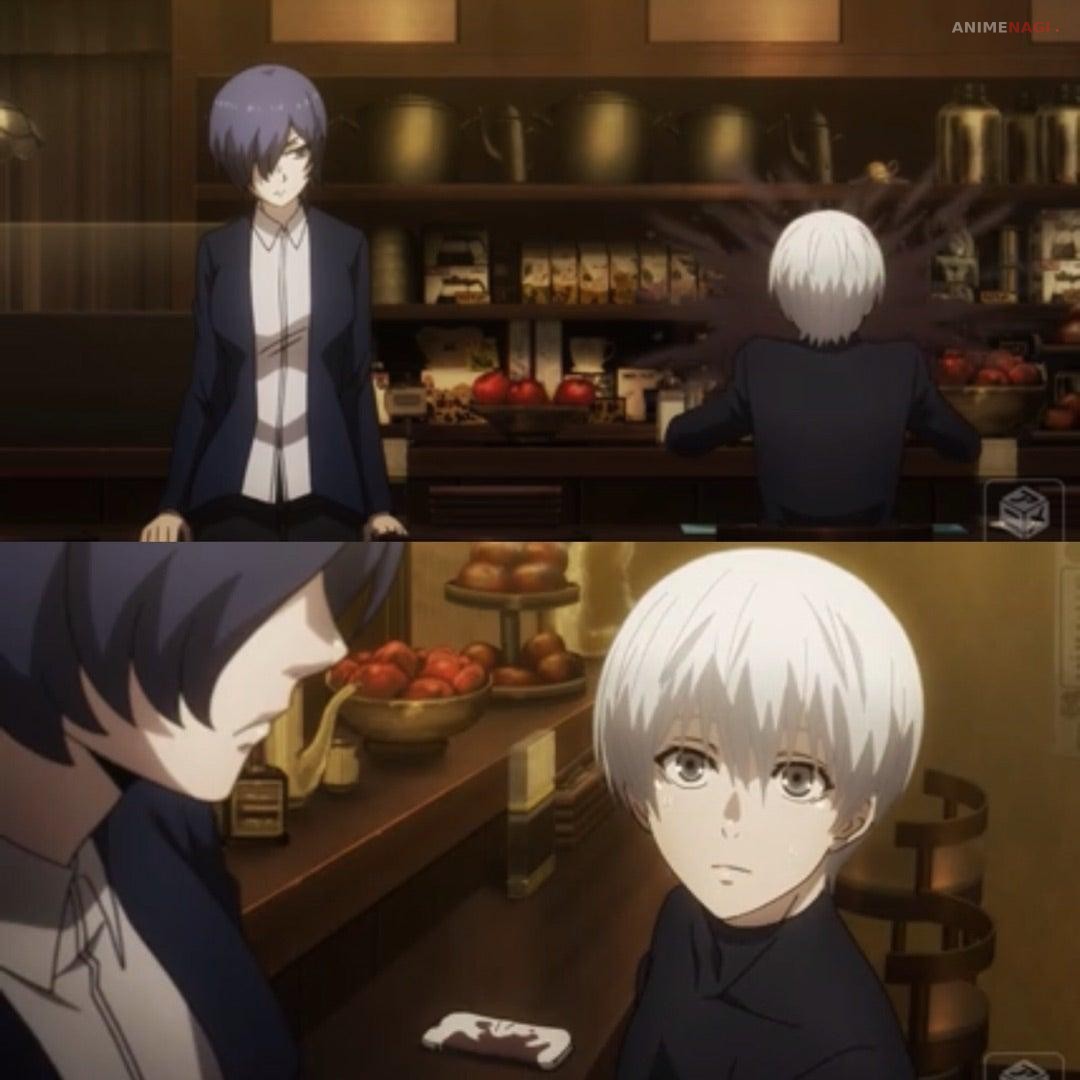
After the final battle, Kaneki goes on to live a relatively peaceful life with Touka Kirishima. The two characters, whose relationship had been developing throughout the series, end up together and start a family. This marks a major shift from the chaos that defined most of Kaneki’s life.
The epilogue reveals that Kaneki and Touka have a daughter, symbolizing hope for a new generation. This future represents a world where humans and ghouls can coexist more peacefully. Kaneki’s role transitions from a fighter to someone who values stability and family.
This ending also reinforces the idea that Kaneki’s struggles were not in vain. Everything he endured ultimately led to a better future, even if the path was filled with pain and sacrifice.
The Meaning Behind Kaneki’s Ending
Kaneki’s fate carries deep thematic significance within Tokyo Ghoul. His transformation into Dragon and subsequent recovery symbolize the destructive nature of hatred and the possibility of redemption. The story uses his journey to highlight the importance of understanding and empathy.
The decision to let Kaneki live also reflects a more optimistic conclusion than many dark fantasy series. Instead of reinforcing despair, the ending suggests that change is possible when people come together. This message resonates strongly with the series’ central conflict.
At the same time, the scars of Kaneki’s past are not erased. His survival does not undo his suffering, but it allows him to move forward. This balance between realism and hope is what makes the ending impactful.