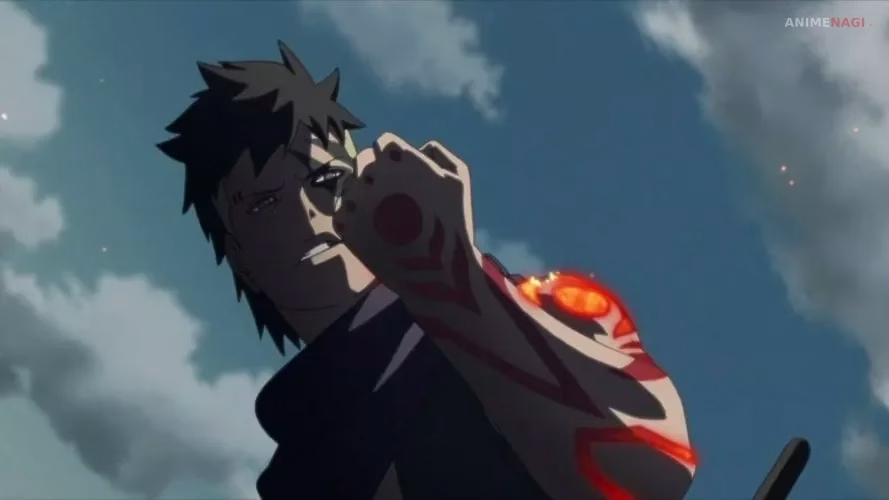
Kawaki quickly became one of the most important characters in Boruto: Naruto Next Generations because of his connection to the mysterious Karma seal and the dangerous organization known as Kara. Introduced first through a flash-forward showing the destruction of Konoha, Kawaki immediately stood out as someone deeply tied to Boruto’s future. As the story progressed, it became clear that his Karma mark was not just a source of power. It was the center of a much larger conflict involving the Ōtsutsuki clan, resurrection, and Kara’s terrifying experiments.
Unlike traditional ninja abilities in Naruto and Boruto, Karma functions almost like a biological overwrite system. It grants enormous power while slowly transforming the user into a vessel for an Ōtsutsuki. For Kawaki, this made his existence both tragic and dangerous. Kara did not simply train him. They physically and psychologically reshaped him into the ideal host for Isshiki Ōtsutsuki.
His connection to Karma also explains why Kawaki eventually becomes one of the strongest characters in the series. The seal dramatically increases his abilities, grants access to advanced Ōtsutsuki powers, and links him directly to Kara’s goals. At the same time, it places him in constant danger of losing his identity completely.
Let’s break down how Kawaki’s Karma works, why Kara needed him, and how the seal transformed him into one of Boruto’s most powerful figures.
What Is Karma in Boruto?
Karma is one of the most important concepts introduced in Boruto. According to lore explanations from the Boruto Wiki and Narutopedia, Karma acts as a compressed backup file containing an Ōtsutsuki’s biological data and consciousness.
When an Ōtsutsuki implants Karma onto a compatible vessel, the seal slowly rewrites the host’s body at the genetic level. Over time, the vessel becomes increasingly transformed into a complete Ōtsutsuki. Once the process reaches 100%, the original Ōtsutsuki can resurrect using the vessel’s body. This makes Karma both a weapon and a curse.
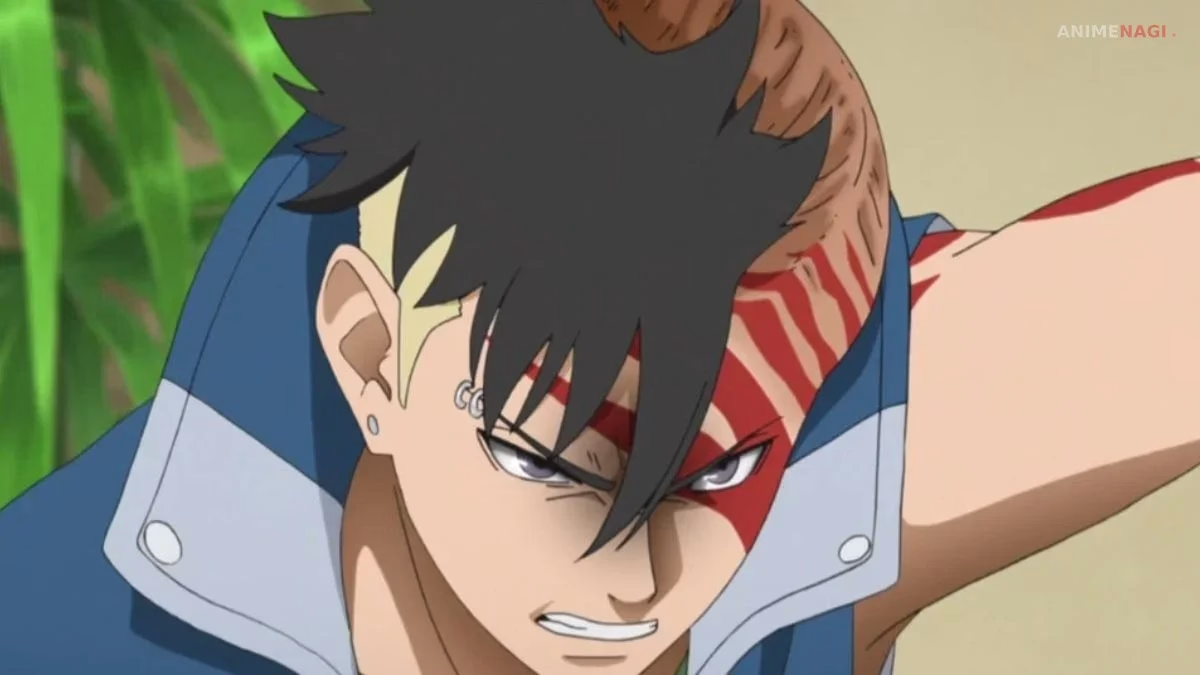
The seal also grants immediate combat advantages before the resurrection process is complete. Users gain enhanced physical strength, speed, chakra amplification, and the ability to absorb ninjutsu. According to explanations discussing Boruto and Kawaki’s Karma powers, the seal additionally allows access to combat experience inherited from the Ōtsutsuki, whose data is stored within it.
Another major feature is resonance. When Boruto and Kawaki activate Karma near each other, their seals interact and become stronger. This connection plays a major role throughout the Kara arc because it links both characters emotionally and physically.
Karma essentially replaces traditional ninja progression with alien evolution. Instead of simply learning techniques through training, users gradually gain god-like abilities tied directly to the Ōtsutsuki clan.
Why Kara Needed Kawaki
Kawaki became central to Kara because he was the perfect vessel for Isshiki Ōtsutsuki. According to Kawaki’s character background, Kara leader Jigen purchased Kawaki from his abusive father before subjecting him to brutal experimentation alongside multiple other children. Most test subjects died because their bodies could not survive the Karma implantation process. Kawaki survived.
That survival made him extraordinarily valuable because Isshiki required a compatible vessel capable of fully containing his power. Jigen himself was only an imperfect host, meaning Isshiki needed Kawaki to achieve complete resurrection without physical limitations. Lore explanations discussing Karma mechanics note that unsuitable vessels eventually break down under Ōtsutsuki power.
Kara therefore treated Kawaki less like a person and more like a container for Isshiki’s future rebirth. This connection deeply shaped Kawaki psychologically. He grew up believing his only purpose was serving as a vessel, which explains why he initially struggled to trust others after escaping Kara. Much of his character development in Boruto revolves around rejecting the idea that he exists solely as a tool.
The organization also enhanced Kawaki with scientific ninja technology. According to character descriptions, microscopic Shinobi-Ware modifications allowed him to reshape parts of his body into weapons during combat. Combined with Karma, these modifications made Kawaki one of Kara’s strongest assets.
How Kawaki’s Karma Powers Work
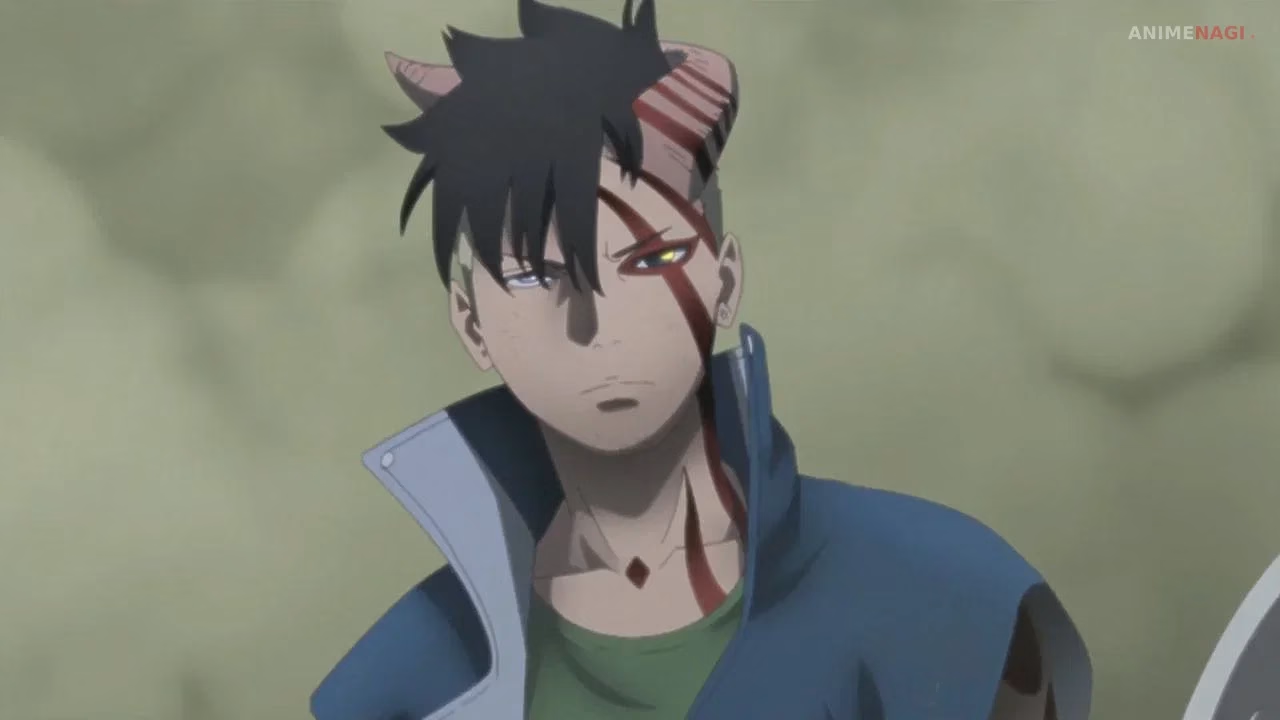
Kawaki’s Karma grants him several abilities that dramatically increase his combat potential. One of the most important powers is ninjutsu absorption. Like other Karma users, Kawaki can absorb chakra-based attacks directly through the seal. This ability makes traditional ninjutsu far less effective against him and reflects the advanced nature of Ōtsutsuki powers.
Karma also enhances physical performance significantly. Kawaki gains increased speed, reflexes, strength, and durability whenever the seal activates. During battles against Kara members and other enemies, the seal repeatedly allows him to fight opponents far beyond normal shinobi levels.
Another major aspect is combat instinct inheritance. As Karma extracts Ōtsutsuki data into the vessel, the user gains access to ancient battle experience. Discussions surrounding Karma mechanics frequently note that users can fight with skills they never formally learned.
Kawaki eventually gains access to Isshiki’s signature abilities as well. These include powers tied to Sukunahikona and Daikokuten, techniques capable of shrinking objects and storing them within a separate dimension. These abilities dramatically increase Kawaki’s versatility and make him extremely difficult to counter.
His scientific ninja body further amplifies these powers. Kawaki can morph his limbs into blades or launch attacks using modified body parts, combining technology with Ōtsutsuki abilities in a way unique to his character.
Together, these powers transform Kawaki from an abused runaway into one of the strongest fighters in Boruto.
Why Kawaki’s Relationship With Kara Is So Important
Kawaki’s connection to Kara defines much of his emotional storyline. Unlike many anime rivals motivated by ambition or revenge, Kawaki’s actions are shaped heavily by trauma. Kara’s experiments stripped away his childhood and treated him as property rather than a human being. According to discussions analyzing Kawaki’s role, the recurring theme surrounding his character is being viewed as a “tool” by others. This makes his relationship with Naruto Uzumaki especially important.
For the first time, Kawaki experiences genuine family bonds after Naruto brings him into the Uzumaki household. Official character summaries repeatedly emphasize how Naruto’s kindness changes Kawaki emotionally and helps him begin viewing Boruto and Himawari as siblings.
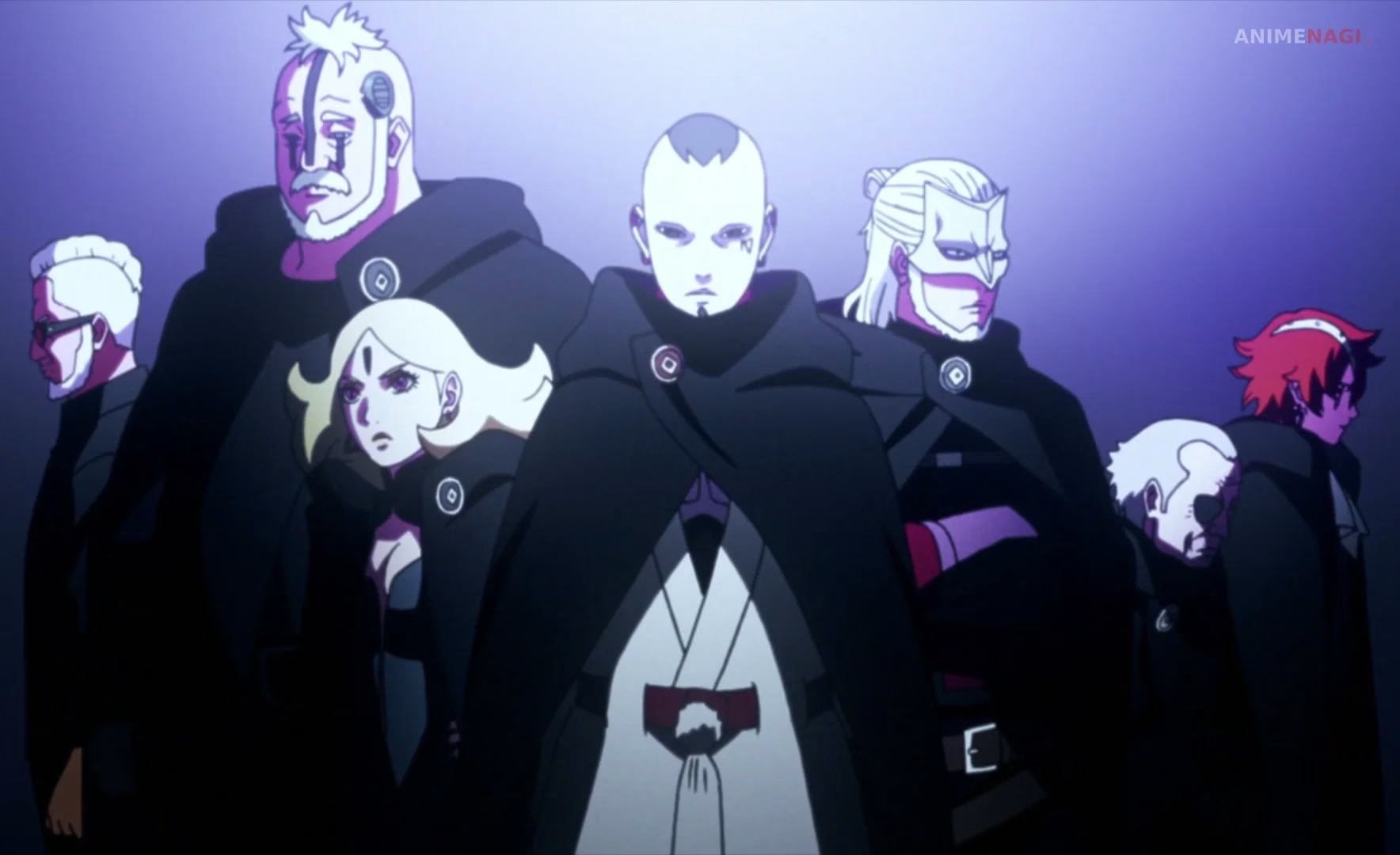
However, Kara’s influence never fully disappears. Even after escaping, Kawaki remains tied to Isshiki through Karma and becomes a target for Kara members seeking to restore the Ōtsutsuki resurrection process.
This creates constant internal conflict. Kawaki desperately wants freedom from Karma, yet he also relies on its power to protect the people he cares about. That contradiction becomes central to his eventual transformation into Boruto’s future rival.
Why Kawaki’s Karma Is Different From Boruto’s
Although Boruto and Kawaki both possess Karma, their seals function differently because of the Ōtsutsuki connected to them. Boruto’s Karma comes from Momoshiki Ōtsutsuki, while Kawaki’s originally came from Isshiki. This difference affects both their abilities and personalities during activation.
Momoshiki’s influence tends to manifest through possession and chakra-based combat enhancement. Kawaki’s Karma, tied to Isshiki, emphasizes raw physical dominance and space-time manipulation abilities.
Another major difference is compatibility. Multiple lore discussions state that Kawaki was specifically engineered to carry Karma successfully, making him unusually stable as a vessel. Boruto, in contrast, received Karma unexpectedly after defeating Momoshiki. This distinction helps explain why Kawaki often adapts to Karma powers more naturally than Boruto.
Their contrasting relationships with Karma also shape the story emotionally. Boruto views Karma as a dangerous curse threatening his identity, while Kawaki gradually begins seeing it as a necessary weapon for protecting Naruto and Konoha. That ideological divide becomes one of the franchise’s most important conflicts.
Why Kawaki’s Karma Changes the Future of Boruto
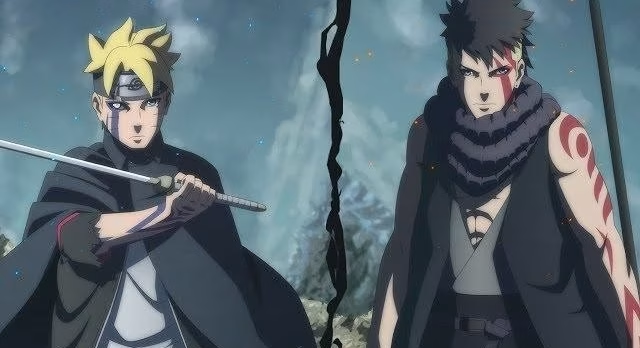
Kawaki’s Karma is ultimately important because it changes the entire direction of Boruto’s story. The seal connects him directly to Kara, the Ōtsutsuki clan, and the future destruction shown in the series opening flash-forward. What initially appears to be a simple power system gradually becomes tied to larger themes involving identity, destiny, and the end of the shinobi era.
Kawaki’s growth also mirrors Boruto’s in many ways. Both characters struggle with Karma’s influence, fear losing themselves, and develop strong emotional bonds with Naruto. However, their responses to those struggles slowly diverge.
Kawaki increasingly believes overwhelming power is necessary to protect the people he loves. Combined with Karma’s god-like abilities and his traumatic past, that mindset pushes him toward increasingly extreme decisions.
That is why Kawaki remains one of Boruto’s most compelling characters. His Karma power is not just a combat upgrade. It is the source of his trauma, his strength, and ultimately the conflict shaping the future of the entire series.
Another crucial layer of Kawaki’s Karma is how it blurs the line between control and dependence. Even after losing Isshiki’s direct influence, Kawaki actively seeks to regain Karma later in the story, not out of desperation but out of choice.
This shift is important because it shows how his mindset evolves. Instead of viewing Karma purely as a curse forced upon him by Kara, he begins to see it as a tool he can control and use. However, this also raises serious risks. The more Kawaki relies on Karma’s power, the closer he moves toward abandoning traditional human limits and embracing Ōtsutsuki-like thinking.