Kawaki is one of the most complex and emotionally layered characters introduced in Boruto: Naruto Next Generations, and his backstory plays a central role in shaping the entire narrative. Unlike traditional protagonists who chase dreams or legacy, Kawaki’s journey begins with survival in an environment defined by abuse and exploitation. His life before joining Konoha was filled with trauma, making him fundamentally different from characters raised within the shinobi system.
His connection to Jigen and the secretive organization Kara transformed him into something far more dangerous than a typical shinobi. Through brutal experimentation and the implantation of Karma, Kawaki was turned into a vessel for Isshiki Ōtsutsuki. This process stripped away his identity and reduced him to a tool meant for resurrection.
However, Kawaki’s story is not just about suffering. It is about reclaiming identity and learning what it means to belong. His bond with Naruto becomes the emotional core that contrasts his past and reshapes his future. Understanding Kawaki’s backstory is essential because it explains both his motivations and the ideological conflict that will eventually define Boruto’s endgame.
Kawaki’s Childhood Shows the Darkest Reality in Boruto
Kawaki’s early life is one of the darkest backstories in the Naruto franchise. He was raised in poverty by an abusive father who treated him as a burden rather than a child. Instead of receiving care or guidance, Kawaki was subjected to constant violence, which shaped his understanding of relationships from a very young age.
This environment forced him to develop a survival-first mindset. Trust, empathy, and emotional connection were replaced with fear and self-preservation. As a result, Kawaki grew up believing that pain was a normal part of existence and that people could not be relied upon for support.
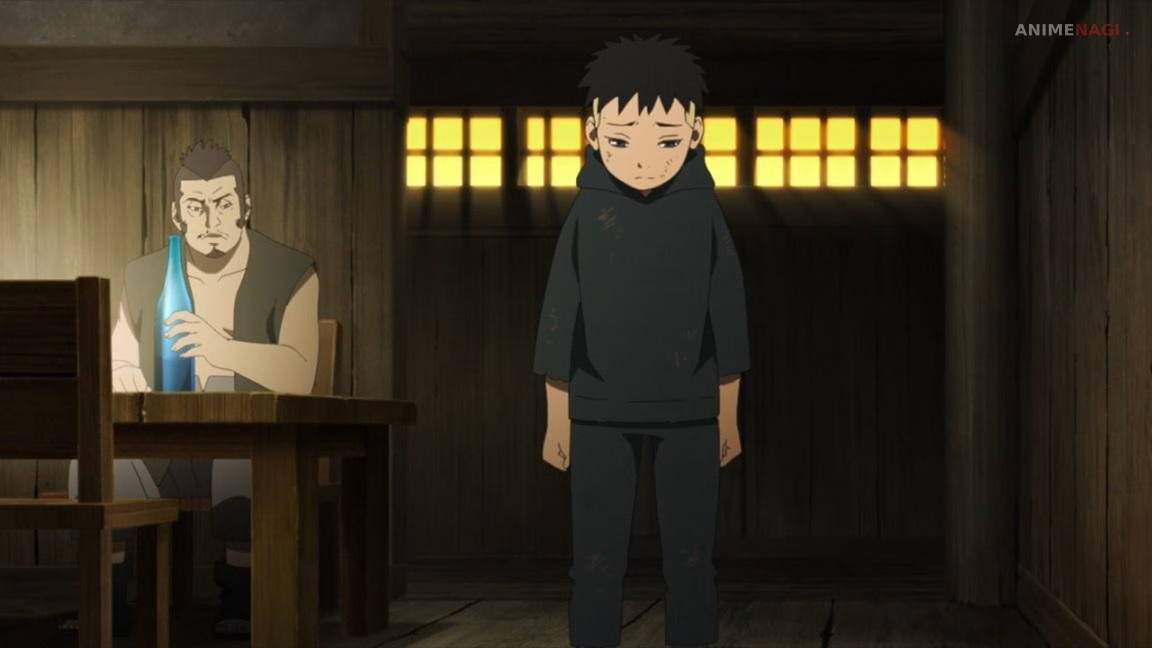
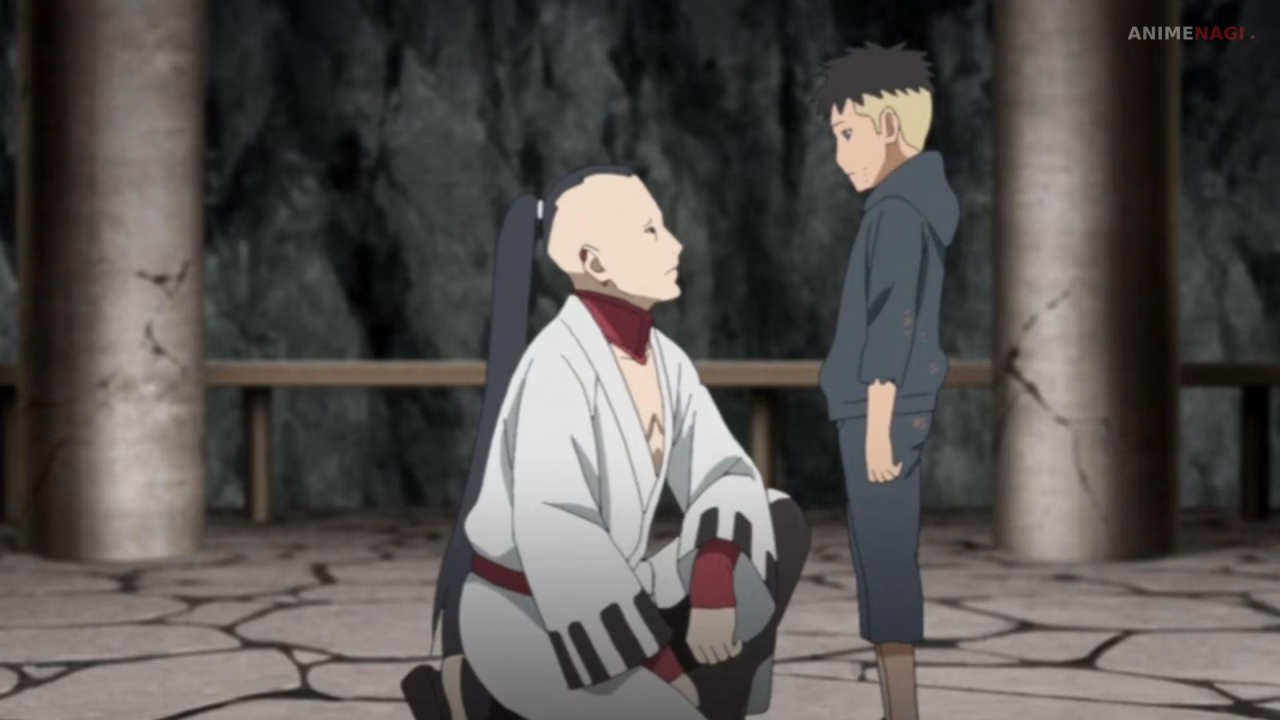
The most defining moment of his childhood came when his father sold him to Jigen. This act completely shattered any remaining sense of security or belonging Kawaki had. It reinforced the idea that his life had no intrinsic value and could be exchanged like an object. From that moment onward, Kawaki stopped seeing himself as a person and began viewing himself as something disposable.
Jigen and Kara Turned Kawaki Into a Weapon
After being taken by Jigen, Kawaki became part of Kara’s experimental program aimed at creating a perfect vessel for Isshiki Ōtsutsuki. These experiments were extremely dangerous, and many children subjected to them died due to incompatibility with Karma. Kawaki’s survival immediately made him unique and valuable within the organization.
The process involved both physical and psychological conditioning. Kawaki endured constant pain as his body was modified to accept Karma, while also being taught to suppress his individuality. Kara did not want a person with emotions and agency. They wanted a stable container for Isshiki’s resurrection.
This conditioning had long-term consequences. Kawaki internalized the belief that his only purpose was to serve as a vessel. He stopped thinking of himself as an individual and instead defined his existence based on usefulness. This mindset becomes one of the biggest obstacles he faces later in the story.
Jigen’s role in this transformation cannot be overstated. He did not just control Kawaki. He reshaped his identity completely, ensuring that even after escaping, Kawaki would struggle to see himself as anything more than a tool.
The Truth About Jigen and Isshiki Explains Everything
The revelation that Jigen was merely a vessel for Isshiki Ōtsutsuki adds a deeper layer to Kawaki’s backstory. Jigen himself was not the ultimate authority within Kara. He was being controlled by a higher entity with far greater ambitions.
Isshiki had taken over Jigen’s body long before the events of Boruto, but that body was imperfect and could not fully contain his power. This limitation is what drove the search for a new vessel. Kawaki was not chosen randomly. He was selected because his body could withstand the transformation process.
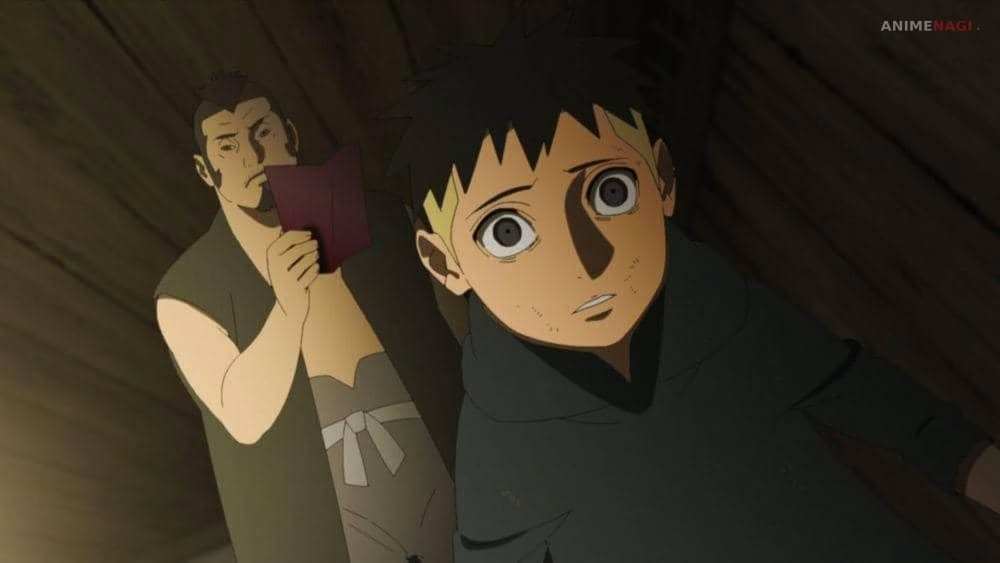
This truth reframes Kawaki’s entire experience. He was never meant to survive as himself. His existence was designed to be overwritten completely. The Karma seal was not just a source of power. It was a countdown to his erasure.
Understanding this dynamic makes Kawaki’s later actions more meaningful. His struggle is not just against Kara. It is against the complete loss of his identity.
Karma Is the Core of Kawaki’s Connection to Jigen
Karma is the mechanism that ties Kawaki to Jigen and Isshiki permanently. The seal functions as a compressed backup of an Ōtsutsuki’s data, gradually rewriting the host’s body until it becomes identical to the original. This process happens continuously, even when the user is not actively using the power.
At the same time, Karma grants immense abilities. Kawaki gains enhanced strength, speed, durability, and the ability to absorb ninjutsu. He also inherits combat instincts from Isshiki, allowing him to fight at a level far beyond ordinary shinobi. These abilities make him one of the strongest characters in Boruto.
However, this power comes at a cost. Every use of Karma accelerates the transformation process, bringing Kawaki closer to losing himself. This creates a constant internal conflict between survival and identity.
Karma represents everything Kawaki struggles with. It is both the source of his strength and the symbol of his past trauma. This duality is what makes his character arc so compelling.
Naruto Changes Kawaki’s Entire Worldview
Kawaki’s life changes dramatically when he meets Naruto Uzumaki. For the first time, he is treated with genuine care and respect. Naruto does not see him as a weapon or a vessel. He sees him as a child who needs support.
This shift is difficult for Kawaki to accept at first. His past experiences make it hard for him to trust others or believe in kindness. However, Naruto’s consistent behavior gradually breaks through these defenses. Kawaki begins to understand what it means to belong.
Living with Naruto, Boruto, and Himawari introduces Kawaki to a family dynamic he has never experienced before. These relationships become the foundation of his emotional growth. They show him that his value is not tied to his usefulness.
At the same time, this new life creates vulnerability. Kawaki becomes deeply attached to Naruto, which makes him fear losing him. This fear plays a major role in shaping his later decisions and ultimately contributes to the conflict teased in the series’ opening scene.

Kawaki’s Trauma Still Defines His Decisions
Even after finding a new home, Kawaki’s trauma does not disappear. His past continues to influence how he reacts to threats and relationships. He remains defensive, quick to anger, and deeply protective of the people he cares about.
This protection often becomes extreme. Kawaki believes that threats must be eliminated completely, a mindset shaped by his experiences with Kara. To him, hesitation can lead to loss, and loss is something he refuses to experience again.
This perspective creates tension within the story. While Kawaki wants to protect Naruto and Konoha, his methods can conflict with the values of the shinobi world. He is willing to take actions others would consider too extreme.
This internal conflict is what makes Kawaki such a compelling character. He is not simply trying to be a hero. He is trying to survive emotionally while protecting the only family he has ever known.
Kawaki’s Past Directly Leads to His Future Conflict With Boruto
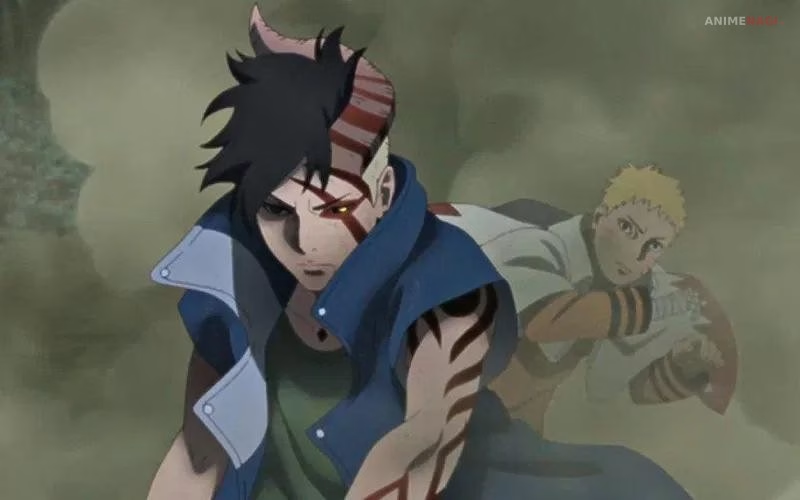
The flash-forward scene at the beginning of Boruto shows Kawaki facing Boruto Uzumaki in a destroyed Konoha. This moment is not just about power. It is about ideology.
Kawaki’s past shapes how he views the world. He believes that true protection requires absolute action, even if it means destroying existing systems. Boruto, on the other hand, represents a more balanced perspective rooted in traditional shinobi values.
This difference creates the foundation for their conflict. Both characters want to protect what they care about, but their methods are fundamentally different. Kawaki’s trauma pushes him toward extreme solutions, while Boruto seeks a path that preserves humanity.
This clash is what defines Boruto’s future narrative. It is not just a battle between two characters. It is a conflict between two ways of thinking shaped by completely different experiences.
Why Kawaki’s Backstory Is One of Boruto’s Strongest Elements
Kawaki’s backstory stands out because it combines emotional depth with narrative importance. His connection to Jigen, Kara, and Isshiki explains the larger conflict within Boruto while also providing a deeply personal story about identity and belonging.
Unlike many characters, Kawaki’s growth is not about becoming stronger. It is about learning that he has value beyond his role as a vessel. This makes his journey more grounded and relatable despite the high-stakes setting.
At the same time, his past ensures that his future remains unpredictable. Even as he grows, the influence of Kara and Jigen continues to shape his decisions. This tension between past and present keeps his character dynamic.
Ultimately, Kawaki represents the evolution of the Naruto franchise into darker, more complex storytelling. His backstory is not just a setup. It is the foundation of everything Boruto is building toward.
Another crucial aspect of Kawaki’s backstory is how it reshapes the idea of “chosen ones” in the Naruto universe. Unlike Naruto or Boruto, who inherit power through lineage or destiny, Kawaki is forcibly turned into something special through suffering and experimentation.
This difference makes his journey far more tragic and morally complex. He never chose power, yet he is burdened with abilities that define his existence and threaten his identity. This contrast highlights one of Boruto’s core themes: power is not always a gift. In Kawaki’s case, it is a responsibility forced upon him, one that he must learn to control before it ultimately consumes him.