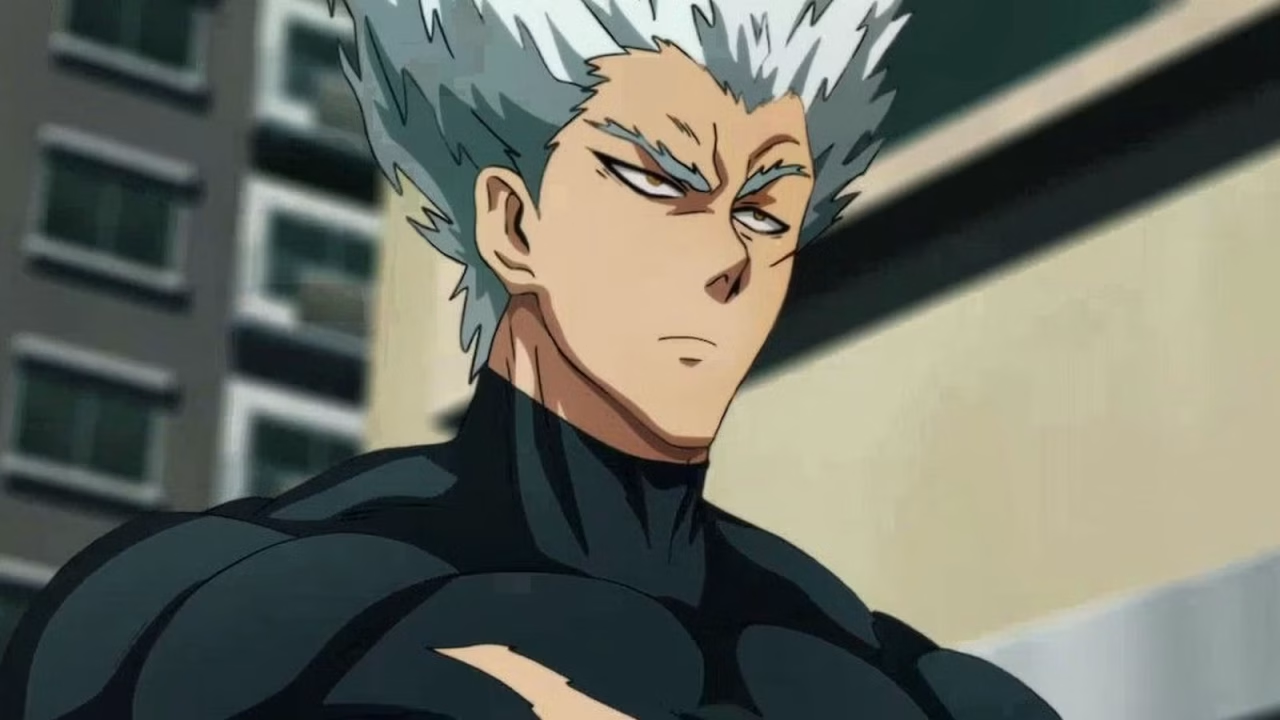
Among all the characters in One-Punch Man, few have experienced a transformation as dramatic and layered as Garou. Introduced initially as the “Hero Hunter,” Garou seemed destined to become a straightforward villain obsessed with defeating heroes. However, as the story progressed, his evolution revealed something far more complicated. Instead of becoming purely evil, Garou gradually emerged as one of the series’ most fascinating anti-heroes, a character shaped by alienation, ideology, and a distorted sense of justice.
What makes Garou especially compelling is that his growth is both physical and psychological. Every major battle pushes him beyond his limits, causing his body, mindset, and powers to evolve constantly. His journey eventually transforms him from a talented martial artist into a near-apocalyptic being capable of rivaling even the strongest heroes.
At the same time, Garou’s story is not simply about gaining power. It is about a young man trying to challenge a world he believes unfairly glorifies heroes while demonizing outsiders. That emotional complexity is why many fans view him as much more than a traditional antagonist.
Why Garou Hates Heroes
Garou’s ideology begins with his childhood experiences. As a kid, he sympathized with monsters in fictional shows because they were constantly outnumbered and defeated by heroes. While other children celebrated the heroes’ victories, Garou felt bad for the villains who never seemed to have a chance.
This mindset made Garou an outcast. He was bullied by classmates and criticized for defending “monsters” instead of supporting heroes. Over time, he developed resentment toward what he saw as society’s simplistic morality. In Garou’s eyes, heroes represented popularity and conformity, while monsters symbolized people rejected by society.
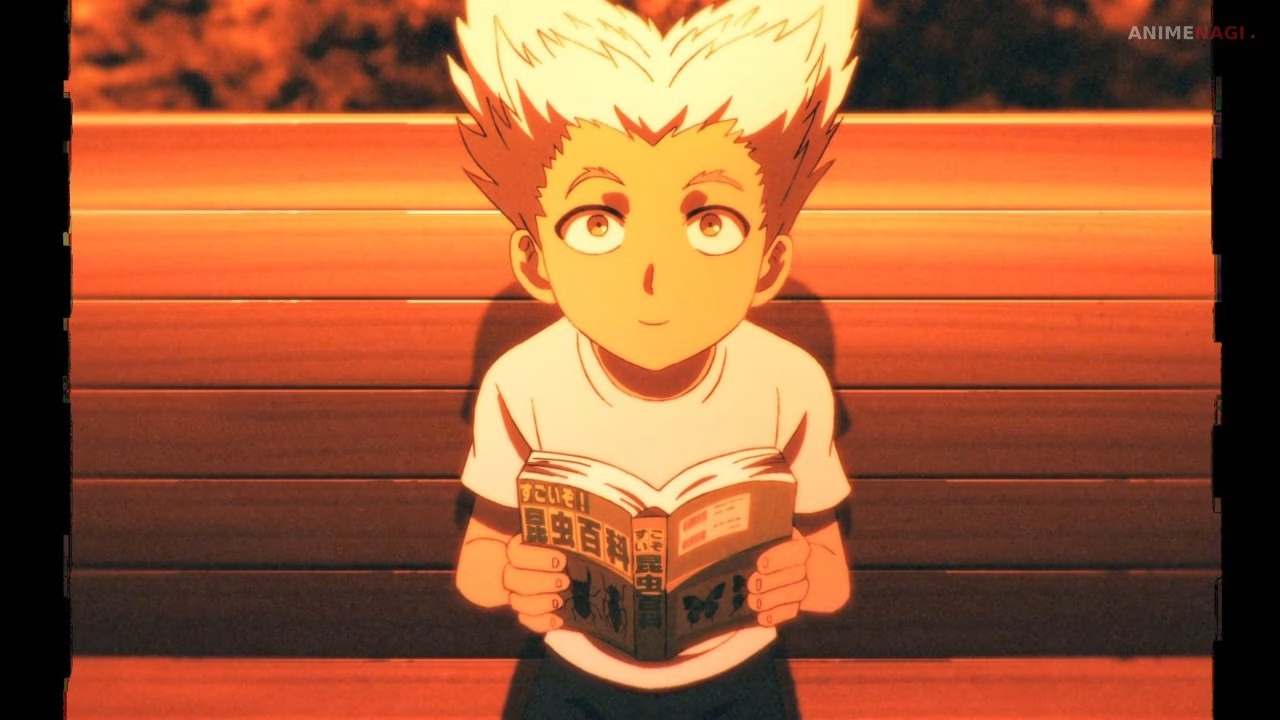
As he grew older, Garou trained under Bang, also known as Silver Fang, one of the strongest martial artists in the Hero Association. However, Garou’s aggression and violent behavior eventually led to his expulsion after he brutally attacked fellow students.
After leaving Bang’s dojo, Garou adopted the identity of the “Hero Hunter.” His goal was not merely to defeat heroes physically. He wanted to become the ultimate monster capable of terrifying the world equally, believing that universal fear could eliminate discrimination and conflict. This twisted philosophy became the foundation for his evolution throughout the series.
Garou’s Early Evolution as the Hero Hunter
Garou’s initial form relies entirely on martial arts skill and adaptability rather than monstrous powers. Even without transformations, he quickly became one of the most dangerous fighters in the series due to his mastery of Bang’s Water Stream Rock Smashing Fist.
During his Hero Hunter phase, Garou systematically targeted professional heroes across multiple classes. He defeated numerous opponents while constantly improving through combat experience. What made him especially dangerous was his ability to analyze enemy fighting styles and adapt mid-battle.
Unlike many villains in One Punch Man, Garou continuously grew stronger while fighting. Every near-death experience pushed his body beyond its previous limits, allowing him to evolve at an abnormal rate. Several fan discussions compare this process to “breaking his limiter,” the same concept tied to Saitama’s overwhelming strength.
However, Garou’s growth also involved gradual monsterization. His obsession with becoming the “ultimate monster” started physically changing him over time. According to analysis discussed by fans and official lore references, Garou was simultaneously evolving through both monsterization and limiter-breaking. This dual evolution made him fundamentally different from ordinary monsters.
Monster Garou and the Beginning of His Transformation
Garou’s transformation accelerated dramatically during the Monster Association Arc. After enduring repeated injuries, battles, and psychological pressure, his body began mutating into increasingly monstrous forms.
One of the most important stages was Spiral Garou, where dark armor-like growths spread across his body after surviving severe damage from Orochi. This form drastically enhanced his durability, reflexes, and raw power.
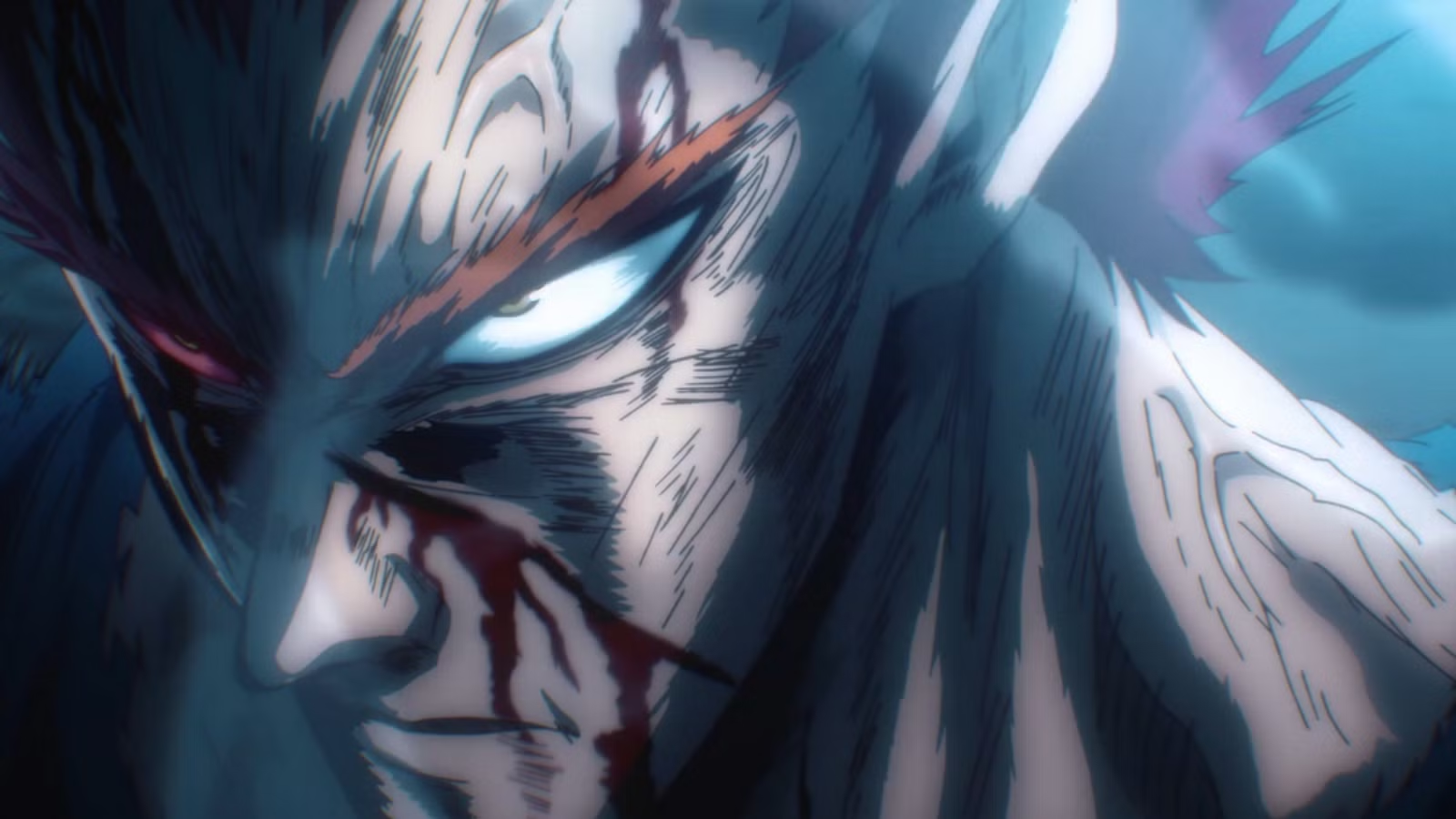
As Garou evolved further, he entered his Monster Garou phase, where his appearance became increasingly inhuman. Horn-like features, glowing eyes, and monstrous physical traits reflected how close he was becoming to fully abandoning his humanity.
Yet despite his appearance, Garou consistently revealed traces of humanity. He repeatedly protected the child Tareo, refused to kill heroes outright, and showed discomfort when confronted with actual cruelty. This contradiction became central to his character.
Saitama eventually recognized this contradiction as well. According to Saitama’s interpretation, Garou never truly wanted to become a monster. Deep down, he actually wanted to be a hero but believed society would never accept someone like him in that role.
This realization is what separates Garou from traditional villains. His monstrous identity is partly an act created by years of resentment and rejection.
Garou vs Saitama Revealed His True Nature
The battle between Garou and Saitama became one of the defining moments of One Punch Man. By this stage, Garou had evolved into “Awakened Garou,” a being powerful enough to overwhelm nearly every hero in existence.
Garou declared himself “Absolute Evil” and attempted to unite humanity through fear by becoming the ultimate enemy. In his mind, forcing the world to fear a single monster equally would eliminate bullying, discrimination, and social divisions.
However, Saitama completely dismantled this ideology during their fight. Instead of seeing Garou as a terrifying monster, Saitama saw him as a confused person pretending to be evil. He repeatedly pointed out Garou’s contradictions, especially his unwillingness to kill innocent people or harm Tareo.
This psychological confrontation mattered more than the physical battle itself. Saitama exposed the gap between Garou’s self-image and his actual behavior. Garou wanted to be viewed as absolute evil, but his actions constantly revealed compassion and humanity underneath the monster persona. That emotional conflict became the core of his anti-hero identity.
Cosmic Garou Became a God-Level Threat
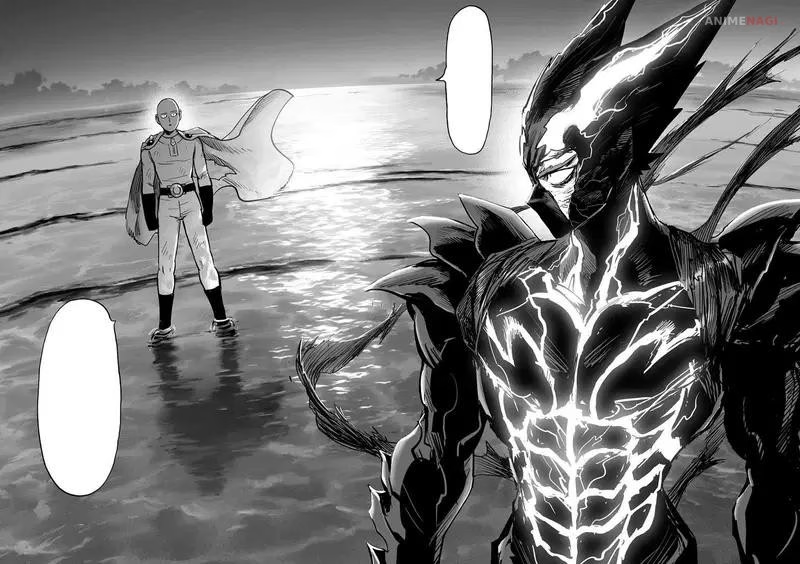
Garou’s evolution reached its peak when he encountered the mysterious entity known as God. Through this interaction, Garou received cosmic-level powers that transformed him into Cosmic Fear Garou, arguably the strongest antagonist in the series up to that point.
Unlike his earlier monstrous forms, Cosmic Garou looked less beast-like and more cosmic or eldritch in appearance. His body contained galaxy-like patterns and immense universal energy.
This version of Garou gained the ability to understand and replicate the flow of energy in the universe. Most dangerously, he could imitate the techniques and power of opponents, including Saitama himself.
The battle between Cosmic Garou and Saitama escalated to absurd levels, eventually extending into outer space. At one point, Garou even copied Saitama’s growth rate through “Saitama Mode,” temporarily pushing the fight to unimaginable scales.
However, despite reaching god-like power, Garou ultimately failed because his ideology remained flawed. He still believed fear and violence could create equality, while Saitama represented simple heroism without ego or ideological obsession.
Why Garou Is One Punch Man’s Ultimate Anti-Hero
What makes Garou such a compelling anti-hero is that his motivations contain genuine emotional truth despite his destructive actions. He recognizes flaws within hero society that other characters ignore. The Hero Association often values popularity, rankings, and image over genuine morality.
Garou’s anger toward unfair systems comes from real experiences with bullying and exclusion. However, instead of fixing those problems constructively, he embraces violence and fear as solutions. That contradiction makes him morally complex rather than purely evil.
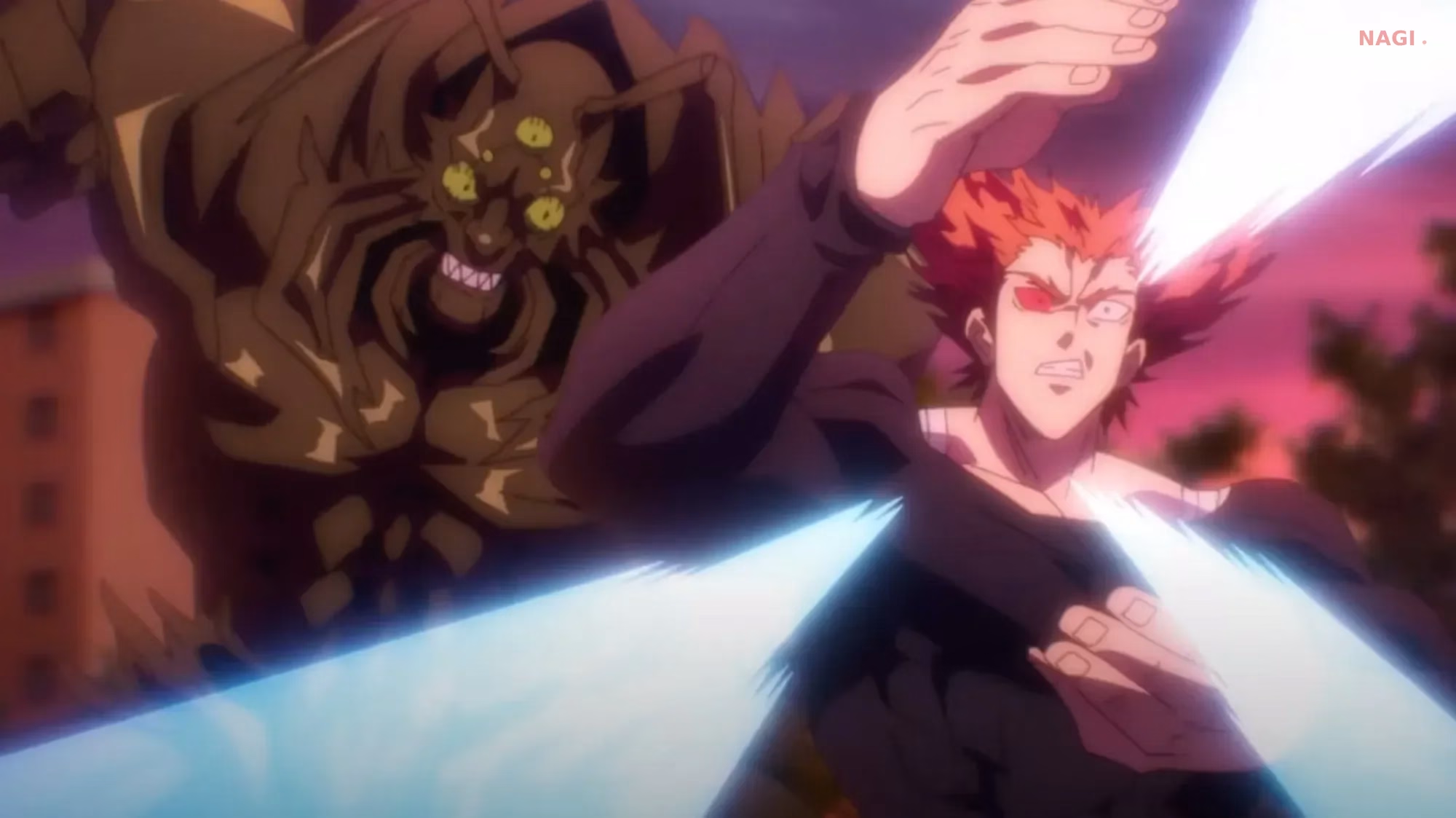
Even during his darkest moments, Garou consistently protects children, refuses true mass murder until influenced by cosmic power, and struggles emotionally when confronted with his own humanity. His relationship with Tareo especially reveals the compassionate side he tries to suppress.
By the end of his journey, Garou’s monster persona completely collapses after Saitama forces him to confront who he really is. Rather than dying as a villain, he begins rebuilding his life and reconciling with Bang. That ending reinforces why Garou works better as an anti-hero than a traditional villain.
Garou’s Evolution Changed One Punch Man Forever
Garou’s story transformed One Punch Man from a simple parody into a much deeper exploration of heroism, society, and identity. His evolution constantly blurred the line between monster and hero, forcing both characters and readers to question simplistic ideas about good and evil.
Physically, he became one of the strongest beings in the entire series through relentless adaptation and monsterization. Psychologically, he evolved from an angry outcast into someone forced to confront the contradictions within his own ideology.
Most importantly, Garou proved that One Punch Man’s best conflicts are not always about strength alone. His battles with Saitama mattered because they challenged philosophies, emotional wounds, and personal identity as much as raw power. That complexity is exactly why Garou remains one of the most popular and respected characters in the franchise.
Another important aspect of Garou’s evolution is how it redefines the idea of growth in One-Punch Man. Unlike Saitama, who has already reached the peak of strength, Garou represents continuous progression driven by struggle, failure, and adaptation. His ability to evolve mid-battle highlights a more traditional shonen-style growth, but with a darker twist rooted in obsession and identity conflict.
This contrast between instant power and earned transformation makes Garou’s journey more relatable and emotionally engaging, reinforcing why his arc stands out as one of the series’ most compelling narratives.