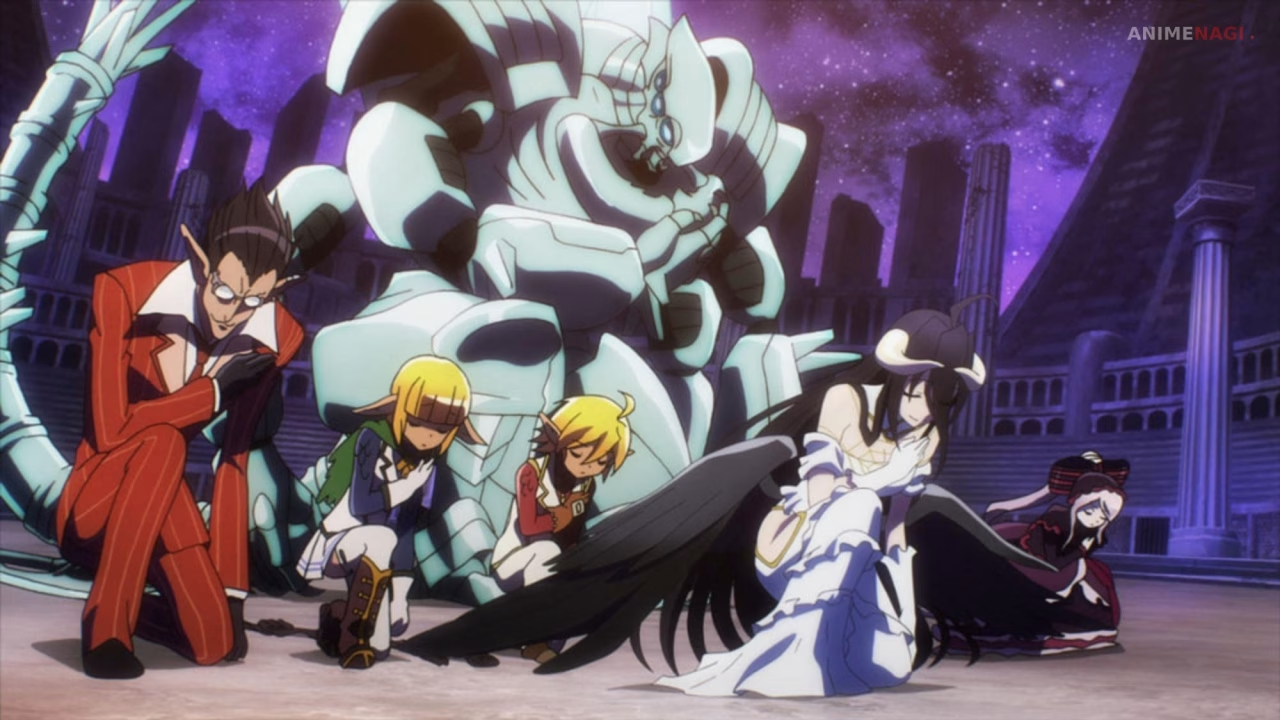
By the time Overlord Season 4 arrived, expectations were clear. Fans wanted the series to finally match the overwhelming power of Ainz Ooal Gown with an equally massive world and narrative scope. Earlier seasons hinted at it through battles and conquest, but they often felt constrained, either by pacing issues or limited perspective.
Season 4 changes that almost immediately. The story expands beyond simple domination arcs and dives into politics, economics, and multi-kingdom conflict. For the first time, Ainz’s rule feels like an empire rather than a faction hiding in the shadows.
However, while the scale has undeniably improved, the season is not without flaws. A persistent storytelling issue continues to hold the narrative back, preventing it from fully capitalizing on its ambitious worldbuilding.
Let’s break down what Season 4 gets right, where it struggles, and why it remains one of the most divisive arcs in Overlord.
Season 4 Finally Expands the World Beyond Nazarick
One of the biggest strengths of Overlord Season 4 is how it broadens the narrative scope. Instead of focusing almost entirely on Nazarick, the story actively explores multiple kingdoms, including the Re-Estize Kingdom, the Baharuth Empire, and the Dwarven Kingdom.
This shift creates a more dynamic and immersive world. Political tensions, economic struggles, and diplomatic strategies take center stage, showing that Ainz’s influence extends far beyond brute force. The season even explores how his conquest disrupts trade and governance, adding a layer of realism to the fantasy setting.
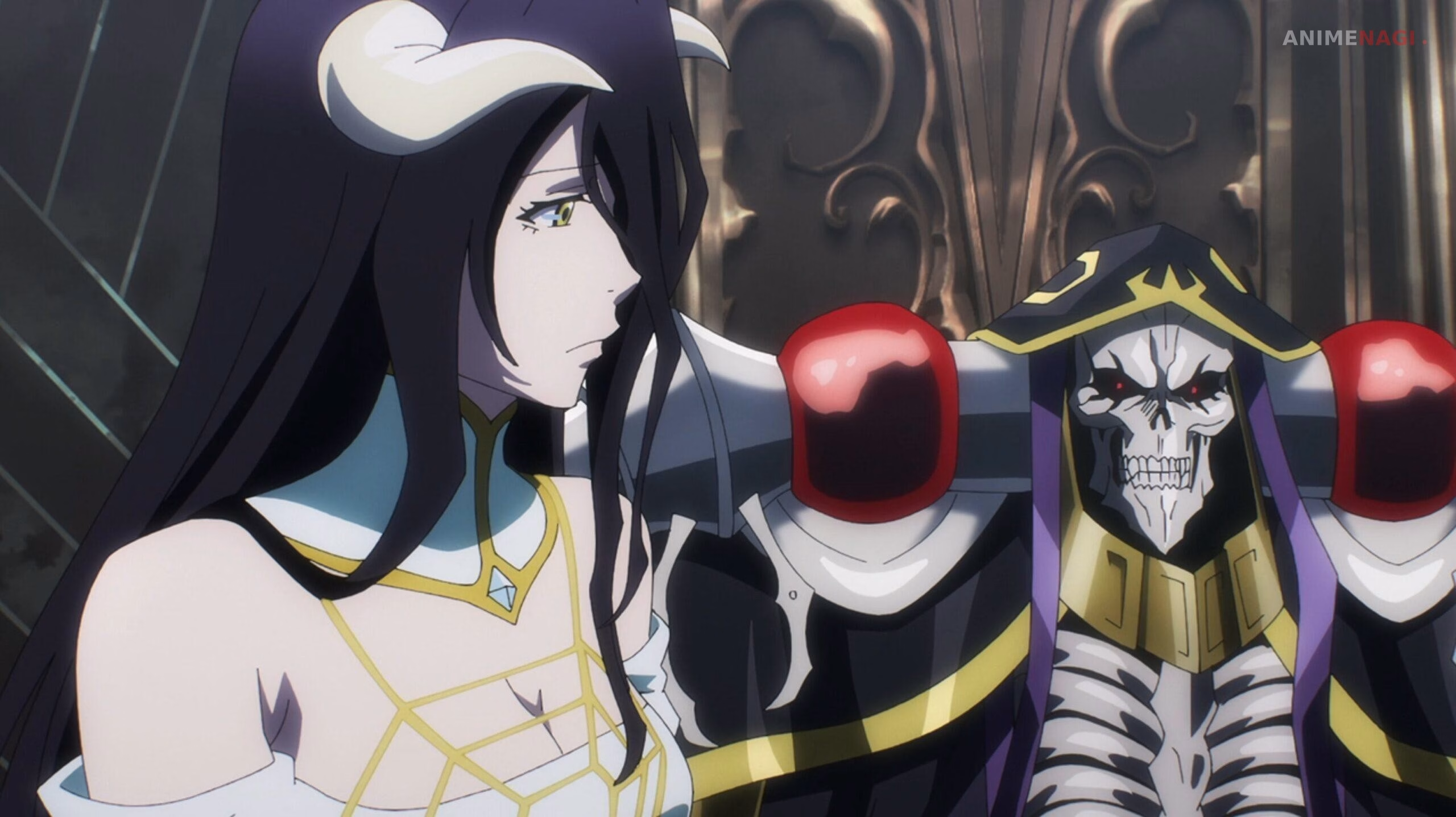
Unlike previous seasons, where conflicts often felt isolated, Season 4 connects events across regions. Every decision Ainz makes has ripple effects, reinforcing the idea that this is no longer a localized story.
This expanded perspective is crucial because it finally gives Overlord the scale it always promised.
Ainz Feels Like a True Overlord Now
Earlier seasons portrayed Ainz as overwhelmingly powerful, but often disconnected from the consequences of his actions. Season 4 changes that by placing him at the center of a functioning empire.
We see him dealing with governance issues, managing alliances, and maintaining his image among both allies and enemies. This adds depth to his character, showing that ruling is not just about strength but also perception and strategy.
At the same time, the season leans further into Ainz’s darker evolution. If there was any doubt that he is a villain protagonist, Season 4 removes it entirely. His actions become more ruthless, reinforcing the moral ambiguity that defines the series.
This progression is important because it aligns his character with the growing scale of the story. Ainz is no longer just a powerful player trapped in another world. He is shaping that world in irreversible ways.
The Side Characters Steal the Spotlight
Ironically, one of Season 4’s biggest strengths is how much focus it gives to characters outside Nazarick. Figures like Princess Renner, Prince Zanac, and Brain Unglaus receive significant development, often delivering some of the most emotionally impactful moments of the season.
These characters ground the story by showing the human cost of Ainz’s expansion. Their struggles, ambitions, and sacrifices make the world feel alive in a way that pure power fantasy cannot achieve.
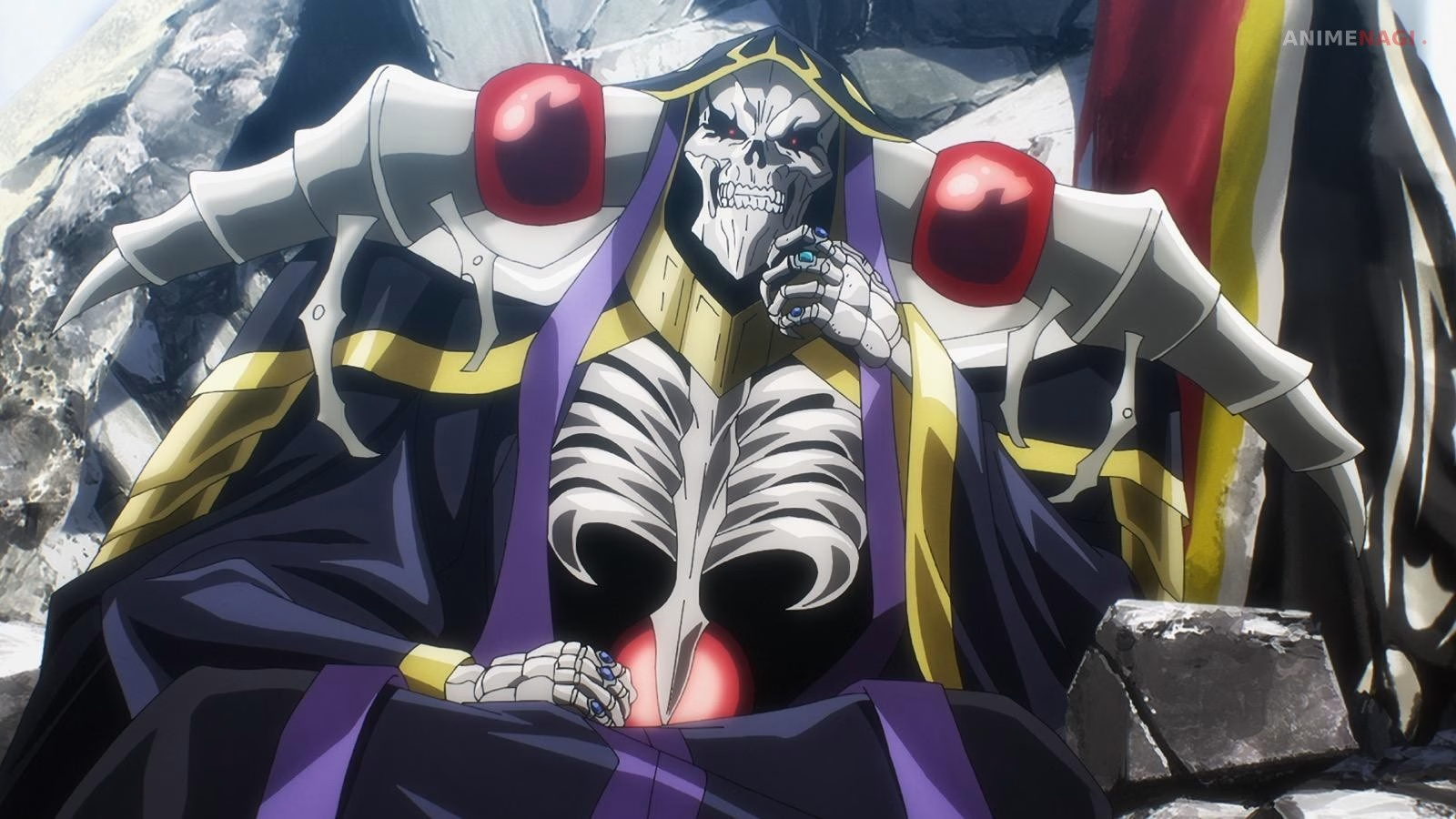
Critics and viewers alike have noted how these side characters lift the narrative, providing perspectives that contrast sharply with Nazarick’s overwhelming dominance.
This approach also helps balance the story. Instead of focusing solely on an unbeatable protagonist, the narrative gains tension through the experiences of those who must survive in his shadow.
The Improved Production and Presentation
Another noticeable improvement in Season 4 is its production quality. While Overlord has been criticized in the past for inconsistent CGI, this season delivers a more polished visual experience.
The animation feels more consistent, and large-scale sequences are easier to follow compared to earlier seasons. Even when the series relies on CGI, it is less distracting, allowing viewers to stay immersed in the story.
Additionally, the tone of the season is more cohesive. Humor is still present, but it is toned down to better match the darker themes. This creates a more balanced viewing experience, especially as the story moves toward increasingly grim territory.
All of these improvements contribute to making Season 4 feel like a step forward in terms of presentation.
The Frustrating Exception: Pacing and Missing Depth
Despite all its strengths, Season 4 is held back by one recurring issue that fans have pointed out for years: pacing.
The season adapts multiple light novel volumes, and as a result, some storylines feel rushed or underdeveloped. Key arcs, such as the Dwarven storyline, lack the depth needed to fully explore their significance.
This problem becomes more noticeable as the narrative grows more complex. With so many characters, factions, and political threads, the story needs time to breathe. Instead, it often moves too quickly, skipping over details that would have added emotional and narrative weight.
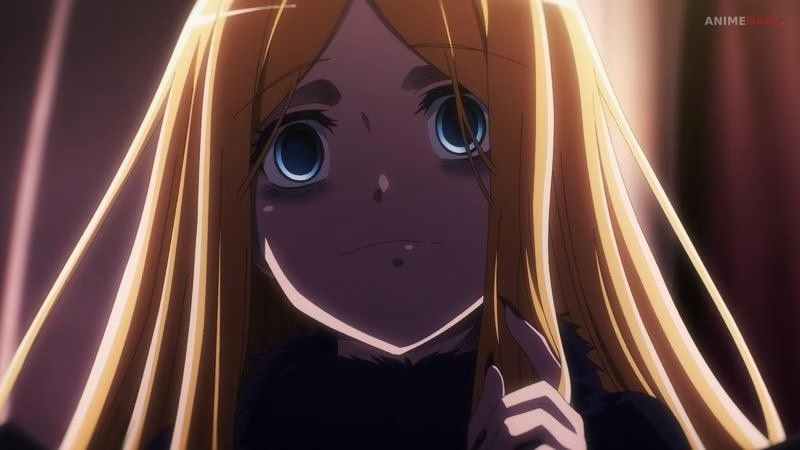
There is also the issue of cut content. Entire segments from the source material are omitted or condensed, leading to gaps in the storytelling that can confuse viewers unfamiliar with the novels.
This creates a frustrating contrast. The world feels bigger than ever, but the narrative does not always give that world enough time to fully develop.
The Power Fantasy Problem Still Exists
Another lingering issue is the lack of meaningful opposition to Ainz. While the expanded world introduces new factions and characters, very few of them pose a real threat to Nazarick.
This reinforces the series’ core identity as a power fantasy, but it also reduces tension. When the outcome of conflicts feels inevitable, the stakes can lose their impact.
Some viewers have pointed out that the story follows a repetitive pattern, where new characters are introduced, explored, and ultimately overpowered by Ainz’s forces.
This structure is not inherently bad, but in Season 4, it becomes more noticeable due to the larger scale. The more the world expands, the more the lack of genuine challenge stands out.
A More Complex but Divisive Narrative Direction
Season 4 represents a shift in how Overlord tells its story. It moves away from simple battles and focuses more on political intrigue, long-term strategy, and moral ambiguity.
For some viewers, this is exactly what the series needed. The added complexity makes the world feel richer and more engaging. It also aligns better with the themes of power and control that define Overlord.
However, this shift also makes the pacing issues more apparent. With so many moving parts, the story requires careful handling, and not every arc receives the attention it deserves.
This is why Season 4 is often seen as both the most ambitious and the most uneven entry in the series.