Kingdom Season 3 is widely considered one of the strongest arcs in the entire anime because of its scale, political tension, and nonstop warfare. Adapting the famous Coalition Invasion Arc from Yasuhisa Hara’s manga, the season transforms the story from a large military drama into a full-scale national survival conflict. The State of Qin suddenly faces annihilation when multiple rival kingdoms unite against it, creating one of the most dangerous wars in the series. The arc pushes every major character to their limits while introducing massive strategic battles, emotional sacrifices, and critical alliances that reshape the balance of power.
What makes the season especially compelling is how it balances battlefield action with political strategy. Every alliance carries consequences, and every general involved influences the future of China’s unification. The Coalition Army itself represents an unprecedented event during the Warring States era because kingdoms that normally hate each other temporarily unite to destroy Qin before it becomes too powerful.
At the center of the conflict are Shin, Ei Sei, and Qin’s military leaders, who must survive overwhelming odds against some of the strongest armies in the series. Let’s break down the major alliances, battles, and turning points that made Kingdom Season 3 such an important arc.
What the Allegiance Arc in Kingdom Season 3 Covers
Although fans commonly refer to the season as the Coalition or Allegiance Arc, Kingdom Season 3 primarily adapts the Coalition Invasion Arc from the manga. The anime covers chapters 261 to 364 and focuses almost entirely on the massive coalition war against Qin. The season later transitions briefly into the Kyou Kai Revenge storyline near its ending.
The story begins after Qin’s growing military expansion alarms the other kingdoms. Riboku of Zhao secretly works behind the scenes with Chu leadership to organize an alliance between multiple rival states. Their goal is simple but terrifying: completely destroy Qin before it can unify China. This immediately raises the stakes higher than any previous arc.
Unlike earlier battles involving single campaigns or regional conflicts, Qin now faces simultaneous invasions from several major kingdoms at once. The survival of the nation itself becomes uncertain for the first time in the series. This creates constant pressure throughout the season because defeat would mean the end of Ei Sei’s dream of unification.
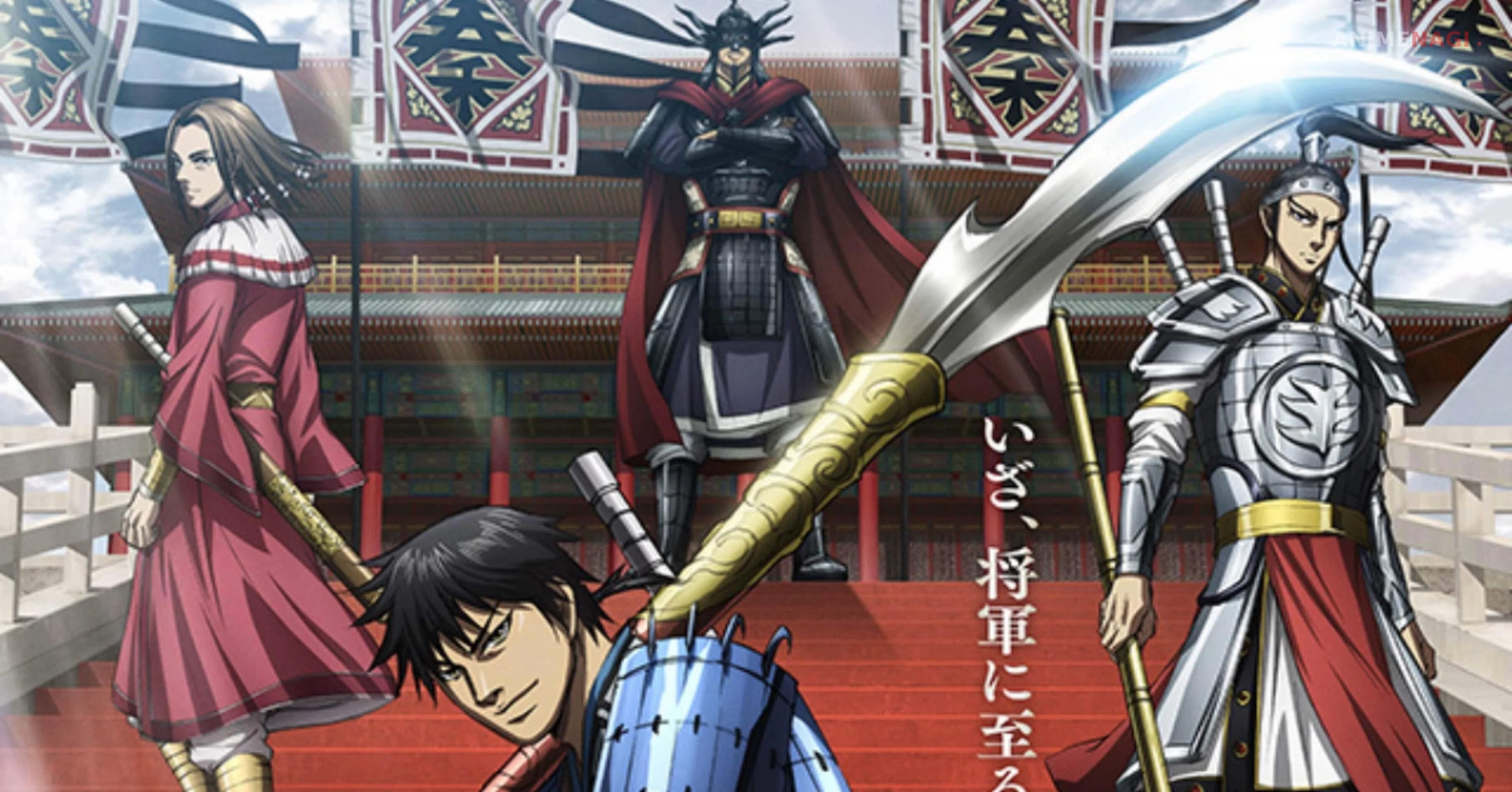
Why the Coalition Alliance Was So Dangerous
The Coalition Army became dangerous because it united kingdoms that normally operated as enemies. Zhao, Chu, Wei, Han, Yan, and initially Qi all participated in the anti-Qin alliance organized by Riboku and Shun Shin Kun. Individually, several of these states already possessed elite generals and enormous armies. Combined together, they created an overwhelming military force unlike anything Qin had faced before. The political significance of this alliance was enormous.
The rival kingdoms understood that Qin’s military growth threatened the future balance of power across China. If Qin continued conquering territory successfully, eventual unification under Ei Sei would become increasingly possible. The coalition therefore represented a desperate attempt to eliminate Qin permanently before it became unstoppable.
Riboku played the central role in making this possible. His strategic intelligence and diplomatic influence allowed him to unite kingdoms that otherwise distrusted each other deeply. This immediately established Riboku as one of the greatest strategic threats in the series and elevated the scale of the conflict dramatically.
Riboku’s Master Plan Against Qin
Riboku’s coalition strategy demonstrated why he is considered one of the greatest military minds in Kingdom. Rather than attacking Qin directly through standard warfare, he recognized that a united strike from multiple kingdoms would overwhelm Qin’s defensive resources completely.
The brilliance of the plan came from timing. Qin was already heavily involved in military expansion when the coalition formed. This meant its armies and supply lines were stretched across various fronts. By launching simultaneous invasions, Riboku forced Qin into a defensive war it was not fully prepared to handle.
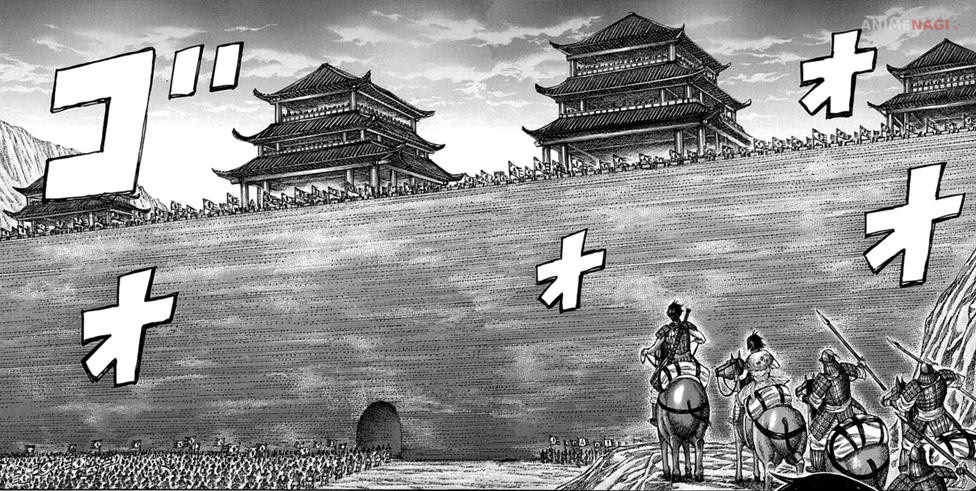
The coalition also attacked quickly before Qin could stabilize politically. Ei Sei’s government was still dealing with internal political struggles involving Ryo Fui and competing factions inside Qin itself. Riboku understood that overwhelming Qin immediately would prevent the kingdom from organizing effectively. This strategic pressure created the desperate atmosphere that defines the season.
Qin’s Defensive Alliance and Leadership
Qin survived primarily because of its extraordinary military leadership and the unity created by Ei Sei during the crisis. Despite internal political conflicts, Qin’s generals understood that national survival now mattered more than factional disputes.
Several major commanders became critical during the defense. Generals like Tou, Mou Bu, Duke Hyou, and Ousen each played important roles across different battlefronts. Their contrasting styles created one of the season’s strongest elements because every battlefield felt strategically unique.
Ei Sei’s leadership also became increasingly important. Rather than remaining a distant ruler, Sei directly inspired both soldiers and civilians during the war. His presence strengthened Qin’s morale during moments when defeat seemed inevitable. This arc significantly develops Sei as a king and reinforces why so many characters eventually support his vision for unifying China.
The alliance between military leaders and political leaders, therefore, became Qin’s greatest strength.
The Battle of Kankoku Pass Explained
The Battle of Kankoku Pass serves as the central battlefield of the Coalition Invasion Arc. This massive defensive line acts as Qin’s final major barrier protecting the capital region from the invading coalition armies. If the pass falls, Qin itself becomes vulnerable to complete destruction.
What makes this battle so compelling is its scale. Multiple armies clash simultaneously across different fronts while elite generals duel for strategic control. Every kingdom involved brings unique tactics and military philosophies, making the warfare feel varied rather than repetitive.
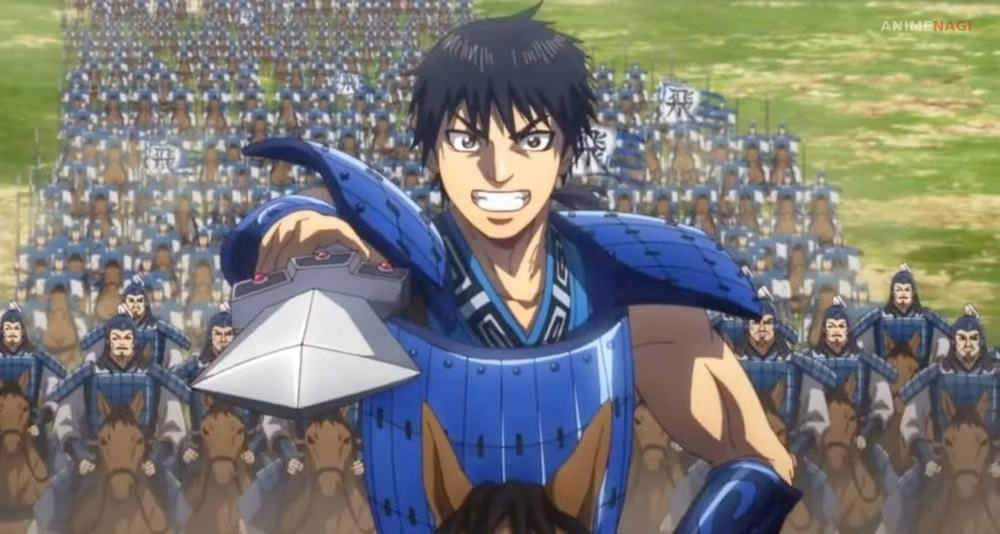
The defensive structure of Kankoku Pass also creates constant tension. Qin cannot simply retreat because losing the pass would effectively end the war. This forces every commander to fight desperately even when heavily outnumbered. The result is one of the most intense military conflicts in the series.
The battle also introduces several memorable strategic moments that showcase the intelligence of both Qin and coalition commanders.
Shin’s Role During the Coalition War
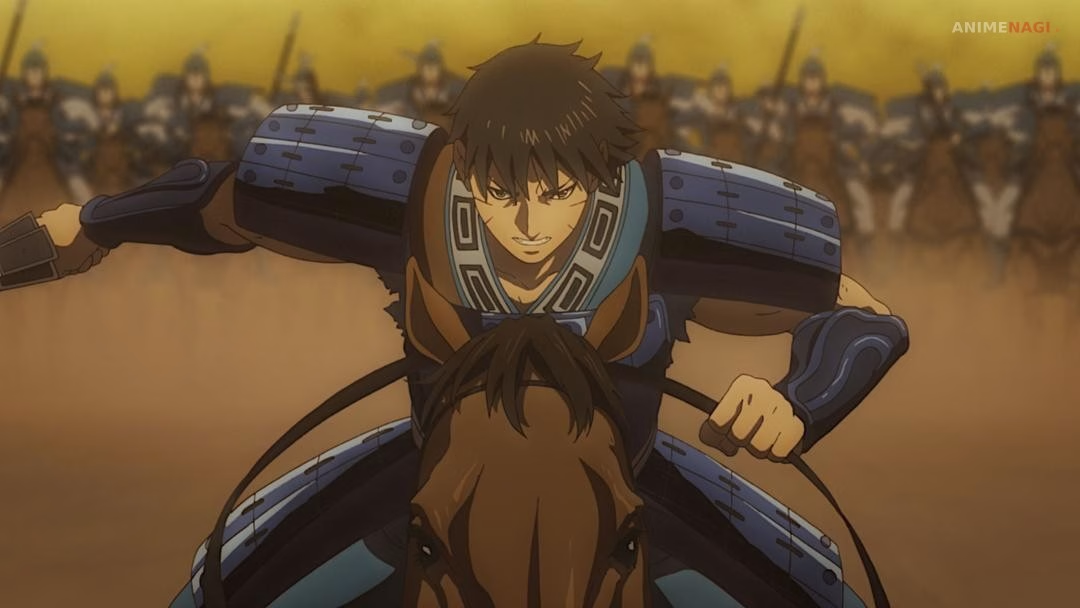
Season 3 marks one of Shin’s most important stages of growth as a military leader. Although he begins the arc still developing as a commander, the coalition war forces him into increasingly dangerous and important situations.
The Hi Shin Unit becomes essential throughout several key battles. Shin repeatedly acts as a frontline fighter capable of changing momentum during desperate moments. His leadership, instincts, and willingness to risk himself inspire his soldiers consistently despite overwhelming odds.
The war also pushes Shin emotionally. He witnesses large-scale death, sacrifices from veteran generals, and the brutal reality of national warfare more clearly than ever before. These experiences mature him significantly and move him closer toward becoming a true Great General.
His encounters with powerful enemies during the arc further establish his future importance within Qin’s military structure.
Mou Bu vs Kan Mei: One of Kingdom’s Best Battles
One of the most famous fights in Season 3 is the clash between Mou Bu and Kan Mei. This battle represents pure overwhelming strength between two monstrous generals from Qin and Chu respectively.
Kan Mei initially appears nearly unstoppable. As Chu’s strongest military figure, he dominates the battlefield physically and psychologically. His confidence and brutal fighting style create enormous pressure for Qin’s forces during the coalition war.
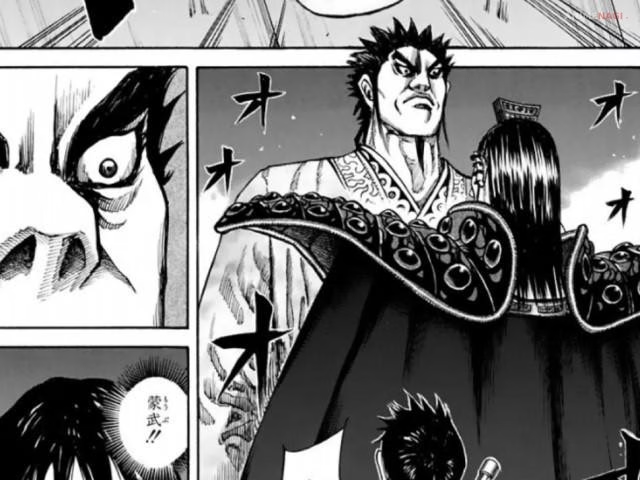
Mou Bu’s response perfectly matches the intensity. Unlike strategic commanders who rely heavily on tactics, Mou Bu represents raw military power and absolute confidence in direct combat. Their duel becomes one of the season’s defining moments because it feels like a collision between unstoppable forces.
The outcome of the battle also carries major strategic importance beyond individual victory.
Duke Hyou and the Instinctual Warfare Theme
Duke Hyou plays a major role in demonstrating the concept of instinctual warfare during the coalition conflict. Unlike highly analytical strategists such as Riboku, Duke Hyou fights through battlefield intuition and aggressive momentum.
This contrast becomes especially important against Zhao forces. Riboku represents calculated strategy and long-term planning, while Duke Hyou embodies unpredictable instinctive warfare. Their clash symbolizes two completely different military philosophies competing against each other.
Duke Hyou’s battlefield presence also impacts Shin heavily. Shin increasingly begins developing similar instinctual qualities throughout the war. The arc subtly suggests that Shin may eventually inherit aspects of Duke Hyou’s fighting style in the future.
The emotional consequences of Duke Hyou’s involvement also become some of the season’s strongest moments.
The Battle of Sai and Ei Sei’s Leadership
After Kankoku Pass nearly falls, the story shifts toward Sai, creating one of the most emotional sections of the entire arc. Qin’s capital region becomes exposed, and Riboku attempts to end the war quickly through direct invasion.
This is where Ei Sei truly proves himself as a king. Rather than fleeing or remaining protected, Sei personally travels to Sai and inspires ordinary civilians to fight alongside Qin’s exhausted soldiers. His speech and leadership unify the city during an almost hopeless situation.
The emotional impact of Sai comes from its desperation. Unlike earlier military battles involving trained armies, Sai involves civilians defending their homes against overwhelming invasion. The stakes therefore become much more personal and emotional.
This section also strengthens the relationship between Sei and Qin’s people significantly.
Why the Coalition Arc Changed Kingdom Forever
The Coalition Invasion Arc permanently changes the scale and direction of Kingdom. Before Season 3, the series focused mainly on military campaigns and Shin’s gradual growth. After the coalition war, the story evolves into a much larger political and historical conflict involving the future of all of China.
The arc also reshapes character relationships. Shin earns greater respect throughout Qin’s military structure, while Ei Sei gains stronger legitimacy as king after defending Sai personally. Several veteran generals also either fall in battle or undergo major development during the conflict.
Most importantly, Qin’s survival changes how the other kingdoms view it. Instead of weakening Qin permanently, the coalition’s failure ironically proves how dangerous and resilient Qin truly is. This pushes the dream of unification even closer toward reality. The war, therefore, becomes a major turning point for the entire series.
Why Fans Consider Season 3 the Best Kingdom Arc
Many fans consider Season 3 the peak of Kingdom because it combines nearly every strength of the series into one storyline. The arc delivers massive warfare, political intrigue, emotional sacrifices, strategic battles, and character growth simultaneously.
The pacing also contributes heavily to its reputation. Unlike shorter military campaigns, the coalition war feels enormous and relentless. Every victory comes with heavy losses, and the tension remains consistently high because Qin’s destruction always feels possible.
The arc also introduces many of the series’ best battles and speeches. Moments involving Sei at Sai, Mou Bu versus Kan Mei, and Shin’s battlefield growth remain fan favorites years after release. Combined with improved animation compared to earlier seasons, Season 3 significantly elevated the anime adaptation’s reputation.
The Importance of Alliances in Kingdom Season 3
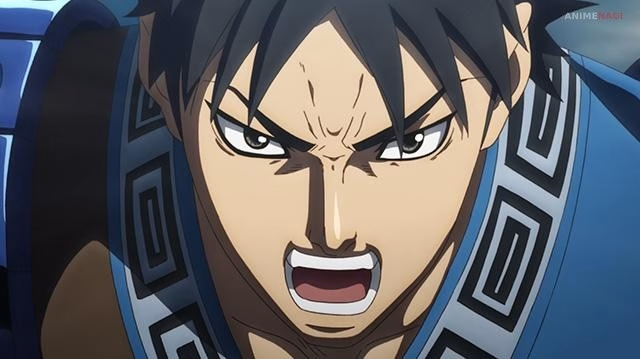
The central theme of Season 3 revolves around alliances and how they shape warfare politically. Every kingdom involved understands that survival often depends on cooperation, even between long-time enemies. The coalition itself exists because rival states fear Qin more than they hate each other.
At the same time, Qin survives because its leaders temporarily unite despite internal political rivalries. This creates a fascinating contrast where both sides rely on fragile alliances to continue fighting. These alliances also reveal deeper themes about power and ambition.
Characters constantly balance personal pride against national survival. Some cooperate reluctantly, while others genuinely believe unity is necessary for long-term goals. This political complexity gives the arc far more depth than simple battlefield action. The result is one of the richest strategic conflicts in modern historical anime.
Kingdom Season 3 stands as one of the most important arcs in the series because it transforms the story into a true large-scale war epic. The Coalition Invasion Arc combines massive alliances, strategic warfare, emotional sacrifices, and political tension into one of anime’s most intense military campaigns.
The coalition alliance against Qin creates overwhelming stakes from the beginning, while battles like Kankoku Pass and Sai showcase the best aspects of Yasuhisa Hara’s storytelling. Characters such as Shin, Ei Sei, Riboku, Mou Bu, and Duke Hyou all receive major moments that permanently shape the future of the series.
More importantly, the season reinforces the central dream driving Kingdom: the unification of China under Qin. By surviving impossible odds during the coalition invasion, Qin proves that its ambition may actually become reality someday. That combination of historical warfare, emotional storytelling, and political strategy is exactly why many fans still consider Season 3 the defining arc of Kingdom.