The Onigashima raid in One Piece is packed with major character moments, but one of the most exciting is the reunion between Monkey D. Luffy and Eustass Kid. Both captains belong to the Worst Generation and share a fierce determination to become Pirate King, making their dynamic both competitive and compelling.
Their reunion is not just a casual encounter but a turning point in the battle against Kaido. After separate struggles in Wano, both pirates arrive at Onigashima with the same goal: defeat the Yonko and change the balance of power. This moment captures their rivalry, mutual respect, and the chaotic energy that defines their partnership. Let’s break down how this reunion unfolds and why it matters in the larger story.
How Luffy and Kid End Up at Onigashima
Before their reunion, both Luffy and Kid endure significant hardships in Wano. Luffy is imprisoned in Udon after his initial defeat by Kaido, where he trains to improve his Haki and prepares for another fight. Kid, on the other hand, has already been captured and tortured, refusing to submit despite immense suffering.
Their shared experience of imprisonment builds an unspoken connection between them. While they remain rivals, both captains prove their resilience and refusal to bow to a Yonko. This parallel journey sets the stage for their eventual alliance during the raid.
By the time the Fire Festival begins, both pirates have regrouped with their crews and allies. Their arrival at Onigashima is driven by the same objective, bringing them onto the same battlefield once again.
Luffy and Kid’s reunion at Onigashima is marked by their signature competitive energy. Instead of greeting each other warmly, they immediately fall back into their rivalry, arguing over who will defeat Kaido. This interaction reflects their personalities and reinforces their shared ambition.
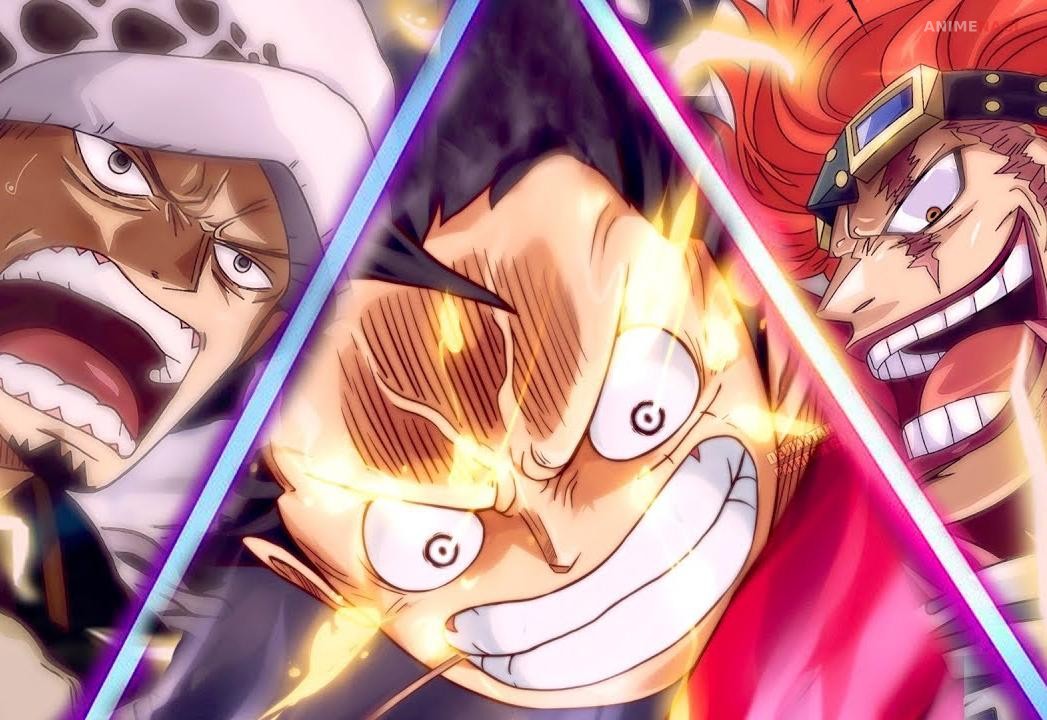
Despite the tension, their goals align perfectly. Both understand that defeating Kaido requires cooperation, even if temporary. This creates a unique alliance where rivalry and teamwork exist side by side.
The scene also serves as a callback to their earlier interactions at Sabaody Archipelago. Their dynamic remains unchanged, showing how both characters have grown stronger without losing their core traits.
Their Alliance Against Kaido
As the battle intensifies, Luffy and Kid join forces with Trafalgar D. Water Law to confront Kaido and Big Mom. This alliance represents a new generation challenging the old guard of pirates.
While Luffy focuses on Kaido, Kid teams up with Law to take on Big Mom. This division of roles highlights their individual strengths and fighting styles. Kid’s brute force and magnetic powers complement Law’s strategic abilities, creating a balanced approach against a Yonko.
The alliance is not built on trust but necessity. Each captain is determined to prove themselves, yet they recognize that working together is the only way to achieve victory. This tension adds depth to their partnership during the raid.
Rivalry That Drives the New Era
The reunion emphasizes how Luffy and Kid represent the future of piracy. Both captains refuse to submit to established powers and are willing to risk everything to achieve their goals. Their rivalry pushes them to grow stronger and take greater risks.
Unlike traditional alliances, their relationship is fueled by competition. Each wants to surpass the other, whether in strength, achievements, or recognition. This dynamic creates constant tension, even when they are fighting on the same side.
Their actions during the raid prove that the Worst Generation is capable of challenging Yonko-level threats. This shift signals the beginning of a new era in the One Piece world.