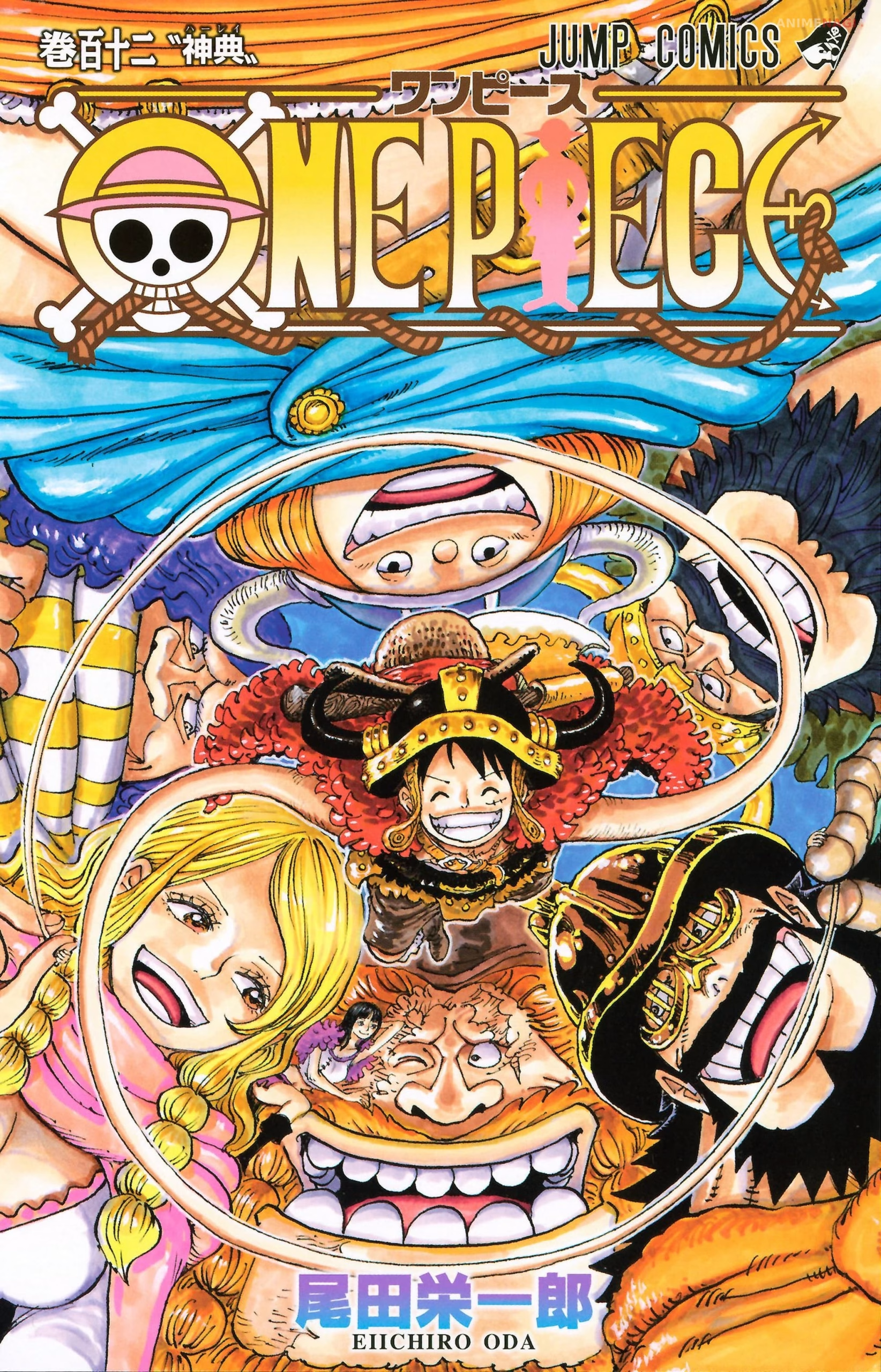
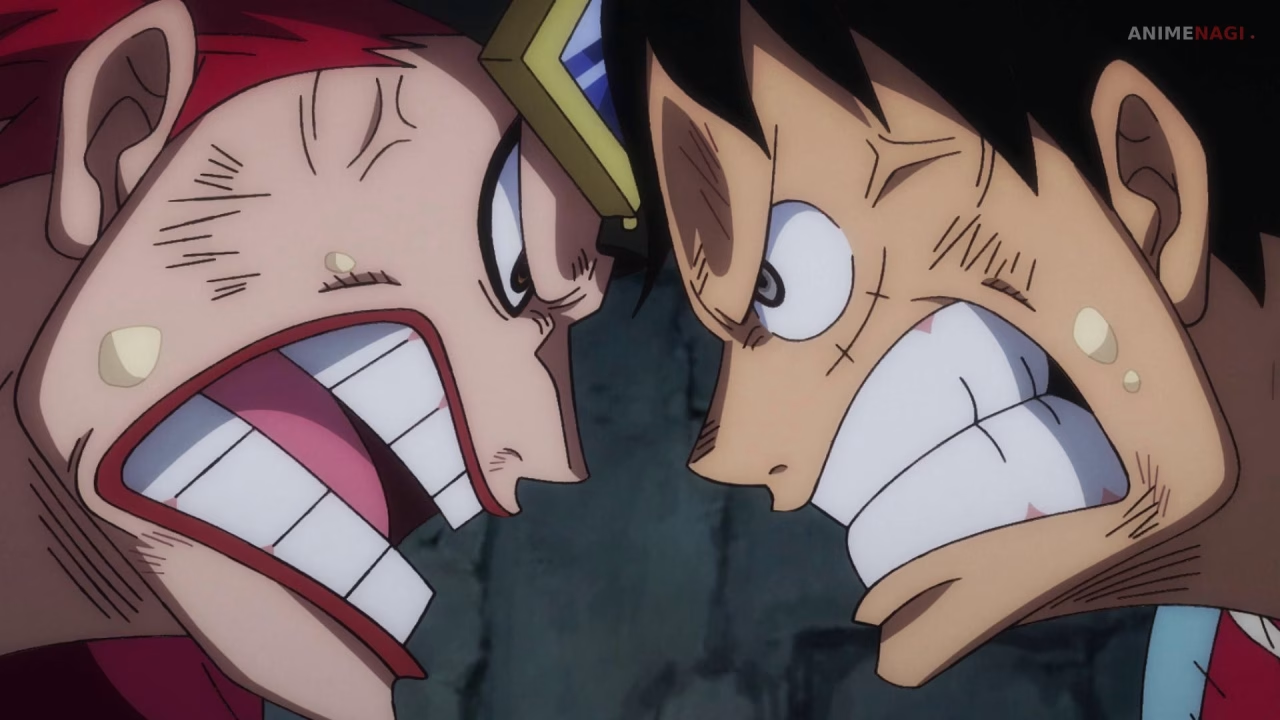
In One Piece, the Udon Prison section of the Wano arc became one of the story’s most important training periods. Unlike earlier arcs where Monkey D. Luffy relied heavily on his Devil Fruit powers and Gear transformations, Udon forced him into a completely different kind of growth. Alongside Eustass Kid, Luffy had to survive brutal prison labor while weakened by sea-stone cuffs that suppressed their Devil Fruit abilities.
What made the Udon training so important was that it stripped both pirates down to raw physical ability, endurance, and Haki mastery. Instead of flashy powers, they developed strength through hard labor, combat pressure, and constant resistance. The arc also introduced Luffy to advanced Armament Haki, known in Wano as Ryuo, which later became essential in his fight against Kaido.
Eiichiro Oda used Udon Prison to show that true strength in One Piece is not built only through Devil Fruits. Physical conditioning, willpower, and Haki control are equally important. This training period transformed both Luffy and Kid into stronger captains before the Onigashima raid. Information about Udon Prison, Hyogoro’s mentorship, and Luffy’s Ryuo training has been detailed through the manga, anime, and official franchise material.
Why Luffy and Kid Could Not Use Their Devil Fruit Powers in Udon Prison
After Kaido defeated Luffy in Wano, he was sent to the Udon Prisoner Mine. Eustass Kid had already been imprisoned there earlier after refusing to submit to Kaido. Both pirates were forced into slave labor while wearing sea-stone handcuffs, also called seastone cuffs.
Sea-stone is one of the biggest weaknesses for Devil Fruit users in One Piece. It emits the same energy as the sea and weakens Devil Fruit users upon contact. The special cuffs used in Udon did not completely remove movement, but they significantly reduced the prisoners’ energy and prevented them from using their powers effectively.
This meant Luffy could not depend on his Gum-Gum abilities, and Kid could not properly manipulate magnetism with his Devil Fruit. Instead, both captains had to rely on natural physical strength. Even simple labor became exhausting because the cuffs constantly drained their stamina.
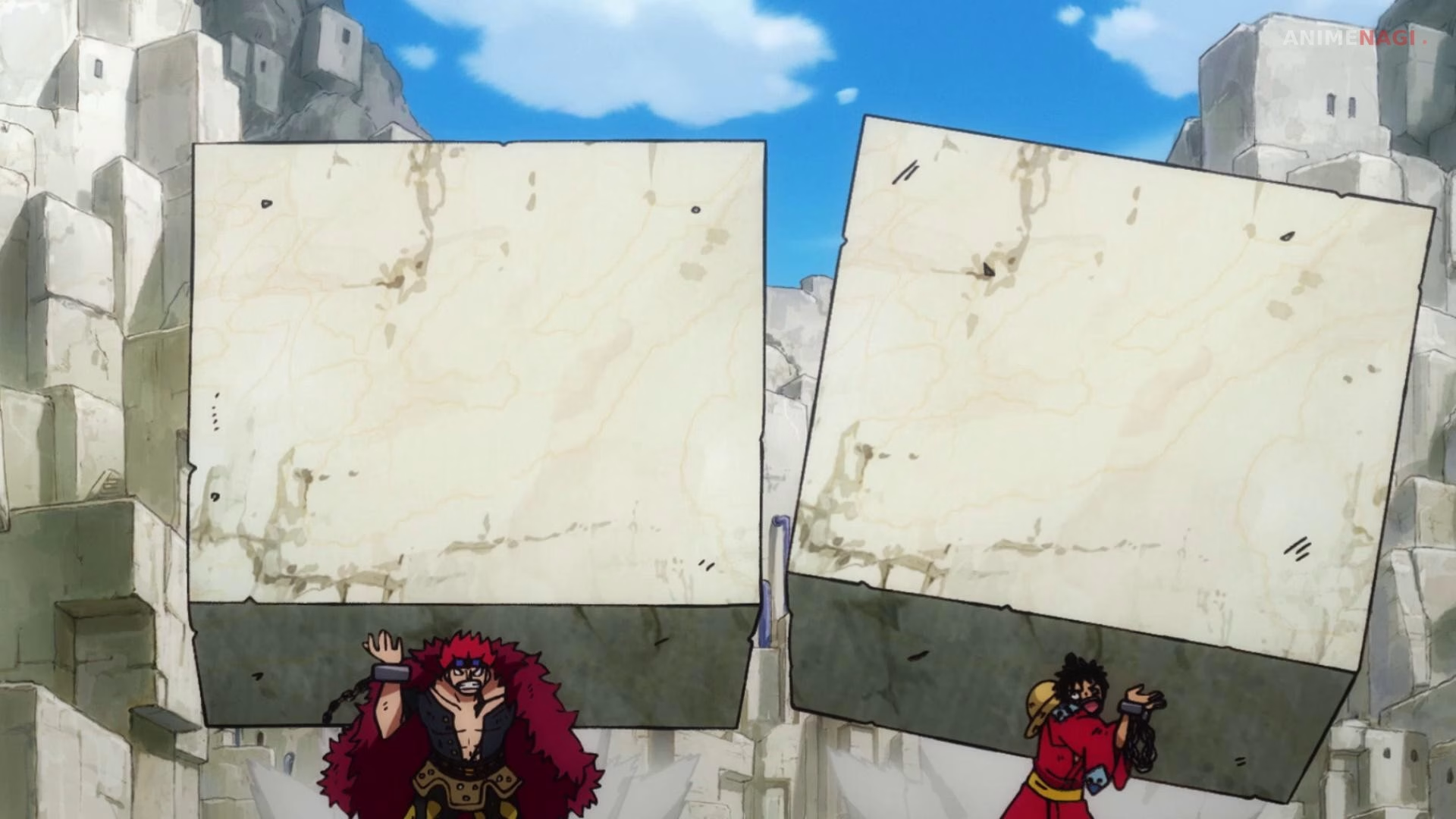
The prison’s labor system involved carrying massive stone blocks, mining work, and nonstop physical punishment. However, instead of breaking them mentally, the environment became a form of intense resistance training. Because their bodies were under constant strain while weakened, both Luffy and Kid gradually built incredible physical endurance.
This was especially important for Luffy because many of his earlier fights depended on combining Haki with Devil Fruit techniques. Udon forced him to improve his base strength separately from his powers. Some fans have even pointed out that the prison effectively acted as a hidden training arc designed to prepare Luffy for stronger enemies like Kaido and Blackbeard.
How Udon Prison Increased Luffy and Kid’s Physical Strength
One of the most interesting parts of the Udon Prison storyline is how casually Luffy and Kid adapted to impossible physical labor. The prison guards treated the inmates like disposable workers, forcing them to carry enormous stone blocks daily in exchange for tiny portions of food.
Rather than conserving energy, Luffy and Kid turned everything into a competition. They constantly challenged each other over who could carry more blocks or complete more work. This rivalry pushed both captains to improve faster.
Because they were training while weakened by sea-stone, their muscles and stamina were constantly under pressure. In many ways, the process resembled weighted resistance training. Once the cuffs were eventually removed or their effects reduced, the strength gains became even more noticeable.
The Udon labor system also improved their durability and recovery speed. Both pirates were exhausted, starving, and beaten regularly, yet they kept functioning at a high level. This reinforced one of One Piece’s core themes: powerful pirates are defined by their willpower as much as their abilities.
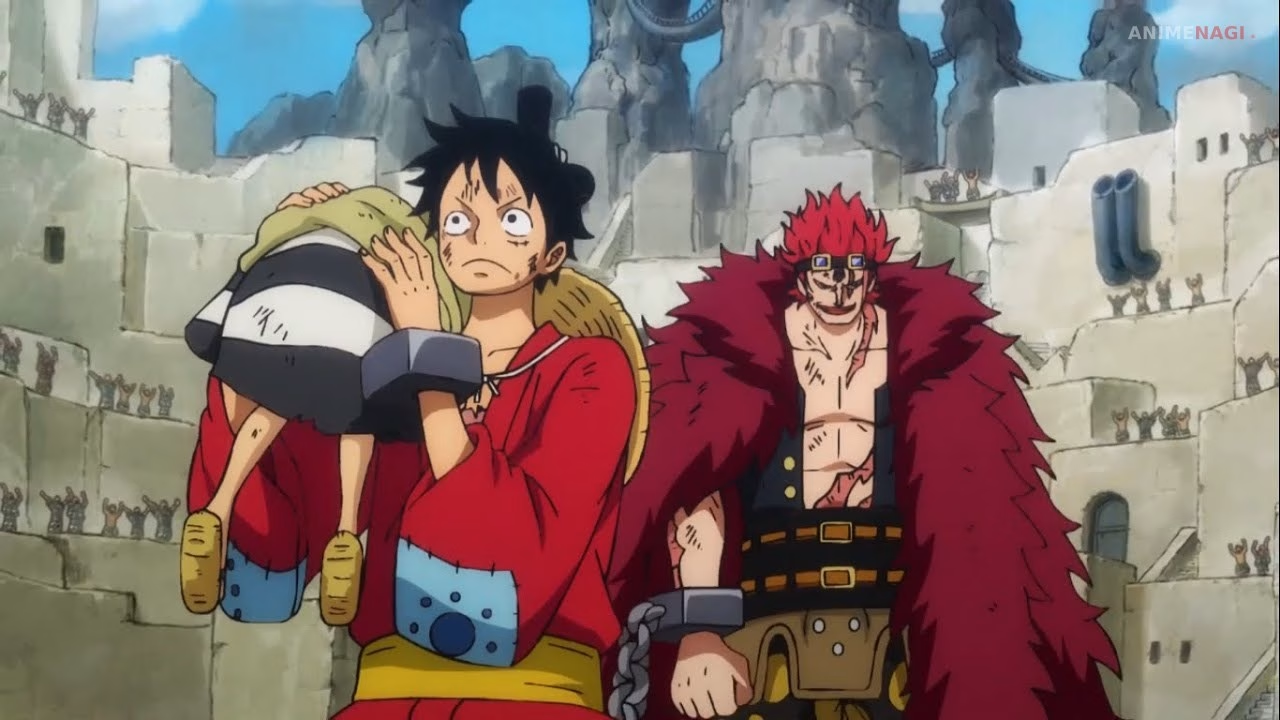
Kid’s performance during this section was especially important because it showed he was not just relying on his magnetic powers. Even without his Devil Fruit, he remained physically monstrous. Oda used the prison scenes to establish Kid as a legitimate rival to Luffy before the Yonko battles.
For Luffy, Udon represented a return to basics. Earlier in the series, his raw physical strength alone made him dangerous. Over time, Gear techniques became a larger part of his fighting style. Udon reminded viewers that Luffy’s natural endurance and combat instincts are still among his greatest strengths.
How Hyogoro Taught Luffy Ryuo in Udon Prison
The biggest result of the Udon Prison training was Luffy learning advanced Armament Haki from Hyogoro. Hyogoro, once a legendary yakuza boss in Wano, recognized Luffy’s potential and began teaching him the country’s Haki technique known as Ryuo.
Ryuo is essentially a more advanced application of Armament Haki that allows the user to project Haki outward instead of coating only their body. This creates internal destruction damage without direct contact, making it extremely effective against durable opponents.
The concept became essential because Luffy realized ordinary attacks could barely hurt Kaido. Even Gear Fourth attacks failed to deal meaningful damage earlier in Wano. Luffy needed a method that could bypass Kaido’s near-invincible exterior.
Hyogoro demonstrated that true Haki control was about flowing energy outward naturally rather than forcing power into attacks. During their training, Luffy repeatedly attempted to remove explosive collars using this technique. These exercises improved both his precision and Haki output.
The Ryuo training also deepened the philosophical side of Haki in One Piece. Haki is not just physical power. It is the manifestation of spirit, discipline, and control. Udon Prison became the perfect environment for this lesson because Luffy had no shortcuts available through Devil Fruit abilities.
The training eventually paid off during the Onigashima raid, where Luffy could finally damage Kaido more effectively. His later mastery of advanced Conqueror’s Haki also built on the principles he first learned through Ryuo in Udon.
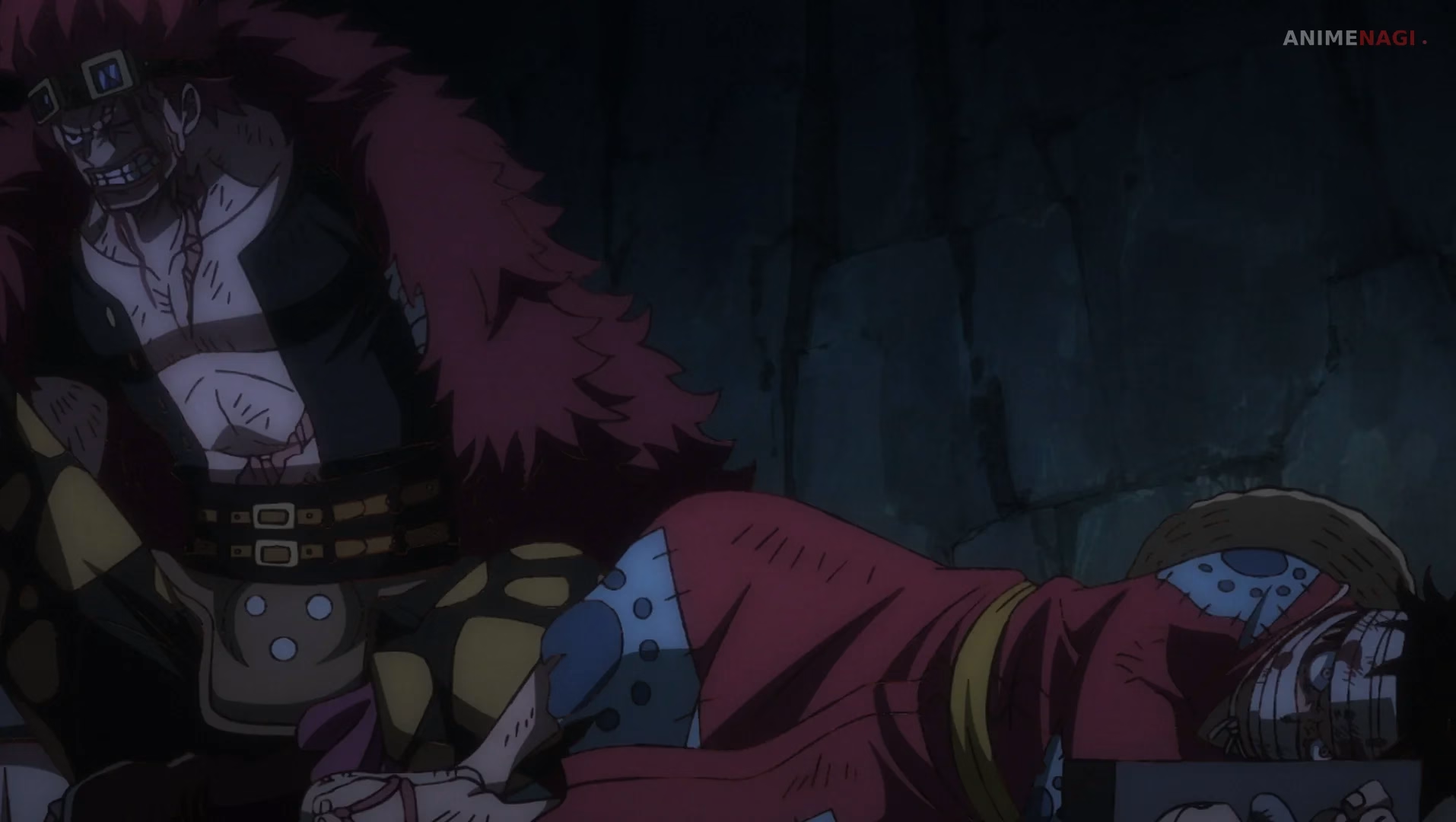
While not an official One Piece formula, this idea essentially captures what the Udon training represented. Luffy’s growth came from balancing all three elements instead of depending only on his Devil Fruit.
Why the Udon Prison Training Was Essential for the Wano Arc
Udon Prison was far more than a temporary detour in Wano. It served as the foundation for Luffy’s later victories and reinforced several major themes in One Piece.
First, it emphasized that Devil Fruits alone do not define strength. Characters like Roger, Shanks, and Garp became legends primarily through Haki and raw combat ability. Udon pushed Luffy closer toward that level of balanced growth.
Second, the prison strengthened the rivalry between Luffy and Kid. Both captains endured the same punishment and survived through sheer determination. Their shared suffering created mutual respect, even if they continued competing constantly.
Third, the training is connected directly to Wano’s samurai culture. Ryuo represented Wano’s unique approach to Haki, and Hyogoro’s mentorship linked Luffy to the country’s history and warriors. This made Luffy’s eventual battle against Kaido feel earned rather than sudden.
Finally, the Udon storyline improved the pacing of the Wano arc by giving Luffy believable progression before facing an Emperor again. Instead of instantly becoming stronger after defeat, he underwent a harsh physical and mental training process first. That made his later power growth feel more grounded within the story.
According to official franchise material and arc explanations, Udon also became a critical rallying point for the rebellion against Kaido and Orochi, with imprisoned samurai and yakuza eventually joining the alliance.
In the end, Udon Prison transformed Luffy and Kid in ways that went beyond simple power scaling. By removing their dependence on Devil Fruits, One Piece showed what truly makes great pirates dangerous: resilience, ambition, and the refusal to give up even under impossible conditions.