One-Punch Man Season 2 introduced a very different type of antagonist compared to the first season. While Season 1 focused heavily on large-scale monster threats like Boros and the Dark Matter Thieves, the second season shifted toward a more personal and psychologically complex conflict. Instead of presenting a straightforward evil force, the story centered on Garou, a former martial arts disciple who declared war on the Hero Association and began hunting heroes across the country.
At first glance, Garou appears to be the clear main villain of the season. He attacks heroes relentlessly, openly admires monsters, and repeatedly declares his desire to become the “ultimate monster.” However, as the story progresses, it becomes clear that One Punch Man Season 2 is more complicated than a simple hero-versus-villain narrative. Garou’s motivations, the rise of the Monster Association, and the flaws within hero society all contribute to a layered conflict that blurs traditional morality.
Understanding who the “true” antagonist is in Season 2 requires looking beyond surface-level fights. The season uses Garou not only as a villain, but also as a challenge to the entire system that defines heroes and monsters in One Punch Man.
Garou Is the Central Antagonist of Season 2
Garou is unquestionably the central antagonist of One Punch Man Season 2. The season introduces him early as Bang’s former disciple who was expelled from the dojo after violently attacking other students. After leaving, Garou became obsessed with monsters and developed a deep hatred toward heroes, eventually beginning his “Hero Hunt” campaign against the Hero Association.
What makes Garou immediately stand out is that he is still human. Unlike most major villains in the series, he is not a giant monster, alien conqueror, or supernatural entity. He is a martial artist whose ideology pushes him toward villainy. This human element gives Season 2 a much darker and more grounded tone compared to the first season.
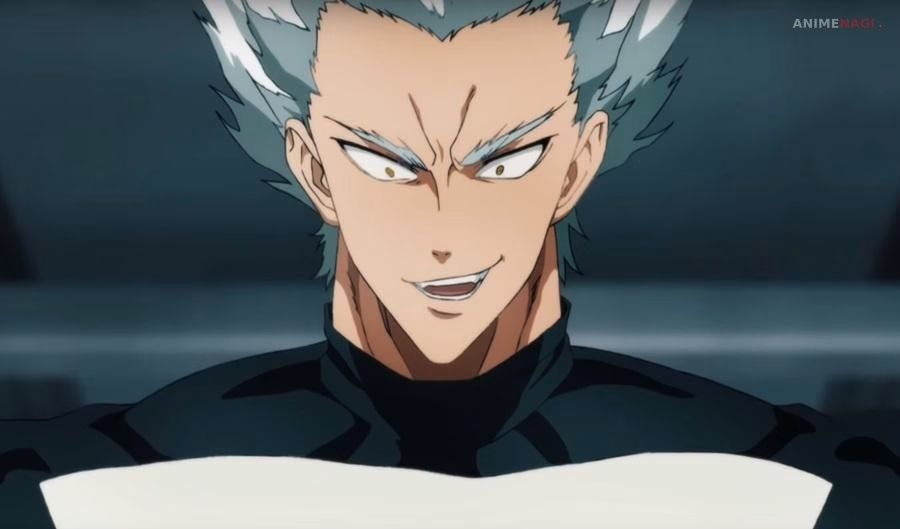
Garou’s strength also grows rapidly throughout the season. He defeats numerous professional heroes, survives repeated near-death situations, and continuously evolves during combat. His fighting style allows him to adapt quickly, making him one of the most dangerous opponents the Hero Association has faced. The anime repeatedly frames him as a growing threat whose full potential has not yet been reached.
At the same time, Garou does not behave like a typical monster. He injures heroes brutally, but he notably avoids killing humans outright. This contradiction becomes one of the most important aspects of his character later in the story.
Why Garou Hates Heroes
Garou’s ideology comes from his childhood experiences and his resentment toward society’s simplistic view of heroes and monsters. As a child, Garou sympathized with villains in TV shows because they were always treated as irredeemable enemies who existed only to lose. Meanwhile, heroes were automatically praised regardless of their flaws.
This mindset caused Garou to become isolated from others. He was bullied for defending monsters and gradually developed resentment toward popular or socially accepted figures. In his eyes, heroes symbolized society’s tendency to favor the strong and reject outsiders. That bitterness eventually evolved into his dream of becoming the ultimate monster capable of terrifying the entire world equally.
What makes Garou compelling is that his logic contains traces of truth despite being deeply flawed. Even fan discussions often describe him as a misguided anti-hero rather than pure evil because he recognizes hypocrisy within hero society.
However, Garou’s solution is extreme and dangerous. He believes fear can unite humanity and eliminate injustice, which pushes him toward increasingly violent behavior. This ideological conflict is what separates him from more straightforward villains in the series.
The Monster Association Is the Bigger Threat
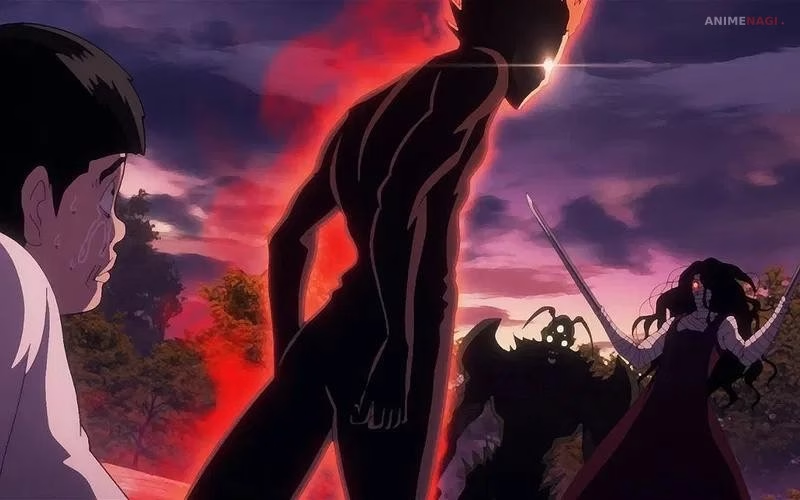
Although Garou dominates most of Season 2’s narrative, the Monster Association gradually emerges as the larger long-term threat. This organization consists of powerful monsters seeking to destroy the Hero Association and overthrow human society entirely. Unlike Garou, the Monster Association openly embraces mass destruction and chaos.
The group becomes increasingly important as the season progresses. Monsters attack cities simultaneously, overwhelm heroes, and create widespread panic across society. Their leadership, including characters like Orochi and Gyoro Gyoro, begins preparing for an all-out war against humanity.
What makes this interesting is that the Monster Association tries recruiting Garou repeatedly. They see him as someone capable of becoming the “Human Monster” and potentially leading their cause. However, Garou never fully accepts them because he dislikes how most monsters behave. According to official lore, Garou’s idea of a monster is an absolute symbol of fear, not a mindless killer.
This creates an unusual situation where Garou and the Monster Association are technically aligned against heroes while still operating under very different philosophies.
Garou Is More Anti-Hero Than Pure Villain
One reason many fans debate the “true villain” of Season 2 is that Garou consistently displays humanity beneath his violent actions. Despite calling himself a monster, he repeatedly protects the child Tareo and refuses to kill innocent people. Even during brutal fights, he mainly injures heroes rather than murdering them outright.
This contradiction is intentional. Garou wants to become the ultimate monster, but his actions constantly reveal compassion and moral hesitation. Saitama eventually notices this contradiction as well, recognizing that Garou behaves differently from actual monsters.
Many analyses describe Garou as a distorted reflection of Saitama. Both characters reject society’s expectations and challenge the existing system in different ways. However, while Saitama remains emotionally detached yet heroic, Garou channels his frustrations into a destructive ideology.
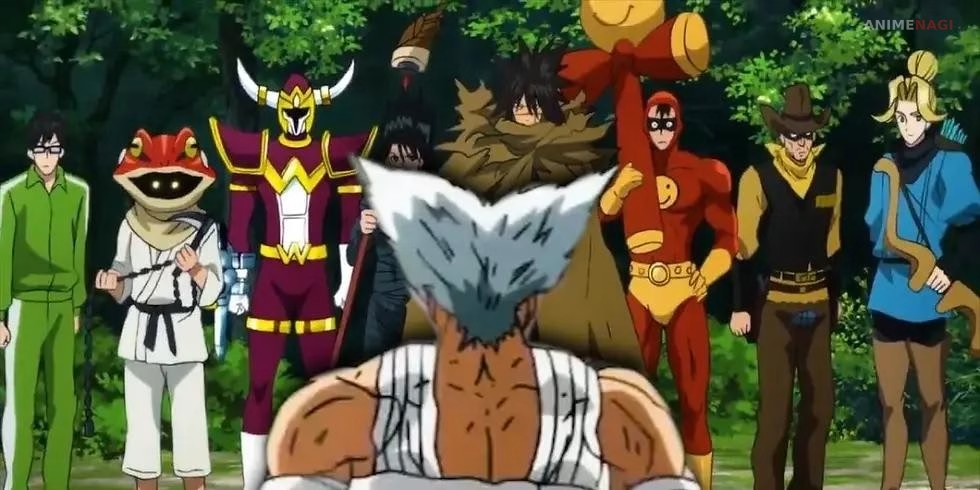
This complexity is why Garou became one of the franchise’s most popular characters. He is not simply evil for the sake of being evil. His actions come from emotional wounds, resentment, and a warped desire to change the world.
Season 2 Uses Garou to Criticize Hero Society
Another reason the season feels morally complex is that it highlights flaws within the Hero Association itself. Throughout Season 2, the organization is shown prioritizing rankings, reputation, and financial interests alongside hero work. Some heroes genuinely care about protecting people, while others focus heavily on status or popularity.
Garou exploits these flaws psychologically. By targeting heroes directly, he exposes weaknesses within the system and forces the Hero Association into panic mode. Several heroes underestimate him because they assume a single human cannot threaten the organization seriously.
At the same time, the season never fully justifies Garou’s actions. His violence harms innocent people indirectly, and his obsession with becoming a monster pushes him further away from humanity. However, the series clearly wants viewers to question the simplistic hero-versus-monster structure that exists within this world. That thematic depth is what makes Season 2 feel so different from traditional superhero anime.