Mo Dao Zu Shi Season 2, also known as Grandmaster of Demonic Cultivation Season 2, takes everything that worked in the first season and pushes it into deeper, more emotionally complex territory. Adapted from Mo Xiang Tong Xiu’s original novel, the second season focuses heavily on unraveling past events, shifting timelines, and the tragic truth behind Wei Wuxian’s downfall. While Season 1 introduced the world and its core conflict, Season 2 dives into the consequences, delivering a much more layered narrative.
The season aired in 2019 and received a strong reception for its tighter pacing, improved animation, and emotionally driven storytelling. Studios behind the adaptation refined both visual quality and narrative clarity, making Season 2 feel more cohesive despite its non-linear structure. With a greater focus on character motivations, moral ambiguity, and political intrigue, the sequel transforms the series into a more mature and gripping experience. Let’s break down what makes Mo Dao Zu Shi Season 2 such a standout installment.
Story and Narrative Structure: A More Focused and Emotional Arc
Season 2 shifts its storytelling approach by focusing on the past, particularly the events that led to Wei Wuxian’s tragic fate. Instead of continuing the present-day mystery introduced in Season 1, the narrative spends most of its time in flashbacks. This decision initially feels disorienting, but it ultimately strengthens the emotional impact of the story.
The arc explores the rise of the Sunshot Campaign, the growing tension between cultivation clans, and the gradual isolation of Wei Wuxian. As the story progresses, viewers gain a deeper understanding of how misunderstandings, fear, and political manipulation contributed to his downfall. The writing emphasizes how small decisions snowball into irreversible consequences.
Despite its complex structure, the pacing feels significantly improved compared to Season 1. Each episode serves a clear purpose, gradually building toward major emotional payoffs. By the end of the season, the narrative threads come together in a way that recontextualizes everything viewers thought they knew.
Character Development: Wei Wuxian and Lan Wangji Shine
One of Season 2’s greatest strengths is its focus on character development. Wei Wuxian evolves from a carefree and rebellious cultivator into a deeply conflicted figure burdened by his choices. His descent into darker territory is portrayed with nuance, making it clear that his actions are driven by both compassion and desperation.
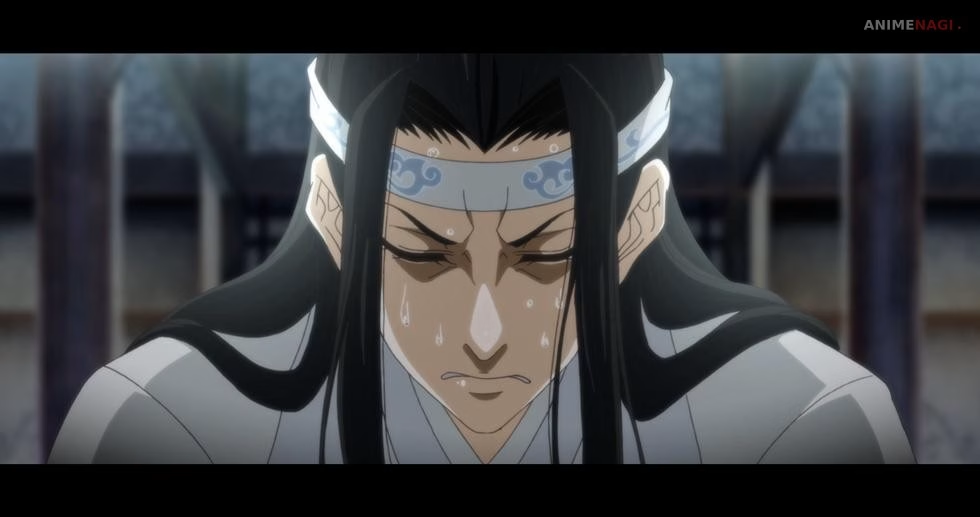
Lan Wangji’s role is equally important. While he remains reserved and disciplined, Season 2 reveals his unwavering loyalty and internal struggles. His relationship with Wei Wuxian becomes the emotional backbone of the story, providing moments of quiet intensity that contrast with the larger conflicts.
Supporting characters also receive more attention. Figures like Jiang Cheng and Wen Ning are given greater depth, highlighting their motivations and the difficult decisions they must make. This expanded focus ensures that the story feels grounded in personal stakes rather than just large-scale events.
Themes: Morality, Power, and Misunderstanding
Season 2 explores complex themes that lift it beyond a typical fantasy narrative. One of the central ideas is the blurred line between good and evil. Wei Wuxian’s use of demonic cultivation places him in direct conflict with traditional values, yet his intentions remain rooted in protecting others.
The story also examines how fear can shape societal perceptions. As Wei Wuxian becomes more powerful, others begin to view him as a threat rather than an ally. This shift highlights how quickly admiration can turn into suspicion when power disrupts established norms.
Another key theme is the role of misunderstanding in driving conflict. Many of the tragedies in Season 2 occur not because of malicious intent, but because of miscommunication and prejudice. This adds a layer of realism to the narrative, making the emotional moments more impactful.
Animation and Visual Quality: A Noticeable Upgrade
Season 2 showcases a clear improvement in animation quality. The action sequences are more fluid, with better choreography and more dynamic camera work. Battles feel more intense and visually engaging, enhancing the viewing experience.
Character designs also appear more refined. Facial expressions are more detailed, allowing for subtle emotional cues that strengthen character interactions. This is particularly important during quieter scenes where dialogue and expression carry the weight of the story.
The use of color and lighting further enhances the atmosphere. Darker tones are used effectively to reflect the story’s more serious themes, while brighter moments provide contrast. This visual balance helps maintain engagement throughout the season.
Sound Design and Music: Elevating Emotional Impact
The soundtrack in Season 2 plays a crucial role in amplifying the story’s emotional beats. The background music is carefully integrated into key scenes, enhancing tension during conflicts and deepening emotional moments.
Voice acting continues to be a strong point, with performances that capture the complexity of each character. Wei Wuxian’s emotional range is particularly well-executed, conveying both his confidence and vulnerability.
Sound design during action scenes is also improved. The impact of weapons, spiritual energy, and environmental effects adds to the immersion. These elements combine to create a more polished and engaging audiovisual experience.
Pacing and Structure: Strengths and Minor Flaws
While Season 2 improves on many aspects of its predecessor, it is not without flaws. The heavy reliance on flashbacks can be confusing for new viewers, especially those unfamiliar with the source material. The timeline shifts require careful attention to fully understand the sequence of events.
However, this structure also serves a purpose. By revealing information gradually, the story builds suspense and emotional weight. Key revelations feel more impactful because they are earned through careful buildup.
The shorter episode count helps maintain focus, ensuring that the narrative does not feel stretched. While some viewers may wish for more detailed exploration of certain events, the concise structure ultimately benefits the pacing.
How Season 2 Improves on Season 1
Season 2 addresses many of the criticisms directed at the first season. The storytelling is more cohesive, the pacing is tighter, and the emotional stakes are higher. These improvements make it easier for viewers to connect with the characters and their struggles.
The shift toward a character-driven narrative also enhances the experience. Instead of relying heavily on exposition, the story allows character actions and interactions to drive the plot. This approach results in a more engaging and immersive narrative.
Additionally, the production quality sees noticeable refinement. From animation to sound design, every aspect feels more polished. This consistency helps lift the series to a higher standard.