Beyond the Screen, within the broader fabric of contemporary global culture, a distinctive artistic medium has emerged from Japan and extended its reach across continents. Anime, a form of Japanese animation, has moved well beyond its original entertainment function to operate as a cultural vector that shapes identity, informs trends, and connects audiences across geographic and social boundaries.
This article examines anime’s trajectory and influence, focusing on how the medium has embedded itself within global consciousness, stimulated creative engagement, and altered how audiences interpret narrative and visual storytelling.
A dynamic urban environment illustrates this influence, where futuristic architecture, illuminated by dense neon palettes, coexists with fashion aesthetics derived from multiple anime genres. Public displays project animated sequences, while cherry blossoms and stylized character motifs integrate traditional and modern visual cues, reinforcing anime’s hybrid cultural footprint.
Anime has developed into a global cultural force, engaging audiences through a combination of distinctive narrative structures and visual design.
- Its historical development within Japan has been central to its international expansion and recognition.
- Major franchises function as cultural intermediaries, influencing sectors such as fashion, music, and contemporary art.
- Beyond entertainment, anime facilitates discourse on social issues and enables cross-cultural exchange.
- A globally distributed fan ecosystem, including conventions and digital platforms, continues to drive its evolution.
Anime’s Rise to Global Prominence
Anime has undergone a significant transformation, progressing from localized experimentation to a globally recognized cultural system. Its origins date to early 20th-century Japan, where animators began refining techniques and narrative approaches that would later define the medium’s visual and thematic identity.
The foundational phase of anime is closely associated with figures such as Osamu Tezuka, frequently described as the “God of Manga.” His works, including Astro Boy and Kimba the White Lion, established core conventions such as stylized character design, cinematic framing, and layered thematic content. As production capabilities improved, series like Astro Boy, Speed Racer, and Sailor Moon achieved international distribution, introducing global audiences to anime’s formal and narrative characteristics.
The expansion of anime into a global market has been strongly influenced by franchise development. Series such as Dragon Ball, Naruto, One Piece, and Attack on Titan have accumulated transnational audiences, extending their reach beyond Japan. These properties integrate elements of mythology, philosophy, and sociopolitical commentary, allowing them to resonate across diverse cultural contexts.
The scale of popularity has resulted in extensive ecosystems that include adaptations, merchandise, and derivative media, reinforcing brand longevity and audience engagement. Simultaneously, conventions, festivals, and online communities function as nodes of interaction, sustaining a decentralized yet cohesive global fandom.
The sustained success of anime reflects its capacity to combine visual distinctiveness with narrative universality, maintaining relevance as both an entertainment format and a cultural framework.
“Anime has the power to not just entertain, but to educate, inspire, and bridge cultural divides. Its global appeal is a testament to the universal human experiences it captures.”
Anime now operates as a form of cultural transmission, extending beyond entertainment into the domain of global cultural exchange. Its narratives and visual systems enable audiences to engage with Japanese cultural constructs while also addressing themes that carry cross-cultural relevance.
As an instrument of soft power, anime disseminates values, aesthetics, and ideological perspectives. Its international reception has contributed to broader awareness of Japanese traditions, social norms, and historical context. Anime frequently incorporates social critique, addressing issues such as environmental concerns, gender representation, and psychological well-being.
This dual function enhances Japan’s cultural influence while positioning anime as a medium capable of facilitating dialogue between different societies. Its ability to operate across linguistic and geographic barriers reinforces its role as a global cultural intermediary.
“Anime has the power to transport viewers to different worlds, cultures, and perspectives, creating a deeper understanding and appreciation for the diversity of human experience.”
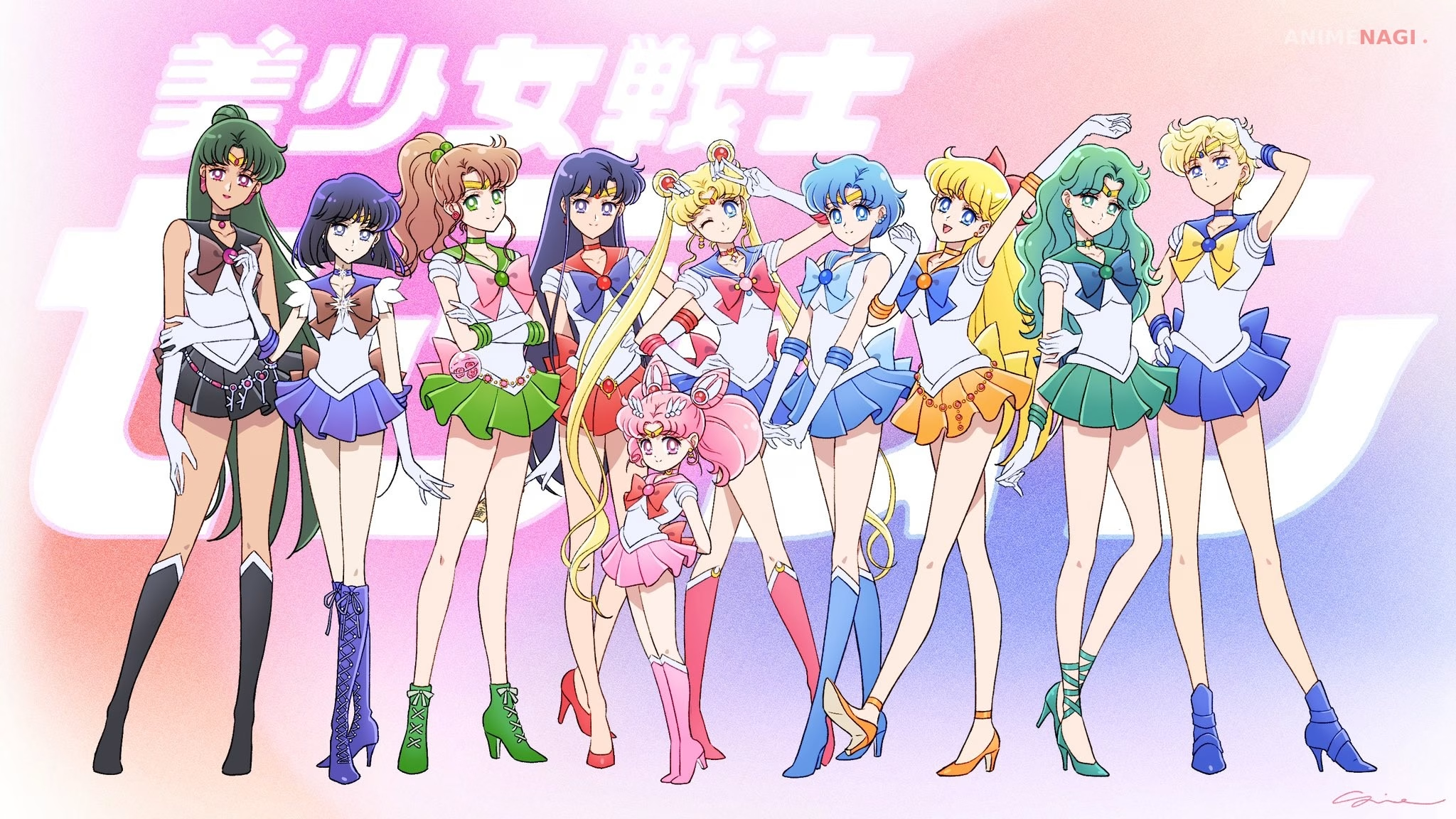
Anime’s narrative architecture extends into complex thematic territory, frequently engaging with philosophical, ethical, and sociopolitical questions. Rather than functioning solely as escapist media, anime often mirrors contemporary societal tensions and debates.
Through varied storytelling frameworks, anime addresses themes such as justice, identity, governance, and human behavior. Its narratives often challenge established norms and encourage critical engagement. For instance, Attack on Titan examines authoritarian structures, moral ambiguity, and systemic conflict within a speculative setting, prompting analysis of power and resistance.
Similarly, Spirited Away, directed by Hayao Miyazaki, explores environmental degradation, cultural displacement, and identity preservation. Its narrative structure integrates symbolic imagery with broader cultural commentary, encouraging reflection on modernization and tradition.
“Anime has the power to transcend entertainment and become a powerful medium for social commentary, challenging audiences to confront difficult truths and engage in meaningful discourse.”
By incorporating these thematic layers, anime extends its function into intellectual and cultural discourse, engaging audiences beyond surface-level consumption.
Anime’s visual system is a central component of its global influence, characterized by deliberate stylistic choices that support narrative delivery. Its aesthetic framework integrates detailed character design, controlled motion, and strategic use of color and composition.
Character construction often involves exaggerated visual traits, including enlarged eyes and stylized hair, which function as emotional amplifiers. Animation techniques emphasize movement fluidity, framing, and perspective shifts to intensify narrative moments. Color application and lighting design further contribute to tone modulation, aligning visual output with thematic intent.
Anime’s Impact on Popular Culture
Anime’s aesthetic and narrative influence has permeated multiple sectors within popular culture, extending into fashion, music, and visual art.
Influence on Fashion
Designers frequently incorporate anime-inspired motifs, including bold color schemes, character iconography, and experimental silhouettes. These elements appear in both high-fashion collections and streetwear, indicating broad adoption.
Musical Collaborations
Anime soundtracks and compositional styles have intersected with mainstream music production. Collaborative projects between musicians and anime composers have produced hybrid works that expand audience reach.
Artistic Collaborations
Visual artists engage with anime through merchandise design, gallery installations, and public art projects. These collaborations blur distinctions between commercial and fine art practices.
“Anime has become a global cultural phenomenon, transcending its origins in Japan to captivate audiences around the world. Its impact on popular culture is undeniable, as it continues to inspire fashion, music, and art in innovative and unexpected ways.”
Fostering Cross-Cultural Understanding
Anime facilitates interaction between diverse cultural groups by creating shared reference points. Its narratives often incorporate universal themes, enabling audiences to connect despite differing backgrounds.
Bridging Cultural Divides Through Shared Experiences
Viewers engage with anime through shared emotional and narrative frameworks that foster empathy and cross-cultural dialogue. Exposure to diverse perspectives in anime narratives fosters a broader understanding of global experiences.
“Anime has the power to transcend cultural boundaries and bring people together in a shared experience of storytelling and visual artistry.”
As engagement expands, anime’s role in fostering cultural literacy and mutual understanding becomes more pronounced.
The medium increasingly reflects a wider range of identities and perspectives. Representation of varied gender identities, cultural backgrounds, and social experiences has become more prominent, challenging earlier limitations.
This shift supports both audience identification and broader cultural awareness. By presenting diverse narratives, anime reinforces its function as an inclusive platform that accommodates multiple viewpoints.
“Anime has the power to transcend borders and connect people from all walks of life. It’s a medium that celebrates our differences while reminding us of our shared humanity.”
The global anime community demonstrates how shared cultural interests can generate persistent and interconnected social networks. “Anime has the power to bring people together, transcending cultural boundaries and uniting fans from all corners of the globe.”
The anime industry is entering a phase characterized by technological advancement and creative diversification. Digital animation tools are increasing production precision and enabling more complex visual compositions. At the same time, creators are experimenting with narrative structures, genre blending, and character development.
This combination of technical progression and creative expansion suggests a continued trajectory of growth. The medium is positioned to maintain relevance by adapting to shifting audience expectations while preserving its core aesthetic and narrative identity.