Haikyuu’s final arc takes a bold narrative shift by moving beyond high school volleyball and exploring the characters’ futures as professional athletes. While this transition allowed the series to expand its world and show long-term growth, it also meant that some fan-favorite characters received less focus than expected. One of the most notable examples is Yu Nishinoya, Karasuno’s energetic libero, whose absence during the final stages of the story raised questions among fans.
Nishinoya played a crucial role throughout the series as Karasuno’s defensive backbone. His reflexes, confidence, and ability to save seemingly impossible balls made him one of the most reliable players on the team. However, as Haikyuu progressed into its final arc, the story shifted its focus toward Shoyo Hinata’s personal journey and evolution, particularly during his time in Brazil and later professional career.
Understanding Nishinoya’s absence is not about missing content, but about recognizing the thematic direction of Haikyuu’s ending. His reduced presence highlights the series’ focus on growth, change, and the individual paths each character ultimately chooses.
What Happened to Nishinoya After High School
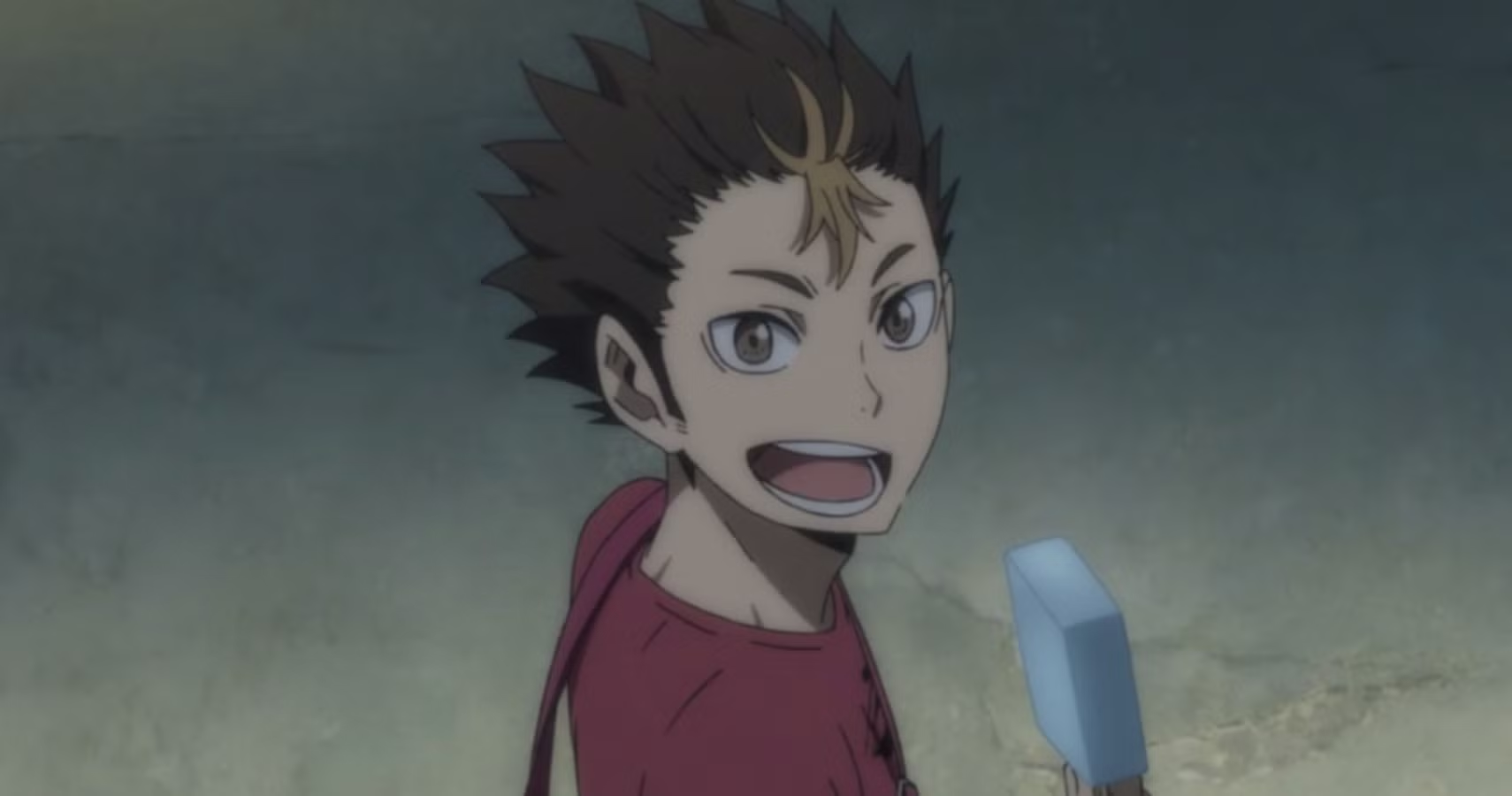
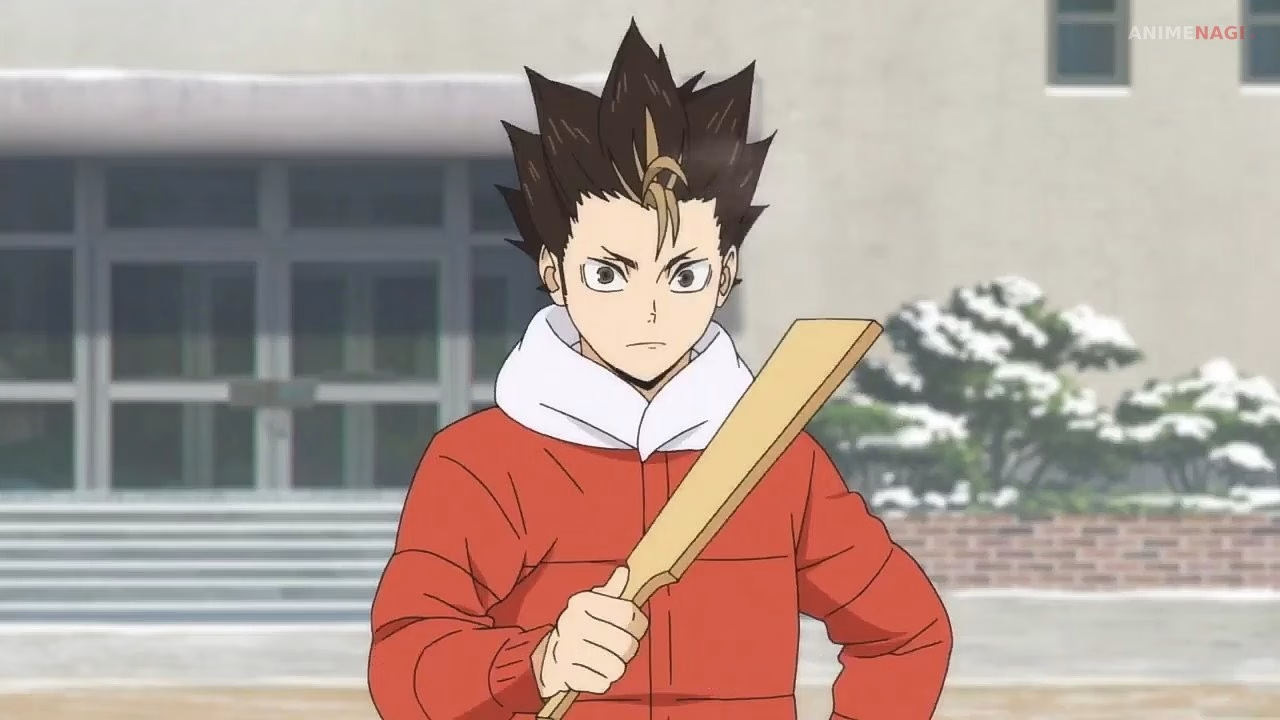
After Karasuno’s run at Nationals, the story gradually transitions into a time skip that shows where each character ends up in adulthood. Yu Nishinoya does not follow the expected path of becoming a professional volleyball player. Instead, official character information reveals that Nishinoya chooses to travel the world and pursue a freer lifestyle.
This decision fits perfectly with his personality. Throughout the series, Nishinoya is portrayed as someone driven by passion, excitement, and a love for new challenges. While he deeply cares about volleyball, his identity is not limited to the sport alone. His choice to explore life outside professional volleyball reflects Haikyuu’s broader message that success is not defined by a single path.
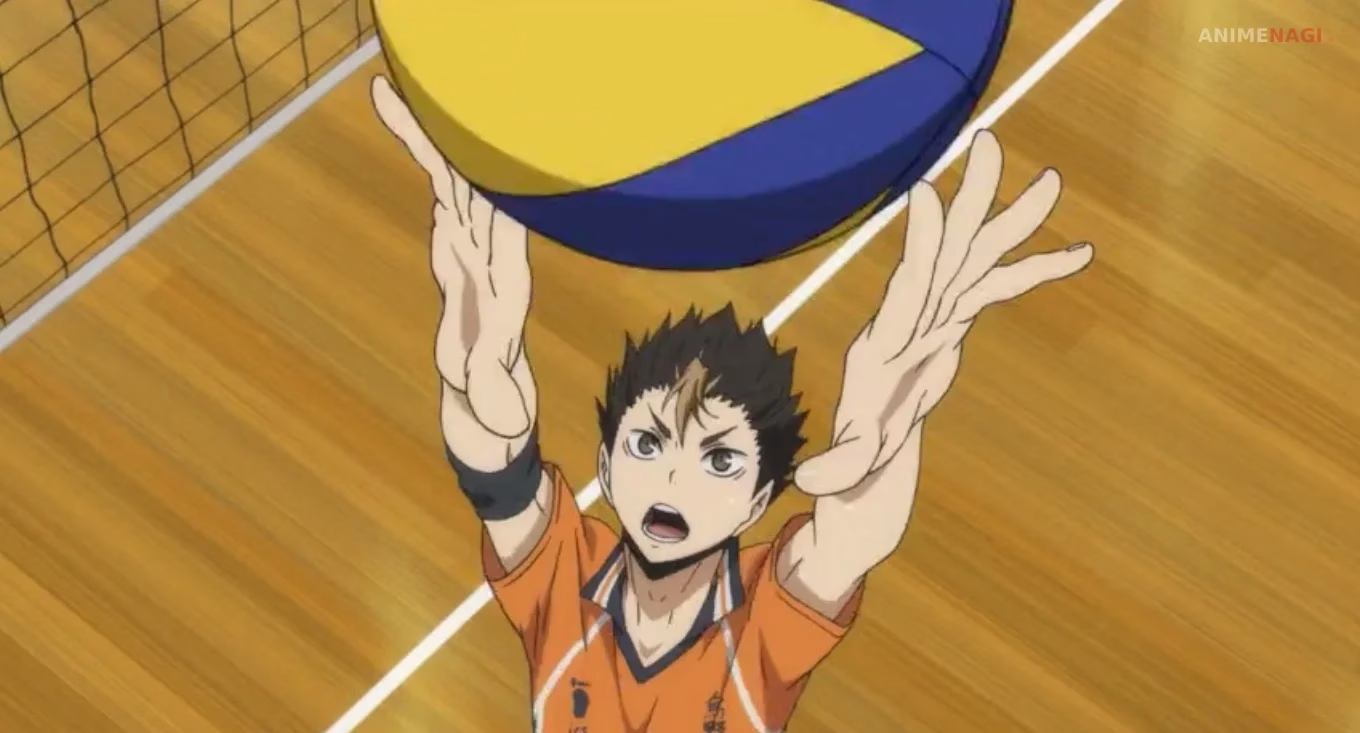
At the same time, his absence from the professional volleyball scene means that he is not directly involved in the final arc’s main matches. This naturally shifts the spotlight toward characters who continue competing at the highest level.
Rather than diminishing his importance, Nishinoya’s path reinforces the idea that every character’s journey is valid, even if it diverges from expectations.
Why Nishinoya’s Absence Matters to the Story
Nishinoya’s absence becomes more meaningful when viewed in the context of Haikyuu’s themes. Throughout the series, Karasuno’s strength comes from teamwork and the unique contributions of each player. Nishinoya represents defensive stability, often acting as the foundation that allows attackers like Hinata and Asahi to shine.
By removing Nishinoya from the final arc, the story creates a noticeable gap in Karasuno’s traditional structure. This absence emphasizes how much the team relied on him and highlights the importance of defensive skills in volleyball.
It also serves a narrative purpose by forcing other characters to step up and fill that void in different ways. Instead of replacing Nishinoya directly, the story explores how the next generation adapts and evolves without him.
This approach aligns with Haikyuu’s realistic portrayal of sports, where teams constantly change and players must adjust to new dynamics over time.
How Hinata’s Journey in Brazil Changed Everything
The biggest shift in the final arc is Shoyo Hinata’s decision to travel to Brazil and train in beach volleyball. This period becomes the foundation for his transformation into a complete player. Unlike his earlier development, which focused heavily on attacking, this phase emphasizes defense, positioning, and overall game awareness.
Beach volleyball requires players to cover the entire court, meaning Hinata cannot rely on a dedicated libero like Nishinoya. He must learn to receive, dig, and defend at a much higher level. This directly addresses one of his earlier weaknesses and allows him to grow beyond his role as a specialized attacker.
Hinata’s training in Brazil also improves his physical conditioning, reaction speed, and adaptability. Playing in a different environment forces him to think creatively and adjust to unpredictable situations, which becomes crucial in his later professional career.
This development effectively fills the gap left by Nishinoya’s absence, not by replacing him, but by evolving Hinata into a more balanced and versatile player.
Hinata Stepping Up as a Complete Player
By the time the story reaches its final matches, Hinata has transformed significantly from the player introduced at the beginning of the series. He is no longer just an explosive attacker relying on speed and quick sets. Instead, he has become a well-rounded athlete capable of contributing in every aspect of the game.
His improved defensive skills are especially noticeable. Hinata now performs reliable receives and digs, allowing him to stay involved in rallies even when he is not attacking. This evolution directly connects to Nishinoya’s earlier role on the team.
At the same time, Hinata retains his unique strengths, including his speed, jumping ability, and instinctive understanding of the game. The combination of these traits makes him a much more complete and unpredictable player.
This growth represents one of the most satisfying character arcs in Haikyuu. Hinata’s journey shows that true development comes from addressing weaknesses rather than relying solely on strengths.
Why Hinata Didn’t Replace Nishinoya Directly
It is important to understand that Hinata does not become a direct replacement for Nishinoya. The libero position has specific responsibilities and restrictions that Hinata does not fully adopt. Instead, his development allows him to contribute defensively while still maintaining his role as a versatile attacker.
This distinction reinforces the idea that players do not need to replicate others to succeed. Nishinoya’s skills remain unique and irreplaceable, even as Hinata improves his own defensive abilities.
The story uses this difference to highlight the diversity of roles within volleyball. Each position requires different strengths, and success comes from how players combine those strengths effectively.
By allowing Hinata to grow in his own way, Haikyuu avoids reducing Nishinoya’s importance while still showing meaningful progression.
What Nishinoya’s Absence Says About Haikyuu’s Ending
Nishinoya’s absence ultimately reflects the broader themes of Haikyuu’s ending. The series emphasizes that life after high school involves change, uncertainty, and personal choices that may not align with expectations.
Not every character continues playing volleyball at a professional level, and that is portrayed as a natural part of growing up. Nishinoya’s decision to travel represents freedom and individuality, which are just as important as competitive success.
At the same time, his legacy remains present through the skills and mindset he helped instill in his teammates. Karasuno’s identity as a team is shaped by players like Nishinoya, even after they move on.
This approach gives the ending a sense of realism and emotional depth that resonates with many viewers.