Few anime series have developed as strong a cult following as No Game No Life. Ever since the anime aired in 2014, fans have continuously demanded a second season. The series ended on a major cliffhanger, introduced a fascinating fantasy world, and quickly became one of the most recognizable isekai anime of the 2010s. Yet despite its popularity, high Blu-ray sales, and successful movie adaptation, No Game No Life Season 2 has never been officially announced.
Over the years, countless rumors, theories, and fake leaks have spread online claiming that a sequel was secretly in production. However, none of those reports have proven true. Even creator Yuu Kamiya has publicly commented multiple times about wanting another season himself.
The long absence of a sequel has confused anime fans because the franchise still has enough source material for continuation. Unlike some anime that completely adapt their manga or novels, No Game No Life still has plenty of unexplored story arcs remaining in the light novels. This has led many viewers to wonder what is actually preventing the anime from returning.
The answer is not simple. Multiple factors involving production committees, studio priorities, controversy, and industry trends appear to have contributed to the situation. While there is still hope for a sequel someday, the reasons behind the delay explain why No Game No Life has remained one of anime’s most famous unfinished stories.
Why No Game No Life became so popular
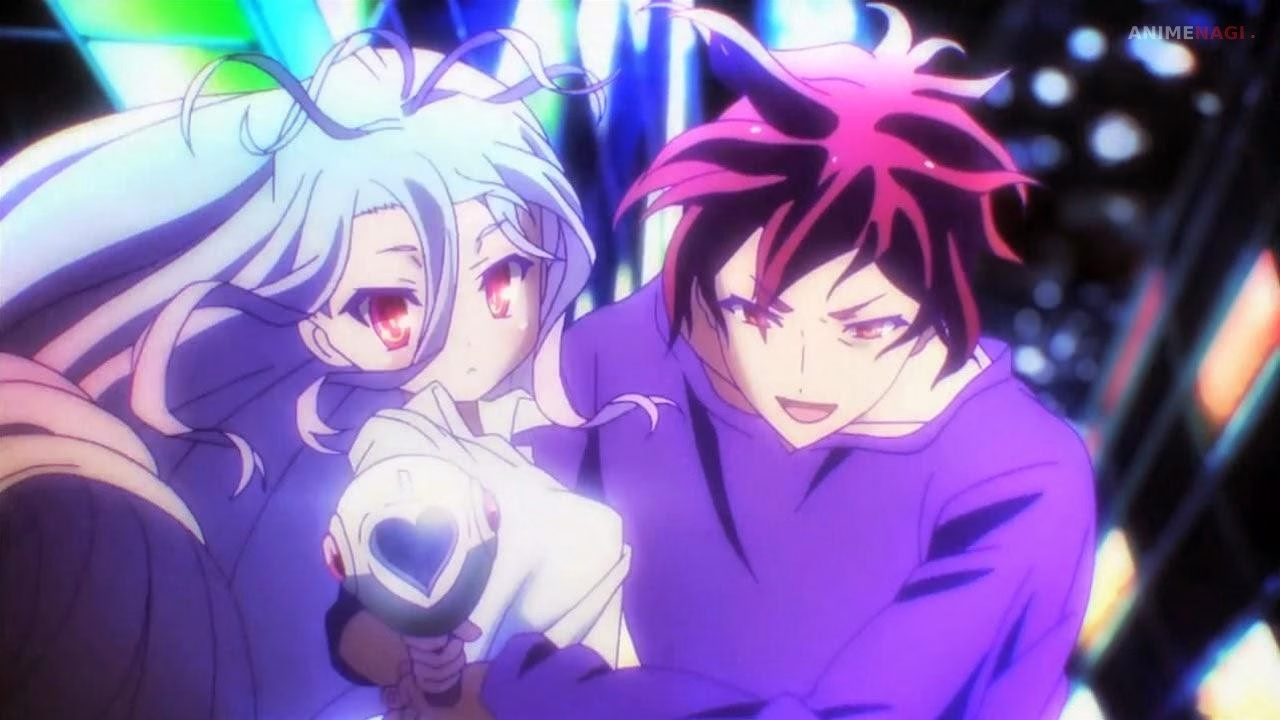
When Madhouse released No Game No Life in 2014, the anime immediately stood out from other fantasy and isekai series. The story followed genius gamer siblings Sora and Shiro as they entered the world of Disboard, where every conflict is resolved through games instead of violence.
The anime gained attention because of its unique premise, colorful visual style, and strategic mind games. While many fantasy anime focused heavily on action battles, No Game No Life emphasized psychological manipulation, gambling tactics, and elaborate game-based conflicts. The chemistry between Sora and Shiro also became one of the series’ biggest strengths.
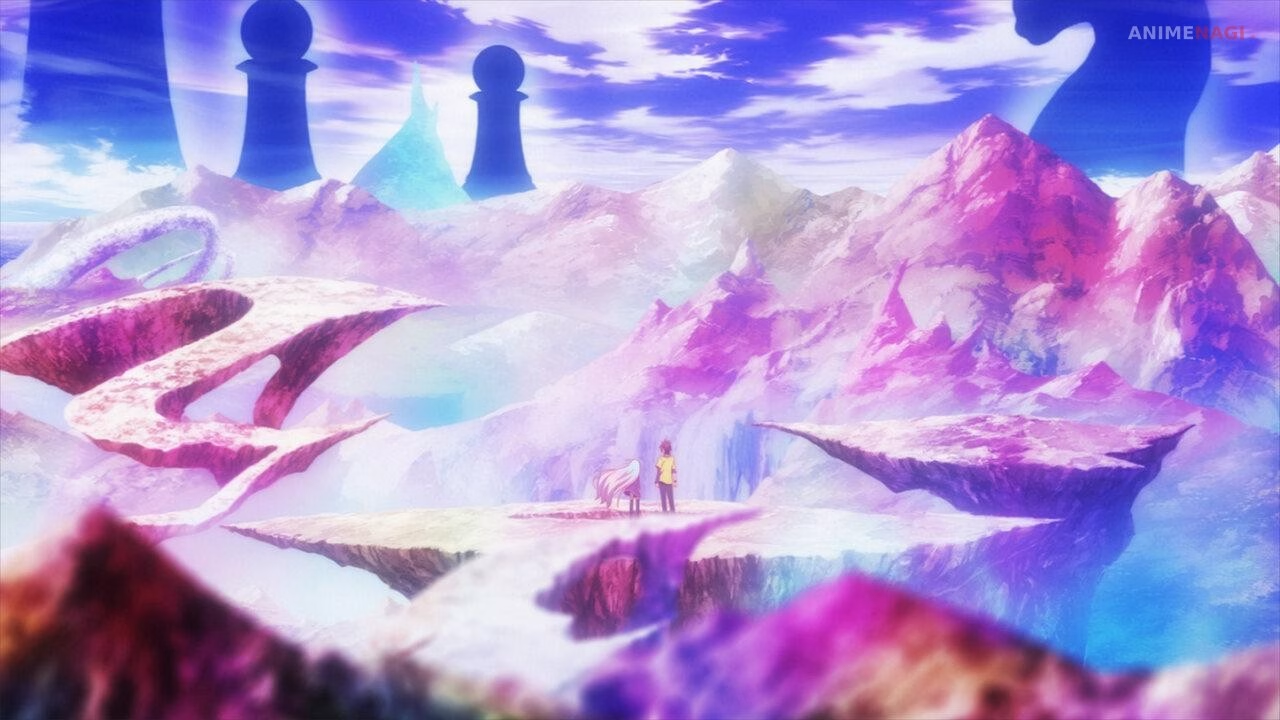
According to franchise information, the original anime adapted only the first few volumes of the light novel series written by Yuu Kamiya. Madhouse produced 12 episodes, which aired between April and June 2014.
The anime’s popularity continued growing even after it ended. Fans especially praised the vibrant art direction, surreal color palette, and creative animation style. The franchise later expanded with the 2017 movie No Game No Life: Zero, which adapted Volume 6 of the light novels and explored the ancient history of Disboard. The movie itself performed successfully and received strong fan reception.
This success is one reason why the absence of Season 2 still feels unusual to many anime viewers.
The biggest misconception: there is enough source material
One of the most common misconceptions surrounding No Game No Life Season 2 is the idea that there is not enough source material available. In reality, the anime only adapted a small portion of the light novels.
The original light novel series has continued releasing volumes for years after the anime aired. Franchise information confirms that the novels reached Volume 13 by 2026, giving any potential sequel more than enough material for additional seasons.
This means source material availability is not the reason the anime stopped.
In fact, many fans expected a sequel announcement after No Game No Life: Zero released in 2017. The movie demonstrated that the franchise still had strong audience interest years after the original anime aired. However, Madhouse and the production committee never officially announced continuation plans afterward.
This situation is common within the anime industry. Many anime adaptations are initially produced mainly to promote source material sales rather than fully adapt an entire story. Even successful anime sometimes remain unfinished if production committees decide other projects are more financially attractive.
That reality has frustrated No Game No Life fans because the anime’s cliffhanger ending strongly implied future storylines were planned.
Did the plagiarism controversy affect Season 2?
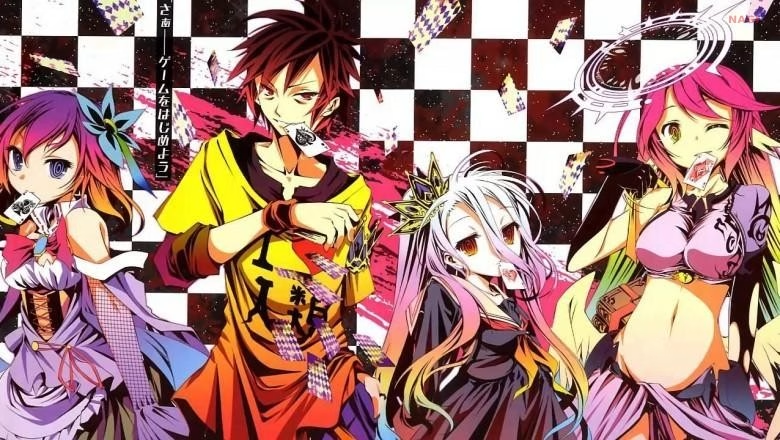
One of the most discussed theories involves the controversy surrounding Yuu Kamiya shortly after the anime aired.
In 2014, allegations appeared online claiming that some illustrations in the No Game No Life light novels closely resembled artwork created by other artists. Kamiya later acknowledged the issue publicly and apologized, while replacement illustrations were reportedly made for future releases.
Although the controversy eventually faded, many fans believe it may have negatively affected the franchise behind the scenes.
Several anime commentators and fan discussions have suggested that production committees could have become hesitant about aggressively expanding the anime after the controversy emerged. Some industry observers also speculate that trust issues within publishers or licensors may have contributed to delays. However, no official company has ever directly confirmed this as the reason for the absence of Season 2.
Importantly, the controversy alone probably does not fully explain the situation. The franchise still received the No Game No Life: Zero movie years later, which suggests the series itself was not abandoned entirely.
Still, the timing of the allegations during the anime’s peak popularity created a long-lasting theory among fans regarding why momentum for a sequel disappeared.
Madhouse’s production priorities may have changed
Another major factor involves Madhouse itself. During the early 2010s, Madhouse produced many highly praised anime projects, including Hunter x Hunter, Death Parade, One Punch Man, and No Game No Life. However, the studio gradually shifted focus toward different productions and collaborations over the following years.
Anime production schedules are extremely complicated, and studios often prioritize newer projects rather than returning to older franchises. Unlike studios such as Kyoto Animation or Ufotable that frequently revisit their major franchises, Madhouse historically moved between many unrelated projects.
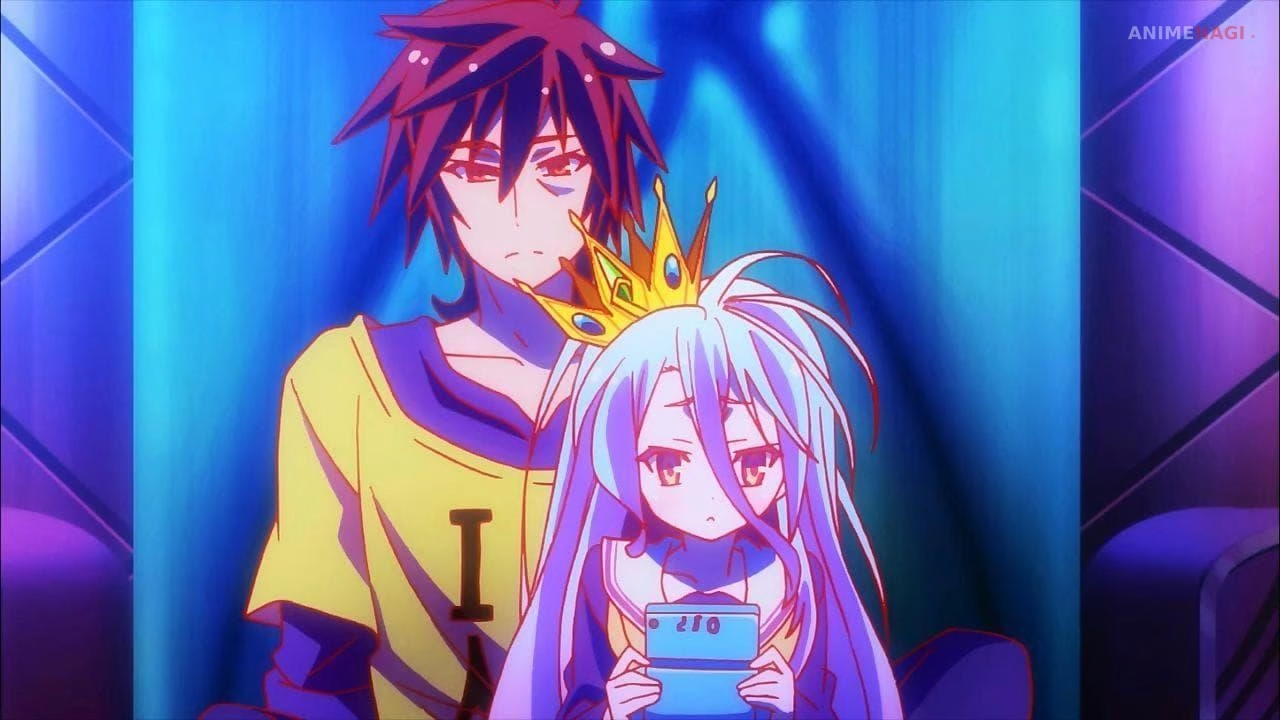
Recent interviews involving No Game No Life director Atsuko Ishizuka also reignited discussion about the anime’s production history. Ishizuka explained that the series intentionally broke many visual “rules” of anime design because she wanted to recreate the unique style of Yuu Kamiya’s illustrations faithfully.
Some fans believe recreating that distinct visual identity at the same quality level may be difficult today. Others think Madhouse simply prioritized projects with stronger long-term commercial potential.
The anime industry has also changed dramatically since 2014. Modern anime production increasingly focuses on franchises that guarantee consistent streaming revenue, merchandise sales, and multi-season planning from the beginning.
No Game No Life arrived during an era when many anime adaptations received only one season regardless of popularity.
The creator himself still wants Season 2
Interestingly, Yuu Kamiya has repeatedly shown public support for a second season.
Over the years, Kamiya has joked on social media about receiving endless questions regarding Season 2 from fans around the world. During the anime’s 10th anniversary in 2024, he openly posted a message asking for another season to be made.
This is important because it confirms the creator himself is not opposing a continuation.
Kamiya has also previously commented that financial issues are likely not the main problem preventing another season. According to discussions cited by anime media outlets, he once suggested the anime may have been “done too well,” making expectations for a sequel extremely high.
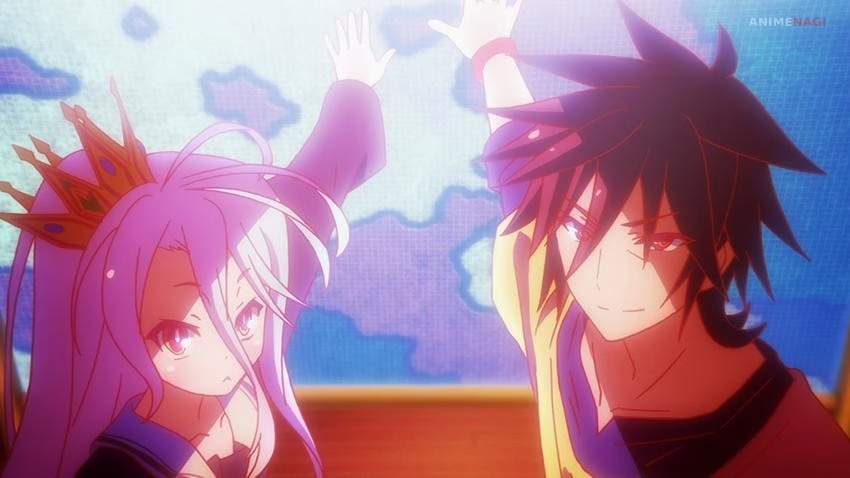
That statement reflects a larger issue many anime sequels face. If a first season becomes visually iconic or culturally beloved, studios may hesitate to produce a sequel unless they believe it can meet similar expectations.
Fans have also repeatedly fallen victim to fake leaks and false rumors regarding Season 2. In 2025, Kamiya personally debunked viral online claims that Madhouse had secretly confirmed a sequel.
At this point, the continued fan demand itself has become part of the anime’s legacy.
Why No Game No Life still has a chance to return
Despite the long delay, No Game No Life Season 2 is not impossible.
The anime industry has recently embraced revivals more aggressively than before. Several older franchises once considered “dead” eventually returned years later with new seasons, remakes, or sequel films. Modern streaming platforms also value nostalgic anime properties with established global audiences.
No Game No Life still maintains strong online popularity more than a decade after its debut. The franchise remains heavily discussed across anime communities, recommendation lists, and streaming platforms. The continued success of the light novels also proves there is still audience interest in Disboard.
The existence of No Game No Life: Zero further demonstrates that the franchise can still succeed commercially years after the original anime aired.
Another positive sign is that anime sequel culture has changed significantly since the 2010s. Older franchises that once seemed abandoned now regularly receive continuation projects because streaming services have expanded global demand for anime content.
However, even if Season 2 eventually happens, there is no guarantee Madhouse would handle it again. Modern revivals often involve different production teams, studios, or visual styles.
What Season 2 would likely adapt
If a sequel finally happens, it would most likely continue adapting the light novels immediately after the anime’s ending.
The original anime ended by teasing future confrontations involving the Old Deus race and larger conflicts across Disboard. A second season would likely focus on Sora and Shiro expanding their influence among the sixteen races while continuing their goal of challenging Tet, the god of games.
The light novels also introduce larger-scale political games, deeper world-building, and more dangerous strategic conflicts than those seen in the first anime season. Fans of the novels frequently argue that later arcs become even more ambitious psychologically and emotionally.
Because the source material already exists, the structure for another season is essentially ready whenever a production committee decides to move forward.