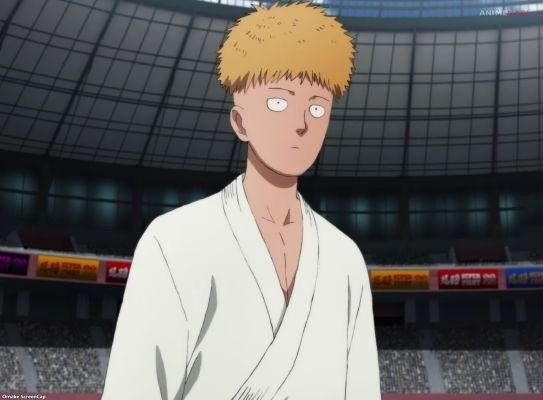
The second season of One Punch Man arrived with massive expectations after the groundbreaking success of its first season. Known for its stunning animation, satirical humor, and overpowered protagonist, the series quickly became a global phenomenon. However, Season 2 faced a major challenge even before release, with a studio change that sparked concerns among fans.
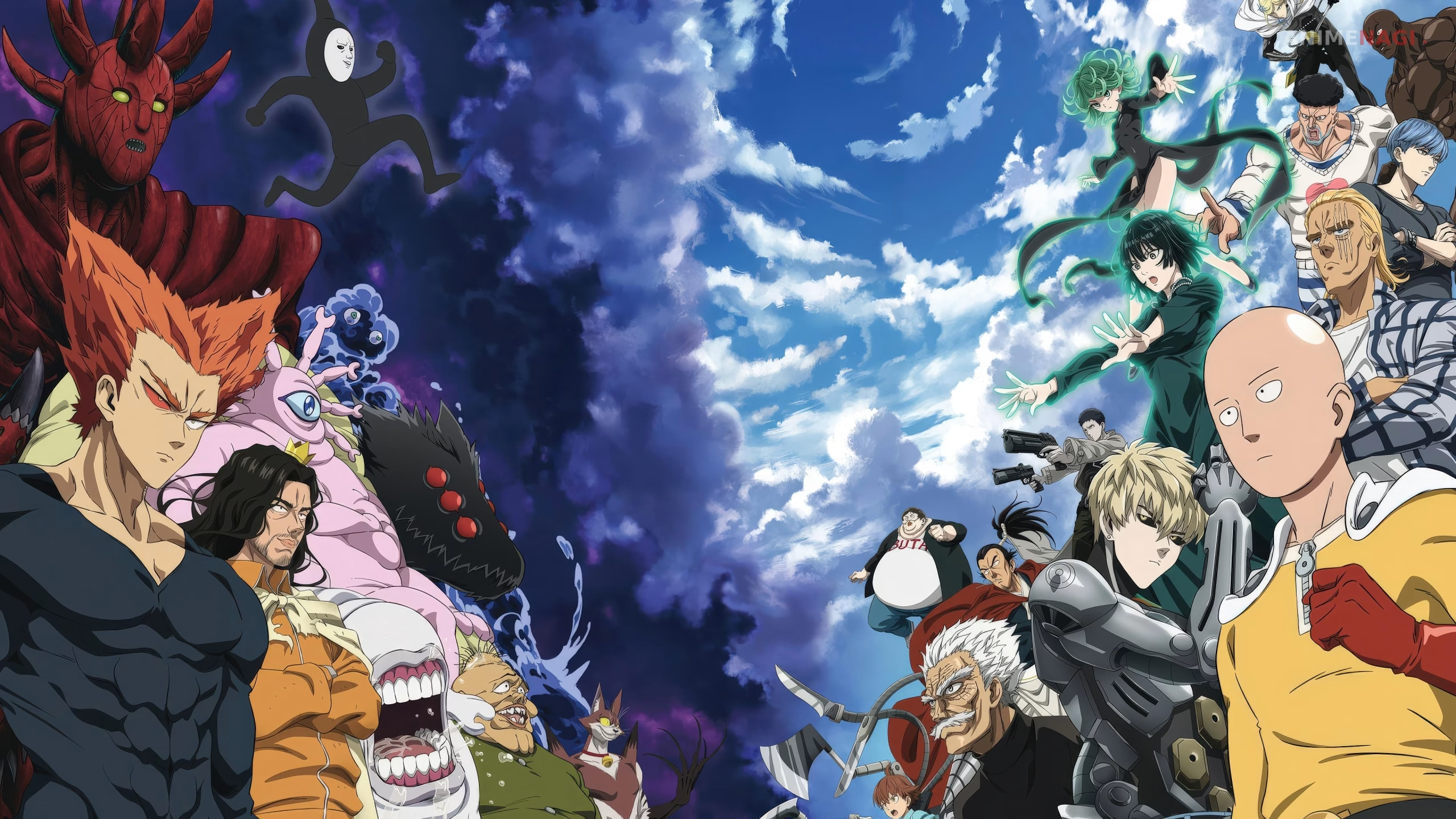
Despite the controversy, Season 2 continues the story of Saitama, the hero who can defeat any opponent with a single punch. This time, the focus expands beyond Saitama, introducing new characters, deeper conflicts, and a rising threat in the form of Garou, the self-proclaimed Hero Hunter.
But does Season 2 live up to the hype, or does it fall short of its predecessor? Let’s break down the full recap and review, covering the story, characters, animation, and overall impact.
Season 2 Recap: The Rise of Garou and the Monster Association
Season 2 shifts its focus toward a broader narrative, introducing the Monster Association as a major threat. While Saitama remains central to the story, much of the spotlight is given to other characters, particularly Garou.
Garou is introduced as a former disciple of Bang who has turned against heroes. Unlike traditional villains, Garou sees himself as a symbol of justice for monsters, believing that society unfairly glorifies heroes while demonizing others. His philosophy adds a layer of complexity rarely seen in the series before.
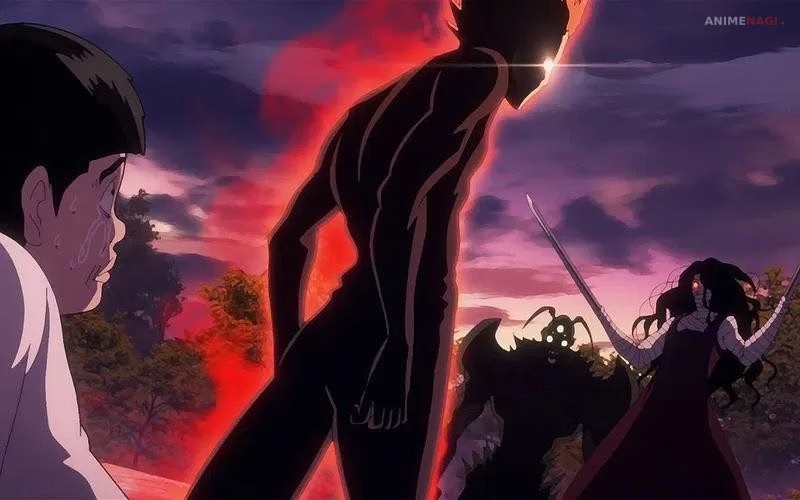
Throughout the season, Garou battles multiple heroes, steadily growing stronger with each encounter. His fights are intense and often brutal, showcasing his evolution into a formidable antagonist. Meanwhile, the Monster Association begins recruiting powerful creatures, setting the stage for a larger conflict.
Saitama’s storyline runs parallel to these events. Instead of directly confronting the main threat, he participates in a martial arts tournament under a disguise. This subplot provides comedic relief while also exploring themes of strength and recognition.
The season builds toward a larger confrontation but stops short of delivering a full resolution, leaving many storylines open for future arcs.
One of the biggest strengths of Season 2 is Garou’s character arc. He is not just a villain but a deeply conflicted individual shaped by his experiences. His hatred for heroes stems from childhood trauma, where he sympathized with monsters who were always portrayed as evil.
This perspective makes Garou one of the most compelling characters in the series. He challenges the traditional hero-versus-villain dynamic, forcing viewers to question what justice really means.
His fights are some of the most engaging moments in the season. Unlike Saitama, who ends battles instantly, Garou struggles, adapts, and evolves. This makes his battles feel more intense and unpredictable.
Garou’s presence adds emotional weight to the story, making Season 2 feel more grounded compared to the more comedic tone of Season 1.
Saitama’s Role: Less Screen Time, Same Impact
While Saitama remains the face of the series, his role in Season 2 is noticeably reduced. Instead of being at the center of every major conflict, he takes a more passive role in the overall narrative.
His participation in the martial arts tournament provides some of the season’s funniest moments. Watching him casually outperform skilled fighters without revealing his true identity reinforces the series’ core humor.
However, this reduced focus can feel disappointing for fans who expect more action from the protagonist. Saitama’s lack of involvement in the main conflict with Garou and the Monster Association creates a sense of disconnect.
That said, when Saitama does step into action, he still delivers impactful moments that remind viewers why he is such an iconic character.
Animation and Studio Change: A Noticeable Drop in Quality
One of the most talked-about aspects of Season 2 is the change in animation quality. The first season, animated by Madhouse, set an incredibly high standard with its fluid action and cinematic direction.
Season 2, handled by J.C. Staff, struggles to maintain that level. While the animation is not bad, it lacks the polish and intensity that made the first season stand out. Some fight scenes feel less dynamic, and the use of sound effects and visual effects can feel inconsistent.
This drop in quality becomes more noticeable during high-action sequences, where expectations are naturally higher. Compared to modern anime standards, Season 2 feels less refined.
Despite this, there are still moments where the animation shines, particularly during key fights involving Garou and Genos. These glimpses show what the season could have achieved with more consistent execution.
Does Season 2 Still Deliver?
Season 2 of One Punch Man is a mixed but ultimately worthwhile continuation. It expands the story, introduces compelling characters, and sets up future arcs that promise even bigger conflicts.
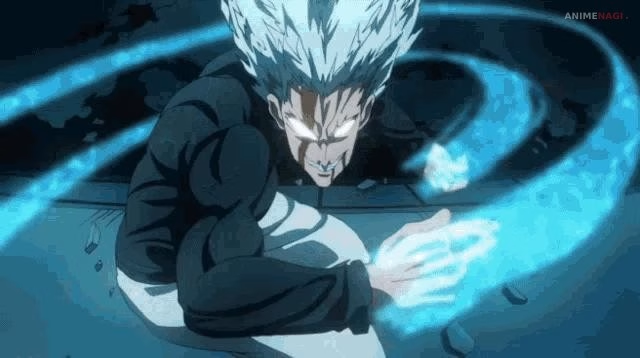
The biggest strength of the season lies in its character development, particularly with Garou. His arc adds depth and complexity that elevates the narrative beyond simple heroics.
However, the season is held back by its animation and pacing issues. The lack of a strong conclusion also leaves the story feeling incomplete, as it primarily serves as a setup for future events.
Compared to the first season, it does not reach the same level of excellence. But when viewed as part of a larger story, it still offers plenty of engaging moments.
One Punch Man Season 2 may not live up to the near-perfect standard set by its predecessor, but it remains an important chapter in the series. It shifts the focus from pure spectacle to character-driven storytelling, which may appeal to viewers looking for more depth.
For fans of the series, it is definitely worth watching. It lays the groundwork for future arcs and introduces one of the best characters in the franchise. However, new viewers might find it less impactful without the context of Season 1.
In the end, Season 2 is a solid continuation that succeeds in storytelling but falls short in execution. It proves that even a series built on simplicity can evolve into something more complex, even if the transition is not entirely smooth.