The Revolutionary Army has quietly become one of the most important factions in One Piece, especially as the Final Saga pushes the story closer to its biggest conflict yet. While pirates dominate most of the spotlight, Monkey D. Dragon and his followers represent something completely different. They are not searching for treasure, territory, or fame. Instead, they are trying to destroy the oppressive system that controls the entire world.
For years, the Revolutionary Army remained mysterious. Fans only saw glimpses of Dragon, Sabo, Ivankov, and Kuma before Eiichiro Oda slowly began revealing the organization’s structure and true mission. Recent chapters and episodes have finally clarified that the group’s war is not simply against the Marines. Their real enemy is the Celestial Dragons and the corrupt system behind the World Government.
As the Final Saga intensifies, understanding Dragon’s plan and the Revolutionary Army’s goals has become essential to understanding where One Piece itself is heading.
What Is the Revolutionary Army in One Piece?
The Revolutionary Army is the only large-scale organization directly opposing the World Government in One Piece. Unlike pirates, who mostly operate independently, the Revolutionary Army functions as a coordinated global movement that inspires rebellions across different kingdoms and islands. The group was founded by Monkey D. Dragon after he lost faith in the system that claimed to deliver justice.
Dragon reportedly served in the Marines before abandoning the organization. According to information revealed in the manga, events like the Ohara tragedy and the corruption surrounding the World Government pushed him toward revolution. He later created the Freedom Fighters, which eventually evolved into the Revolutionary Army.
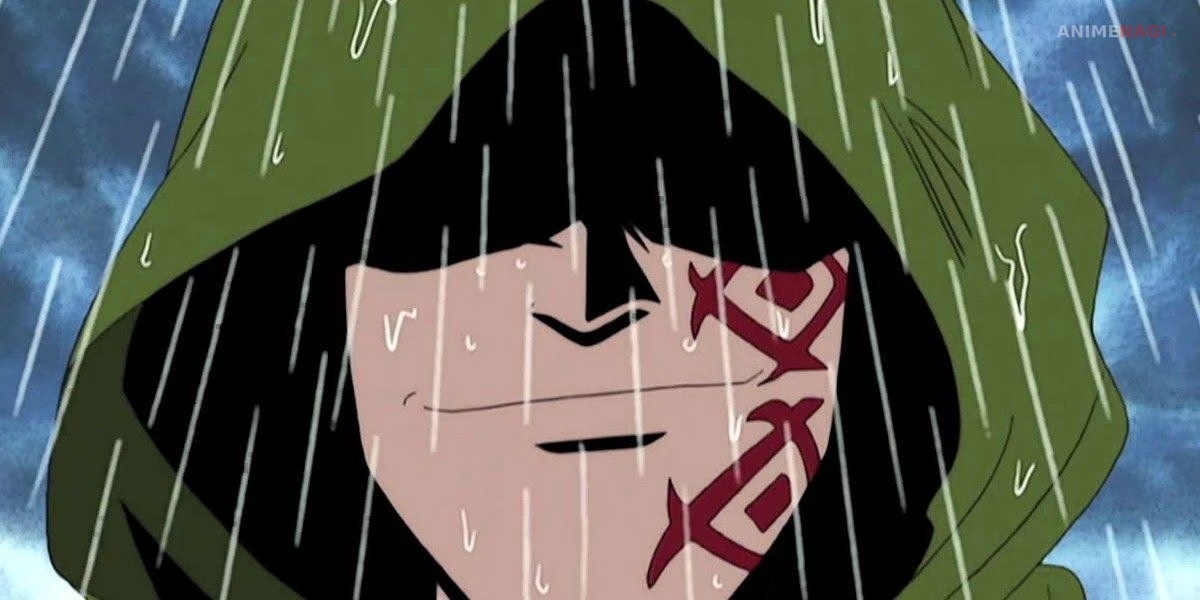
The organization’s influence stretches across the world. Rather than openly conquering nations, the Revolutionaries support oppressed citizens and resistance groups fighting against tyrannical rulers connected to the World Government. This distinction matters because the Revolutionary Army does not aim to replace the current rulers with another dictatorship. Their stated goal is liberation.
That philosophy separates them from many pirate crews and even some kingdoms within the series.
Monkey D. Dragon remains one of the most mysterious characters in One Piece, but Oda has revealed enough details to understand his larger mission. Dragon’s ultimate objective is the destruction of the corrupt power structure controlling the world. More specifically, the Revolutionary Army targets the Celestial Dragons, the nobles who stand above ordinary citizens and abuse their authority without consequences.
This is an important distinction because the Revolutionary Army is not attempting to eliminate every kingdom or nation affiliated with the World Government. Instead, Dragon wants to dismantle the system that allows the Celestial Dragons to dominate the world through fear, slavery, political manipulation, and military force.
The Reverie arc made this even clearer. During the attack on Mary Geoise, the Revolutionary Army openly declared war on the Celestial Dragons. Their operation had several goals, including rescuing Bartholomew Kuma, freeing slaves, and symbolically attacking the authority of the nobles.
Dragon’s movement is therefore ideological as much as military. He believes true freedom cannot exist while the Celestial Dragons remain untouchable rulers above the rest of humanity.
Many fans also believe Dragon’s connection to the mysterious “Will of D.” will become central in the final conflict. Oda has repeatedly linked members of the D. clan with rebellion against oppressive forces, and Dragon appears to embody that theme more directly than almost anyone else in the story.
The Revolutionary Army’s Structure and Key Members
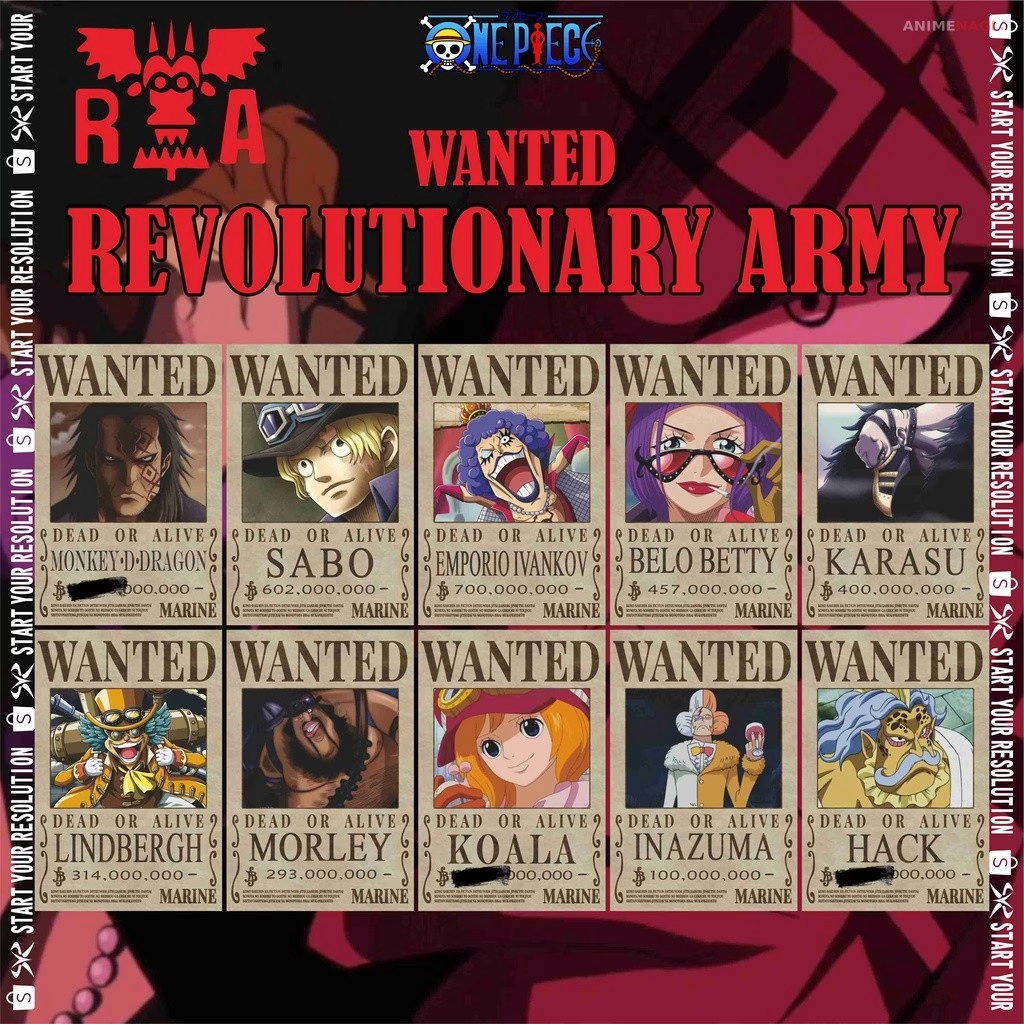
The Revolutionary Army is organized more like a military network than a pirate crew. Dragon serves as the Supreme Commander, while Sabo acts as Chief of Staff and effectively the organization’s second-in-command.
Other important members include Emporio Ivankov, Karasu, Belo Betty, Morley, Lindbergh, Koala, and Hack. The organization is divided into regional armies led by commanders responsible for different parts of the world.
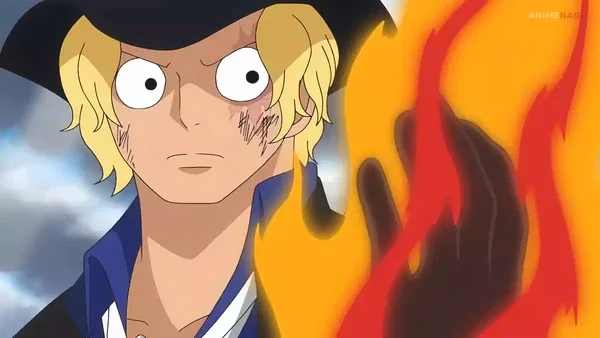
Sabo has become especially important during the Final Saga. Following the events at the Reverie, he gained worldwide attention after being falsely accused of murdering King Cobra. Ironically, that controversy increased public support for the Revolutionary Army and strengthened Sabo’s symbolic role as a revolutionary figure.
Bartholomew Kuma’s storyline also exposed the cruelty of the World Government in devastating detail. Once a respected Revolutionary Army member, Kuma was turned into a weaponized cyborg and enslaved by the Celestial Dragons. His suffering became one of the clearest examples of why Dragon’s organization exists in the first place.
Each major Revolutionary Army member represents a different side of rebellion. Some inspire people emotionally, others specialize in intelligence or combat, and others focus on rescuing civilians trapped under corrupt rulers.
Why the Revolutionary Army Is the World Government’s Greatest Threat
The World Government fears pirates, but it treats the Revolutionary Army as an even bigger danger. The reason is simple. Pirates usually seek personal freedom or power, while the Revolutionaries challenge the legitimacy of the entire global system.
Dragon’s movement encourages ordinary people to rise up against oppressive governments. That idea threatens the foundation of the World Government more than any single pirate crew could.
The Revolutionary Army also operates strategically instead of chaotically. They gather intelligence, coordinate uprisings, sabotage supply chains, and weaken political influence across multiple nations. Their actions at Mary Geoise showed they are now bold enough to directly attack the Celestial Dragons in their own territory.
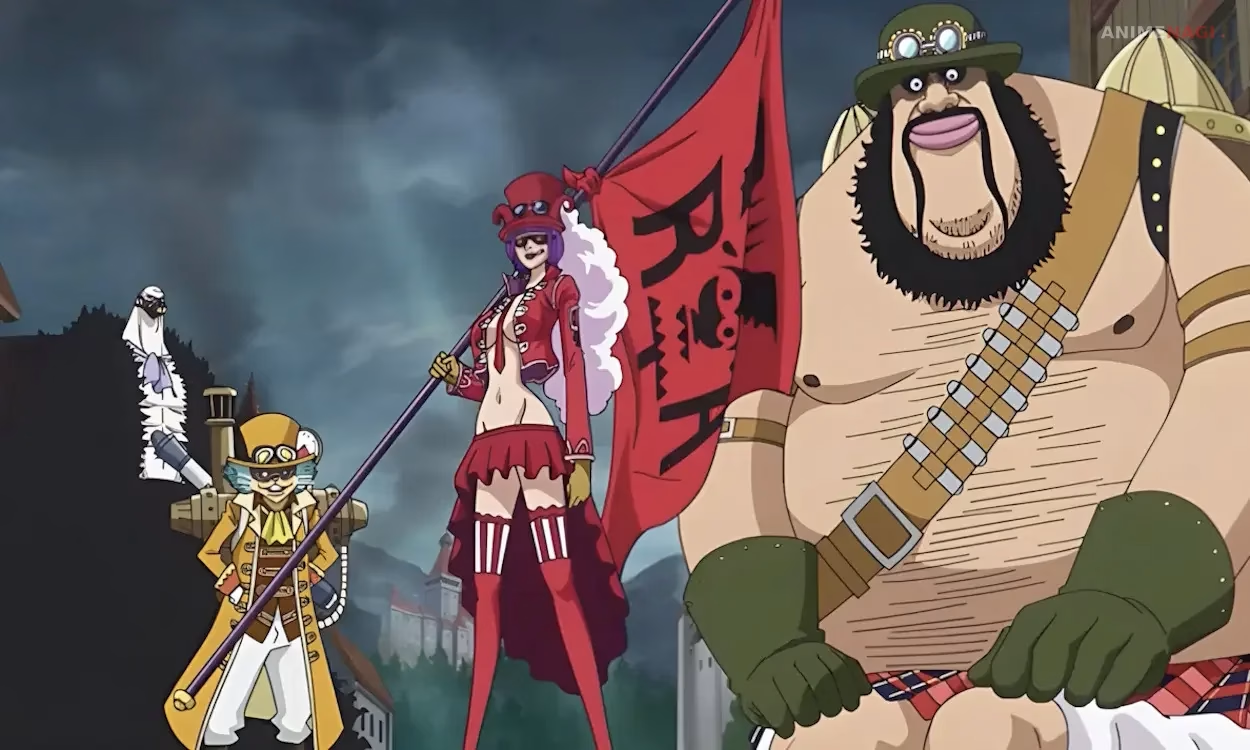
Another major reason the World Government fears Dragon is his influence. He is known as the “World’s Worst Criminal,” not because he destroys islands like some pirates, but because his ideology spreads hope and rebellion.
That ideological threat may become even more dangerous after the truth about the Void Century and Imu is fully revealed. As One Piece moves deeper into the Final Saga, the Revolutionary Army seems increasingly positioned as a central force in the final war.
How Dragon’s Plan Connects to the Final Saga
The Final Saga has already started pulling together the story’s biggest mysteries. Imu, the Void Century, Joy Boy, the Ancient Weapons, and the corruption of the World Government are all becoming interconnected. The Revolutionary Army stands directly in the middle of those revelations.
Dragon’s long-term strategy appears focused on weakening the World Government from within while inspiring revolutions across the globe. At the same time, Luffy and the Straw Hats continue exposing corruption wherever they travel. Even though Luffy is not officially part of the Revolutionary Army, his actions often align with Dragon’s larger mission of liberation.
This connection between father and son feels increasingly important. Dragon represents organized revolution, while Luffy represents instinctive freedom. Both oppose tyranny, but they approach it differently.
Many fans also believe the Revolutionary Army will play a major role in the inevitable final war against the World Government and Imu. Oda has repeatedly built toward a global conflict involving pirates, Marines, kingdoms, and revolutionaries alike.
Dragon himself still remains one of the story’s greatest mysteries. His powers, full backstory, and ultimate plan have not been fully revealed yet, which strongly suggests Oda is saving him for some of the biggest moments still to come.
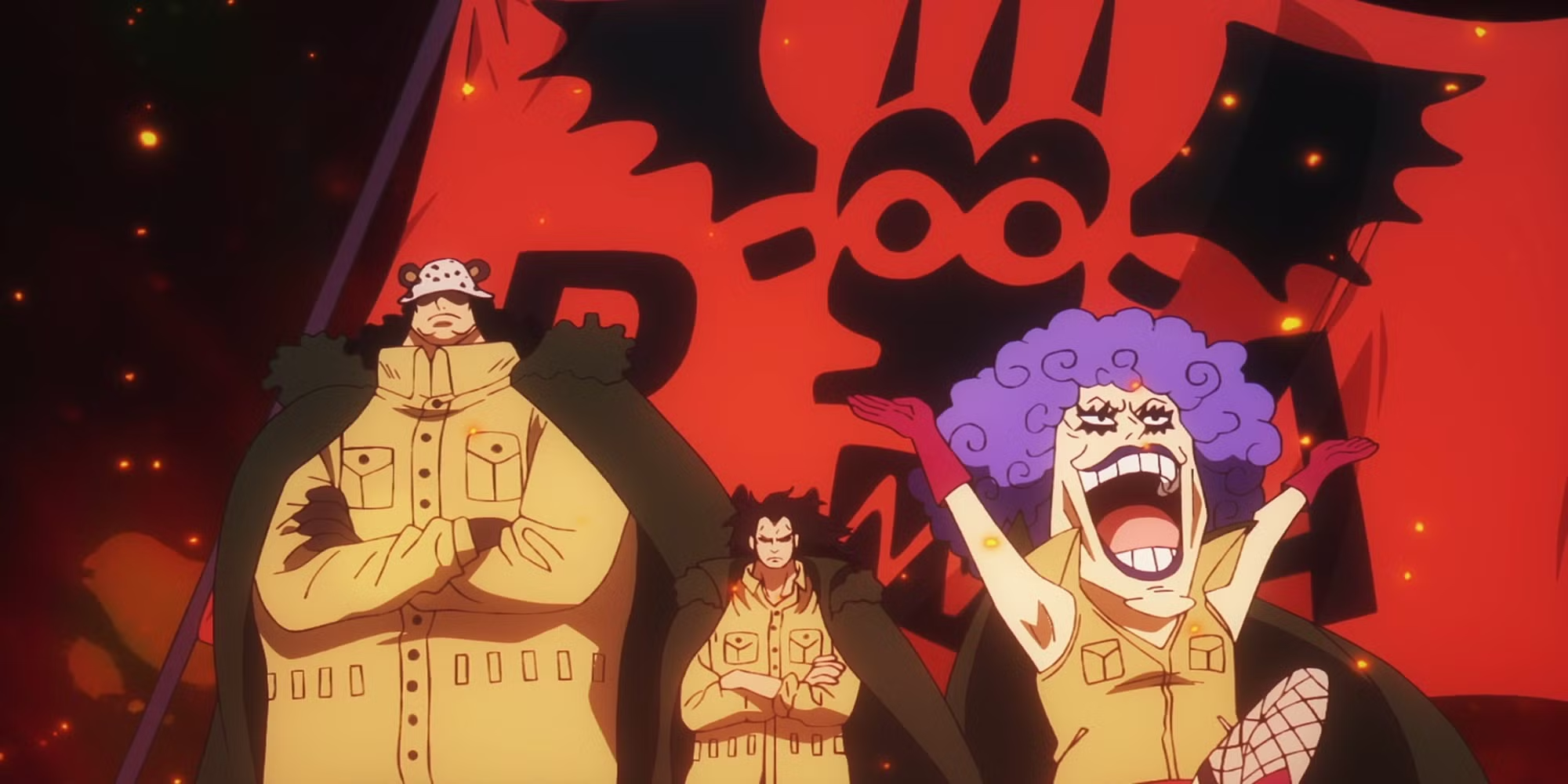
The Revolutionary Army Represents the Core Theme of One Piece
At its heart, One Piece has always been about freedom. The Revolutionary Army embodies that idea on a global scale. While the Straw Hats pursue personal freedom through adventure, Dragon’s organization fights for political and societal freedom for the entire world.
That difference is why the Revolutionary Army has become increasingly important in the story’s final phase. They are not simply another faction competing for power. They are a direct response to centuries of oppression and corruption under the World Government.
As more secrets about the Void Century and Imu emerge, Dragon’s true importance will likely become even clearer. The Revolutionary Army may not have dominated screen time throughout One Piece, but its role in the ending could ultimately rival even the Yonko and the Marines.
For now, one thing is certain: Dragon’s war against the World Government is no longer happening in the shadows. The revolution has already begun.
To fully understand the Revolutionary Army’s importance, it also helps to look at how its actions are already reshaping the political terrain of the One Piece world. Multiple kingdoms affiliated with the World Government have started experiencing internal unrest, often sparked or supported by Revolutionary agents.
Characters like Belo Betty have demonstrated the ability to inspire entire populations to rise against oppression, proving that the army’s strength is not just physical but psychological. This method of empowering civilians ensures that revolutions are sustainable rather than dependent solely on external intervention, which aligns closely with Monkey D. Dragon’s long-term vision of true freedom.
At the same time, the Revolutionary Army’s growing visibility is forcing the World Government to take more aggressive countermeasures, which could escalate tensions into a full-scale global conflict. The more the government tightens its grip, the more it exposes its own corruption to the public, unintentionally strengthening the revolutionary cause.
This creates a cycle where each crackdown fuels further rebellion, pushing the world closer to an unavoidable turning point. If current events are any indication, the Revolutionary Army will not just participate in the final war of One Piece; it may very well be the force that ignites it.