Attack on Titan introduced many terrifying Titans throughout its story, from the Colossal Titan’s overwhelming size to the Beast Titan’s intelligence and brutality. However, few Titans were as visually disturbing or emotionally unsettling as Rod Reiss’s monstrous transformation during Season 3. Unlike most Titan forms seen earlier in the anime, Rod Reiss’s Titan did not look powerful in a traditional sense. Instead, it looked grotesque, unstable, and horrifyingly unnatural.
The scene immediately stood out because of how different Rod Reiss appeared compared to other Titans. His body became so massive that it scraped across the ground while generating extreme heat capable of burning nearby structures. Rather than walking upright, he crawled toward Wall Sina like a nightmare creature barely able to support its own weight. The image became one of the most memorable moments in Attack on Titan because it perfectly combined body horror, tragedy, and symbolism.
More importantly, Rod Reiss’s Titan transformation represented the collapse of the old royal system that secretly controlled humanity within the Walls. His monstrous form symbolized greed, cowardice, and desperation, especially after Historia rejected his plan to restore the Founding Titan to the Reiss family.
Let’s break down why Rod Reiss’s Titan looked so disturbing, how his transformation happened, and what the scene meant for Attack on Titan’s larger story.
Who Was Rod Reiss Before Becoming a Titan?
Before his transformation, Rod Reiss was revealed to be the true king within the Walls and the head of the Reiss family, the royal bloodline that secretly possessed the Founding Titan for generations. According to the Attack on Titan Wiki’s Rod Reiss profile, Rod publicly operated as a noble while allowing a fake Fritz monarchy to rule outwardly in order to hide the true royal family’s existence.
Rod’s primary goal throughout the Uprising arc was to reclaim the Founding Titan from Eren Yeager. Years earlier, Eren’s father Grisha Yeager attacked the Reiss family chapel, killed Frieda Reiss, and stole the Founding Titan before eventually passing it to Eren. This destroyed the Reiss family’s control over the Titan power and left Rod as one of the last surviving members of the royal bloodline.
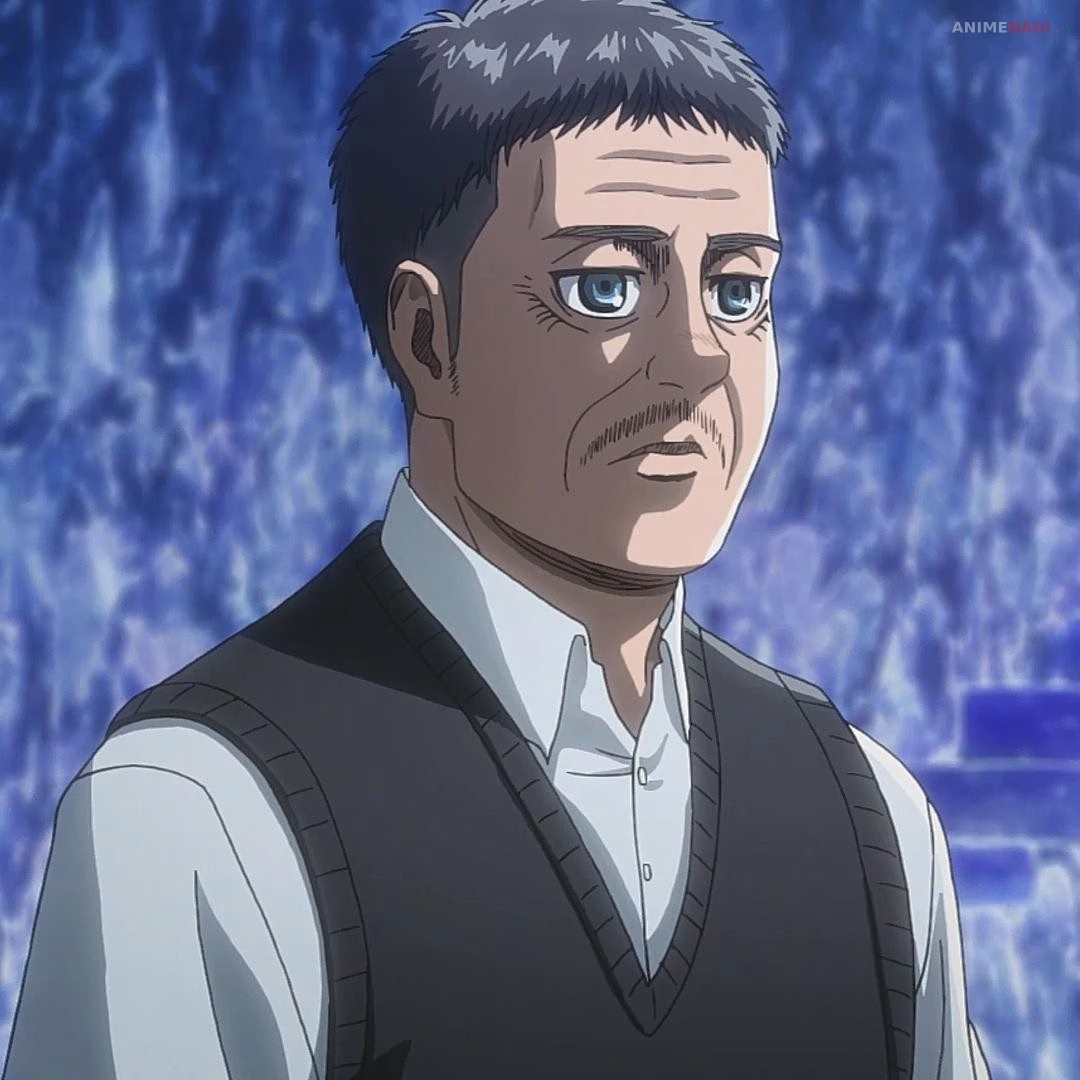
Rather than transforming himself, Rod originally intended for Historia Reiss to inherit the Founding Titan by becoming a Titan and eating Eren. He believed this would restore the old system and return the Founding Titan to the royal family.
However, Rod himself was deeply hypocritical. Although he constantly preached duty and sacrifice, he repeatedly avoided becoming a Titan personally. Multiple lore summaries and character analyses note that Rod feared inheriting the Founding Titan because he had witnessed how its power psychologically consumed previous holders like Uri and Frieda. This cowardice became central to understanding why his eventual Titan form looked so grotesque.
How Rod Reiss Became Such a Massive Titan
Rod Reiss transformed after Historia rejected his plan and smashed the Titan serum vial inside the underground cavern. In desperation, Rod licked the spilled Titan spinal fluid directly from the ground instead of properly injecting it like most Titan transformations require. According to Attack on Titan’s official story summaries archived on Wikipedia, this improper method triggered an abnormal transformation. The result was one of the largest and most disturbing Titans ever seen in the series.
Rod’s Titan became enormous, even larger than many Colossal Titans in sheer body length. However, its structure was horribly malformed. His torso expanded uncontrollably while his limbs became disproportionately weak, forcing him to crawl instead of stand upright.
The anime emphasized this horror through disturbing visual details. Rod’s face dragged across the ground, peeling away flesh and creating trails of burning destruction behind him. Steam and heat radiated constantly from his body, causing buildings and nearby areas to ignite as he approached.
According to discussions archived on Reddit and fan analysis forums, many viewers interpreted the transformation as a result of Rod’s incomplete or incorrect Titan conversion process. The fact that he consumed the serum improperly likely caused his Titan body to develop abnormally.
However, the transformation also worked symbolically. Rod Reiss spent his entire life avoiding responsibility while manipulating others into sacrifice. His Titan form reflected that moral corruption physically. Instead of becoming a majestic or powerful Titan, he transformed into something monstrous and unstable.
Why Rod Reiss’s Titan Was So Disturbing
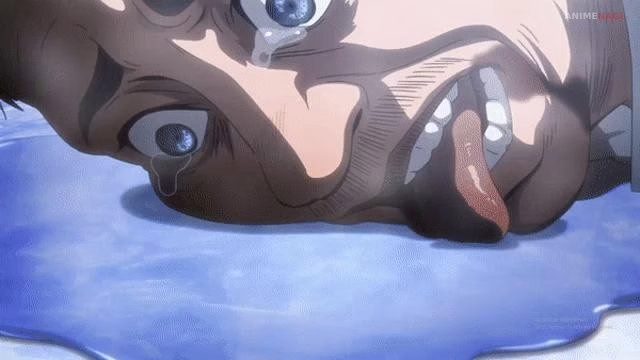
What made Rod Reiss’s Titan especially disturbing was not just its size but its unnatural movement and body horror design. Most Titans in Attack on Titan, even abnormal ones, still resemble giant humanoids capable of walking or running. Rod’s Titan completely broke that pattern. Its enormous body could barely function properly, forcing it to drag itself across the ground in an almost animalistic way.
The crawling movement created a far stronger horror effect than traditional giant-monster action scenes. Instead of appearing majestic or intimidating like the Colossal Titan, Rod’s Titan looked painful and grotesque, almost like a living corpse struggling forward.
The anime also amplified the horror through scale. Rod’s Titan was so massive that entire districts could see the smoke and heat generated by its approach from miles away. According to lore summaries and episode descriptions, his body temperature became dangerously high due to the Titan’s abnormal size and unstable structure.
Another disturbing element was the loss of identity. Rod Reiss spent most of the Uprising arc trying to maintain authority and control through manipulation. Once transformed, he became little more than a giant instinct-driven creature crawling toward humanity. The transformation, therefore, acted as both physical horror and narrative punishment.
Attack on Titan often uses Titans to reflect psychological or moral themes, and Rod’s Titan may be the clearest example in the series. His monstrous body represented the collapse of the corrupt royal system that had secretly ruled humanity through lies and fear.
Why Historia Killing Rod Reiss Was So Important
The destruction of Rod Reiss’s Titan became one of the defining moments of Historia Reiss’s character arc.
Throughout the early parts of Attack on Titan, Historia struggled with identity and self-worth. She often hid behind the false persona of “Krista Lenz” and prioritized pleasing others over making her own decisions. Rod attempted to exploit those insecurities by convincing her that inheriting the Founding Titan was her duty. However, Historia ultimately rejected both Rod and the ideology of the Reiss family.
After the Survey Corps weakened Rod’s Titan using explosives, Historia delivered the final blow publicly in front of the citizens inside the Walls. According to official anime summaries, this moment allowed Historia to emerge as a genuine leader rather than a manipulated pawn.
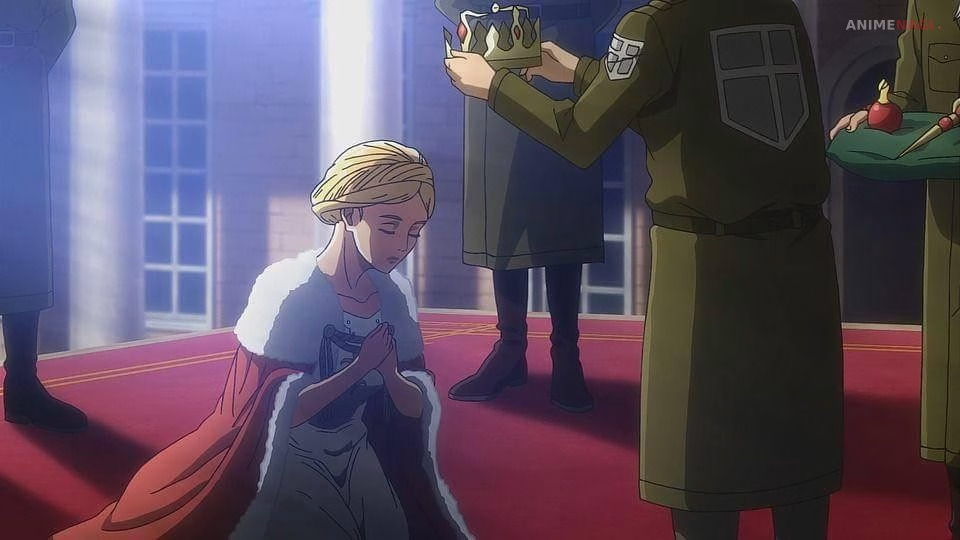
Symbolically, Historia killing Rod represented the destruction of the old monarchy and the beginning of a new political era inside the Walls. Rod’s Titan was not merely a monster threatening humanity. It was the physical embodiment of a corrupt system built on secrecy and inherited power.
The scene also reinforced one of Attack on Titan’s recurring themes: children inheriting the burdens and failures of previous generations. Historia choosing to reject her father’s ideology became a rare moment where a character actively broke that cycle.
Why Rod Reiss’s Titan Was Different From Other Titans
Rod Reiss’s Titan stood apart because it exposed how unstable Titan transformations could become under unusual conditions.
Most Pure Titans in Attack on Titan follow relatively consistent biological rules. Even abnormal Titans usually maintain functional body proportions and mobility. Rod’s Titan violated those expectations completely.
According to fan analysis and lore discussions, several factors likely contributed to the abnormal transformation. These included his royal bloodline, the method of consuming the serum, and possibly the specific Titan serum type itself.
The transformation also highlighted how little characters inside the Walls truly understood about Titan science at that point in the story. Earlier seasons portrayed Titan transformations as mysterious but relatively predictable. Rod’s Titan revealed that Titan biology was far more dangerous and unstable than previously believed.
Visually, the Titan’s appearance also helped bridge Attack on Titan’s horror roots with its later political storytelling. The monster looked less like a military threat and more like a nightmare created from corruption itself.
That combination of body horror, symbolism, and tragedy is why Rod Reiss’s Titan remains one of the most memorable transformations in the entire franchise.
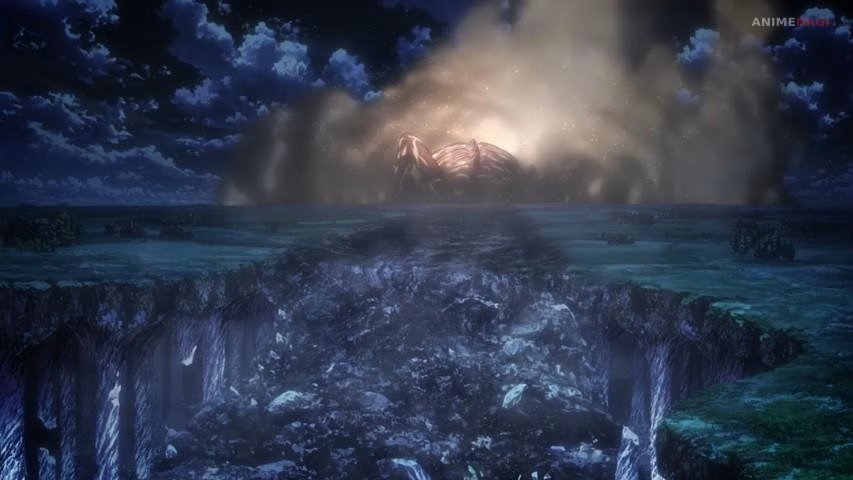
Another important detail about Rod Reiss’s Titan is how it reinforces Attack on Titan’s recurring theme that power without responsibility leads to destruction. Rod spent his entire life hiding behind tradition and forcing others to carry the burden of the Founding Titan, especially his own children. When he finally transformed, that avoidance manifested physically as a Titan that could not even stand on its own.
The imagery is intentional. His body collapses under its own weight just as his ideals collapse under scrutiny. Instead of becoming a ruler who could restore order, he became a mindless force that endangered the very people he claimed to protect.
The aftermath of Rod Reiss’s death also played a crucial role in reshaping the world inside the Walls. With the false monarchy exposed and the true royal bloodline revealed, the political structure shifted dramatically. Historia’s rise to power symbolized a break from secrecy and manipulation toward transparency and accountability.
This moment helped transition Attack on Titan from a survival-focused story into a deeper political narrative. It showed that defeating Titans alone was not enough. Humanity also needed to confront the flawed systems that allowed such tragedies to happen in the first place.