The anime adaptation of Sakamoto Days arrived with massive expectations, thanks to the popularity of Yuto Suzuki’s manga. Known for its explosive action, humor, and heartfelt storytelling, the source material built a loyal fanbase long before the anime premiered. Naturally, viewers were eager to see how this unique blend of assassin drama and slice-of-life comedy would translate to the screen.
At first glance, Sakamoto Days offers a compelling premise. A legendary hitman leaves behind his violent past to live a peaceful life with his family, only to be dragged back into danger when old enemies resurface. It is a concept that mixes high-stakes action with domestic warmth, something rarely executed this well in anime.
However, the adaptation has sparked mixed reactions. While some praise its characters and humor, others criticize its animation and execution. So, is Sakamoto Days actually worth your time? Let’s break down every aspect of the anime to find out.
Story and Premise: A Hitman’s Quiet Life Turned Chaotic
At the heart of Sakamoto Days is Taro Sakamoto, once the most feared assassin in the underworld. His life changes completely after falling in love, leading him to abandon his profession and open a small convenience store. Years later, he is a family man, far removed from his deadly past.
This peaceful life does not last long. As former enemies begin to track him down, Sakamoto is forced to protect his family using the very skills he tried to leave behind. This creates a compelling contrast between his domestic life and his violent abilities.
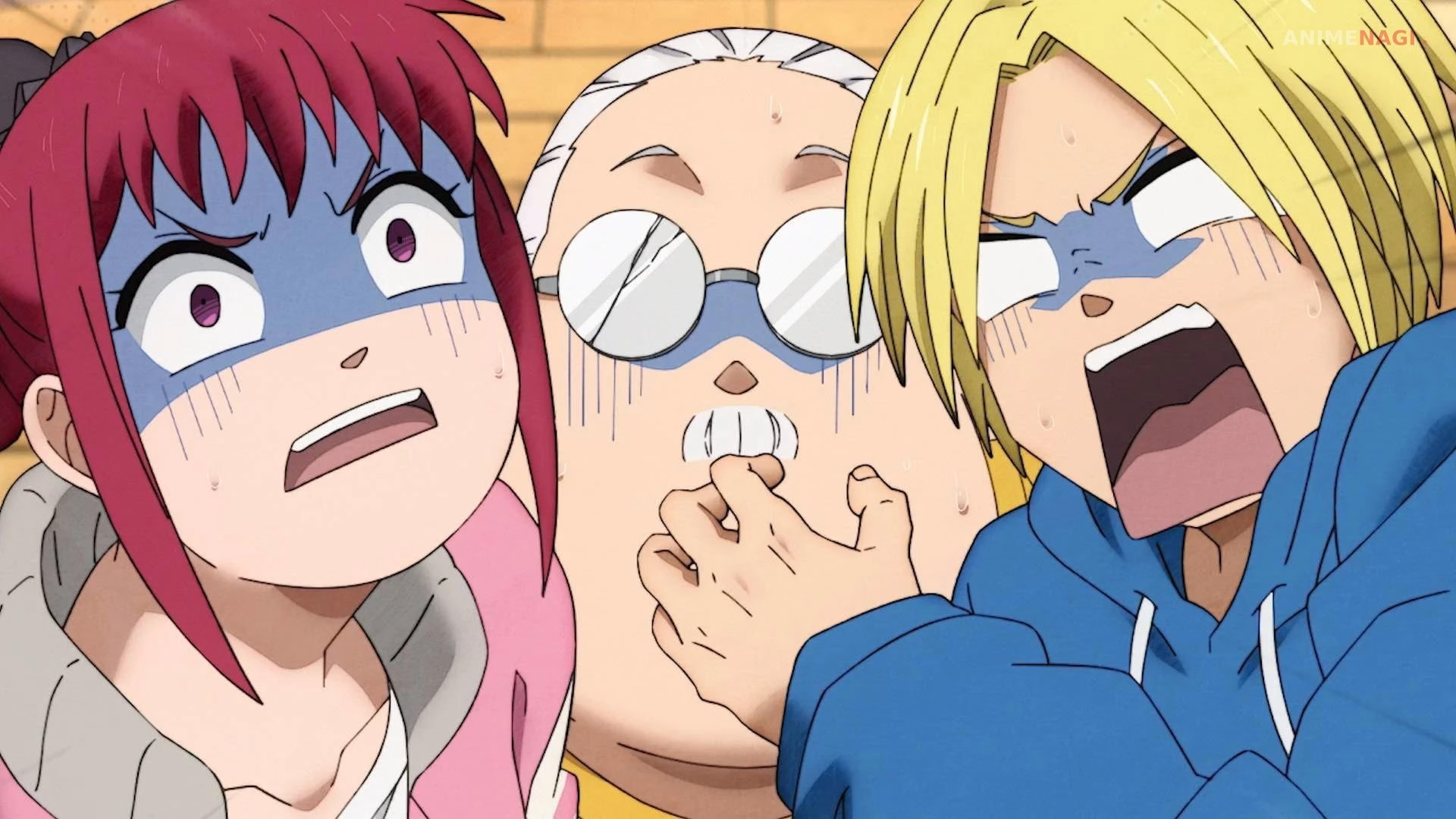
The story thrives on this duality. One moment, Sakamoto is helping customers at his store, and the next, he is taking down assassins with effortless precision. This balance keeps the narrative engaging and unpredictable.
While the early episodes follow a somewhat episodic format with different enemies appearing, there are hints of a larger overarching plot involving powerful organizations and mysterious figures. This setup gives the series room to grow into something more complex over time.
One of the biggest strengths of Sakamoto Days is how it blends action and comedy. The fight scenes are exaggerated and over-the-top, often resembling the stylized violence seen in films like John Wick. Despite the intensity, the anime never loses its sense of humor.
Sakamoto’s appearance plays a major role in the comedy. His overweight, unassuming look contrasts sharply with his deadly skills, leading enemies to underestimate him. This setup creates satisfying moments where he effortlessly defeats opponents who assumed he was harmless.
However, not all humor lands perfectly. Some jokes, particularly those focused on his weight, can feel outdated. Fortunately, the series does not rely solely on these gags, and the humor is often driven by character interactions and absurd situations.
The action sequences, when executed well, are exciting and creative. They emphasize agility and strategy rather than brute force, making each fight feel distinct. This balance between comedy and action is one of the reasons the show remains entertaining despite its flaws.
Animation Quality: The Biggest Point of Controversy
The most debated aspect of Sakamoto Days is its animation quality. While the art style faithfully adapts the manga’s character designs, the animation itself has received mixed reactions from fans.
Many viewers feel that the animation lacks the fluidity expected from a modern action anime. Some scenes appear stiff, with noticeable reliance on still frames and limited motion. This is particularly disappointing given how dynamic the manga’s action sequences are.
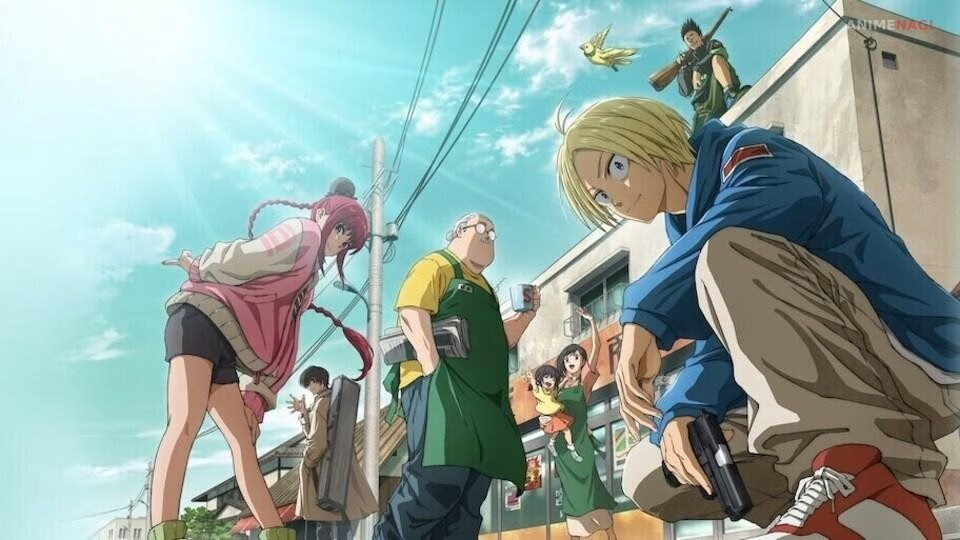
That said, the animation is not entirely плох. Certain moments, especially those involving Shin, show glimpses of what the series is capable of. These sequences feature smoother movement and better choreography, suggesting that the production has potential.
The issue becomes more noticeable when compared to visually stunning anime like Jujutsu Kaisen or Dandadan. In comparison, Sakamoto Days feels a step behind, which raises expectations for improvement in future episodes.
If there is one area where Sakamoto Days consistently shines, it is its characters. Taro Sakamoto is a unique protagonist, combining the calm demeanor of a family man with the precision of a professional killer.
Shin Asakura, a clairvoyant former assassin, quickly becomes a fan favorite. His energetic personality and ability to read minds add both humor and depth to the story. He often acts as the emotional bridge between Sakamoto and the audience.
Other characters, including Lu and Heisuke, contribute to the growing found-family dynamic. Their interactions bring warmth to the story, reinforcing its central theme of connection and personal growth.
Even antagonists are given distinct personalities, making each encounter feel meaningful. This strong character foundation helps the series remain engaging, even when the animation falls short.
Final Verdict: Is Sakamoto Days Worth Watching?
Sakamoto Days is worth watching, but with some expectations in check. It delivers an entertaining mix of action, comedy, and heartfelt moments, supported by a strong cast of characters and an engaging premise. The concept of a retired hitman protecting his peaceful life continues to feel fresh, especially when combined with the series’ lighthearted tone.
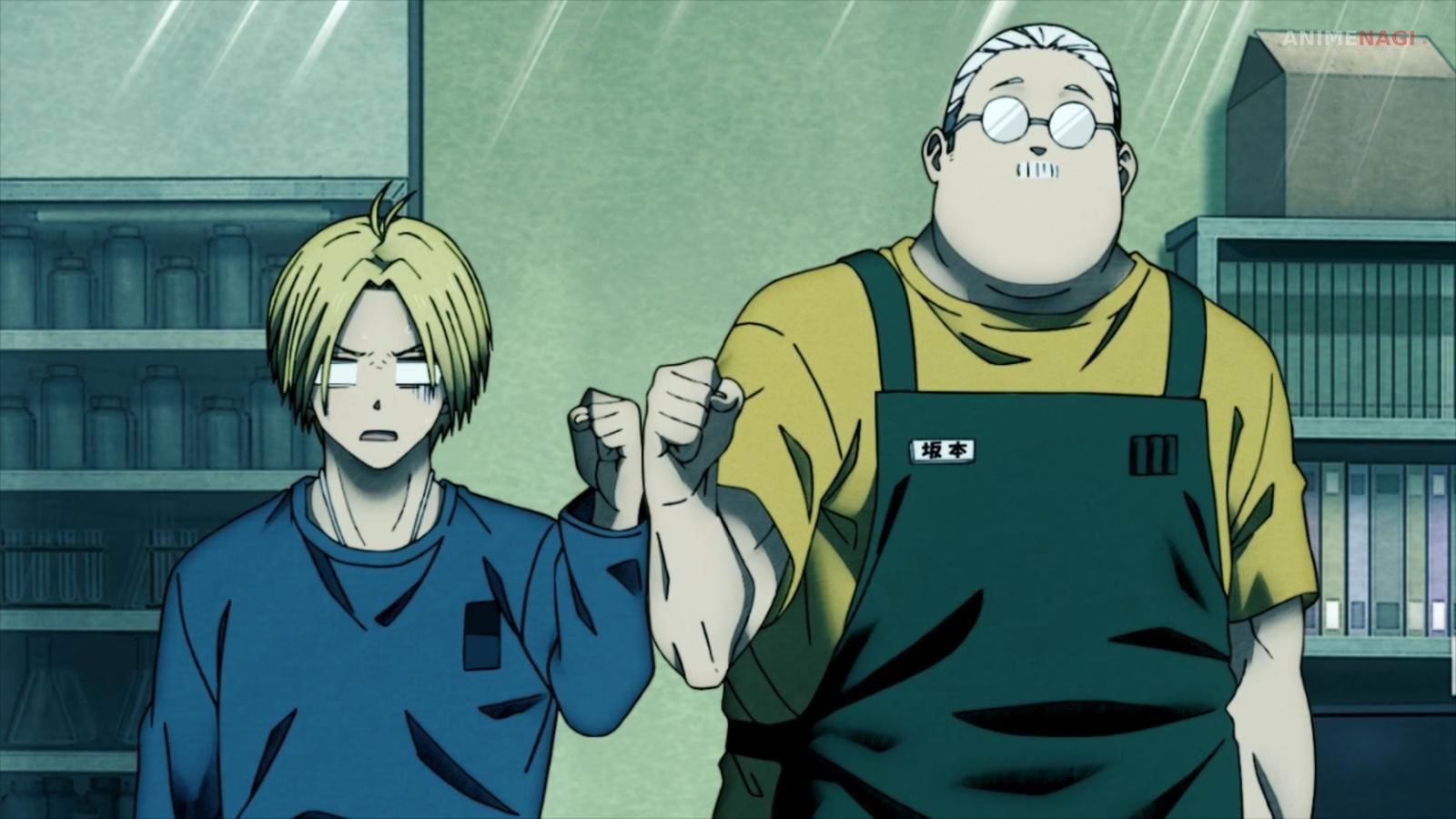
The anime’s biggest drawback is its inconsistent animation, which prevents it from reaching the same level as top-tier modern anime. However, it is far from a failure. There are enough highlights in its storytelling and character work to keep viewers invested. Moments of strong direction and occasional well-executed fights show that the series has potential to improve as it progresses.
For fans of character-driven stories and unique concepts, Sakamoto Days offers plenty to enjoy. It may not fully capture the energy of the manga yet, but it lays a solid foundation for future arcs. As more characters are introduced and the larger narrative unfolds, the anime has room to grow into something far more compelling.
Another factor that works in the show’s favor is its accessibility. Unlike heavier or more complex anime, Sakamoto Days is easy to pick up and enjoy without needing to overanalyze every detail. Its episodic structure, combined with an overarching plot, makes it suitable for both casual viewers and dedicated fans looking for something fun yet engaging.
At the same time, expectations should be realistic. If you are going in expecting animation on the level of Jujutsu Kaisen or Demon Slayer, you may feel underwhelmed. However, if you focus on its characters, humor, and core premise, the experience becomes much more enjoyable.
In the end, Sakamoto Days is a promising adaptation that succeeds in some areas and struggles in others. If you are willing to overlook its flaws, it is a fun and worthwhile addition to your anime watchlist, especially as the story continues to build momentum.