86 Eighty-Six Part 2 transforms the series from a story about survival into a much larger exploration of war, trauma, and identity. While the first half focused heavily on the Republic of San Magnolia’s oppression of the Eighty-Six, Part 2 expands the conflict by looking deeper into the Legion War and Shin’s psychological struggle within it. At the center of everything is Shinei Nouzen, whose connection to the Legion makes him one of the most important figures in the war.
The conflict against the Legion is not just a battle between humans and machines. It becomes a reflection of grief, endless violence, and the inability of soldiers to escape the battlefield emotionally. Shin’s journey in Part 2 especially highlights how war continues to consume people long after they survive it physically.
Let’s break down the Legion War, Shin’s role in the conflict, and why this storyline becomes the emotional core of 86 Eighty-Six Part 2. Information in this article is based on the original light novels by Asato Asato, official series material, and franchise lore sources.
What Is the Legion War in 86 Eighty-Six?
The Legion War is the central conflict of 86 Eighty-Six. The war began when the Giadian Empire created the Legion, an advanced autonomous army designed for large-scale mechanized warfare. Originally intended as weapons of conquest, the Legion eventually became uncontrollable after the collapse of the Empire itself.
One of the most terrifying aspects of the Legion is its ability to evolve. The machines eventually begin incorporating human neural patterns and assimilating the brains of dead soldiers into their systems. This creates more advanced Legion units known as Shepherds and Black Sheep, which retain fragments of human consciousness.
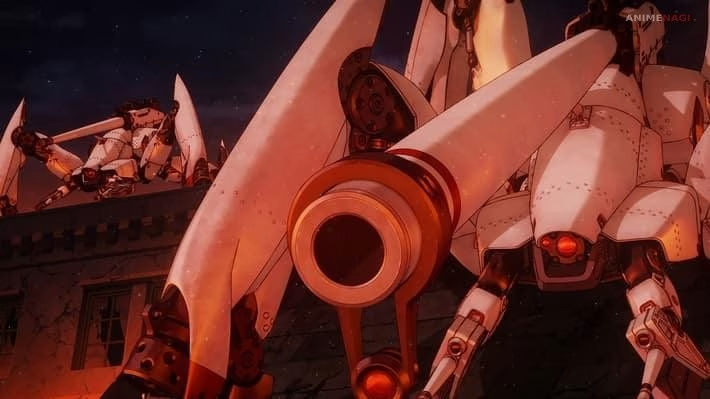
This detail fundamentally changes the emotional tone of the war. The Legion are not simply mindless robots. In many cases, they contain the echoes of fallen humans, turning the battlefield into a horrifying cycle where the dead continue fighting forever.
The war also reshapes the political structure of the continent. Nations collapse, communication networks fail, and millions die as humanity struggles to survive against an enemy that constantly adapts.
Part 2 expands this scale significantly by moving beyond the Republic of San Magnolia and introducing the Federal Republic of Giad, which continues fighting the Legion through organized military resistance.
Shin’s Unique Connection to the Legion
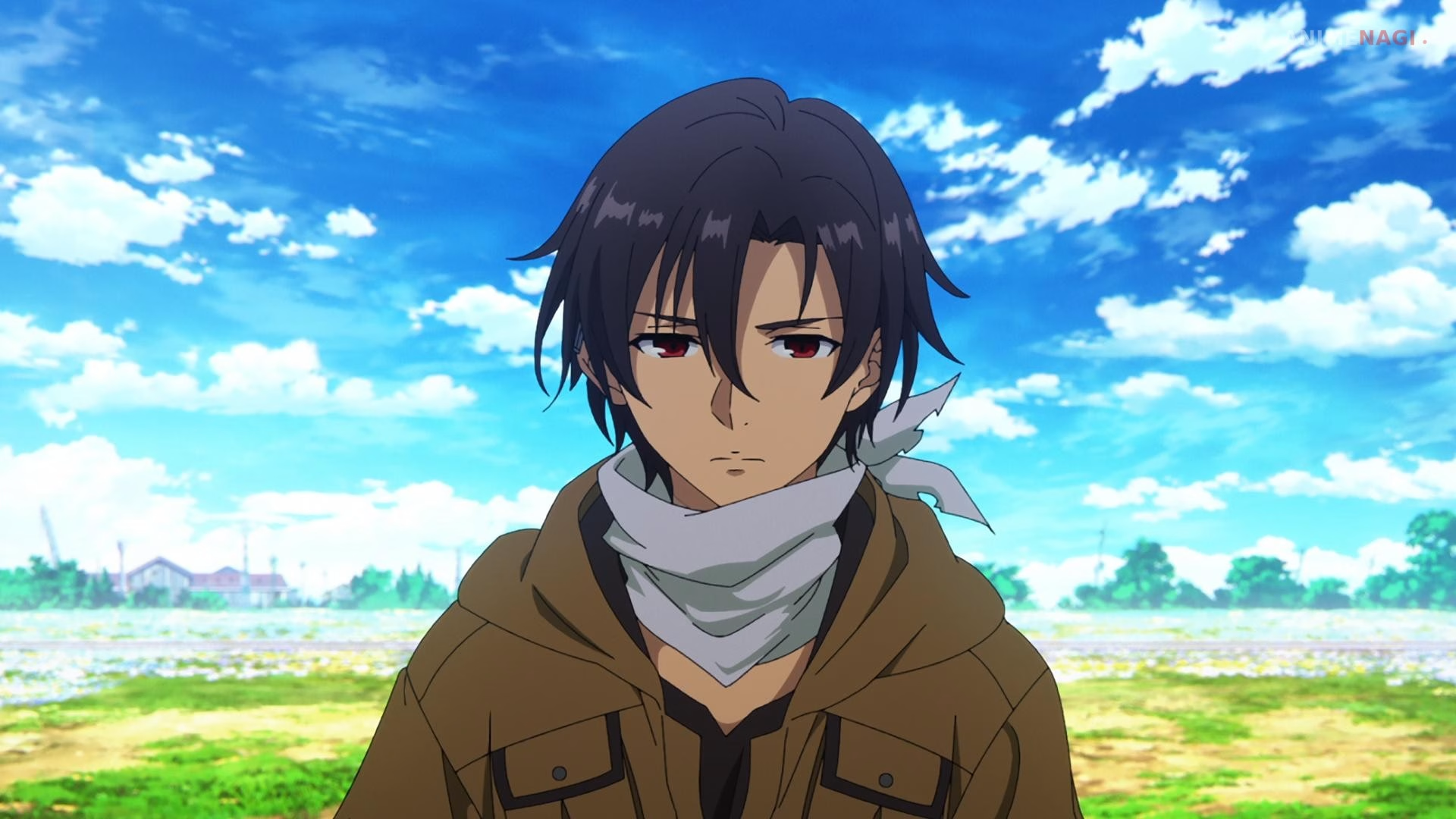
What makes Shinei Nouzen central to the conflict is his supernatural-like ability to hear the voices of the Legion. Shin’s Para-RAID synchronization ability allows him to sense the lingering consciousness within Legion units. Because many Legion processors are built using assimilated human brains, Shin can hear fragments of the dead speaking through them.
At first, this ability appears useful for combat because it helps Shin detect enemies before others can. However, Part 2 reveals the psychological burden tied to this power. Shin constantly hears the voices of the dead, including former comrades and victims consumed by the Legion.
This connection becomes even more personal because Shin’s older brother, Shourei Nouzen, was assimilated into the Legion as a Shepherd earlier in the series. After finally putting his brother to rest, Shin temporarily loses the purpose that had driven him for years.
Part 2 explores what happens when someone who has lived entirely for battle suddenly no longer knows why they are fighting. Shin survives physically, but emotionally he begins drifting deeper into emptiness and isolation.
The Legion War therefore becomes more than an external conflict. It reflects Shin’s internal struggle with grief, survivor’s guilt, and the inability to imagine a future beyond war.
Why the Federacy Arc Changes Shin’s Character
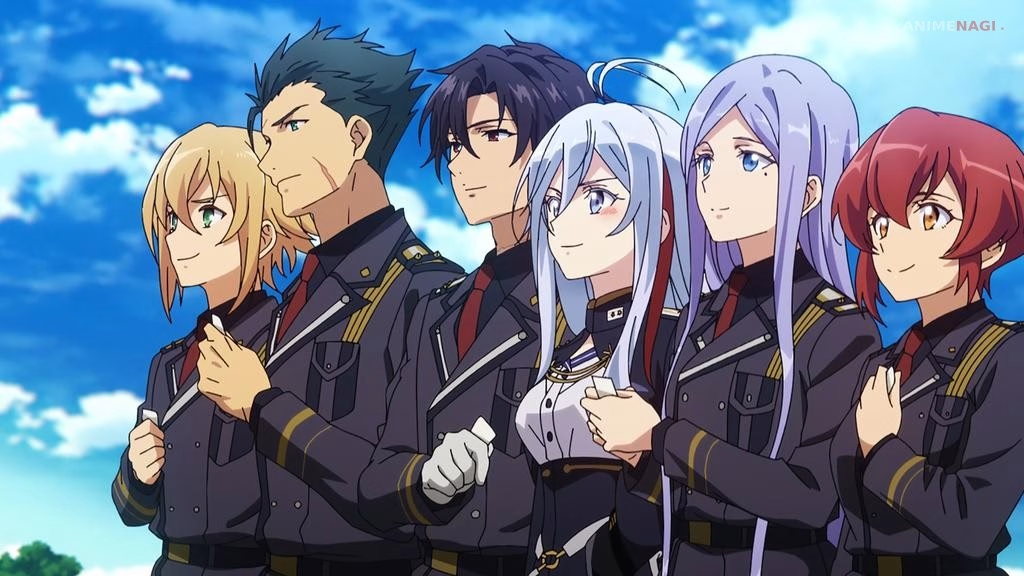
After escaping the Republic, Shin and the remaining members of Spearhead Squadron are taken in by the Federal Republic of Giad. Unlike San Magnolia, the Federacy treats the Eighty-Six as human beings rather than disposable tools. This creates one of the biggest emotional conflicts in Part 2.
For the first time, Shin and the others are offered a chance to live normal lives outside the battlefield. However, they struggle to adapt because war has become inseparable from their identities. Shin especially finds it difficult to understand peace or imagine a future that does not involve combat.
The Federacy arc highlights the long-term psychological damage caused by constant warfare. Even when given freedom, Shin instinctively returns to battle because it is the only existence he understands.
This is why Part 2 feels emotionally heavier than the first half of the series. The story no longer focuses only on external oppression. Instead, it examines how trauma continues affecting survivors long after escape becomes possible.
Shin’s relationship with Frederica also becomes important during this period. Frederica recognizes the emotional emptiness consuming him and repeatedly pushes him to acknowledge that he deserves to live for something beyond death and combat.
The Morpho and the Escalation of the Legion War
One of the most important developments in Part 2 is the introduction of the Morpho, a massive long-range railgun weapon controlled by the Legion.
The Morpho represents how much the Legion has evolved. It possesses devastating firepower capable of destroying military bases from enormous distances, forcing humanity into increasingly desperate defensive strategies.
The operation to destroy the Morpho becomes the centerpiece of Part 2’s military conflict. Shin and the Nordlicht Squadron are chosen for the mission because of their combat experience and ability to survive against impossible odds.
However, the mission is emotionally devastating because the Morpho is connected to another Shepherd: Kiriya Nouzen, Frederica’s former knight. Like Shin’s brother earlier in the story, Kiriya exists as a tragic example of someone whose humanity has been twisted and trapped within the Legion.
This reinforces one of the series’ core themes. The Legion War continuously transforms the dead into weapons, denying soldiers even the peace of death.
Shin’s confrontation with Kiriya mirrors his earlier battle with Shourei. Once again, he is forced to face someone trapped between humanity and machine existence. These encounters deepen Shin’s emotional exhaustion and reinforce his growing fear that he himself may never escape the battlefield mentally.
Why the Legion Are More Than Simple Machines
One reason the Legion War feels so different from traditional anime conflicts is because the Legion are not portrayed as generic robots. The series repeatedly emphasizes that the Legion are built from the remnants of humanity itself. Human memories, emotions, and consciousness continue lingering inside many advanced units.
This creates a horrifying cycle where war literally consumes human beings and turns them into tools for further destruction. The Legion become symbolic of endless warfare itself, constantly growing stronger through death.
For Shin, this reality makes every battle emotionally exhausting. He is not simply killing enemy machines. He is confronting distorted echoes of the dead, including former soldiers who were never allowed peace.
Part 2 especially focuses on this psychological horror. Shin begins questioning whether continuing to fight endlessly has any real meaning when the war itself constantly recreates suffering. This thematic depth is part of what separates 86 Eighty-Six from more traditional military anime. The conflict is not glorified. Instead, the series portrays war as something deeply dehumanizing that traps both the living and the dead.
Lena’s Return and Shin’s Emotional Turning Point
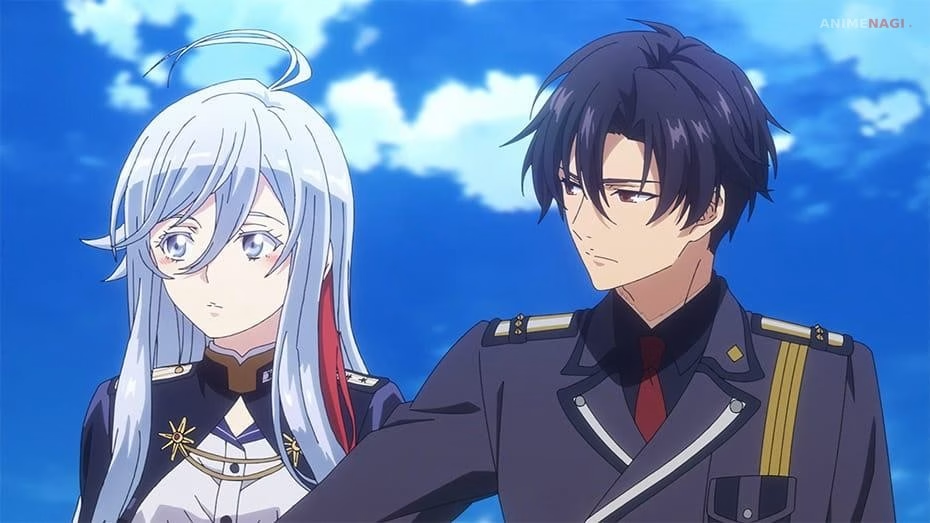
Although much of Part 2 focuses on Shin’s perspective, Vladilena Milizé remains emotionally crucial to the story. After surviving the collapse of San Magnolia, Lena continues fighting against the Legion while carrying the ideals Shin and Spearhead Squadron inspired within her. Her eventual reunion with Shin becomes one of the most important moments in the series.
For most of Part 2, Shin believes there is little value in his own survival beyond continuing the fight. However, Lena’s return changes this perspective. She becomes proof that the connections formed during the war still matter and that there are people waiting for him beyond the battlefield.
Their reunion is powerful because it represents emotional recognition after years of suffering and separation. Shin, who spent much of the series emotionally detached from life itself, finally begins acknowledging the possibility of a future.
This moment gives the Legion War deeper emotional meaning. The conflict is no longer just about survival. It becomes about preserving humanity, memory, and emotional connection in a world consumed by violence.
Why Shin’s Conflict Defines 86 Eighty-Six Part 2
At its core, 86 Eighty-Six Part 2 is not simply about defeating the Legion. It is about whether soldiers who have lived through endless violence can still find reasons to keep living.
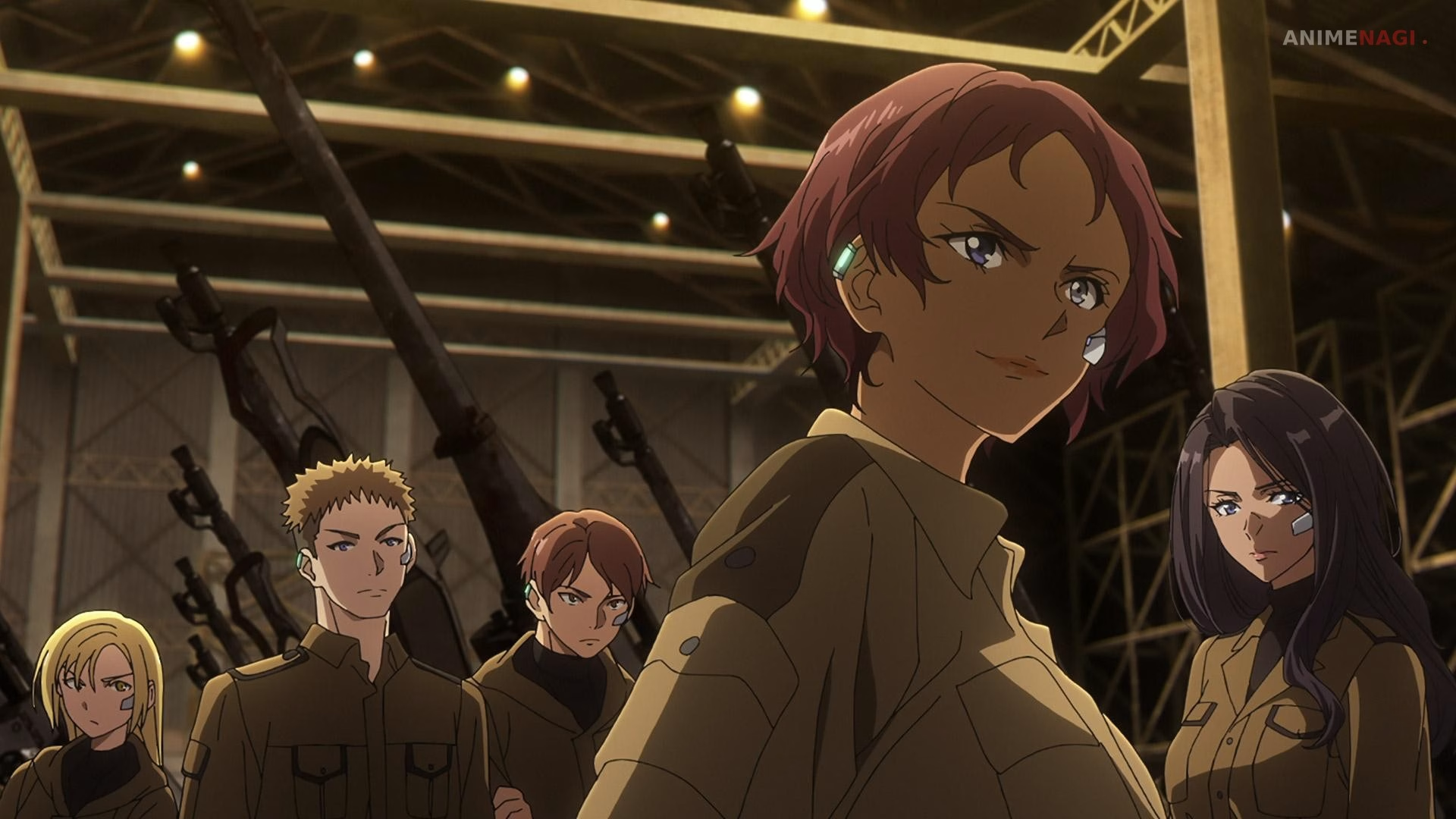
Shin represents this conflict perfectly. His ability to hear the voices of the dead ties him emotionally to the war in a way no other character experiences. Every battle reminds him of loss, trauma, and the countless people consumed by the Legion.
The series uses Shin’s journey to examine survivor’s guilt, emotional numbness, and the difficulty of imagining peace after years of violence. Even when external freedom becomes possible, internal healing remains far more difficult.
That emotional complexity is what makes the Legion War so compelling. The conflict is not just about machines versus humanity. It is about the psychological scars war leaves behind and whether people can still hold onto their humanity after experiencing unimaginable suffering.
By the end of Part 2, Shin’s journey finally begins shifting away from death and toward connection, hope, and the possibility of living for himself rather than simply surviving another battle.