Shutenmaru’s introduction in One Piece immediately stood out because he did something very unusual for an ally in the series. When Monkey D. Luffy and the samurai alliance began gathering forces in Wano, most expected the legendary retainer to join them without hesitation. Instead, Shutenmaru openly refused and dismissed their plan as unrealistic, which surprised both the characters and the audience. His reaction was not random, and it carried deep emotional weight tied to Wano’s past.
The truth is that Shutenmaru, whose real name is Ashura Doji, represents a side of Wano that the other samurai do not. While several retainers were sent into the future through time travel, Ashura lived through the full twenty years of Kaido’s rule. That difference created a major emotional gap between him and the rest of the Kozuki loyalists. His refusal to join Luffy’s alliance is rooted in loss, trauma, and repeated failure.
Eiichiro Oda uses Shutenmaru’s character to explore the consequences of long-term oppression in a way few other characters do. Rather than blindly believing in hope or prophecy, Ashura became a man shaped by harsh reality. His story adds depth to the Wano arc by showing that not everyone can hold onto faith after decades of suffering. Understanding his mindset is key to understanding why he initially rejected the alliance.
Who Is Shutenmaru in One Piece?
Shutenmaru is the alias of Ashura Doji, one of the Nine Red Scabbards who served Kozuki Oden. Before becoming Oden’s retainer, Ashura was a feared bandit who ruled the chaotic region of Kuri. He was known for his immense strength and violent reputation, making him one of the most dangerous figures in Wano at the time. However, everything changed after he encountered Oden.
Oden defeated Ashura in battle but chose not to kill him, which became a defining moment in Ashura’s life. Instead of punishing him, Oden inspired him to help rebuild Kuri into a peaceful land. This act of mercy earned Ashura’s respect and loyalty, eventually leading him to become one of Oden’s most trusted followers. From that point onward, he fought alongside the other samurai to support Oden’s vision.
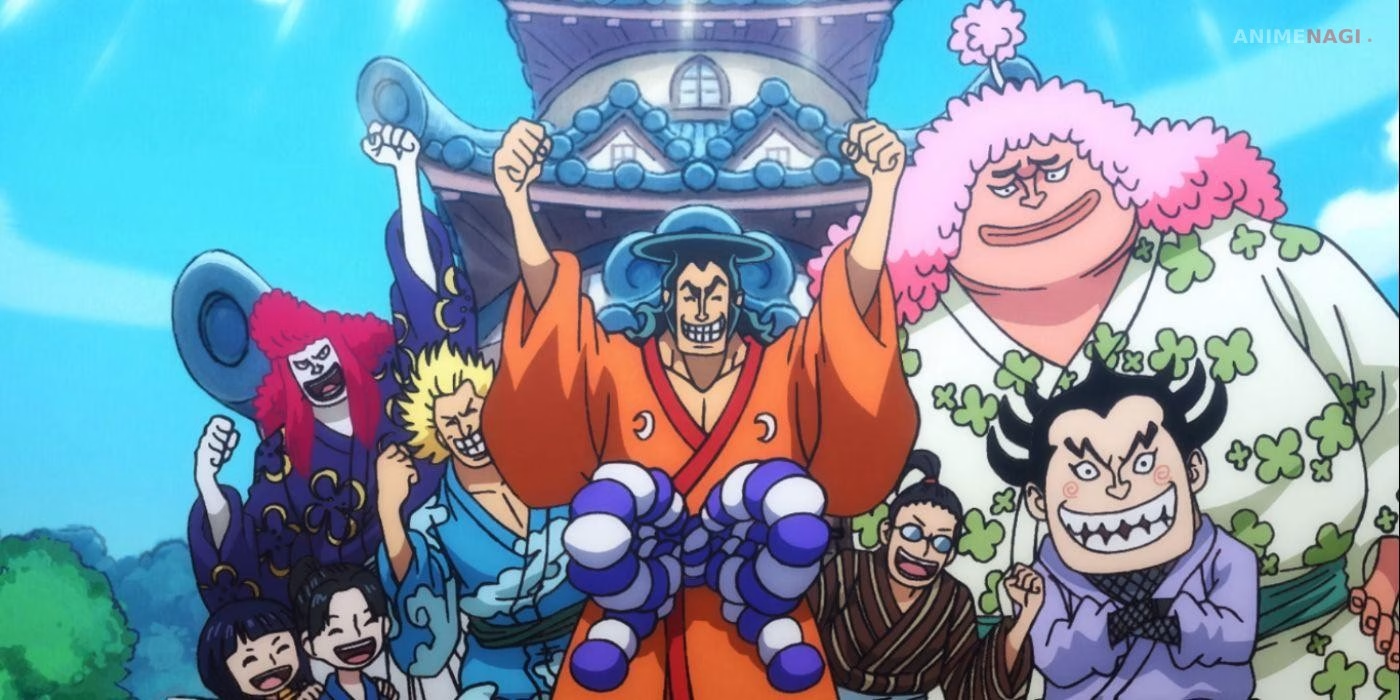
Ashura’s transformation showed how powerful Oden’s leadership truly was. He was not just a warrior but someone who could change even the most hardened individuals. That is why Ashura’s later disillusionment hits so hard, because he once believed deeply in Oden’s ideals. His fall from loyal retainer to cynical bandit leader reflects the damage caused by Kaido’s rule.
Why Shutenmaru Refused to Join Luffy’s Alliance
The main reason Shutenmaru refused to join the alliance is that he no longer believed it could succeed. After Oden’s execution, Ashura continued resisting Kaido with whatever forces he could gather. Over time, he led multiple attempts to fight back against Kaido’s army. Unfortunately, every effort ended in failure and heavy casualties.
Ashura watched countless samurai die in battles that achieved nothing. These repeated losses slowly destroyed his hope and replaced it with bitterness. While others escaped to the future, he remained behind to witness Wano’s suffering year after year. This created a deep emotional divide between him and the time-traveling retainers.
When Kin’emon returned and spoke about a new rebellion, Ashura saw it as another doomed attempt. He believed the samurai were repeating the same mistakes that had already cost many lives. From his perspective, joining the alliance meant leading more people to their deaths. His refusal was not cowardice, but a refusal to repeat past tragedies.
The Emotional Gap Between Ashura and the Other Scabbards
One of the most important aspects of Shutenmaru’s character is the emotional gap between him and the other Nine Red Scabbards. Characters like Kin’emon and Kozuki Momonosuke were sent twenty years into the future by Kozuki Toki. For them, Oden’s death felt recent, and their hope remained intact.
Ashura, on the other hand, experienced every single year of Kaido’s tyranny. He saw Wano’s people starve, watched allies die, and endured the slow collapse of everything Oden had built. This long exposure to suffering hardened his worldview. It made him far less willing to believe in miracles or prophecies.
Because of this, Ashura initially resented the returning samurai. He felt they did not
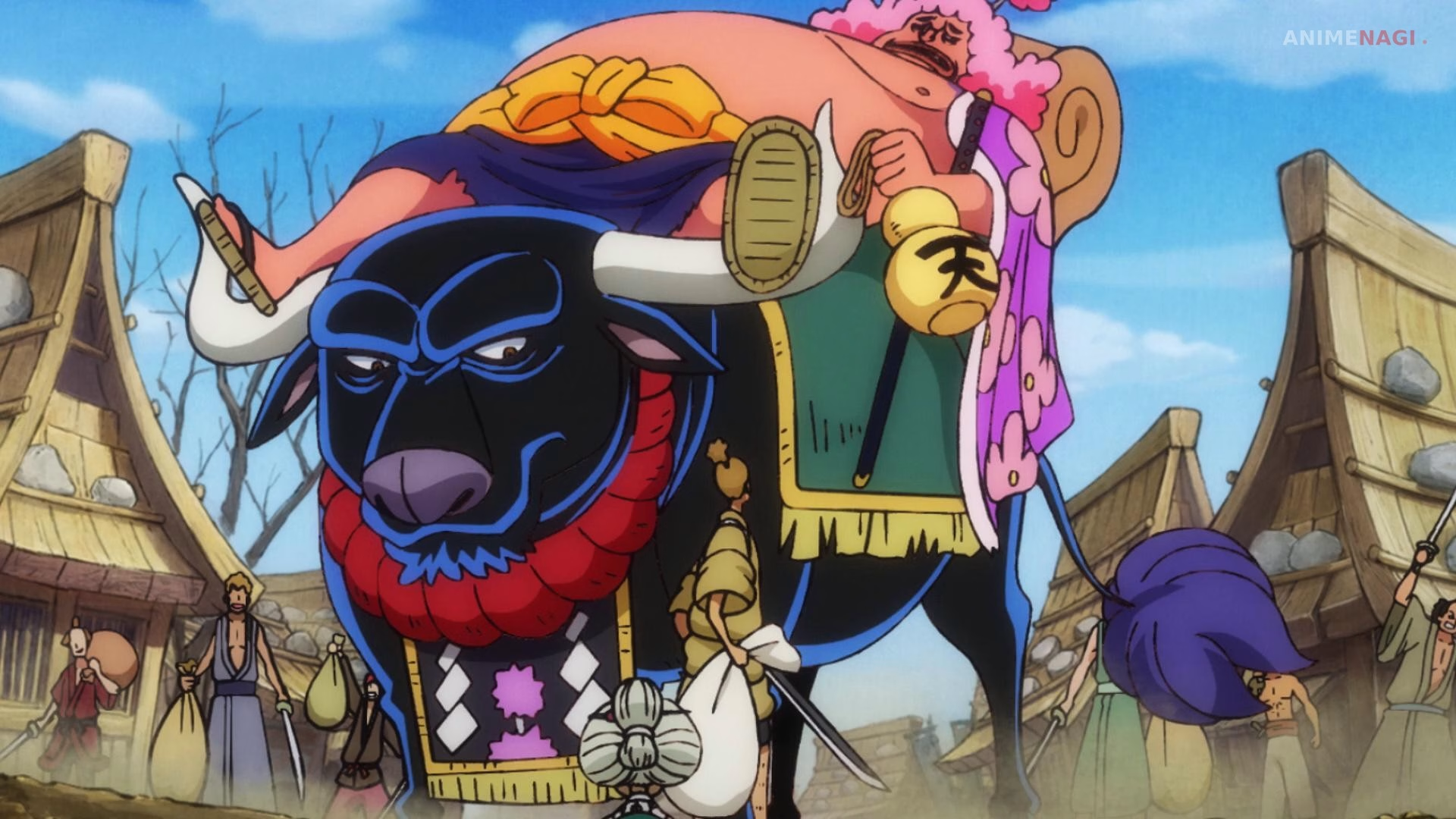
truly understand what Wano had gone through in their absence. Their optimism seemed disconnected from reality, which made it difficult for him to trust their plan. This emotional tension added depth to the alliance’s formation.
Why Shutenmaru Distrusted Luffy
Another key reason Shutenmaru refused to join the alliance was his initial distrust of Luffy. Like many characters in One Piece, Luffy is driven by confidence and belief in impossible outcomes. However, Ashura had already seen how such optimism could lead to disaster. This made him skeptical of Luffy’s ability to succeed.
Luffy had just been defeated by Kaido earlier in the arc, which further reinforced Ashura’s doubts. From his perspective, Luffy was just another ambitious pirate who did not understand the true strength of their enemy. He did not see Luffy as the savior others believed him to be. Instead, he saw him as another potential failure.
Ashura needed proof, not promises. He had reached a point where words meant nothing without results. This is what separates him from many other allies in the series who quickly trust Luffy. His skepticism made his eventual change of heart much more meaningful.
How Yasuie’s Death Changed Everything
The turning point for Shutenmaru came after the death of Shimotsuki Yasuie. Yasuie sacrificed himself publicly to protect the rebellion and inspire hope among the people of Wano. His execution had a powerful emotional impact on everyone, especially Ashura. It reminded him of the kind of courage and selflessness that once defined Oden’s followers.
Yasuie’s death showed that people were still willing to fight for Wano despite the risks. This broke through Ashura’s hardened mindset and forced him to reconsider his position. He realized that giving up completely would mean betraying the sacrifices of those who still believed. That moment reignited the part of him that once followed Oden.
After this, Ashura finally chose to rejoin the alliance. His decision was not based on blind hope, but on renewed respect for those willing to risk everything. This made his return feel earned and emotionally powerful. It marked the beginning of his redemption arc.
How Strong Is Shutenmaru?
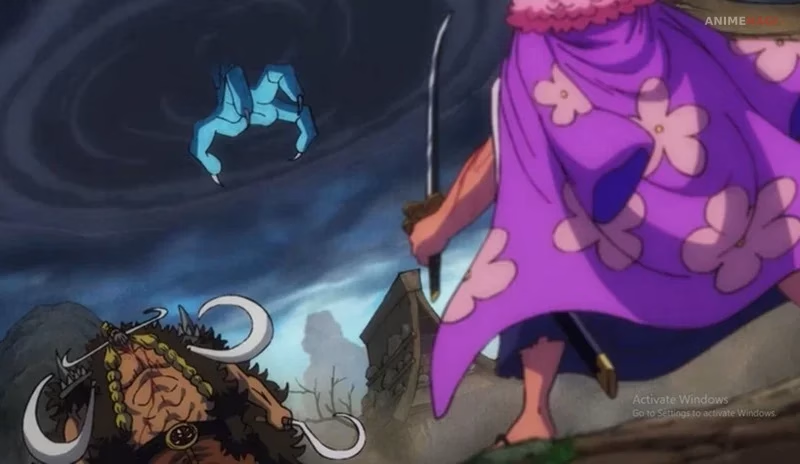
Shutenmaru is considered one of the strongest samurai in Wano. Characters like Kin’emon have stated that warriors such as Ashura are worth hundreds of soldiers in battle. His strength is further confirmed by the fact that Kaido himself attempted to recruit him. This shows that even the Yonko recognized his power.
Ashura also clashed with Jack, one of Kaido’s top commanders, without hesitation. This demonstrated that he operates at a very high combat level. Even after years of inactivity, he remained a formidable fighter. His presence alone added significant strength to the alliance.
However, his true strength goes beyond physical power. Ashura is also a capable leader who commanded the Mt. Atama thieves for years. His ability to survive and maintain influence during Kaido’s rule speaks to his resilience. These qualities made him a valuable ally once he returned.
Ashura Doji’s Sacrifice and Final Redemption
Ashura Doji’s story reaches its conclusion during the Raid on Onigashima. When Kanjuro attempted to kill the samurai using explosives, Ashura stepped in to stop him. He sacrificed himself to protect the other Red Scabbards from the blast. This moment completed his character arc in a powerful way.
At the beginning of Wano, Ashura had lost faith in everything Oden stood for. He rejected hope, distanced himself from his allies, and chose isolation. By the end, he returned to the very ideals he once believed in. His sacrifice proved that his loyalty to Oden never truly disappeared.
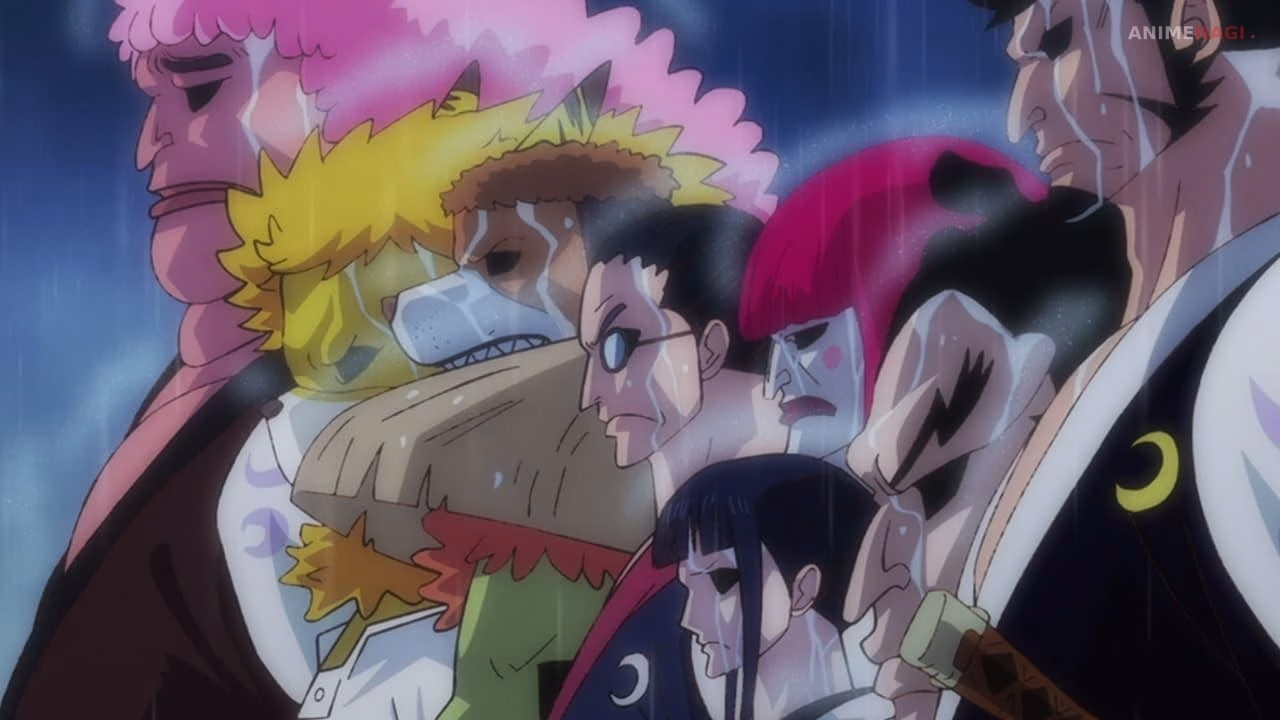
Ashura’s journey reflects one of One Piece’s core themes, which is the power of inherited will. Even after years of despair, the ideals passed down from Oden continued to influence him. His final act showed that hope can return even after it seems completely lost. That is what makes Shutenmaru one of the most human and emotionally complex characters in the Wano arc.
Shutenmaru’s story also highlights how Wano’s suffering was not just physical but deeply psychological. Kaido and Orochi did not simply conquer the country through force, but through breaking people’s spirits over time. Ashura became a representation of what happens when hope is repeatedly crushed without relief. His reluctance to fight again reflected a survival instinct rather than weakness, as he prioritized avoiding further meaningless loss. This makes his character one of the most grounded portrayals of long-term trauma in One Piece.
At the same time, his eventual return reinforces why Luffy’s presence matters so much in the story. Luffy does not just bring strength, but a kind of belief that can reignite even the most broken individuals. Ashura did not change because of speeches, but because he saw actions that reminded him of Oden’s legacy. His arc shows that faith cannot be forced, but it can be restored through sacrifice and proof. That balance between realism and hope is what makes the Wano arc emotionally powerful.