The Skypiea Arc in One Piece has long been one of the most misunderstood parts of Eiichiro Oda’s story. When it first aired, many fans dismissed it as a self-contained adventure that had little impact on the larger narrative. Compared to arcs like Water 7 or Marineford, Skypiea felt disconnected from the central pirate world, leading some viewers to even label it as “skippable.” However, that perception has changed dramatically in recent years.
As One Piece progressed, it became clear that Skypiea contains some of the most important lore, themes, and foreshadowing in the entire series. From the introduction of ancient civilizations to hints about the Void Century and the concept of “gods,” the arc quietly laid the groundwork for major revelations happening hundreds of chapters later. What once seemed like a side story is now recognized as a critical piece of the puzzle.
Let’s break down what actually happens in Skypiea and why it matters more than ever.
What Happens in the Skypiea Arc?
The Skypiea Arc begins when Monkey D. Luffy and the Straw Hat Pirates reach a legendary island in the sky. After riding the Knock Up Stream, they arrive in Skypiea, a floating civilization made of clouds where people live under a strict and mysterious rule.
Soon after arriving, the crew becomes involved in a conflict between the native Skypieans and the Shandians, a group of warriors fighting to reclaim their ancestral land. At the center of this conflict is Enel, a self-proclaimed god with lightning-based powers granted by his Goro Goro no Mi Devil Fruit.
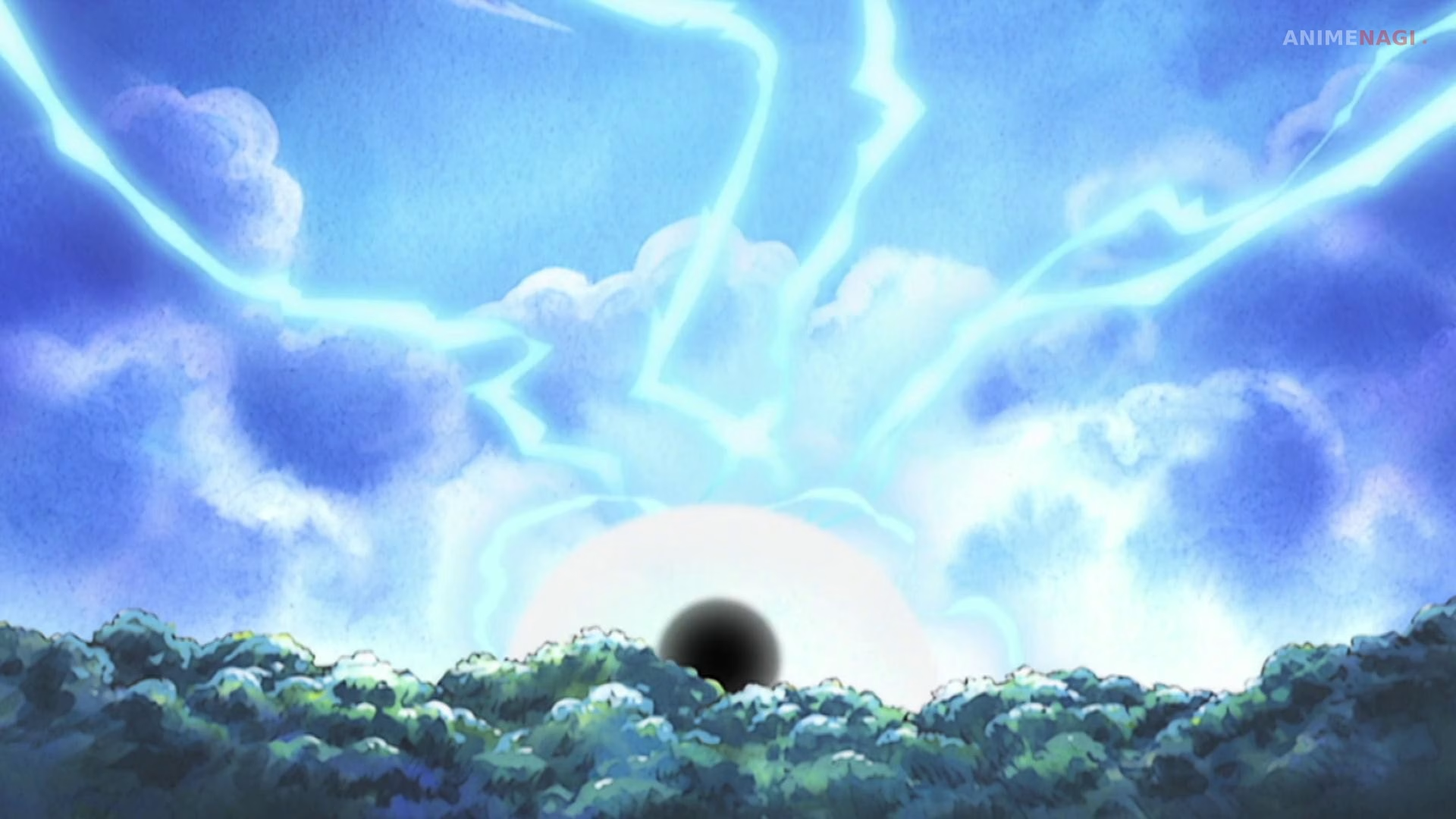
Enel rules Skypiea through fear, using his near-invincible abilities and advanced Observation Haki, known as “Mantra,” to monitor and control the entire island. His ultimate goal is to destroy Skypiea and travel to the moon, which he believes to be a divine land.
The arc builds toward a large-scale survival battle where multiple factions fight for control. Luffy eventually confronts Enel, and thanks to his rubber body, he becomes the only natural counter to Enel’s lightning powers. After defeating him, Luffy rings the Golden Bell, fulfilling a centuries-old promise and bringing closure to the conflict between Skypieans and Shandians.
Why Skypiea Feels Different From Other Arcs
One of the main reasons Skypiea was initially misunderstood is because of how different it feels from other One Piece arcs. Unlike most storylines, it takes place almost entirely isolated from the Grand Line’s main political and pirate conflicts.
There are no Marines chasing the Straw Hats, no major Warlords interfering, and no direct connection to the World Government’s immediate actions. This gives the arc a more self-contained, almost mythical tone compared to arcs like Alabasta or Dressrosa.
However, this isolation is intentional. Skypiea is designed to feel like a legend or ancient story, which aligns perfectly with its deeper themes about history, lost civilizations, and forgotten truths. Instead of advancing the surface-level plot, it builds the foundation for the larger mysteries of the One Piece world.
This is why the arc has aged much better than its initial reception. What once felt disconnected now feels like essential worldbuilding.
The Arc’s Connection to the Void Century and Ancient History
One of the biggest reasons Skypiea matters is its connection to the Void Century, one of One Piece’s central mysteries. During the arc, Nico Robin discovers a Poneglyph hidden in the ruins of Shandora, an ancient city that once existed in the sky.
The Poneglyph contains information about Poseidon, one of the Ancient Weapons, which are key elements tied to the lost history of the world. This moment is crucial because it reinforces the idea that the truth about the Void Century is scattered across the world in hidden locations.
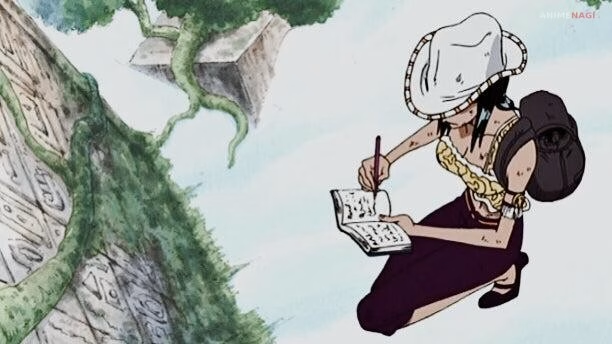
More importantly, Gol D. Roger’s message is also found alongside the Poneglyph. He confirms that he reached Skypiea and could understand the ancient language, hinting at his connection to the Voice of All Things.
This directly ties Skypiea to the larger narrative about inherited will, history, and the search for truth. The arc quietly establishes that the Straw Hats are following in Roger’s footsteps, even in places that seem unrelated to the main storyline.
Enel and the Concept of “Gods” in One Piece
Enel’s role in Skypiea goes beyond being just another arc villain. He introduces one of the most important recurring themes in One Piece, the idea of “gods” and false divinity.
Enel believes himself to be a literal god, ruling over Skypiea with absolute authority. However, his power comes from a Devil Fruit, which makes him no different from other strong characters in the series. His “godhood” is built on fear and perception rather than true divine status.
This theme becomes increasingly important in later arcs. One Piece repeatedly questions the idea of gods, whether it is through the Celestial Dragons, the Sun God Nika, or other mythological references. Skypiea is the first arc to explore this concept in depth.
Luffy defeating Enel symbolizes the rejection of false gods and oppressive systems. It reinforces one of the core themes of One Piece, that freedom should not be controlled by those who claim superiority over others.
Nika, the Sun God, and Skypiea’s Foreshadowing
One of the biggest reasons Skypiea has gained importance in recent years is its connection to the Sun God Nika. During the arc, there are multiple references to a sun deity worshipped by ancient people.
At the time, these references seemed like simple worldbuilding. However, later developments in One Piece revealed that Luffy’s Devil Fruit is tied to Nika, a legendary figure representing freedom and liberation.
This connection retroactively elevates Skypiea’s importance. The arc subtly introduces the idea of a sun god long before it becomes central to the story. It also reinforces the theme of liberation, as Luffy frees Skypiea from Enel’s rule.
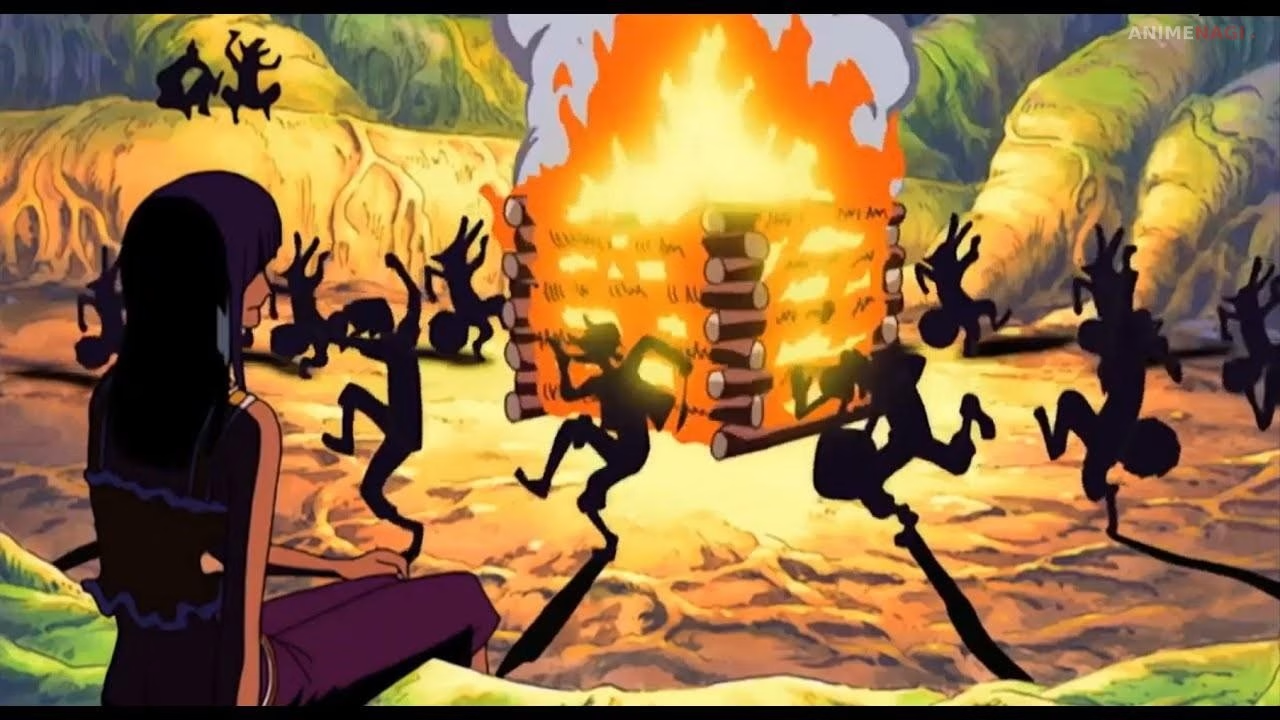
The imagery of the sun, drums, and celebration at the end of the arc now feels much more significant. It aligns perfectly with the themes surrounding Nika and the idea of bringing joy and freedom to oppressed people.
The Importance of the Golden Bell and Inherited Will
The Golden Bell in Skypiea represents one of the most emotional and symbolic elements of the arc. It is tied to the history of Shandora and a promise made centuries ago between the ancestors of Mont Blanc Noland and the Shandian warrior Calgara.
Ringing the bell is not just about ending the conflict. It fulfills a promise that has been carried across generations, reinforcing the theme of inherited will. This idea is central to One Piece, where the dreams and intentions of the past continue to influence the present.
Luffy ringing the bell also serves as a signal to Mont Blanc Cricket, proving that the city of gold truly existed. This moment connects past and present in a powerful way, showing how stories and beliefs can shape people’s lives.
The emotional payoff of this scene is one of the reasons Skypiea remains memorable despite its slower pacing. It captures the essence of One Piece’s storytelling.
Why Fans Once Skipped Skypiea and Why That’s Changed
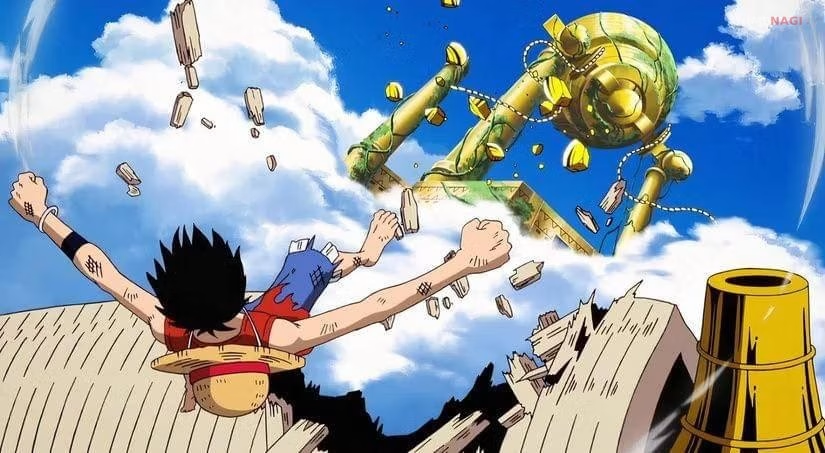
For years, Skypiea was often labeled as a “skippable arc,” especially by newer fans trying to catch up with the series. Its slower pacing and lack of immediate connection to the main plot made it feel less important compared to other arcs.
However, this perception has changed as the story has progressed. With the introduction of major concepts like the Void Century, Joy Boy, and Nika, fans have started to revisit Skypiea and recognize its deeper significance.
Many of the ideas introduced in Skypiea are now central to One Piece’s endgame. What once seemed like isolated worldbuilding is now clearly part of a much larger narrative plan.
Today, Skypiea is often praised as one of Oda’s most cleverly written arcs because of how well it foreshadows future events.