In the brutal Tokyo Ghoul world, very few antagonists carried the same intimidating presence as Tatara. As one of the top leaders of Aogiri Tree, Tatara was introduced as a cold, calculating ghoul who rarely showed emotion but commanded fear from both investigators and fellow ghouls alike. His loyalty to the One-Eyed King, overwhelming combat abilities, and mysterious background made him one of the most intriguing figures in the series.
However, despite years of buildup and his reputation as a near-unstoppable force, Tatara’s fate in Tokyo Ghoul:re surprised many fans. His death came suddenly, brutally, and at the hands of someone deeply connected to his past conflicts. For anime-only viewers especially, the moment felt abrupt because the anime adaptation skipped much of the emotional and thematic context behind his final battle
Let’s break down what really happens to Tatara in Tokyo Ghoul, why he dies, who kills him, and what his death means for the larger story. Information in this article is based on the original manga by Sui Ishida and official Tokyo Ghoul character material.
Who Is Tatara in Tokyo Ghoul?
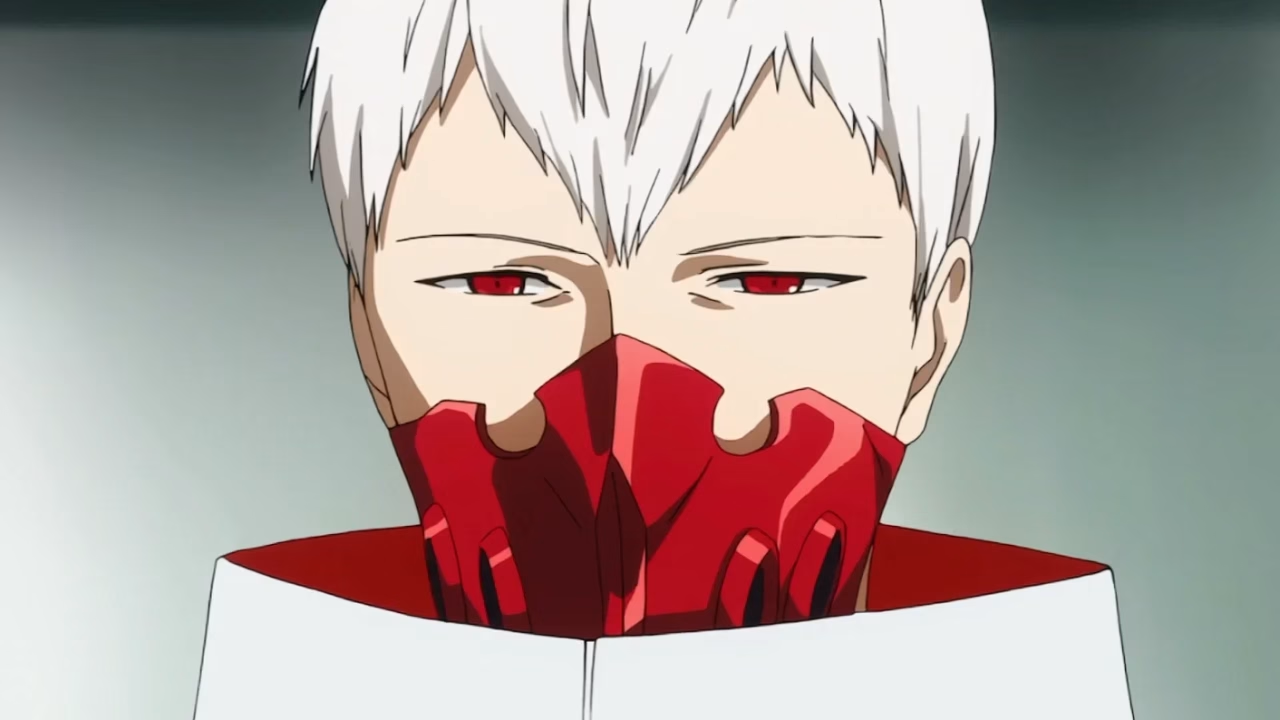
Tatara is one of the highest-ranking members of Aogiri Tree and serves directly under the One-Eyed King. He is portrayed as the organization’s second-in-command and acts as one of its most disciplined and intelligent leaders. Unlike chaotic members such as Yamori, Tatara is calm, strategic, and highly focused on Aogiri’s long-term goals.
Originally from China, Tatara was once affiliated with the ghoul organization Chi She Lian. The destruction of that organization became one of the defining tragedies of his life. During the conflict, his brother and close allies were killed by CCG investigator Kōsuke Hōji. This event fueled Tatara’s hatred toward the CCG and created a deeply personal grudge against Hōji.
Tatara is also one of the most powerful ghouls in the series. His kagune possesses pyrokinetic abilities, allowing him to generate intense flames capable of overwhelming even elite investigators. When he enters his kakuja form, he becomes even more monstrous, turning into a massive dragon-like figure that symbolizes his destructive power.
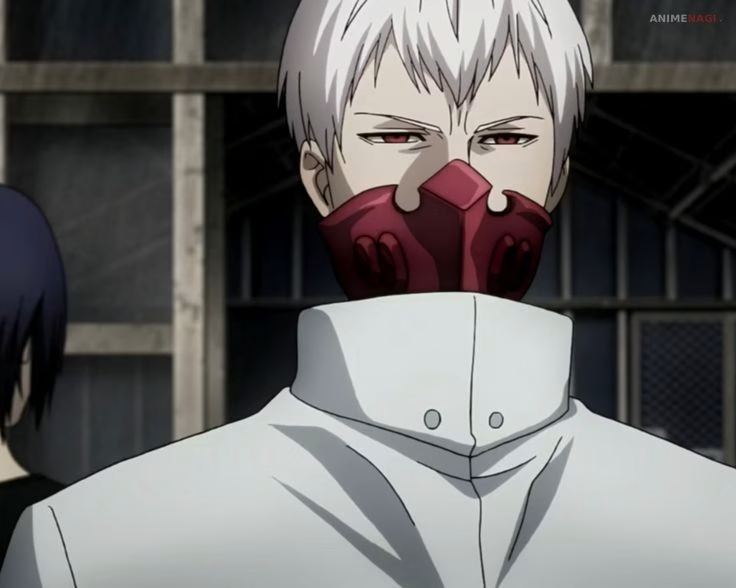
Despite his terrifying image, Tatara is not portrayed as mindlessly cruel. Tokyo Ghoul repeatedly hints that he is driven by ideology, loyalty, and grief rather than pure sadism. This complexity makes his eventual downfall far more tragic.
What Happens to Tatara During Tokyo Ghoul:re?
By the events of Tokyo Ghoul:re, the war between the CCG and Aogiri Tree has intensified dramatically. Tatara continues serving the One-Eyed King while coordinating attacks against investigators. However, the balance of power begins shifting after the emergence of artificially created half-ghouls and stronger experimental fighters.
One of the most important figures during this period is Seidou Takizawa. Once a human investigator partnered with Kōsuke Hōji, Takizawa was captured and experimented on by Dr. Kanō. These experiments transformed him into an unstable half-ghoul with immense strength and severe psychological trauma.
Tatara previously defeated Takizawa with ease during an earlier confrontation. That humiliating loss became one of the experiences that pushed Takizawa further into madness and violence. The relationship between the two characters therefore carries major emotional weight heading into their final encounter.
During the Cochlea and Rue Island conflict in Tokyo Ghoul:re, Tatara and Takizawa fight again. This time, however, Takizawa is far stronger and mentally unstable enough to ignore fear entirely. Instead of a long drawn-out battle, Takizawa catches Tatara off guard and kills him almost instantly.
The moment surprised readers because Tatara had been hyped for years as one of Aogiri Tree’s deadliest leaders. Yet his death comes quickly, without a grand farewell or extended final monologue.
Who Kills Tatara?
Tatara is killed by Seidou Takizawa during Tokyo Ghoul:re. The confrontation is emotionally tied to investigator Kōsuke Hōji, the man responsible for killing Tatara’s brother years earlier. Hōji had also been Takizawa’s mentor before Takizawa was captured and transformed into a ghoul experiment. This creates a tragic triangle between the characters, where revenge, trauma, and guilt all collide at once.
Tatara expected Takizawa to remain subordinate and controllable. Instead, Takizawa had become unpredictable and overwhelmingly violent after enduring horrific torture and experimentation. During the battle, Takizawa suddenly turns against Tatara and kills him before he can fully react.
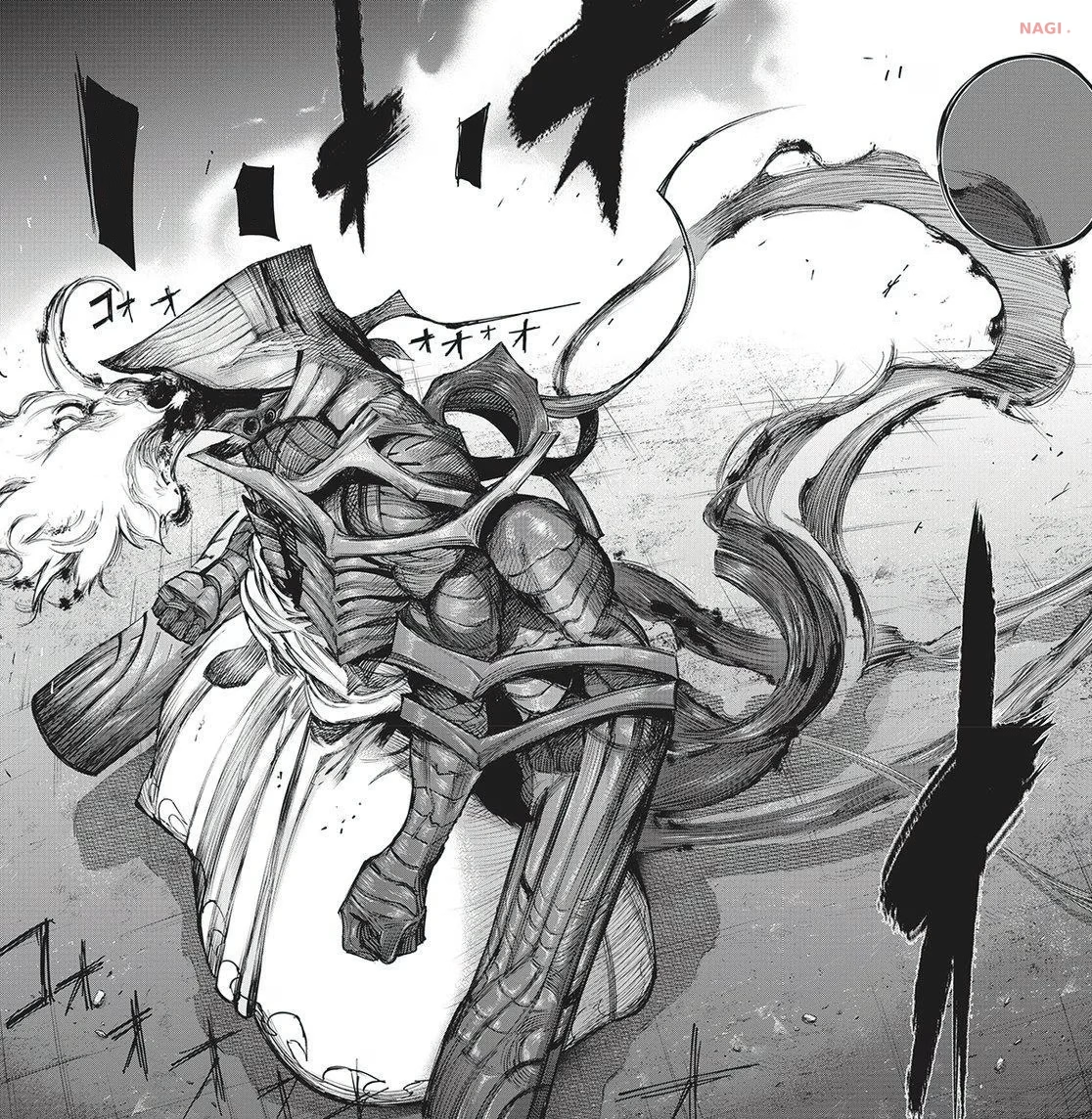
The scene is especially important for Takizawa’s character arc. Killing Tatara is less about defeating an enemy and more about Takizawa desperately trying to prove his existence and power to Hōji. After Tatara’s death, Takizawa seeks validation from his former mentor, only for the situation to spiral into even greater tragedy.
For many readers, the suddenness of Tatara’s death reinforces one of Tokyo Ghoul’s biggest themes: even powerful figures can die abruptly in a world defined by endless violence.
Why Tatara’s Death Feels So Abrupt
One major reason fans still discuss Tatara’s fate is because his death feels surprisingly fast compared to his importance in the story. Characters with less narrative significance often received longer fights or more emotional conclusions.
Part of this comes from Sui Ishida’s storytelling style during Tokyo Ghoul:re. The later arcs move at a very rapid pace and frequently portray death as sudden and chaotic. Rather than glorifying battle, Ishida often depicts violence as meaningless and emotionally devastating. Tatara’s death fits that philosophy perfectly.
The anime adaptation also contributed to confusion. Tokyo Ghoul:re compressed a large amount of manga content into relatively few episodes, removing much of the buildup surrounding Tatara, Takizawa, and Hōji. As a result, anime-only viewers often felt disconnected from the emotional context behind the confrontation.
In the manga, Tatara’s history with Hōji and Chi She Lian adds far more weight to his final scenes. His death is not simply about losing a fight. It represents the collapse of years of hatred, revenge, and loyalty that defined his existence.
The Meaning Behind Tatara’s Fate
Tatara’s fate reflects several of Tokyo Ghoul’s central themes, especially the destructive cycle of revenge and violence. For most of his life, Tatara was driven by hatred toward the CCG because of the destruction of his former organization and the death of his brother. That hatred shaped his loyalty to Aogiri Tree and his commitment to fighting investigators. Yet in the end, his obsession with revenge indirectly leads to his downfall.
Takizawa mirrors Tatara in many ways. Both characters were transformed by trauma, consumed by violence, and manipulated by larger organizations. Their confrontation shows how the Tokyo Ghoul world destroys people regardless of whether they are human or ghoul.
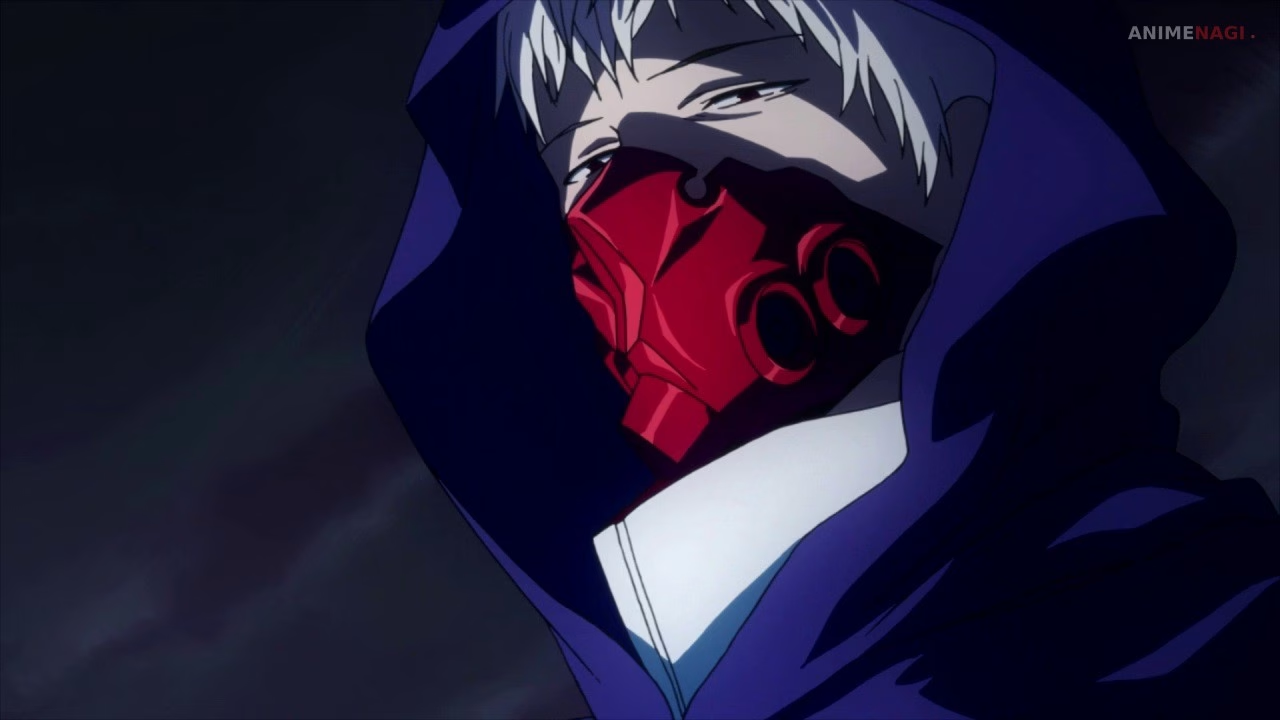
Tatara’s death also symbolizes the weakening of Aogiri Tree itself. By the time he dies, the organization is already collapsing under internal conflict, war, and the growing chaos surrounding the One-Eyed King’s plans. Losing Tatara removes one of the few disciplined leaders holding the group together.
Even though Tatara was technically an antagonist, his death is framed more as tragic than triumphant. There is no heroic celebration after he dies. Instead, the moment feels empty and painful, which is exactly the emotional effect Tokyo Ghoul often aims for.
Did Tatara Die in the anime, too?
Yes, Tatara dies in both the Tokyo Ghoul:re manga and anime adaptation. However, the anime version shortens many details surrounding his death. The manga spends more time exploring Takizawa’s unstable mental state, Hōji’s emotional conflict, and Tatara’s lingering hatred from his past. These missing details are why many fans recommend reading the manga for a fuller understanding of his character arc.
The anime still shows Takizawa killing Tatara, but the emotional impact is reduced because several important character interactions were either rushed or removed entirely.
Even after his death, Tatara remains one of the most memorable Aogiri Tree members in Tokyo Ghoul. His calm demeanor, terrifying kagune, and mysterious personality gave him an aura that stood out even among the series’ strongest ghouls.
Many fans also appreciate that Tatara represents the morally gray nature of Tokyo Ghoul’s world. He is undeniably ruthless and responsible for terrible acts, yet his motivations are rooted in grief, survival, and loyalty rather than simple evil. That complexity is part of what makes Tokyo Ghoul’s antagonists so compelling.
Tatara ultimately dies not as an invincible monster, but as another victim of the endless cycle of violence consuming both humans and ghouls. His sudden death may have surprised readers, but thematically, it perfectly fits the tragic tone that defines Tokyo Ghoul from beginning to end.
Tatara’s presence in Tokyo Ghoul:re also reflects how power structures shift rapidly in the series’ later arcs. As newer, unstable half-ghouls begin to emerge, even established figures like Tatara are forced into unpredictable situations where raw strength is no longer enough to guarantee survival. This changing dynamic is crucial to understanding why his downfall happens the way it does, rather than through a prolonged, traditional battle.
At the same time, his role within Aogiri Tree highlights the organization’s internal contradictions. While it presents itself as a revolutionary force for ghouls, leaders like Tatara often rely on fear and strict control to maintain order. This tension between ideology and brutality becomes more apparent as the story progresses, making his eventual death feel less like a random surprise and more like an inevitable collapse of a flawed system.