The Promised Neverland Season 2 takes the story in a dramatically different direction compared to its critically acclaimed first season. While Season 1 focused on psychological tension and escape planning, Season 2 expands the world beyond Grace Field House, introducing new environments, characters, and moral dilemmas. However, it also became one of the most controversial anime adaptations due to major deviations from the original manga.
The second season follows Emma, Ray, and the other children after their escape as they attempt to survive in a demon-controlled world. Instead of continuing the slow-burn strategy and suspense of the first season, the narrative shifts toward faster pacing and large-scale world-building. This change significantly alters how key events unfold.
Understanding Season 2 requires looking at both its story and its adaptation choices. From the introduction of new allies to the rushed conclusion, the season presents a complex mix of strong ideas and missed opportunities that shaped its reception.
Life After Escape: Surviving the Demon World
Season 2 begins immediately after the children escape from Grace Field House. Emma, Ray, and the others find themselves in an unfamiliar and dangerous environment where demons hunt humans as food. This shift from controlled captivity to open survival drastically changes the tone of the series.
The children quickly realize that survival requires more than intelligence. They must learn to navigate forests, avoid predators, and secure food. This early part of the season highlights their vulnerability and growth as they adapt to life outside the orphanage.
Emma continues to act as the emotional core of the group, prioritizing unity and hope. Ray complements her with strategic thinking, ensuring they make calculated decisions. Together, they guide the group through increasingly dangerous situations.
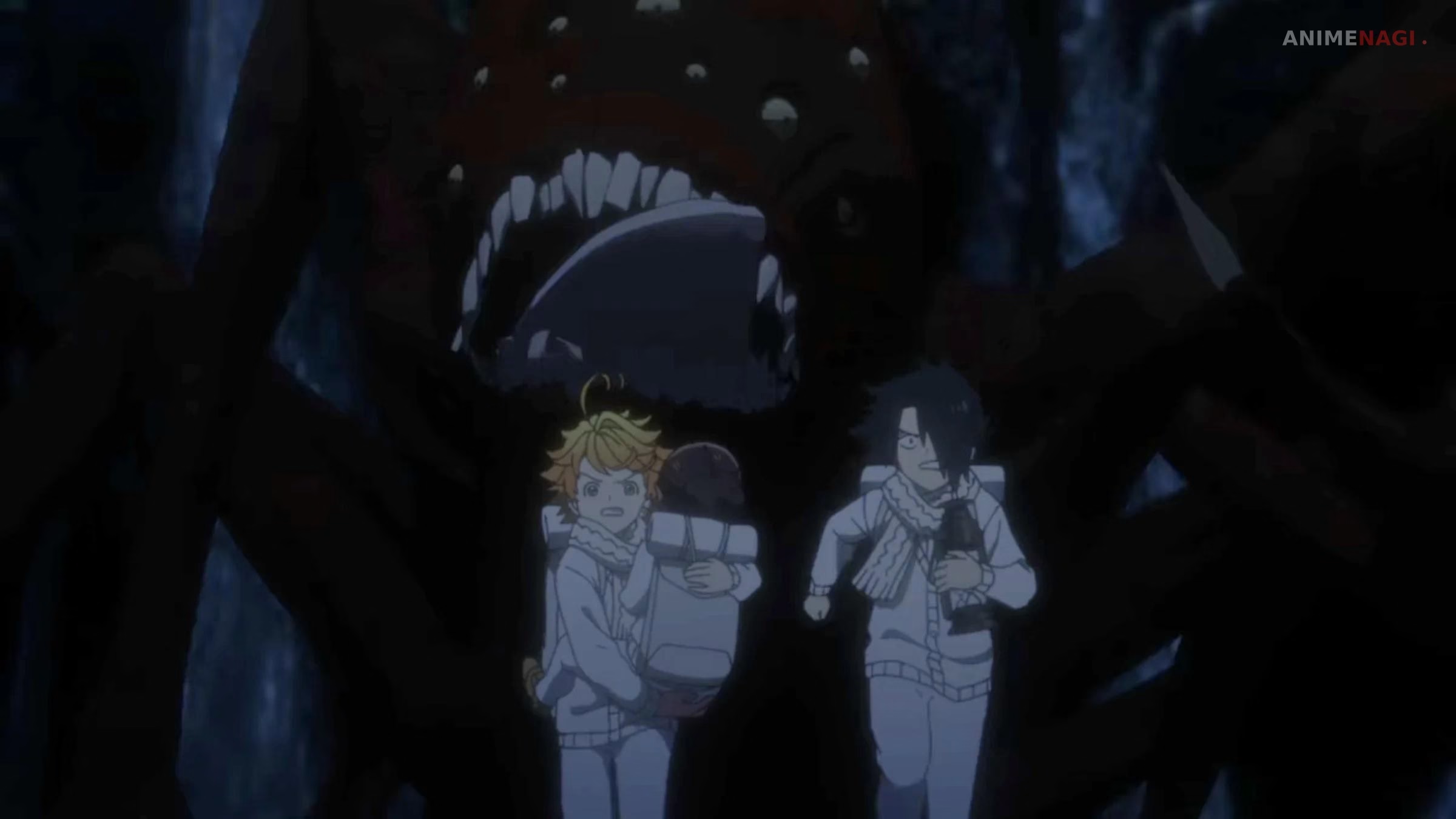
This section of the story establishes the stakes of the outside world. It shows that escaping Grace Field was only the beginning of a much larger and more complex struggle.
Meeting Mujika and Sonju: A New Perspective on Demons
One of the most important developments in Season 2 is the introduction of Mujika and Sonju. These two demons challenge everything the children believed about their enemies.
Mujika and Sonju help the children survive, teaching them how to hunt and live in the wild. Their kindness introduces a moral dilemma for Emma, who begins to question whether all demons are inherently evil. This marks a major shift in the series’ themes.
Mujika’s unique ability to maintain her intelligence without consuming humans becomes a key plot point. It suggests that coexistence between humans and demons might be possible. This idea becomes central to Emma’s evolving goals.
However, this perspective also creates tension within the group. Not everyone agrees with Emma’s optimism, especially when the threat of hostile demons remains constant. This conflict adds depth to the narrative.
The Search for William Minerva
The promise of help from William Minerva drives much of the early storyline. The children follow clues left behind in hopes of finding a safe haven for humans.
This journey leads them to hidden shelters and coded messages, reinforcing the idea that someone is guiding them from the shadows. These elements maintain some of the mystery that defined Season 1.
Eventually, the group discovers that Minerva is actually an alias for James Ratri. His role in the system controlling the farms adds complexity to the story.
The revelation shifts the focus from simple survival to dismantling the larger system. It raises questions about responsibility and whether the cycle of human farming can truly be broken.
Norman’s Return and a Darker Plan
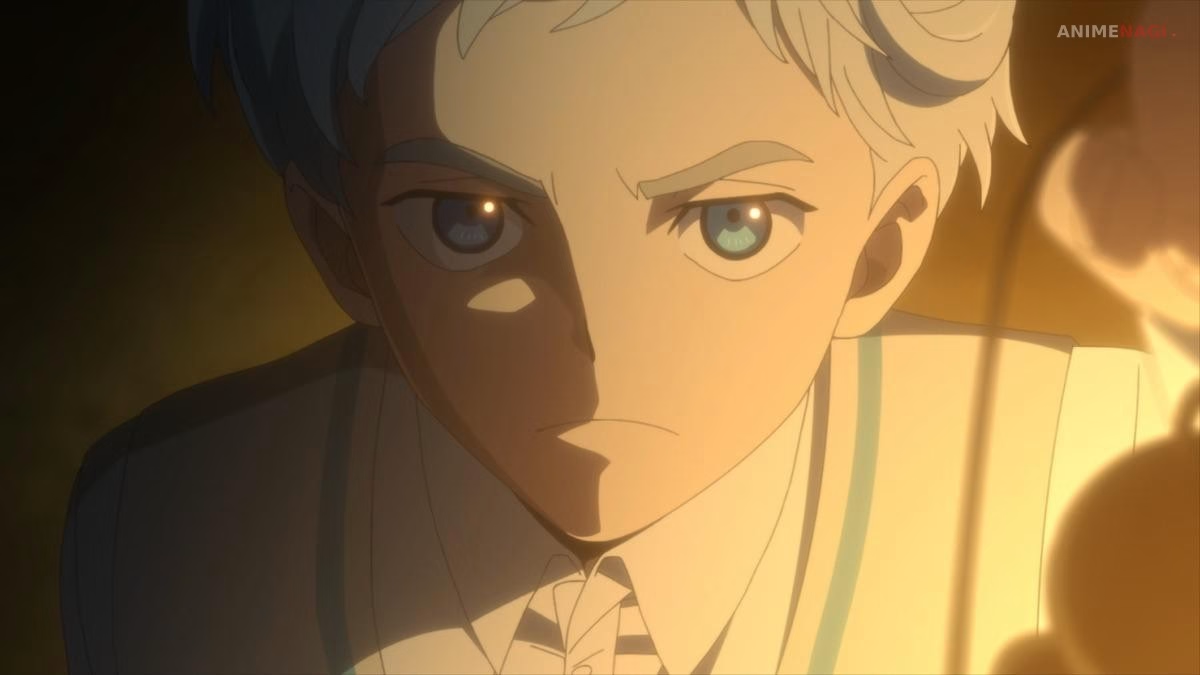
One of the biggest turning points in Season 2 is the return of Norman. Previously believed to be dead, Norman reappears as a significantly changed character with a more ruthless approach.
Norman leads a group dedicated to eliminating demons entirely. His plan involves using biological weapons to wipe out demon society. This contrasts sharply with Emma’s belief in coexistence.
This conflict creates a central moral divide in the story. Emma wants to save everyone, including friendly demons, while Norman prioritizes human survival above all else. Ray often finds himself caught between these perspectives.
Norman’s transformation reflects the harsh realities of the world they live in. His experiences have made him more pragmatic, even if it means sacrificing his ideals. This adds emotional weight to his character.
The Major Differences From the Manga
One of the most discussed aspects of Season 2 is how much it diverges from the original manga. Entire arcs, including the highly anticipated Goldy Pond storyline, were removed from the adaptation.
These changes significantly affect the pacing of the story. Instead of gradually building toward major conflicts, the anime compresses events into a much shorter timeframe. This results in less character development and fewer detailed world-building elements.
Key characters and plotlines from the manga are either reduced or omitted entirely. This creates gaps in the narrative, making certain developments feel rushed or underexplored.
The decision to alter the story also impacts its emotional payoff. Moments that were originally built up over multiple chapters are resolved quickly, reducing their impact. This is a major reason why the season received mixed reactions.
The Final Conflict and Resolution
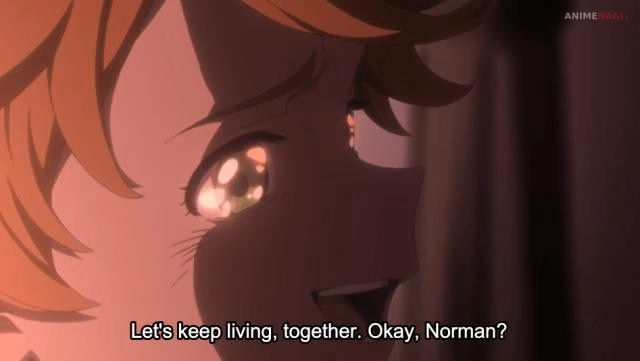
The climax of Season 2 focuses on resolving the conflict between humans and demons. Emma ultimately chooses a path that aligns with her belief in coexistence rather than destruction.
Through Mujika’s ability, a solution is found that allows demons to survive without consuming humans. This creates the possibility of peace between the two species. Emma’s determination plays a crucial role in achieving this outcome.
At the same time, the system of human farming begins to collapse. The children’s actions, combined with external factors, lead to a major shift in the world’s structure. This marks the end of the central conflict.
However, the resolution is presented very quickly compared to the manga. Important events are summarized rather than shown in detail, which reduces the emotional depth of the ending.
The Controversial Ending Explained
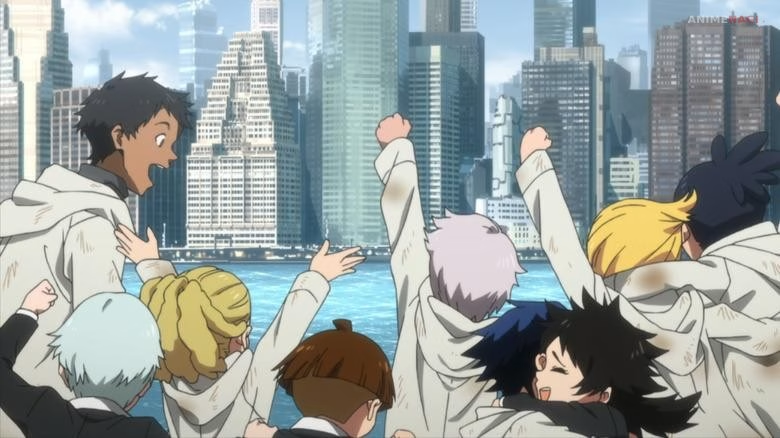
The ending of Season 2 is one of the most debated aspects of the series. Instead of fully adapting the remaining story, the anime uses a montage-style sequence to conclude major plot points.
This sequence shows the children’s journey to the human world and the eventual resolution of their struggles. While it provides closure, it lacks the detail and development that fans expected.
Emma’s goal of saving everyone is technically achieved, but the process feels condensed. The emotional journey that led to this outcome is not explored as deeply as it could have been.
Despite this, the ending still reflects the core theme of hope. Emma’s belief in a better future ultimately shapes the outcome, even if the execution feels rushed.
Why Season 2 Divided Fans
Season 2’s reception was heavily influenced by its departure from the manga. Fans who were familiar with the source material were disappointed by the removal of key arcs and characters.
The pacing is another major issue. By compressing a large portion of the story into a single season, the anime sacrifices depth for speed. This makes it harder for viewers to connect with the characters and their struggles.
However, some viewers appreciated the broader themes and the attempt to provide a complete ending. The idea of coexistence and breaking cycles of violence remains compelling.
The divide in reception highlights the importance of adaptation choices. While the core ideas of the story are still present, the execution significantly affects how they are perceived.
Key Themes and Takeaways
Season 2 continues to explore themes introduced in the first season while expanding their scope. Survival remains a central focus, but it is now tied to larger questions about morality and coexistence.
Emma’s character embodies the theme of hope. Her refusal to accept a world built on suffering drives the narrative forward. This contrasts with characters like Norman, who represent a more pragmatic approach.
The series also examines the idea of breaking cycles. The system of human farming is shown as a long-standing structure that can only be changed through difficult choices and sacrifices.
These themes give the story depth, even if the pacing issues limit their full impact. They ensure that Season 2 remains meaningful despite its flaws.
The Promised Neverland Season 2 is a complex continuation that expands the story beyond its original premise while taking significant creative risks. It introduces new ideas, explores deeper themes, and attempts to provide closure to the characters’ journey.
However, its departure from the manga and rushed pacing prevent it from reaching the same level of impact as Season 1. Key moments feel condensed, and important storylines are left underdeveloped.
Despite these issues, the season still offers a complete narrative with a clear resolution. Emma’s journey and her belief in coexistence remain at the heart of the story.
For viewers looking to understand what happens after the escape, Season 2 provides answers, even if they come in a simplified form. It stands as a divisive but important chapter in The Promised Neverland’s story.
Another important aspect of Season 2 is how it reshaped the legacy of The Promised Neverland. While Season 1 is widely regarded as one of the strongest psychological anime arcs, the second season created a lasting divide among fans. Many viewers now recommend experiencing the story through the manga to fully understand its intended depth and pacing.
At the same time, Season 2 still provides a complete narrative for those who prefer an anime-only experience. This contrast between adaptation and source material has become a defining part of the series’ long-term reception.