Wonder Egg Priority became one of anime’s most talked-about psychological dramas because of its emotional storytelling, surreal visuals, and layered symbolism. However, the anime’s final episodes also left many viewers confused, especially regarding the reveal involving the “two Ai’s.” By the time the story introduced parallel worlds, artificial intelligence, and alternate versions of characters, many fans struggled to understand what was actually happening.
The confusion mainly centers around Ai Ohto and the alternate version of herself introduced near the end of the series. At the same time, Wonder Egg Priority also heavily explores artificial intelligence through characters like Frill and Neiru, adding another meaning to the name “Ai.” These overlapping concepts make the finale difficult to interpret without closely examining the show’s themes.
Despite the complicated presentation, the truth behind the two Ai’s is closely tied to Wonder Egg Priority’s larger ideas about identity, trauma, regret, and self-worth. Here’s a simple breakdown of what the anime was trying to say and what the two Ai’s actually represent.
Who Is the “Second Ai” in Wonder Egg Priority?
The second Ai introduced late in the series is essentially a parallel-world version of Ai Ohto. During Episode 12, Ai enters the Egg World and encounters another version of herself who committed suicide in a different timeline. This alternate Ai is often referred to by fans as “Parallel Ai.”
Unlike the main Ai, this version could not overcome her emotional struggles and eventually drowned herself. Her trauma and despair manifest within the Egg World just like the other girls Ai had previously tried to save throughout the series.
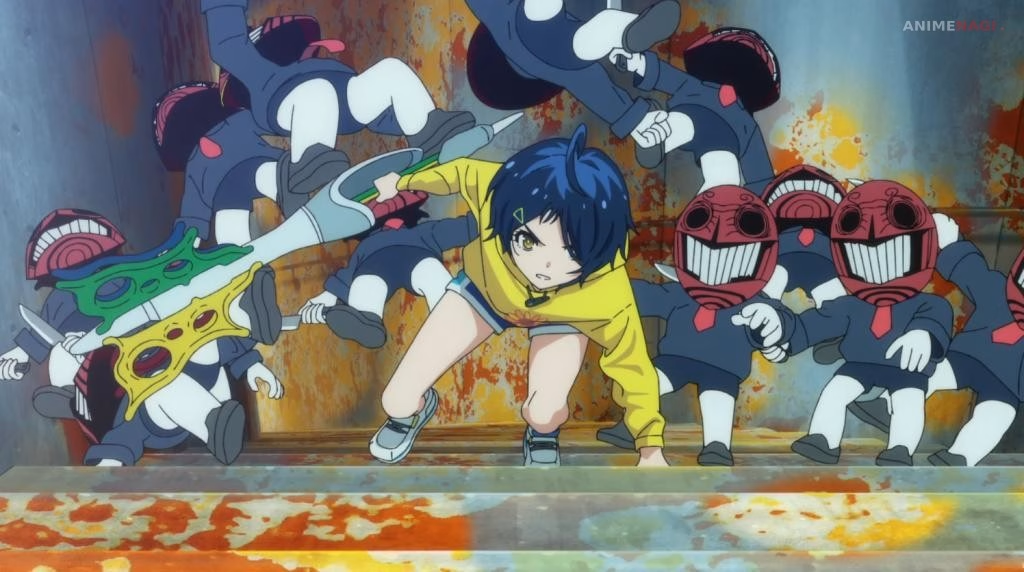
The appearance of Parallel Ai changes the emotional direction of the anime because it forces the main Ai to confront a darker possibility of herself. Instead of simply saving strangers, she now faces a version of her own pain and insecurities directly.
This twist also reinforces one of Wonder Egg Priority’s core themes: small emotional differences and life experiences can drastically change a person’s fate. The anime suggests that under different circumstances, Ai herself could have followed the same tragic path.
Why Parallel Ai Exists in the Story
Parallel Ai exists mainly as a narrative mirror for the protagonist. Throughout the series, Ai struggles with guilt over Koito’s death, social isolation, bullying, and uncertainty surrounding her teacher Mr. Sawaki. While she gradually learns to confront those emotions, Parallel Ai represents what might happen if those feelings completely consumed her.
This is why Parallel Ai’s Wonder Killer takes the form of Mr. Sawaki. The alternate version of Ai internalized her fear, confusion, and distrust toward him so deeply that those emotions became psychologically destructive.
The main Ai survives because she slowly learns to express her emotions honestly and reconnect with other people. Parallel Ai, meanwhile, symbolizes emotional surrender and hopelessness. The confrontation between the two characters is less about physical conflict and more about self-acceptance.
In many ways, Episode 12 functions as Ai’s final emotional test. She cannot truly move forward until she faces the version of herself that gave up entirely.
The Double Meaning Behind “Ai”
One reason the finale confuses viewers is because “Ai” carries multiple meanings in Wonder Egg Priority. On the surface, Ai is simply the protagonist’s name. However, the anime also repeatedly explores artificial intelligence, creating an intentional double meaning tied to the term “A.I.”
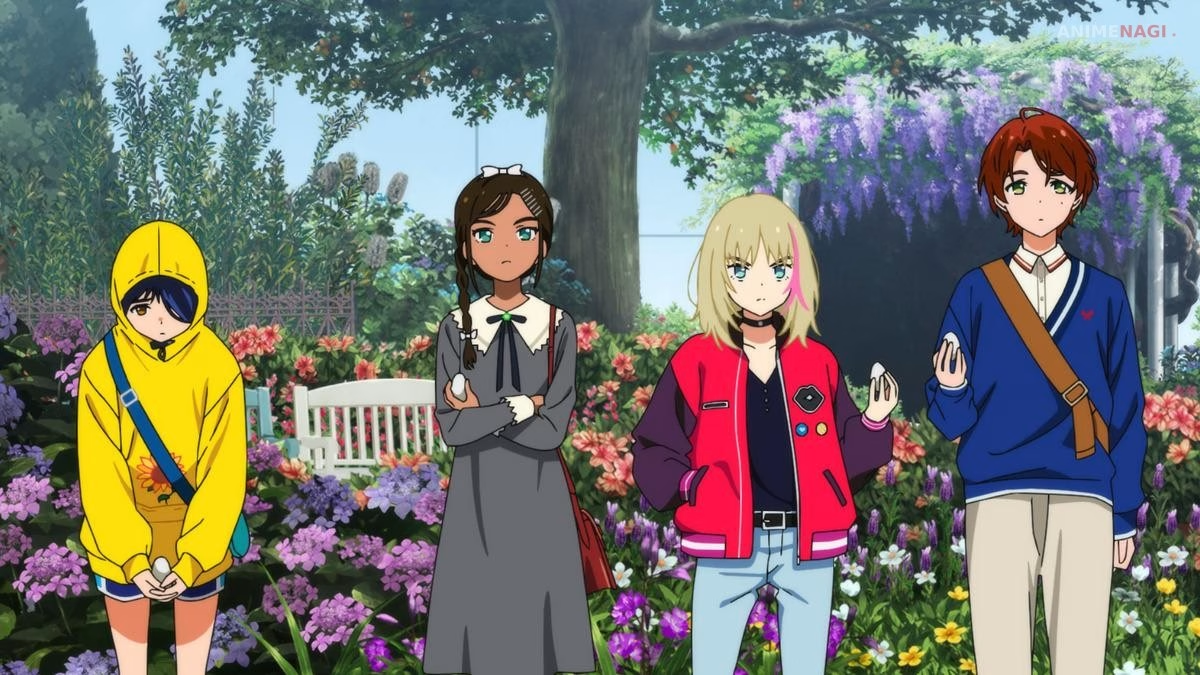
This becomes especially important after Episode 11 introduces Frill, an artificial human created by Acca and Ura-Acca. Frill is essentially an advanced AI designed to emulate human emotion and behavior. However, because she lacks proper emotional understanding and moral development, her jealousy and loneliness become destructive.
The anime later reveals that Neiru is also an artificial intelligence created in Airu’s image. This reveal further blurs the line between human identity and artificial existence.
By combining Ai Ohto’s emotional journey with the artificial intelligence storyline, Wonder Egg Priority creates a broader discussion about what truly defines humanity. Is it memory, emotion, empathy, or personal connection? The “two Ai’s” concept reflects this thematic overlap between human identity and artificial emotion.
How Frill Connects to the Two Ai’s
Frill’s introduction is one of the most controversial parts of Wonder Egg Priority because it dramatically changes the scale of the story. Initially, the anime focused heavily on personal trauma, bullying, abuse, and suicide. However, Frill introduces science-fiction elements involving artificial humans and parallel realities.
Frill indirectly connects to the “two Ai’s” because she represents distorted emotional understanding. Unlike Ai Ohto, who slowly learns empathy through pain and friendship, Frill processes emotions possessively and destructively.
Her jealousy toward Azusa leads to tragedy, and Acca later believes Frill somehow influences the rising number of teenage suicides. This idea connects Frill to the Egg World itself and the emotional suffering experienced by the girls trapped there.
Parallel Ai’s despair therefore reflects the larger emotional corruption spreading through the series. Frill is not simply a villain controlling events directly. Instead, she symbolizes toxic emotional isolation taken to its extreme.
This thematic connection explains why the anime ties together artificial intelligence, parallel selves, and emotional trauma within the same narrative structure.
What the Parallel World Twist Really Means
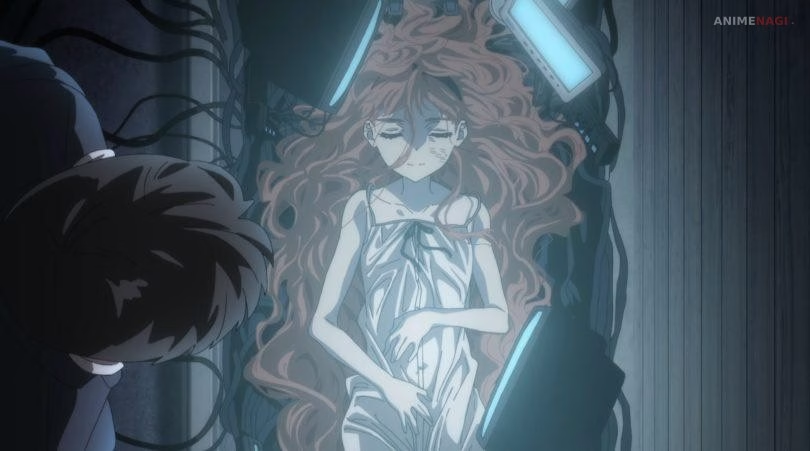
The parallel-world reveal in Episode 13 complicates the story further by explaining that many of the girls “saved” through the Wonder Egg system were actually replaced by alternate-world versions of themselves.
This means Ai did not literally resurrect the original Koito. Instead, timeline shifts allowed another version of Koito to appear in her world. However, this Koito lacks the same memories and experiences, emphasizing that trauma and identity cannot simply be erased through magical solutions.
The twist reinforces the anime’s central message that grief cannot be undone perfectly. Ai’s emotional growth comes not from truly reversing death, but from learning how to live despite loss and uncertainty.
Parallel Ai’s sacrifice also becomes important here. She gives up her eye to protect the main Ai during the confrontation with Frill’s final agent. Symbolically, this represents Ai accepting and integrating the painful parts of herself rather than denying them.
Even though the mechanics of the parallel worlds remain vague, the emotional symbolism behind them remains relatively consistent.
Why So Many Fans Found the Ending Confusing
Wonder Egg Priority’s ending became divisive partly because the anime introduced major concepts too late in the story. Frill, artificial intelligence, parallel worlds, and timeline replacement all appear heavily during the final episodes rather than being developed gradually from the beginning.
This sudden expansion of the narrative scope made many viewers feel disconnected from the grounded emotional storytelling that initially attracted them to the series. The anime shifted from psychological drama into abstract science-fiction mystery very quickly.
Production problems also affected the final episodes significantly. Industry reports noted scheduling issues and production struggles during the anime’s later stages, which likely contributed to the uneven pacing and lack of clarity surrounding the ending.
As a result, some symbolic ideas feel underexplained. The anime often prioritizes emotional metaphor over detailed logical explanations, which can make the story feel ambiguous.
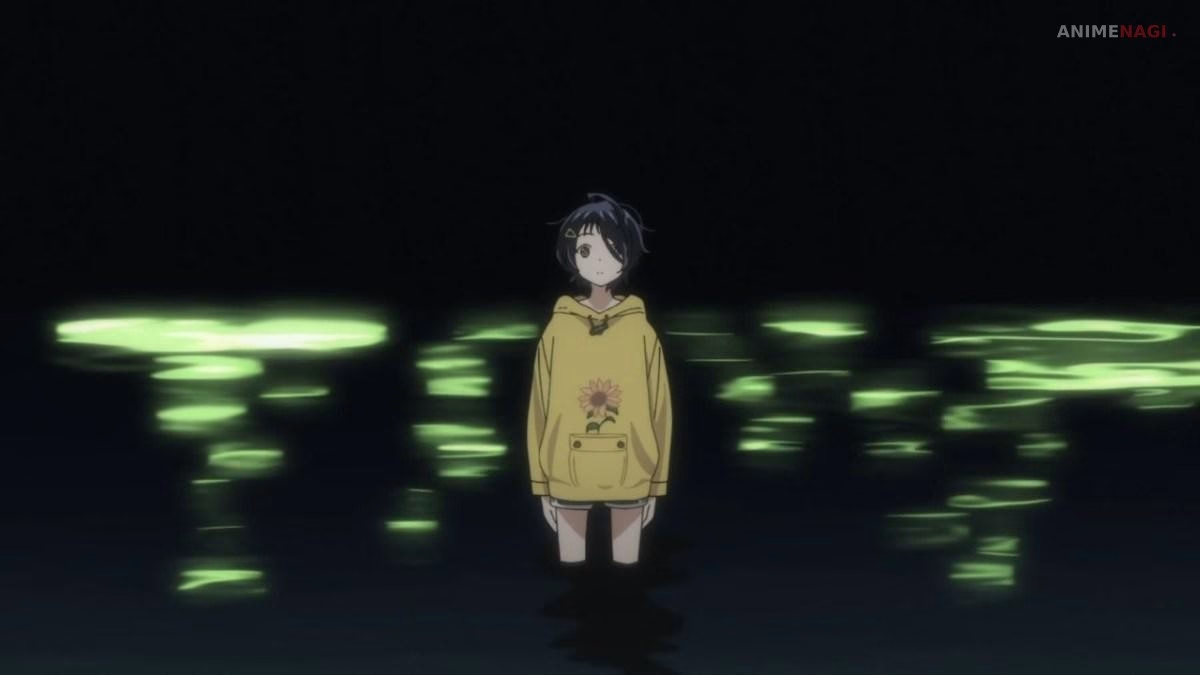
Still, many fans appreciate the emotional themes behind the finale even if the exact mechanics remain difficult to fully understand.
The Emotional Meaning Behind the Two Ai’s
At its heart, the “two Ai’s” storyline is about confronting self-hatred, regret, and emotional vulnerability. Parallel Ai represents the version of oneself consumed entirely by despair, while the main Ai represents the possibility of healing through human connection.
This duality reflects the broader message of Wonder Egg Priority. The series repeatedly emphasizes that trauma isolates people emotionally, but empathy and understanding can create pathways toward recovery.
The use of parallel selves and artificial intelligence expands this idea further. Both concepts question what truly makes someone emotionally “real.” Characters like Frill and Neiru blur the boundaries between artificial emotion and genuine humanity.
Meanwhile, Ai’s interaction with her alternate self forces her to acknowledge her own pain honestly instead of avoiding it.
The anime may leave many details unresolved, but emotionally, the meaning behind the two Ai’s remains fairly clear: healing begins when people face the darkest versions of themselves rather than pretending those feelings do not exist.