The third match of the Joint Training Arc in My Hero Academia became one of the most tactical and chaotic battles between Class 1-A and Class 1-B. Featuring Shoto Todoroki, Tenya Iida, Mezo Shoji, and Mashirao Ojiro against Tetsutetsu Tetsutetsu, Juzo Honenuki, Pony Tsunotori, and Sen Kaibara, the battle initially looked heavily tilted in favor of Class 1-A because of Todoroki’s overwhelming power. However, Class 1-B gradually turned the fight around through coordination, battlefield manipulation, and strategic targeting.
Unlike earlier matches where one side clearly dominated, this confrontation constantly shifted momentum. Todoroki’s flames and ice created devastating pressure, but Class 1-B repeatedly disrupted his team’s formation and isolated individual fighters. The match eventually ended in a draw, but many viewers felt Class 1-B psychologically outplayed Todoroki’s team despite not securing a complete victory.
What made the fight especially important was how it exposed the limits of relying too heavily on raw power. Todoroki remained one of the strongest students on the field, yet Class 1-B successfully neutralized much of his advantage through teamwork and tactical planning. Let’s break down why Todoroki’s team struggled, how Class 1-B controlled the battlefield, and why the match became one of the smartest fights in the Joint Training Arc.
Why Todoroki’s Team Looked Strong at the Start
At the beginning of the battle, Class 1-A appeared to have a major advantage because of Todoroki’s overwhelming offensive power. His Half-Cold Half-Hot Quirk gave his team immediate battlefield control, allowing him to create massive ice structures that restricted enemy movement almost instantly. Combined with Iida’s speed and Shoji’s scouting abilities, the team looked balanced and highly dangerous.
Todoroki also entered the battle with growing confidence after obtaining his provisional hero license and continuing to improve his use of fire abilities. Earlier arcs showed him struggling emotionally with his flames because of his relationship with Endeavor, but during the Joint Training Arc he began using both sides of his Quirk more freely. This made him far more versatile than before.
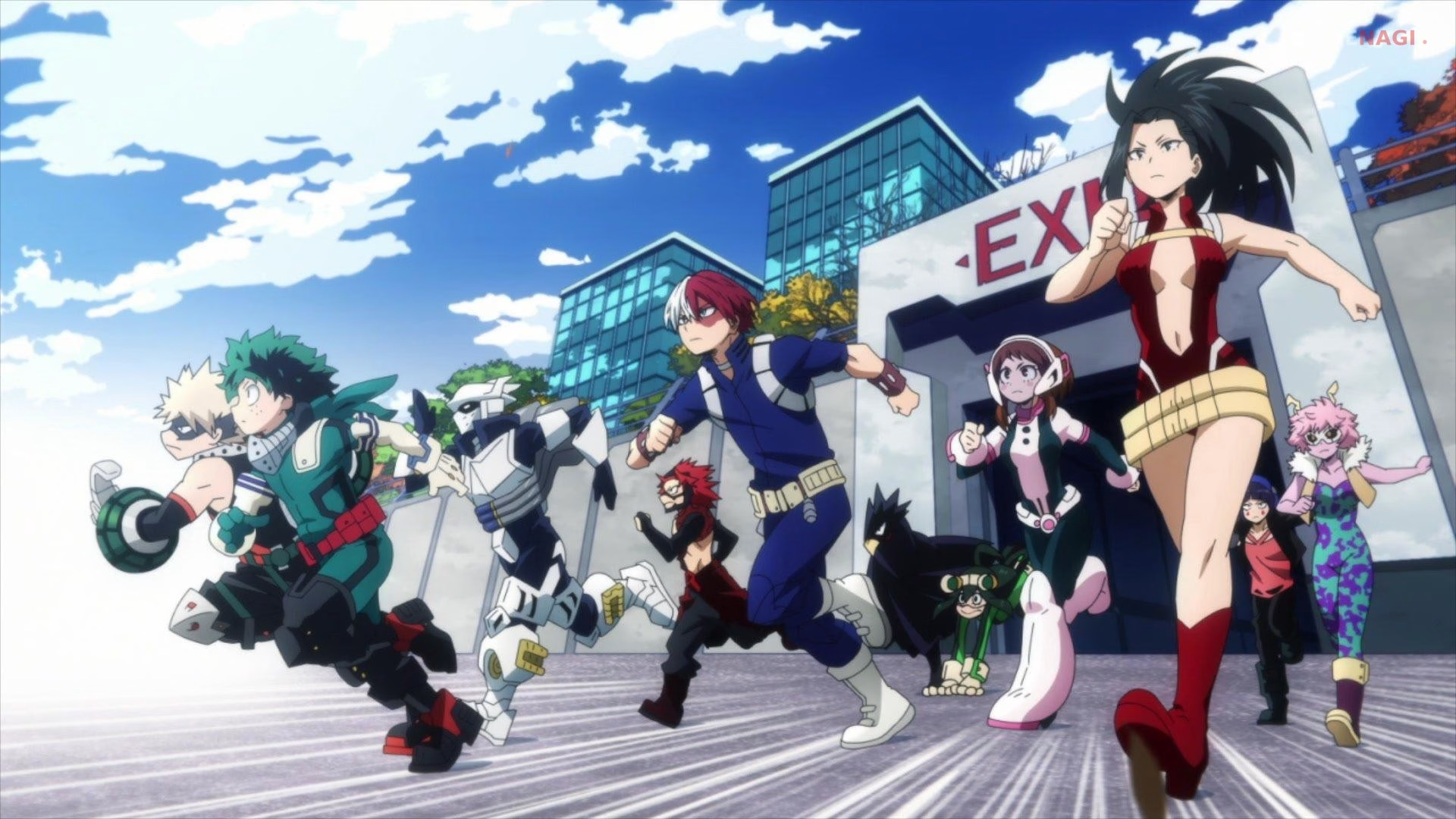
Class 1-A initially believed overwhelming force would quickly corner Class 1-B. However, that assumption played directly into Juzo Honenuki’s strategy. Rather than confronting Todoroki head-on immediately, Class 1-B focused on disrupting formations and turning the environment itself into a weapon.
Juzo Honenuki’s Softening Quirk Changed the Entire Battle
Juzo Honenuki became the most important tactical player on Class 1-B’s team because his Softening Quirk completely countered Todoroki’s battlefield control. According to the Joint Training Battle summaries, Juzo softened Todoroki’s massive ice structures, turning what should have been defensive terrain into unstable traps. This instantly disrupted Class 1-A’s momentum.
Instead of benefiting from Todoroki’s ice, his team suddenly found themselves trapped and separated. Iida became immobilized within softened terrain, while Todoroki was forced into direct confrontation with Tetsutetsu. This separation was exactly what Class 1-B wanted because it prevented Class 1-A from coordinating effectively.
Juzo’s strategy also exposed one of Todoroki’s biggest weaknesses during this stage of the series. Todoroki often relied on large-scale attacks to control fights quickly, but Softening neutralized that advantage entirely. Rather than overpowering Todoroki directly, Juzo manipulated the environment to force Class 1-A into unfavorable positions.
The effectiveness of this strategy demonstrated why many teachers viewed Juzo as one of Class 1-B’s smartest students. His ability to adapt against overwhelming power became one of the defining elements of the battle.
Why Tetsutetsu Was the Perfect Counter to Todoroki
Tetsutetsu Tetsutetsu played a critical role because his Steel Quirk allowed him to endure Todoroki’s attacks longer than most opponents could. Instead of avoiding Todoroki’s fire and ice, Tetsutetsu charged directly through them with overwhelming aggression. According to the Joint Training battle recap, Tetsutetsu trained his heat resistance extensively, even strengthening himself by enduring high temperatures repeatedly. This created a brutal endurance battle.
Todoroki’s ice attacks initially slowed Tetsutetsu, but his steel body prevented severe damage. Once Todoroki shifted to fire, Tetsutetsu adapted again by enduring the heat and continuing close-range pressure. His refusal to retreat forced Todoroki into prolonged combat instead of quick domination.
The psychological impact of this fight was also important. Todoroki was used to overwhelming opponents with raw Quirk power, but Tetsutetsu continuously pushed through attacks that should have ended the battle. This forced Todoroki to increase his flames to dangerous levels, eventually harming himself in the process.
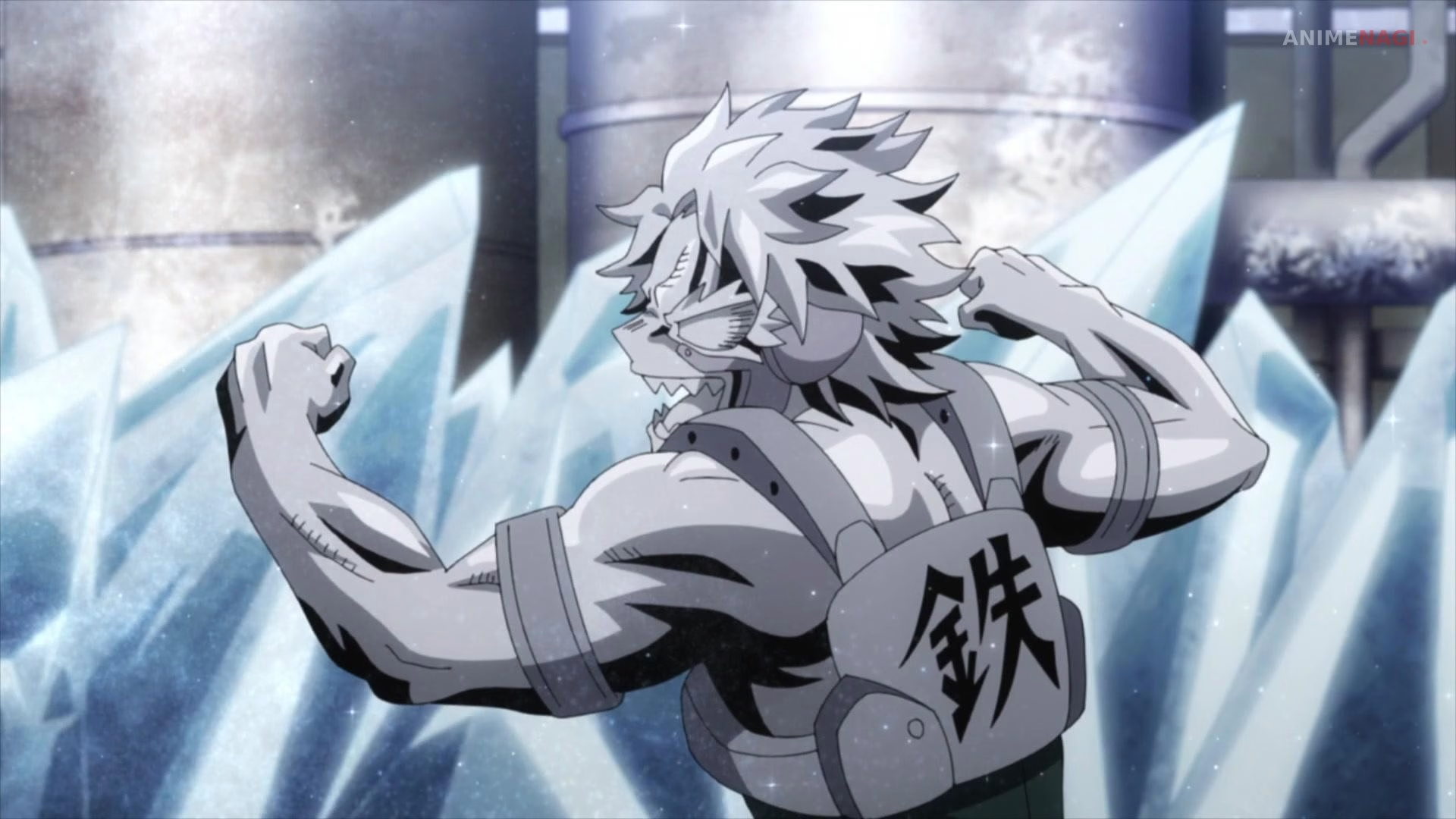
Tetsutetsu’s relentless fighting style therefore achieved exactly what Class 1-B needed. Even though he did not defeat Todoroki outright, he prevented Todoroki from supporting the rest of his team effectively.
Pony Tsunotori and Sen Kaibara Controlled the Remaining Fight
While Todoroki and Tetsutetsu fought directly, Pony Tsunotori and Sen Kaibara focused on disrupting Class 1-A’s remaining members. Pony’s Horn Cannon Quirk allowed her to launch and remotely control her horns at high speed, creating constant pressure from long range. This forced Shoji and Ojiro into defensive reactions throughout the match.
Sen Kaibara’s Spiral Quirk also proved surprisingly effective during close combat exchanges. His rotating attacks created additional pressure whenever Class 1-A attempted regrouping. Combined with Juzo’s battlefield manipulation, these attacks prevented Class 1-A from stabilizing their formation.
Pony ultimately became one of the match’s most important players. Near the end of the battle, she successfully captured Todoroki and escaped into the air, preventing Class 1-A from regaining momentum before the timer expired.
This final move reflected Class 1-B’s overall strategy perfectly. Instead of focusing purely on defeating opponents physically, they prioritized positioning, timing, and objective control. That tactical discipline allowed them to neutralize stronger individual fighters repeatedly.
Why Iida Could Not Fully Save the Match
Tenya Iida delivered one of the strongest individual performances for Class 1-A during the match. After activating Recipro Turbo, he gained tremendous speed and managed to break free from Juzo’s softened terrain. His mobility allowed him to capture Sen Kaibara and temporarily shift momentum back toward Class 1-A. However, even Iida’s speed could not completely reverse the situation.
Class 1-B’s layered strategy had already created too much battlefield chaos. By the time Iida attempted regrouping, Todoroki was exhausted from fighting Tetsutetsu while Pony controlled aerial positioning. The constant disruption prevented Iida from fully coordinating rescues or counterattacks.
The match therefore highlighted an important limitation within Class 1-A’s approach. Although their individual fighters were extremely strong, they struggled maintaining consistent teamwork once separated. Class 1-B exploited this weakness repeatedly throughout the battle.
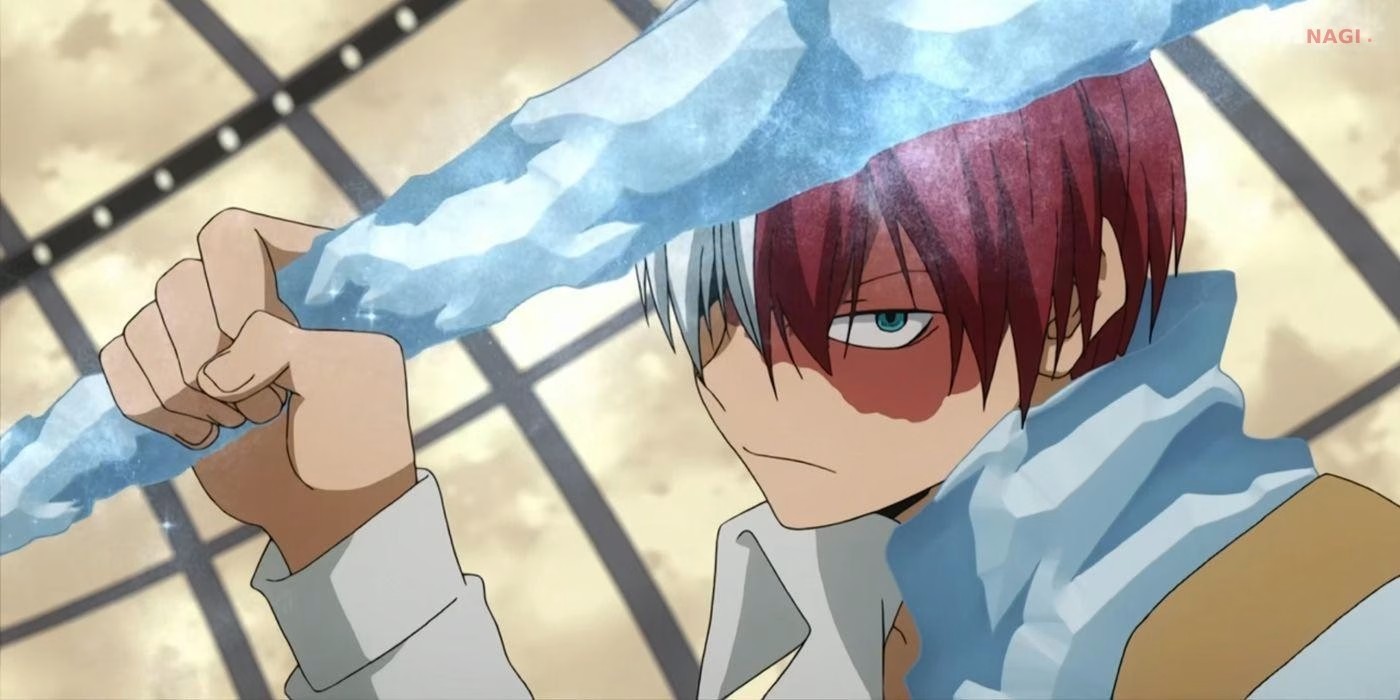
Iida’s performance still earned praise afterward because he adapted quickly under pressure. However, the overall team structure never recovered fully after Juzo’s initial battlefield manipulation.
Why the Match Ended in a Draw
The battle officially ended in a draw after the time limit expired with one captured opponent on each side. Although neither team achieved complete victory, the outcome reflected how evenly matched the confrontation became. According to the Joint Training Arc recap, Pony escaped with Todoroki while Iida captured Kaibara, leaving both teams unable to secure additional captures before time ran out.
Despite the tie, many characters acknowledged that Class 1-B’s strategy had been extremely effective. Even Aizawa admitted during the Joint Training Arc that Class 1-B generally demonstrated stronger teamwork and tactical preparation throughout the exercise. Their ability to coordinate Quirks efficiently often compensated for the overwhelming power advantages held by certain Class 1-A students.
The draw also carried important character development for Todoroki. He realized afterward that relying too heavily on immediate large-scale attacks created openings opponents could exploit. This lesson became important later as he continued refining his fighting style and learning more controlled fire techniques from Endeavor.
Why Class 1-B Overpowered Todoroki’s Team Strategically
Class 1-B succeeded strategically because they approached the battle as a coordinated unit instead of relying on individual dominance. Every member contributed toward controlling positioning, isolating opponents, and disrupting teamwork. Their Quirks complemented each other naturally, allowing them to respond flexibly whenever the fight shifted direction.
By comparison, Class 1-A relied heavily on Todoroki’s overwhelming offensive power early in the match. Once Juzo neutralized that advantage through Softening, the team struggled to adapt quickly enough. Although individual fighters like Iida performed well, the overall coordination remained weaker than Class 1-B’s structured strategy.
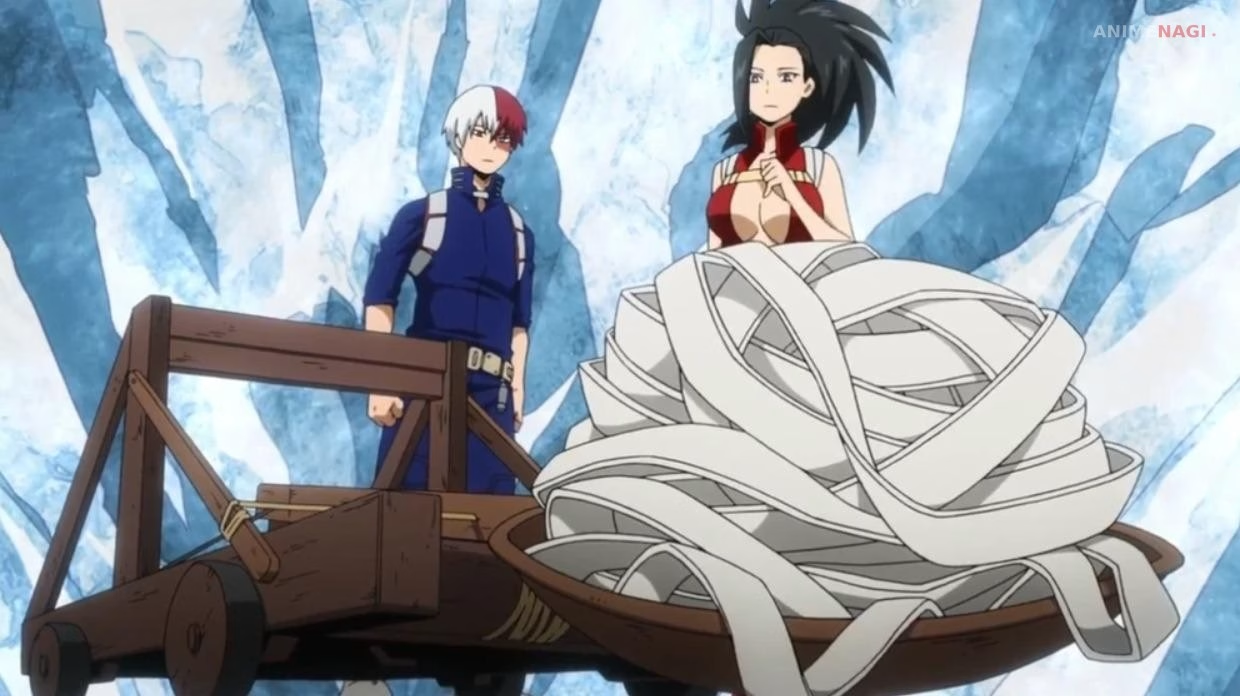
The match ultimately reinforced one of My Hero Academia’s most important themes: hero combat is not decided by strength alone. Tactical planning, teamwork, and adaptability can overcome even extremely powerful Quirks when executed correctly.
That is why Todoroki’s team, despite having some of the strongest students on the battlefield, found themselves strategically overpowered by Class 1-B.
Another key takeaway from this battle is how it highlights Shoto Todoroki’s ongoing character development rather than portraying him as a finished hero. Despite his immense power and improved control over both fire and ice, the fight shows that he is still learning how to balance offense with strategy and teamwork. His tendency to rely on large-scale attacks creates opportunities for opponents like Juzo Honenuki to counter him effectively, forcing him into situations where raw strength is no longer enough.
At the same time, his intense clash with Tetsutetsu Tetsutetsu pushes him to test his limits and better understand the risks of overusing his flames. This moment becomes important for his growth because it reinforces the idea that being a top hero requires more than just powerful abilities. It requires adaptability, awareness, and the ability to work seamlessly within a team, something Todoroki continues to improve as the series progresses.