The ending of Tokyo Revengers Season 1 left fans stunned with a mix of emotional payoff and a jaw-dropping cliffhanger. Throughout the season, Takemichi Hanagaki struggles to rewrite the past and save his loved ones, especially Hinata Tachibana, from a tragic fate tied to the Tokyo Manji Gang. By the time the final episode arrives, it seems like his efforts may have finally worked.
However, the anime pulls off one of its most stunning twists in the closing moments. Just when the timeline appears to be fixed, a sudden betrayal changes everything, leaving Takemichi and viewers in complete disbelief. This ending is not just a dramatic moment but a crucial turning point that redefines the stakes of the story.
Let’s break down what really happened in the Tokyo Revengers Season 1 ending, how the timeline changed, and what it means for the future of Takemichi’s mission.
The Final Timeline: Did Takemichi Finally Save Everyone?
By the end of Season 1, Takemichi believes he has successfully altered the timeline for the better. After preventing key tragedies in the past, including conflicts within the Tokyo Manji Gang, he returns to the present hoping for a peaceful outcome.
Initially, everything seems perfect. Hinata is alive, which was Takemichi’s primary goal from the very beginning. This moment represents the emotional payoff for all his struggles, failures, and repeated time leaps. It gives both Takemichi and the audience a sense of closure.
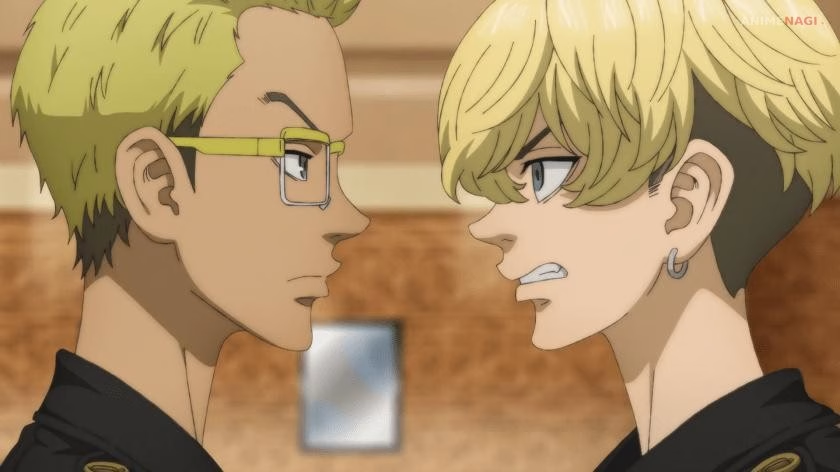
However, this “happy ending” quickly begins to feel uneasy. The tone shifts as Takemichi starts noticing that things are not entirely as they should be. While some outcomes have improved, the overall structure of the future has changed in unexpected ways.
This is where the series reminds viewers that altering the past is never simple. Every action Takemichi takes creates ripple effects, and not all of them lead to positive results.
One of the most important revelations in the ending revolves around Kisaki Tetta. Throughout Season 1, Kisaki has been portrayed as a manipulative and calculating figure who always finds a way to rise to power, no matter how much Takemichi interferes.
The ending confirms that Kisaki remains the central antagonist across timelines. Even when Takemichi successfully changes events in the past, Kisaki adapts and repositions himself to maintain influence over the Tokyo Manji Gang.
This highlights a critical theme in Tokyo Revengers. Kisaki is not just a villain but a constant variable in every timeline. His intelligence and strategic thinking allow him to exploit new circumstances, making him incredibly difficult to defeat.
In the final moments, Kisaki’s actions take a direct and violent turn, showing that he is willing to eliminate anyone who stands in his way. This escalation raises the stakes significantly and makes it clear that Takemichi’s fight is far from over.
The Surprising Cliffhanger: Who Shot Takemichi?
The biggest moment in the Season 1 finale is undoubtedly the surprising cliffhanger. Takemichi, now in the future, comes face to face with Kisaki. The confrontation is tense, filled with unresolved questions and emotional weight.
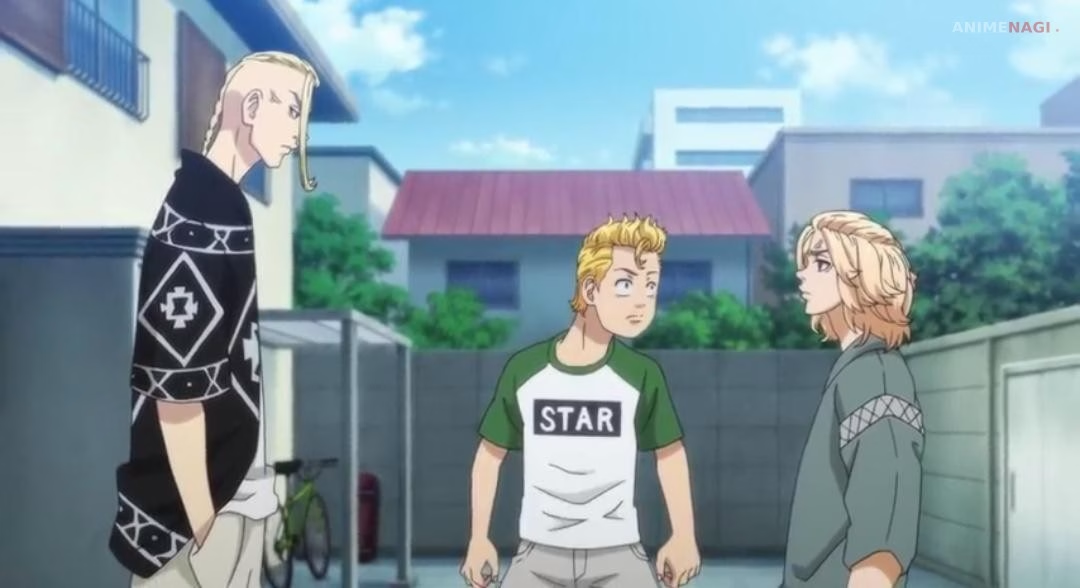
Just when it seems like Takemichi might finally get answers, Kisaki pulls out a gun and shoots him. This moment completely flips the narrative, turning what looked like a successful mission into another failure.
The scene ends abruptly, leaving Takemichi’s fate uncertain. This cliffhanger is designed to startle viewers and ensure that the story continues with even higher stakes.
What makes this moment so impactful is its timing. It comes right after a perceived victory, reinforcing the idea that Takemichi’s journey is far more complicated than simply fixing one event in the past.
Another crucial aspect of the ending is the state of Manjiro Sano, also known as Mikey. In the new timeline, Mikey’s character appears significantly different from the one Takemichi knew in the past.
While Takemichi managed to save certain individuals, Mikey’s inner struggles seem to have worsened. This suggests that saving people physically does not necessarily resolve deeper emotional or psychological issues.
Mikey’s transformation is important because he is the heart of the Tokyo Manji Gang. His choices influence the direction of the entire group, and any change in his character can reshape the future dramatically.
The ending hints that Takemichi’s mission is not just about preventing deaths but also about saving Mikey from his darker impulses. This adds a new layer of complexity to the story moving forward.
What the Ending Means for Season 2 and Beyond
The Season 1 ending sets up several key plotlines for the future. First, it establishes that Kisaki remains the primary obstacle in every timeline. Defeating him will require more than just changing isolated events in the past.
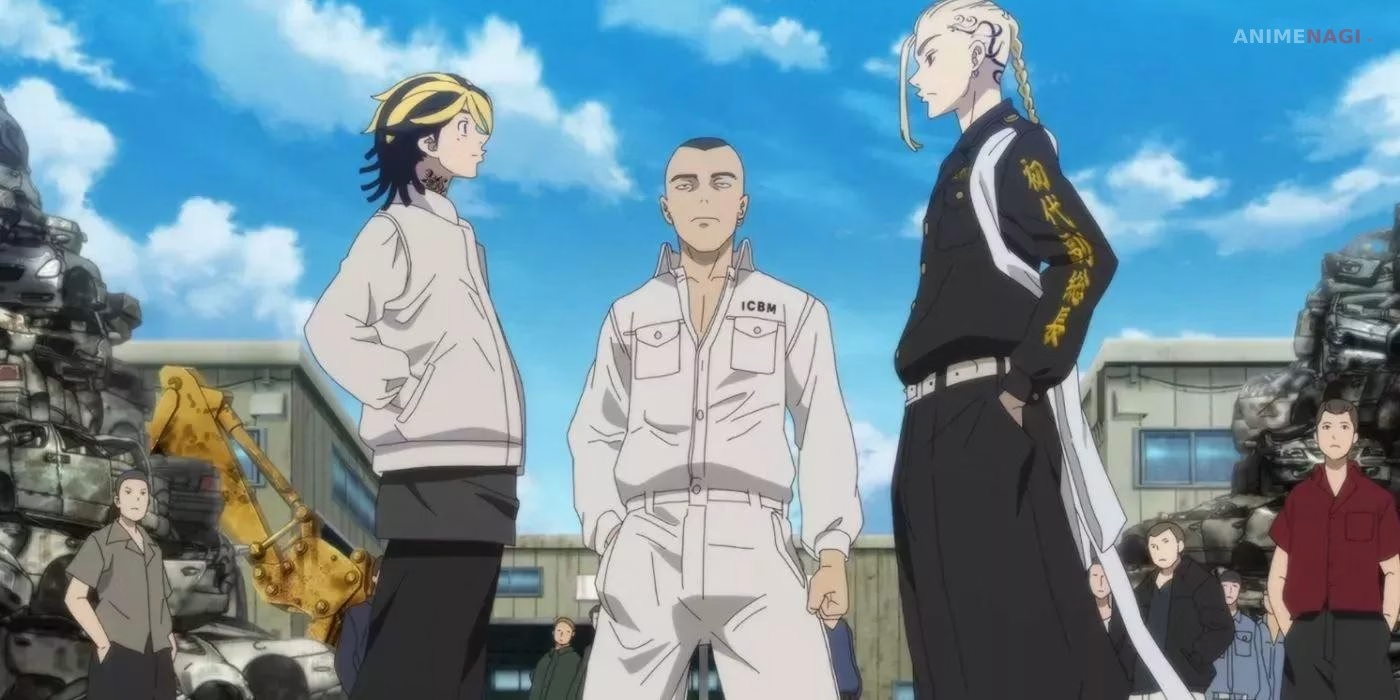
Second, it introduces the idea that the future can never be fully controlled. Even successful changes can lead to unintended consequences, forcing Takemichi to rethink his approach.
Finally, the cliffhanger ensures that Takemichi’s journey continues with greater urgency. He now understands that saving Hinata is only part of the bigger picture. The fate of the entire Tokyo Manji Gang, and especially Mikey, is at stake.
These elements create a strong foundation for the next arcs, promising more intense conflicts, deeper character development, and even higher emotional stakes.
The ending of Tokyo Revengers Season 1 is a perfect example of how to balance resolution with suspense. While Takemichi achieves significant progress, the final twist reminds viewers that his journey is far from complete.
By revealing Kisaki’s continued influence, showcasing Mikey’s transformation, and delivering a stunning cliffhanger, the anime sets the stage for a much larger and more complex story. It reinforces the central theme that changing the past is not enough. Understanding people and their motivations is just as important.
For fans, the ending is both satisfying and frustrating in the best way possible. It answers key questions while raising even bigger ones, ensuring that the story remains compelling as it moves forward.