Anime storytelling thrives on relationships, but the most compelling narratives often emerge when those relationships break down. When friends become rivals, every conflict gains emotional weight because it is rooted in shared history rather than simple opposition. These transformations explore themes like betrayal, ambition, identity, and moral divergence in ways that standard hero-versus-villain stories cannot match.
What makes these rivalries unforgettable is not just the battles themselves, but the journey that leads to them. Characters who once trusted each other are forced into conflict due to trauma, ideology, or personal growth. These shifts often define entire series, turning emotional bonds into the core driving force behind major arcs.
From tragic ideological clashes to subtle emotional distancing, anime has delivered some of the most layered rivalries through duos and trios. Let’s break down five of the most iconic examples where friendship turned into rivalry, and explore what makes each dynamic so powerful.
1. Naruto Uzumaki, Sasuke Uchiha, and Sakura Haruno – A Bond Broken by Revenge and Ideology
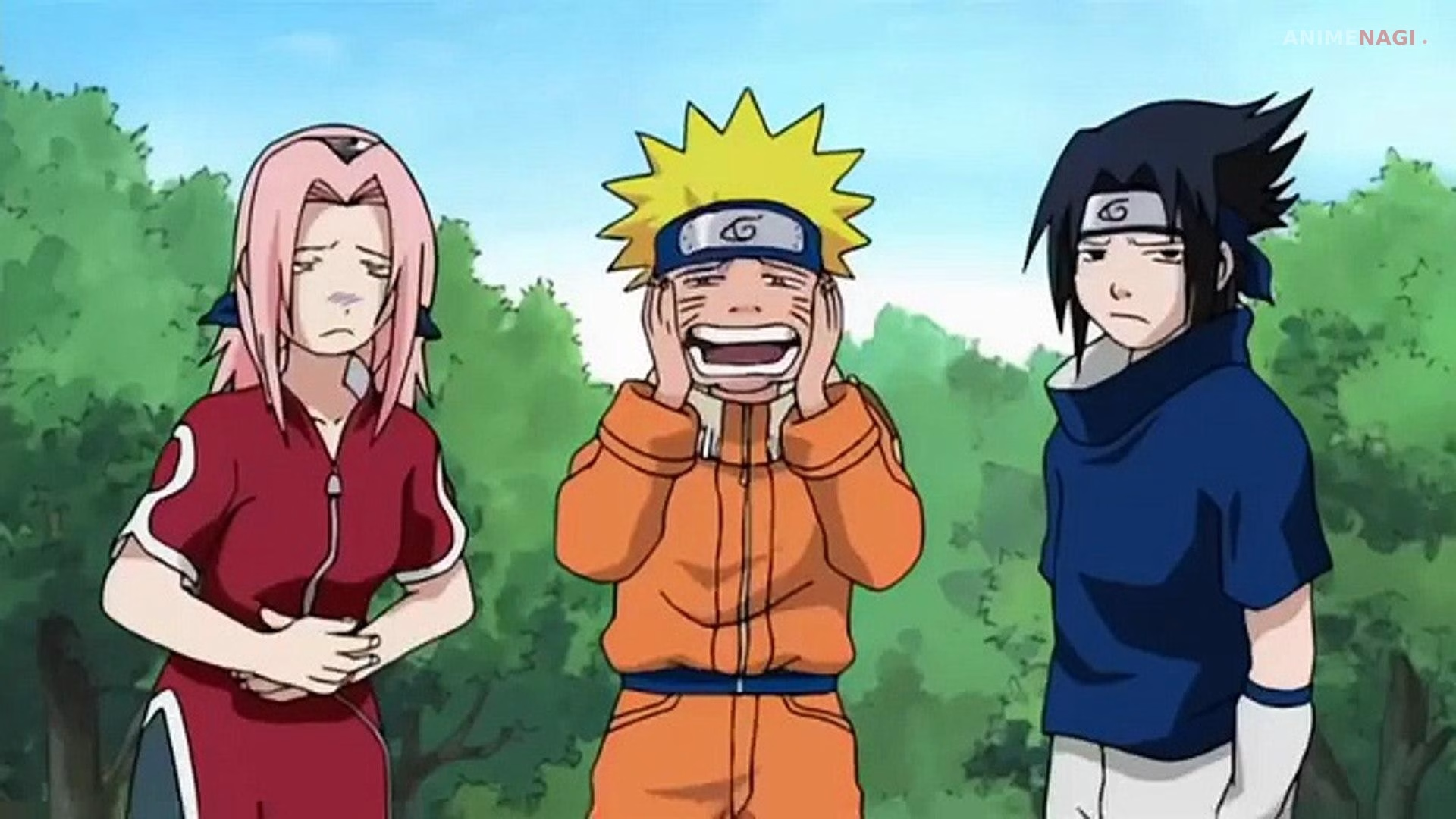
Team 7 from Naruto begins as a classic shonen trio, but their relationship evolves into one of the most emotionally charged rivalries in anime history. Naruto, Sasuke, and Sakura initially function as a unit learning to trust each other through shared missions and hardships. While Sasuke maintains emotional distance, there are clear moments where genuine bonds begin forming.
The turning point arrives when Sasuke abandons the Hidden Leaf Village to pursue power under Orochimaru. His decision is driven by trauma and a singular desire for revenge against his brother Itachi. This moment fractures Team 7 completely, transforming their relationship from cooperation into ideological opposition.
Naruto refuses to accept Sasuke’s departure, believing that bonds are worth saving no matter the cost. Sasuke, however, sees those same bonds as weaknesses holding him back. This philosophical divide becomes the foundation of their rivalry. Their clashes at the Valley of the End symbolize more than physical combat, representing a battle between connection and isolation.
Sakura’s role adds emotional complexity to the trio. She represents the lingering humanity within their broken relationship, constantly trying to bridge the gap between Naruto’s hope and Sasuke’s detachment. Her presence reinforces the emotional stakes of their rivalry.
Over time, Sasuke’s journey grows darker as he targets the shinobi system itself, while Naruto matures into someone who understands pain without abandoning empathy. Their final confrontation is not about victory, but mutual understanding. This resolution elevates their rivalry into one of anime’s most complete character arcs.
2. Eren Yeager, Mikasa Ackerman, and Armin Arlert – Friendship Destroyed by Ideology
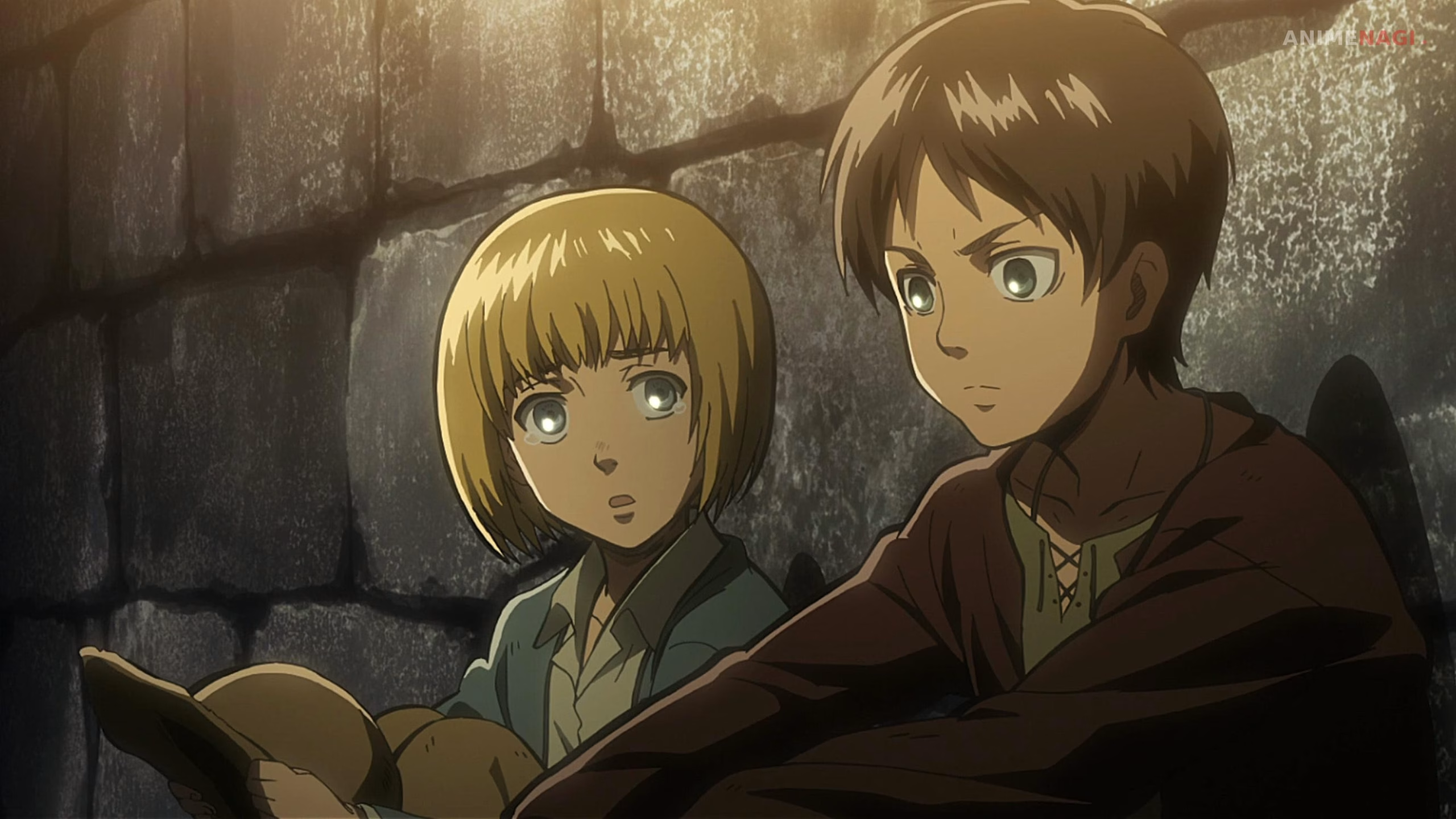
The trio from Attack on Titan represents one of the most tragic transformations from friendship to rivalry. Eren, Mikasa, and Armin grow up together, bound by shared trauma and a dream of freedom beyond the walls. Their early relationship is defined by loyalty, trust, and mutual dependence.
As the story progresses, Eren’s perspective changes drastically after discovering the truth about the world. His decision to initiate the Rumbling marks a complete ideological shift. Instead of seeking freedom alongside his friends, he chooses a path that directly opposes their values.
Mikasa and Armin are forced into an impossible position. They must stop Eren, the person they care about most, in order to save humanity. This creates a deeply personal conflict where every action is emotionally painful. Unlike traditional rivalries, there is no hatred driving their opposition, only necessity.
Armin represents rational morality, believing coexistence is still possible despite overwhelming conflict. Mikasa represents emotional loyalty, struggling to reconcile her love for Eren with the reality of his actions. Eren, on the other hand, embodies absolute determination, prioritizing his version of freedom above all else.
Their final confrontation is devastating because it is rooted in love rather than anger. The trio’s shared history makes every decision heavier, turning their rivalry into one of anime’s most emotionally complex narratives.
3. Gon Freecss and Killua Zoldyck – When Friendship Begins to Fracture
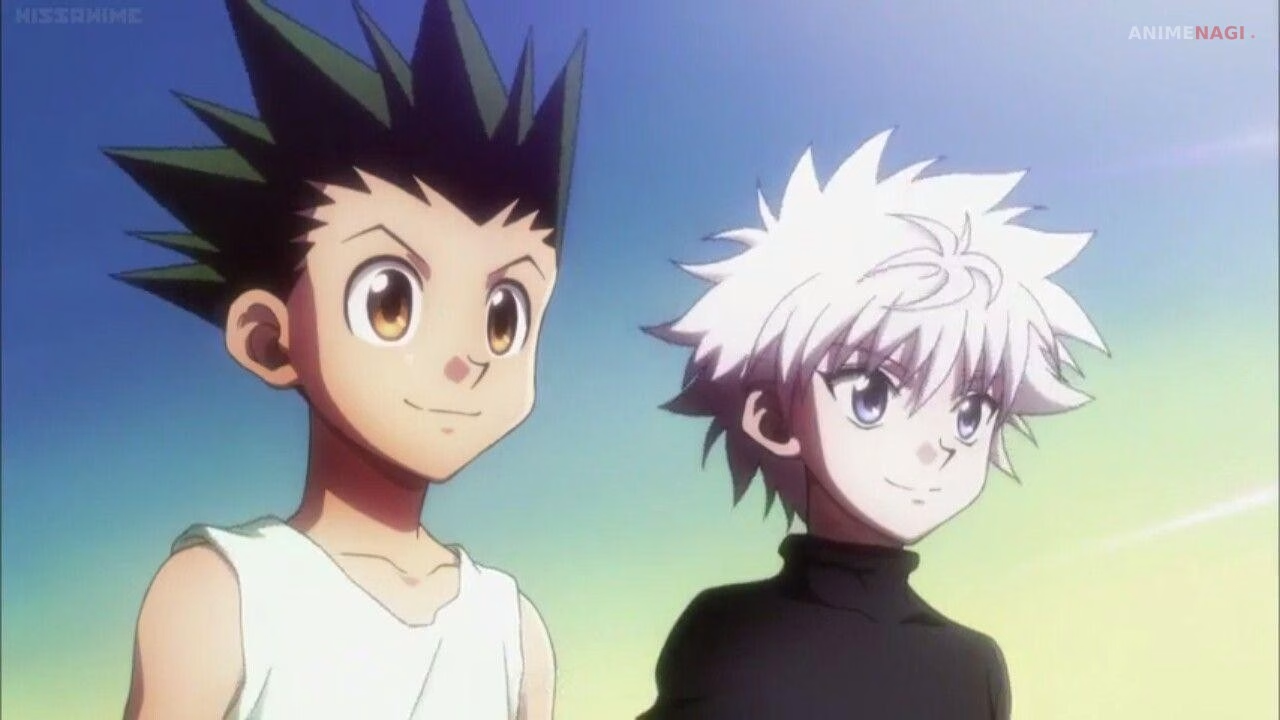
The relationship between Gon and Killua in Hunter x Hunter stands out because it explores the gradual breakdown of friendship rather than a sudden shift into rivalry. For most of the series, their bond is one of the strongest in anime, built on trust, shared experiences, and mutual growth.
Killua, raised as an assassin, finds emotional stability through Gon’s optimism and simplicity. Gon, in turn, benefits from Killua’s intelligence and support. Their friendship feels balanced and genuine, making its eventual strain even more impactful.
The Chimera Ant arc introduces a darker side of Gon that fundamentally changes their dynamic. His obsession with revenge against Neferpitou consumes him, pushing him toward reckless decisions. Gon’s willingness to sacrifice everything, including his own life, shocks Killua deeply.
Killua begins to feel helpless watching his friend self-destruct. This creates emotional distance between them, as Killua struggles to understand Gon’s mindset. While they do not become enemies in the traditional sense, the tension between them reflects the early stages of a fractured relationship.
This dynamic is powerful because it shows how easily friendship can shift under extreme circumstances. The conflict is internal rather than external, making it more subtle but equally impactful. Their story highlights that rivalry does not always require direct opposition, as emotional distance alone can redefine a relationship.
4. Light Yagami and L – Allies in Appearance, Rivals in Reality
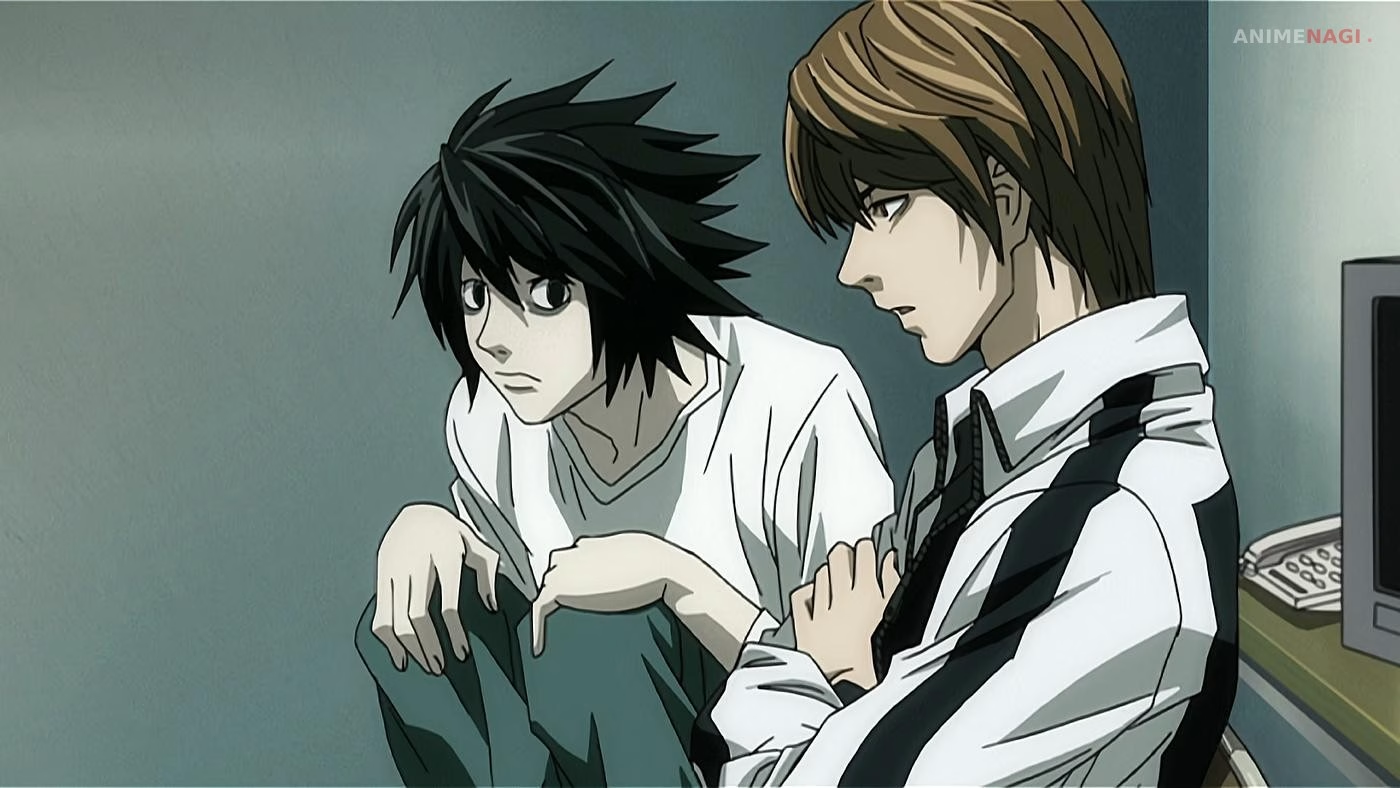
In Death Note, the relationship between Light Yagami and L redefines what it means to be rivals. Unlike other entries, they are never truly friends, but they operate as allies within the same investigative framework. This creates a unique dynamic where cooperation masks underlying hostility.
Light views himself as a god-like figure reshaping the world through Kira’s justice. L represents logic and law, determined to expose Kira regardless of the cost. Their opposing ideologies drive every interaction, turning simple conversations into psychological battles.
What makes their rivalry compelling is the level of mutual understanding. Both characters recognize each other’s intelligence and potential, creating a sense of respect even as they attempt to outmaneuver one another. Their interactions blur the line between ally and enemy.
Moments like the tennis match or their shared investigations highlight this tension. They work together outwardly, but internally, each is trying to defeat the other. This duality creates constant suspense, making their rivalry one of the most intellectually engaging in anime.
Ultimately, their relationship demonstrates that rivalry does not require a prior friendship. Instead, it can emerge from ideological opposition combined with proximity and mutual recognition.
5. Asta and Yuno – A Rivalry That Preserves Friendship
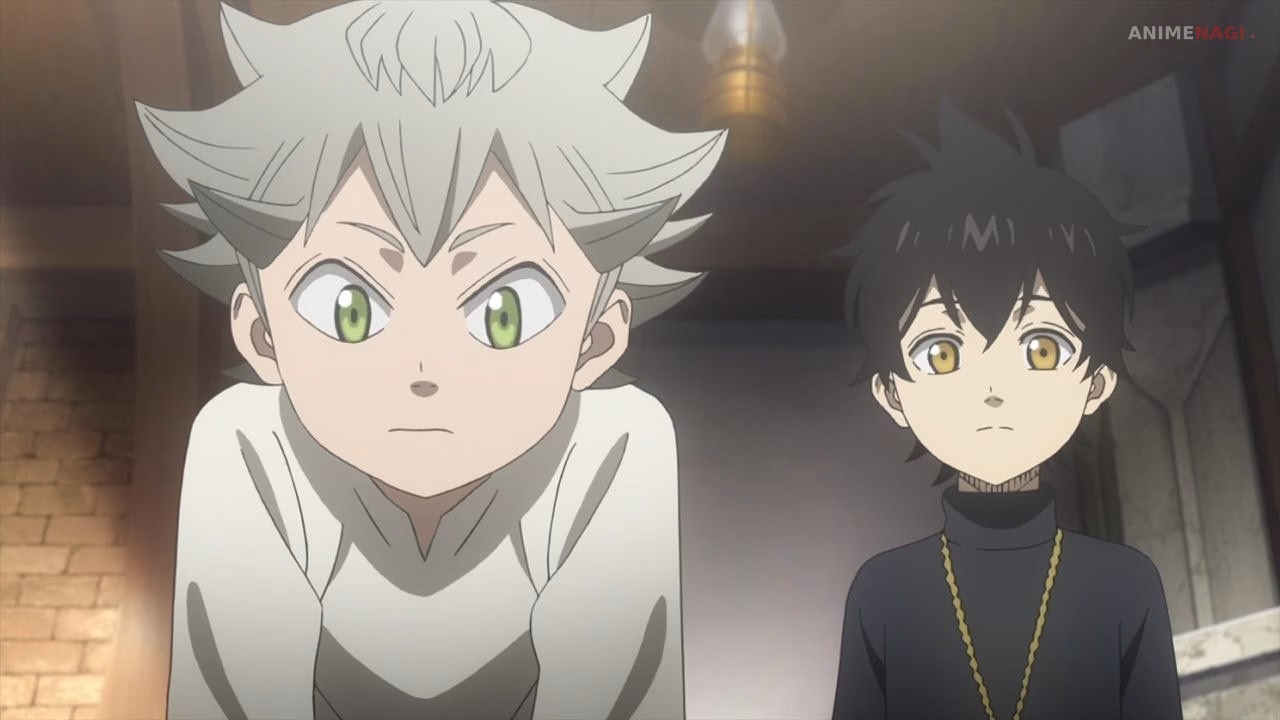
The relationship between Asta and Yuno in Black Clover offers a different perspective on rivalry. Unlike other examples, their friendship never fully breaks, but their paths diverge enough to create meaningful competition.
Both characters grow up as orphans with the shared goal of becoming the Wizard King. Their early bond is supportive, but their differences become more pronounced over time. Yuno’s natural talent contrasts with Asta’s lack of magic, creating a dynamic built on effort versus ability.
As they progress, their rivalry intensifies, but it never becomes hostile. Instead, it pushes both characters to improve continuously. Each sees the other as a benchmark, creating a cycle of growth that benefits them both.
This dynamic highlights that rivalry does not always stem from conflict or betrayal. In some cases, it emerges from shared ambition and mutual respect. Asta and Yuno’s relationship proves that competition can strengthen bonds rather than destroy them.
Their story also reflects a more optimistic interpretation of rivalry, showing that opposing paths do not always lead to emotional separation.
Why These Rivalries Define Anime Storytelling
Rivalries born from friendship resonate because they reflect real emotional experiences. People change, and relationships evolve, sometimes in painful ways. Anime captures this reality by turning personal conflict into dramatic storytelling.
These dynamics also allow for deeper character exploration. When friends become rivals, their history influences every interaction, adding layers of meaning to their actions. This creates conflicts that are not just physical, but also emotional and philosophical.
Another key aspect is how these rivalries drive growth. Characters are forced to confront their beliefs, question their choices, and evolve in response to opposition. Without these relationships, many anime stories would lack emotional depth.
Ultimately, these duos and trios demonstrate that the most powerful conflicts are not between strangers, but between people who once understood each other completely.
Another reason these duos and trios remain so impactful is that their rivalries often extend beyond the characters themselves and influence the entire narrative world around them. In series like Naruto or Attack on Titan, the fallout from these broken bonds reshapes alliances, triggers wars, and alters the course of history within the story.
These relationships become central pillars that everything else revolves around, making their evolution crucial to the plot’s progression. At the same time, they offer viewers a deeper emotional anchor, as audiences are not just watching battles unfold but witnessing the collapse and transformation of meaningful connections.
This layered storytelling ensures that even long after the series ends, these rivalries continue to resonate, reminding viewers that the line between friend and enemy is often shaped by circumstance, choice, and the inability to reconcile deeply held beliefs.