Few anime franchises have produced as many iconic villains as Dragon Ball Z and Dragon Ball Super. From planet-destroying tyrants to universe-level warriors, the series has consistently raised the stakes with enemies capable of pushing Goku and the Z Fighters beyond their limits. However, not every villain leaves the same impact. Some changed the entire direction of the franchise, while others introduced new levels of power that permanently altered Dragon Ball’s scaling.
The best Dragon Ball villains are not remembered only because they were strong. They are remembered because they forced major transformations, created emotional story arcs, and delivered some of anime’s most legendary fights. Villains like Frieza and Cell shaped the identity of Dragon Ball for decades, while newer antagonists like Jiren redefined the meaning of power in Dragon Ball Super.
This ranking considers two major factors: raw power and narrative impact. That means the list focuses on how dangerous these villains were at their peak and how much influence they had on the franchise’s story, characters, and popularity. While many powerful enemies exist in Dragon Ball history, these five villains stand above the rest.
5. Majin Buu
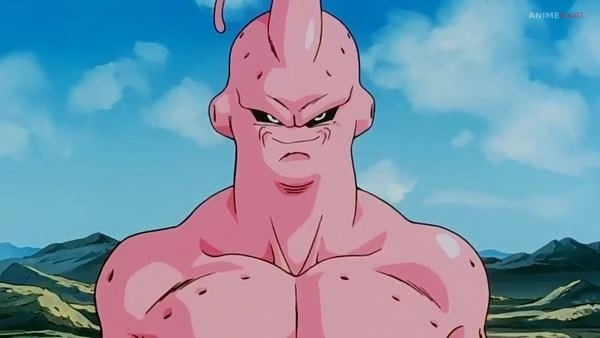
Majin Buu remains one of the most unpredictable and destructive villains in Dragon Ball history. Unlike earlier antagonists who relied mainly on strategy or military power, Buu represented pure chaos. His abilities made him nearly impossible to defeat through conventional means, which is why the Buu Saga constantly escalated in intensity.
What made Buu terrifying was his endless evolution. He transformed multiple times throughout the saga, with each form drastically changing his personality and power level. Fat Buu initially appeared goofy and comedic, but the series quickly revealed his horrifying, destructive abilities. Super Buu became far more intelligent and dangerous, while Kid Buu represented pure destruction without morality or restraint.
Buu’s regeneration abilities completely changed the nature of combat in Dragon Ball. Characters could overpower him temporarily, but destroying him permanently required extraordinary effort. According to character descriptions and official franchise material, Buu possessed near-limitless regeneration and planet-destroying power.
Narratively, Buu also played a major role because he pushed nearly every major Dragon Ball hero into the conflict. Goku, Vegeta, Gohan, Gotenks, Vegito, and even Mr. Satan became central to the storyline. The saga introduced fusion mechanics on a larger scale and explored themes of innocence, evil, and redemption through Buu’s various forms.
Although some fans debate the pacing of the Buu Saga, the villain himself remains iconic because of his versatility and overwhelming threat level. His existence forced the heroes to think beyond simple power-ups and use teamwork, fusion, and strategy to survive.
4. Cell
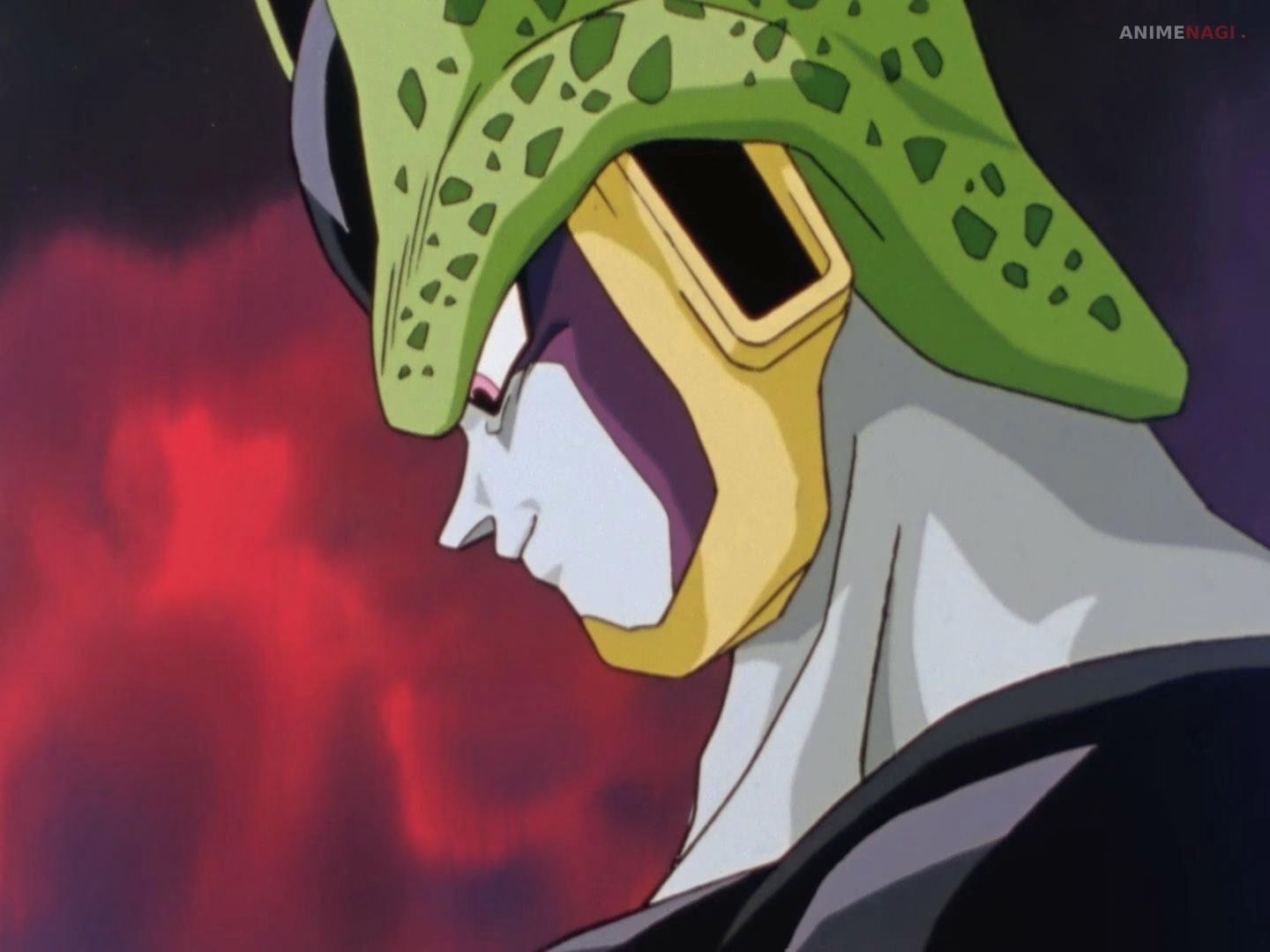
Cell is widely considered one of the most intelligently written villains in Dragon Ball. Unlike Frieza’s tyrannical cruelty or Buu’s chaos, Cell represented calculated perfection. Created from the DNA of the strongest fighters in the universe, he combined strategy, adaptability, and overwhelming power into one terrifying enemy.
Cell’s introduction during the Android Saga remains one of Dragon Ball’s darkest and most suspenseful moments. His first form operated almost like a horror villain, absorbing civilians and hiding in the shadows while growing stronger. The mystery surrounding his origin created tension rarely seen elsewhere in the franchise.
As Cell evolved, he became increasingly arrogant and dangerous. His Perfect Form especially stood out because it mirrored the pride and confidence of the Saiyans themselves. Many critics and fans consider Cell one of the franchise’s best-developed antagonists because he constantly exploits the weaknesses of the heroes around him.
Cell’s greatest narrative contribution was his connection to Gohan’s growth. The Cell Games pushed Gohan into becoming the strongest warrior on Earth and delivered one of the most emotional climaxes in Dragon Ball history. Gohan’s Super Saiyan 2 transformation against Cell remains one of anime’s most iconic moments decades later.
Cell also symbolized the consequences of scientific ambition and arrogance. Dr. Gero’s experiments created a monster that surpassed every expectation, showing how dangerous humanity’s obsession with power could become. Unlike many villains who relied purely on destruction, Cell actively enjoyed proving his superiority over others.
Even years later, Cell remains one of the franchise’s most beloved villains because of his design, personality, and psychological impact on the heroes.
3. Jiren
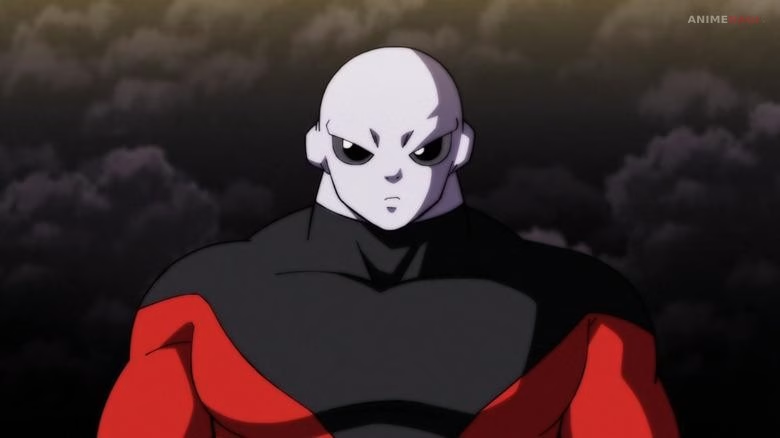
Technically, Jiren is not a traditional villain in the same way as Frieza or Cell. However, he served as the primary antagonistic force of the Tournament of Power arc in Dragon Ball Super and completely transformed the franchise’s understanding of strength.
Jiren surprised fans because he was introduced as a mortal stronger than the Gods of Destruction. His overwhelming dominance immediately raised the stakes of Dragon Ball Super. Characters who previously seemed unbeatable suddenly appeared powerless in front of him. According to official Dragon Ball descriptions, Jiren’s strength rivaled or surpassed divine beings within his universe.
Unlike earlier villains driven by conquest or destruction, Jiren was defined by emotional isolation and absolute faith in personal strength. His ideology directly conflicted with Goku’s belief in friendship, teamwork, and growth through bonds with others. This philosophical clash gave their rivalry more depth than a standard battle between hero and villain.
Jiren’s biggest contribution was forcing Goku to achieve Ultra Instinct. That transformation fundamentally changed Dragon Ball’s power system and introduced one of the franchise’s most visually stunning battles. The Tournament of Power arc became a global phenomenon largely because of Goku’s clashes with Jiren.
While some fans criticized Jiren’s backstory for lacking emotional complexity, his presence alone elevated the intensity of Dragon Ball Super. His calm demeanor and overwhelming aura created a constant sense of tension throughout the tournament. Few villains in Dragon Ball history have made the heroes feel as helpless as Jiren did during his peak moments.
From a pure power perspective, Jiren remains among the strongest non-divine fighters ever introduced in the series.
2. Frieza
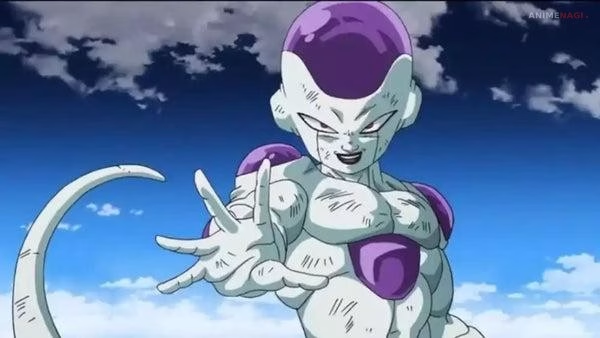
Frieza is arguably the most iconic villain in all of Dragon Ball. Even after decades of new antagonists and power escalations, Frieza remains the franchise’s defining enemy. His influence stretches across nearly every major storyline connected to the Saiyans and Goku himself.
Frieza’s importance begins long before his first on-screen appearance. He destroyed Planet Vegeta, wiped out most of the Saiyan race, and indirectly shaped Goku’s entire destiny. Official Dragon Ball material consistently describes him as one of the central antagonists of the franchise and the catalyst behind many major events.
The Namek Saga transformed Dragon Ball forever because of Frieza. Before him, the series focused mainly on martial arts battles and planetary threats. Frieza expanded the scale into galactic warfare. His cruelty, arrogance, and sadistic personality made him terrifying in a way previous villains were not.
Frieza’s battle against Goku also produced one of anime’s most legendary moments: the first Super Saiyan transformation. That scene became culturally iconic worldwide and permanently changed anime history. Few villains can claim responsibility for a moment that influential.
What separates Frieza from many Dragon Ball villains is longevity. Unlike Cell or Buu, Frieza continued evolving throughout later stories. His resurrection in Dragon Ball Super and introduction of Golden Frieza proved that he could remain relevant even in newer eras of the franchise.
Frieza also consistently balances intelligence with cruelty. He manipulates armies, destroys planets casually, and psychologically tortures his enemies. Even when stronger villains appeared later, Frieza retained his importance because of his personality and narrative influence.
For many fans, Frieza remains the ultimate Dragon Ball villain because he perfectly represents fear, power, and hatred.
1. Beerus
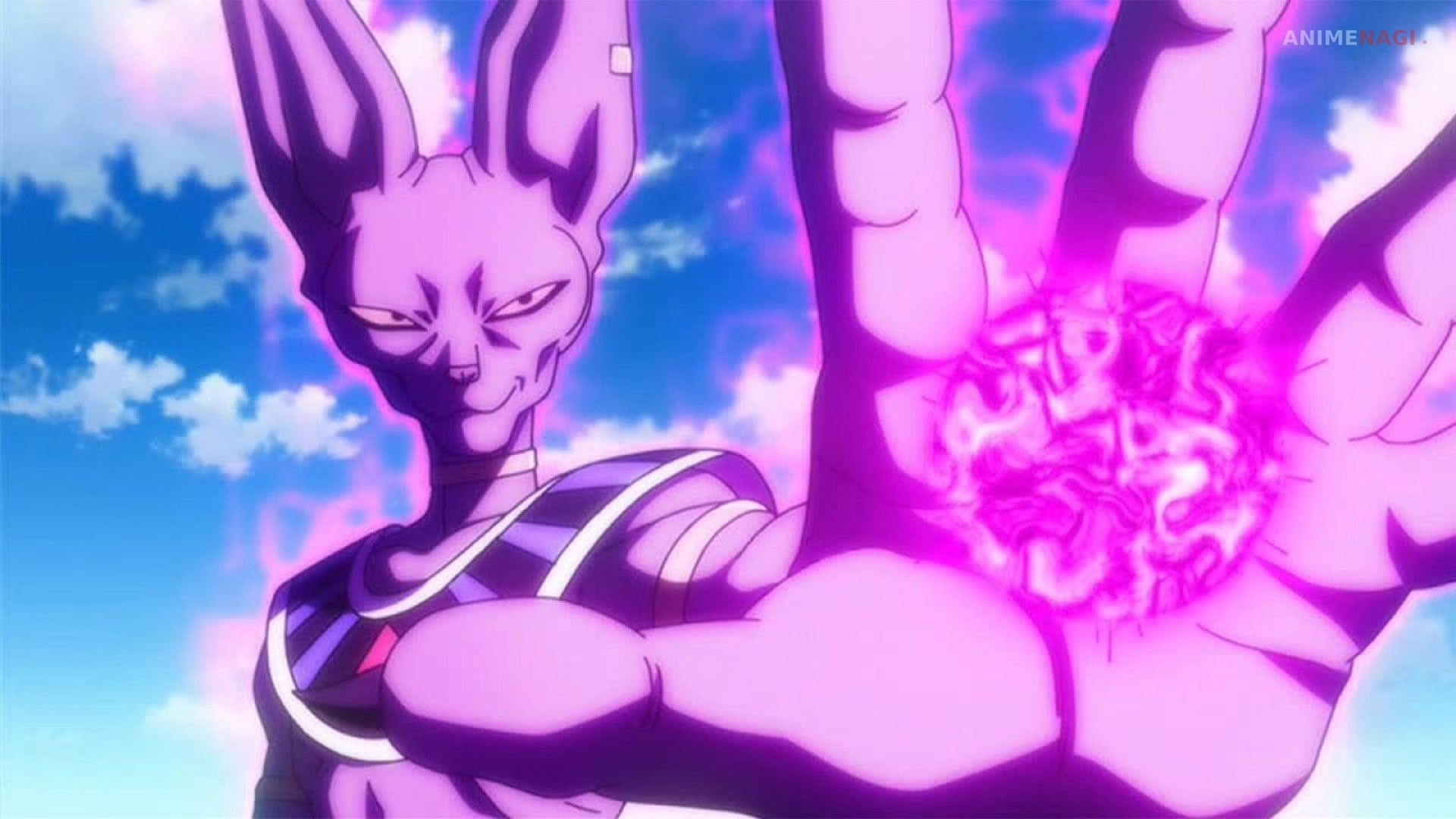
While Beerus eventually became more of an ally, his introduction in Dragon Ball Z: Battle of Gods positioned him as one of the most terrifying antagonistic forces the franchise had ever seen. More importantly, Beerus completely changed Dragon Ball’s power structure forever.
Before Beerus, the series mainly focused on mortals surpassing one another through training and transformations. Beerus introduced the divine hierarchy into Dragon Ball. Suddenly, Super Saiyan 3 was insignificant compared to the power of a God of Destruction. This shift reset the franchise’s scale and opened the door for the entire Dragon Ball Super era.
Beerus immediately established dominance by effortlessly defeating nearly every major fighter. His casual destruction abilities made previous villains seem far less threatening by comparison. Unlike Frieza or Cell, Beerus did not even need to fully try during most battles. That overwhelming superiority created a new level of tension in Dragon Ball storytelling.
Narratively, Beerus also revitalized the franchise after years away from mainstream anime dominance. Battle of Gods successfully modernized Dragon Ball and paved the way for Dragon Ball Super. Without Beerus, newer arcs involving Ultra Instinct, angels, and multiverse tournaments likely would not exist.
What makes Beerus especially compelling is his unpredictability. He can act comedic and relaxed one moment before threatening planetary destruction the next. That unstable balance between humor and godlike terror keeps him fascinating even years after his debut.
Although newer characters may eventually surpass him in raw strength, Beerus remains one of Dragon Ball’s most impactful antagonistic figures because he permanently transformed the franchise’s mythology, scale, and future direction.
Why these villains define Dragon Ball
Dragon Ball’s greatest villains succeed because they do more than simply overpower Goku. They reshape the story itself. Frieza created the legend of the Super Saiyan. Cell pushed Gohan into becoming Earth’s protector. Buu forced the heroes to unite in unprecedented ways. Jiren introduced divine-level competition, while Beerus expanded Dragon Ball into a multiversal franchise.
Each villain also reflects a different era of Dragon Ball storytelling. Frieza represents classic tyrannical evil, Cell embodies perfection through science, Buu symbolizes uncontrollable chaos, Jiren explores isolated strength, and Beerus introduces divine power beyond mortal understanding.
Together, these antagonists helped turn Dragon Ball into one of the most influential anime franchises ever created. Their battles, transformations, and rivalries remain central to anime culture decades after their introductions.