The conflict between U.A. students and the League of Villains is one of the most important long-term dynamics in My Hero Academia. It begins as a clear mismatch between inexperienced trainees and dangerous, fully active criminals. Over time, however, that imbalance gradually shifts as the students gain experience through real battles, training, and emotional growth. This transformation highlights how the series builds tension through progression rather than instant power-ups.
At the start, the League of Villains operates on a completely different level. Characters like Tomura Shigaraki and the Nomu represent threats far beyond what first-year students are prepared to handle. However, repeated encounters force students like Midoriya, Bakugo, and Todoroki to evolve rapidly. Their growth is not just physical but also mental, as they learn to handle fear, responsibility, and real consequences.
Understanding how this power gap changes across arcs is essential to understanding the story’s structure. Let’s break down how the gap begins, how it evolves, and which key battles define the rivalry.
The Early Power Gap Between U.A. Students and the League of Villains
At the beginning of the series, the difference between U.A. students and the League of Villains is overwhelming. The students are still learning basic Quirk control, teamwork, and combat awareness. In contrast, the villains already have real-world experience and fight without restrictions or hesitation.
This gap is not just about strength but also about mindset. Students are trained to save people, which limits their actions in combat situations. Villains, on the other hand, attack without concern for consequences, making them far more unpredictable and dangerous. The early arcs emphasize this imbalance clearly. Students rely heavily on teachers and professional heroes to survive encounters with villains. This dependency reinforces how far they still have to go before becoming true heroes.
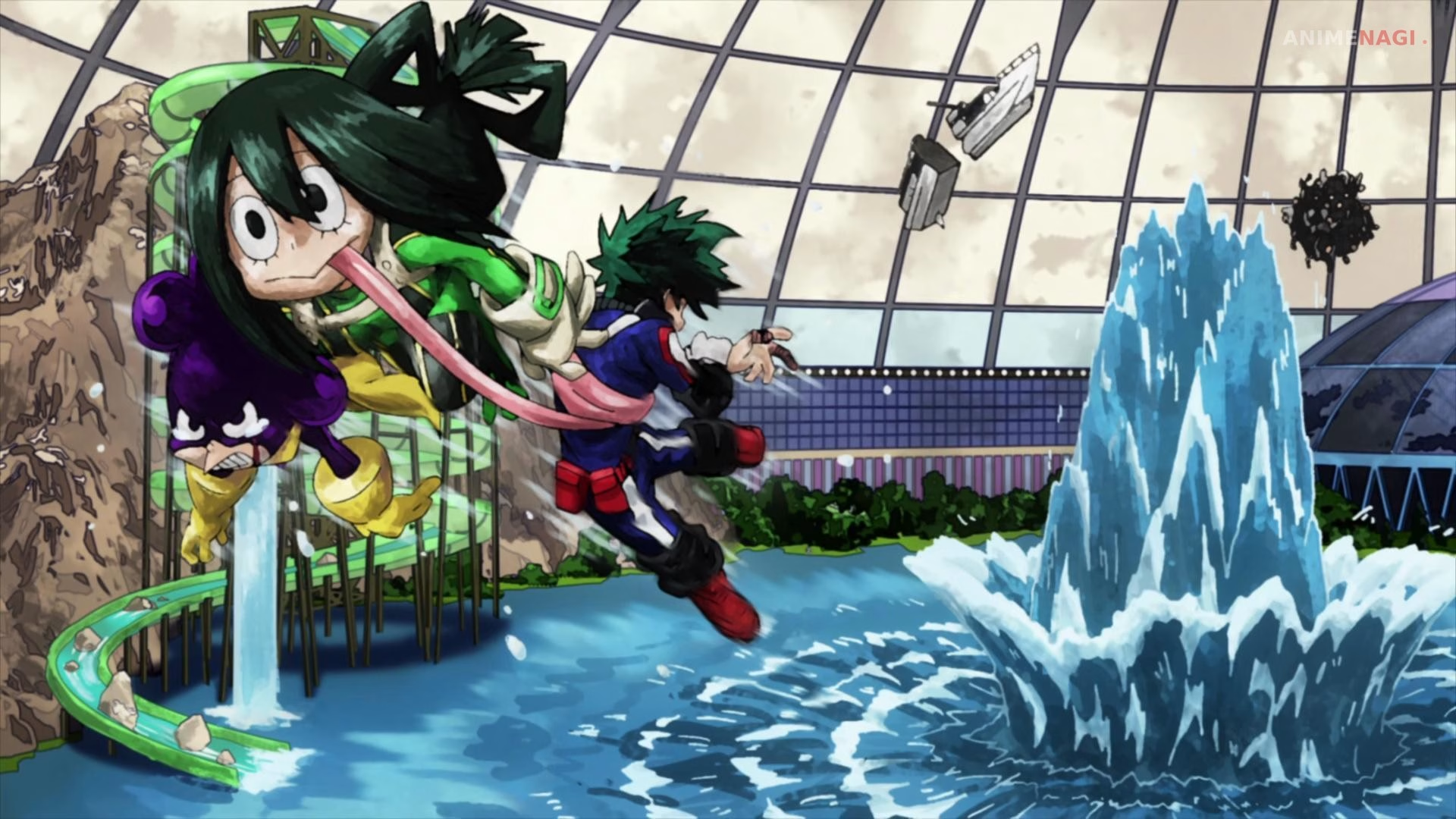
U.S.J. Attack: The First Real Battle
The U.S.J. attack serves as the first direct confrontation between U.A. students and the League of Villains. This arc immediately shifts the tone of the series from training-focused to high-stakes conflict. Students are forced to fight for survival in a situation they were never fully prepared for.
Midoriya, Tsuyu, and Mineta demonstrate adaptability by using their environment to escape danger. Meanwhile, Todoroki and Bakugo show raw offensive power by defeating multiple enemies. These moments highlight their potential, even if they lack experience.
At the same time, the students’ weaknesses are clearly visible. Many struggle to stay calm under pressure and depend on outside help. The arrival of All Might ultimately resolves the situation, reinforcing the gap between students and top-tier villains.
Forest Training Camp Arc: The Gap Turns Personal
The Forest Training Camp arc raises the stakes by placing students in a vulnerable environment without immediate protection. The League of Villains launches a targeted attack, introducing stronger members like Dabi, Toga, and Muscular. This arc makes it clear that the villains are evolving alongside the students.
Midoriya’s fight against Muscular becomes a defining moment. He is forced to push One For All beyond safe limits just to survive, showing both his determination and the massive power gap. This battle highlights how far the students still need to grow. Despite the danger, the students show clear improvement. They coordinate better, protect each other more effectively, and respond faster to threats. Even though Bakugo is captured, the class proves it is no longer completely helpless.
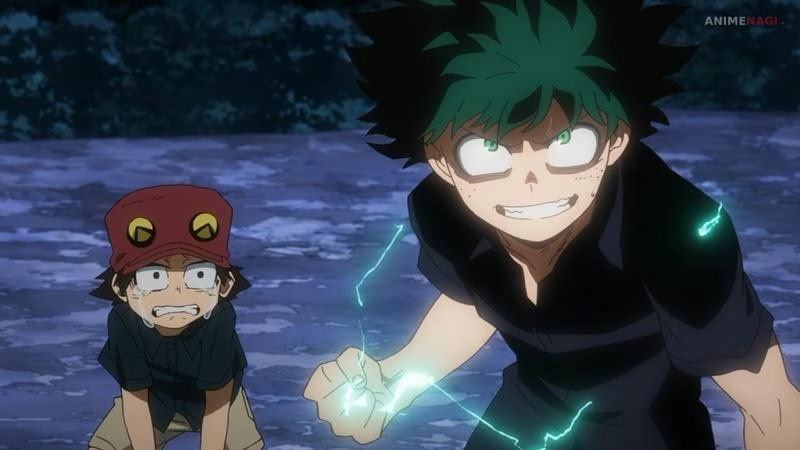
Kamino Incident: Students Step Into Larger Conflicts
The Kamino Incident represents a shift where students begin influencing major events rather than simply reacting to them. While the central battle is between All Might and All For One, the students play a crucial role in the rescue operation.
Midoriya, Kirishima, Todoroki, and others work together to save Bakugo. This mission requires planning, timing, and teamwork under extreme pressure. It shows that the students are beginning to think like heroes rather than just trainees.
However, the power gap is still evident during the final battle. All Might and All For One operate on a level far beyond anything the students can handle. This contrast reinforces that the students are progressing but not yet ready for top-tier threats.
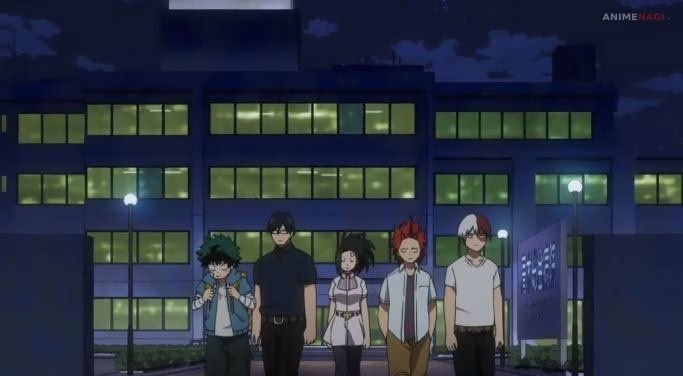
Provisional License Exam: Preparing for Real Responsibility
The Provisional License Exam focuses on preparing students for real-world hero duties. While it does not directly involve the League of Villains, it plays a critical role in closing the power gap. Students are tested on rescue skills, teamwork, and decision-making under pressure.
Passing the exam allows students to participate in official hero activities. This increases their exposure to real situations and helps them gain practical experience. It also builds confidence, which becomes important in later battles.
The exam also emphasizes cooperation over individual strength. This becomes a key advantage when facing coordinated villain groups. By improving teamwork, the students strengthen their effectiveness.
Joint Training Arc: Measuring Growth Between Classes
The Joint Training Arc focuses on the rivalry between Class 1-A and Class 1-B, but it also reflects how far both groups have come. These structured battles highlight improved coordination, strategy, and Quirk control.
Class 1-B demonstrates strong teamwork and planning. Their ability to analyze opponents and execute strategies makes them highly effective in group scenarios. This shows that disciplined training can rival real combat experience.
Class 1-A shows adaptability gained from facing real danger. They adjust quickly to unexpected situations and respond effectively under pressure. This arc proves that both classes are progressing in different but equally important ways.
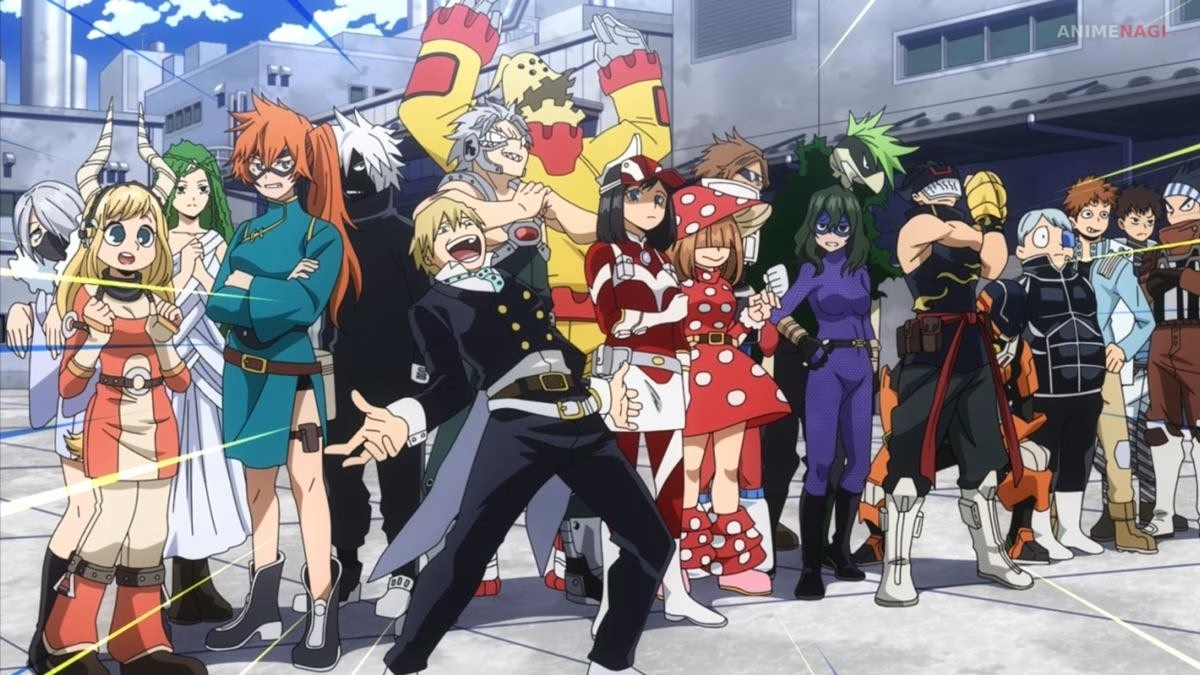
Paranormal Liberation War: The Gap Nearly Closes
The Paranormal Liberation War arc marks the point where the power gap becomes significantly smaller. Students are no longer just trainees but active participants in a large-scale conflict. They are trusted to fight alongside professional heroes in high-risk situations.
Midoriya, Bakugo, and Todoroki directly confront Shigaraki during the battle. Their teamwork allows them to survive and even challenge him, despite his overwhelming power. This shows how much they have grown since the early arcs.
Other students contribute across the battlefield as well. They assist in evacuations, support heroes, and engage enemies when necessary. Their involvement proves that they are becoming reliable assets in real combat scenarios.
Key Battles That Define the Rivalry
Several battles throughout the series define the evolving rivalry between U.A. students and the League of Villains. Each fight represents a different stage in the students’ development. These moments highlight both progress and remaining challenges.
Midoriya’s fight against Muscular shows early-stage determination against overwhelming odds. It establishes his willingness to sacrifice himself for others. This mindset becomes a core part of his growth.
Later confrontations with Shigaraki show a different level of confidence and ability. Instead of simply surviving, the students actively engage and resist him. These battles demonstrate how the gap has narrowed over time.
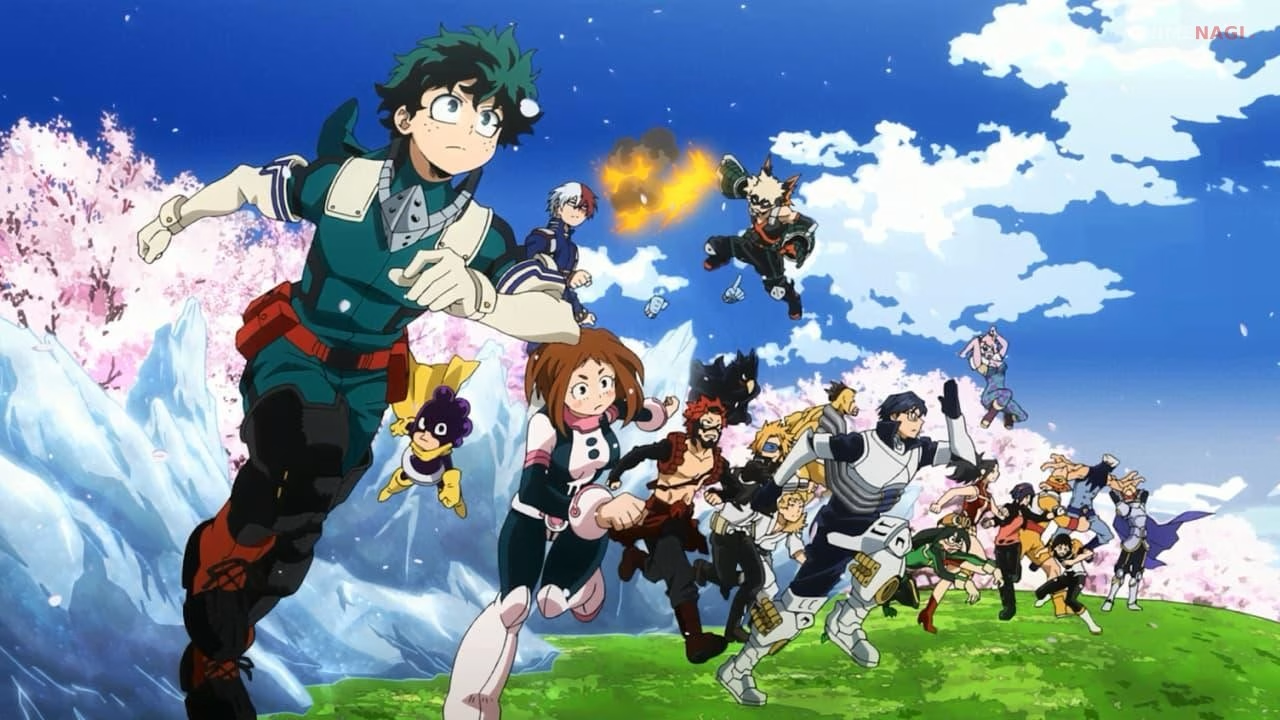
The League of Villains Also Evolves
While the students grow stronger, the League of Villains also evolves significantly. This ensures that the power gap never fully disappears. Characters like Shigaraki, Dabi, and Toga become more dangerous with each arc.
Shigaraki’s transformation is the most dramatic. He evolves from an unstable leader into a nearly unstoppable force capable of mass destruction. His growth mirrors the students’ progression but at a much larger scale.
Other members refine their abilities and strategies. This constant evolution keeps the conflict balanced and unpredictable. It ensures that the students must continue improving to keep up.
Why the Power Gap Matters
The power gap is essential to the story because it creates tension and drives character development. Early arcs focus on survival, while later arcs focus on contribution and responsibility. This progression makes the story feel realistic and earned.
Without the gap, the students’ victories would feel less meaningful. The struggle to overcome stronger opponents is what makes their growth impactful. Each battle becomes a step forward rather than an instant solution.
The gap also reinforces the series’ themes about heroism. Becoming a hero requires time, effort, and experience. It is not something that happens instantly.
The conflict between U.A. students and the League of Villains is a story of gradual growth and evolving power. What begins as an overwhelming mismatch slowly becomes a more balanced rivalry through training, experience, and determination.
Class 1-A and 1-B prove themselves by learning from every encounter and improving their abilities over time. At the same time, the League of Villains continues to grow, ensuring that the challenge remains constant. This dynamic keeps the story engaging and unpredictable.
By the time of the war arc, the students are no longer just learning what it means to be heroes. They are actively proving it on the battlefield.
Another important aspect of this rivalry is how it shapes the students emotionally over time. Early encounters with the League of Villains leave lasting psychological impacts, forcing students to confront fear, failure, and responsibility much earlier than expected. Characters like Midoriya and Bakugo develop a stronger sense of urgency and purpose after witnessing real consequences of villain activity.
This emotional growth becomes just as important as physical strength, as it influences their decisions in critical moments. By the later arcs, the students are not just reacting to danger, they are anticipating it and taking initiative, which clearly shows how much they have matured as future heroes.